Walk the Western Journey City by City
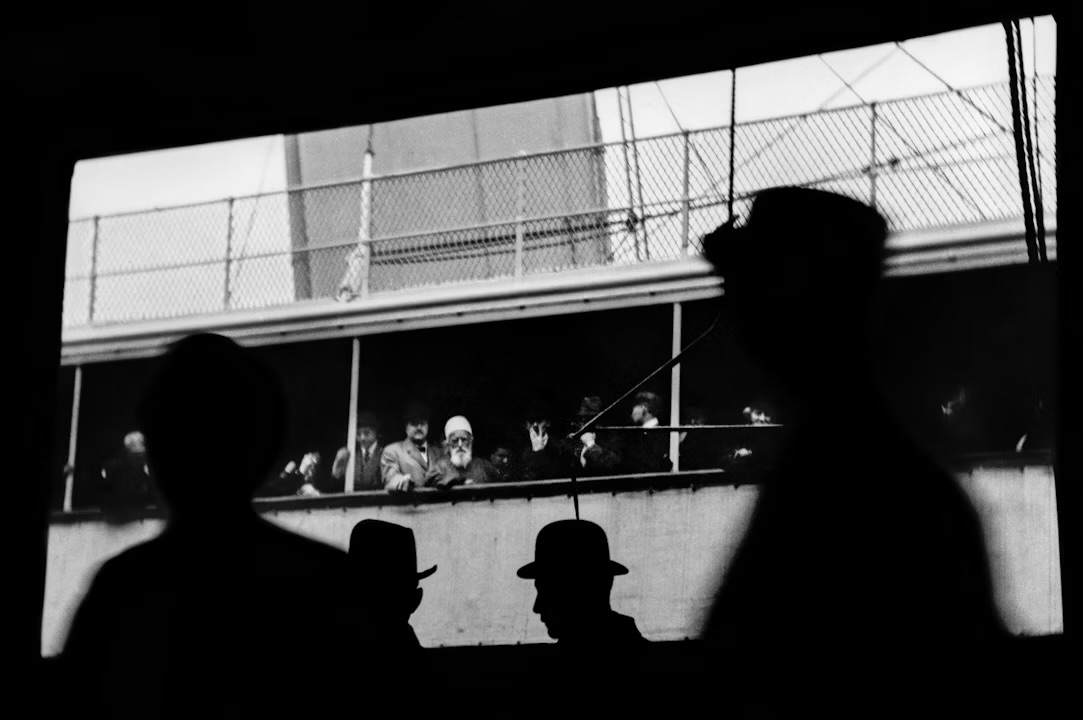
Follow Abdu'l-Bahá through London, Paris, New York, Washington D.C., Chicago, and San Francisco — with the historical precision of a scholar and the reverence the subject deserves.
"Historical grounding doesn't diminish the spiritual power of these journeys — it deepens it."— David Gray

What you'll learn
What you'll be able to do
- Trace the full itinerary of Abdu'l-Bahá's 1911–1913 journeys city by city, from London and Paris to New York, Chicago, and San Francisco
- Identify the key audiences He addressed — suffragists, peace societies, university halls, and urban congregations — and explain why each encounter mattered
- Analyze the core social teachings He emphasized in the West: racial unity, equality of men and women, world peace, and the harmony of science and religion
- Interpret selected talks and tablets from the Western travels using their historical and cultural context
- Explain the lasting influence of the journeys on early Western Bahá'í communities and on broader progressive movements of the era
- Construct a research-ready timeline and annotated source list drawing on contemporaneous newspapers, diaries, and official Bahá'í historical records
How it works
A school that adapts to you
This isn't a set of static videos. Every lesson is generated live and tuned to where you actually are.
We learn your level
A quick placement check tailors your starting point so you're never bored or lost.
Lessons adapt as you go
Each lesson is written for your pace and your goal, adjusting as your skills grow.
Your AI coach keeps you moving
Checkpoints, feedback, and gentle nudges turn progress into a real result.
The curriculum
What's inside your school
6 modules · 18 lessons

The World Abdu'l-Bahá Entered: Context and Preparation for the Journey West
Establishes the essential historical, biographical, and community prerequisites students need before encountering the journeys themselves. Without this foundation, the significance of every later stop and teaching cannot be fully grasped. Students examine the Progressive Era's social ferment, Abdu'l-Bahá's extraordinary life before 1911, and the nascent Western Bahá'í communities that were waiting for Him.
- 1.1The Progressive Era West: A World Ready for a New MessageIncluded
- 1.2Abdu'l-Bahá Before the Journey: Prisoner, Leader, and Living ExemplarIncluded
- 1.3The Early Western Bahá'í Communities: Who Was Waiting for Him?Included
Europe Beckons: The 1911 Journey to London and Paris
Follows Abdu'l-Bahá's first venture out of the Middle East and into Europe, examining each stop in granular detail — the venues, audiences, talks, and press coverage. A dedicated methods lesson ensures students can interpret primary texts in their historical and cultural context, a skill they will apply repeatedly throughout the course. The module also surfaces the characteristic 'duplex title' problem in early records: London lesson titles are cleaned up here to reflect accurate venues.
- 2.1London 1911: City Churches, Drawing Rooms, and a City Temple PulpitIncluded
- 2.2Paris 1911: 'Paris Talks' and the Spiritual SalonIncluded
- 2.3Reading the Talks: Methods for Contextual InterpretationIncluded
America Awaits: Arrival and the Eastern Seaboard, 1912
Covers the April 1912 arrival in New York and the intense weeks Abdu'l-Bahá spent on the Eastern Seaboard — arguably the most densely documented and historically consequential stretch of the entire journey. Particular attention is paid to the race question in Washington D.C. and to the Wilmette cornerstone ceremony, which anchored the journey's institutional legacy.
- 3.1New York City: Arrival, Press, and the Pluralist MetropolisIncluded
- 3.2Washington D.C. and the Race Question: A Nation ConfrontedIncluded
- 3.3The Wilmette Cornerstone and the Chicago AxisIncluded
Across the Continent: The Western and Canadian Travels, 1912
Follows Abdu'l-Bahá's transcontinental arc from Montreal in the northeast to San Francisco and Los Angeles on the Pacific, tracing the itinerary city by city and examining how the teachings adapted to radically different regional audiences — French-Canadian Catholics, Mormon pioneers, Rocky Mountain settlers, and California progressives. The module closes the geographic sweep of the American journey before Module 5's thematic synthesis.
- 4.1Montreal and the Canadian Visit: French, English, and the Question of WarIncluded
- 4.2The Transcontinental Journey: Denver, Salt Lake City, and the American InteriorIncluded
- 4.3San Francisco, Los Angeles, and the Pacific EdgeIncluded
Core Teachings in Western Context: A Thematic Deep Dive
Shifts from chronological itinerary to thematic analysis, ensuring students can articulate and substantiate each of Abdu'l-Bahá's four signature teachings in the West: racial unity, the equality of women and men, world peace, and the harmony of science and religion. Each lesson draws on talks from across the full journey — not just one city — modeling the synthesis skills students will need for Module 6's research and legacy work. Placed after the geographic modules so students have the raw material to draw on.
- 5.1Racial Unity: The Most Vital IssueIncluded
- 5.2The Equality of Women and Men: Talks, Suffragists, and the Suffrage AgeIncluded
- 5.3World Peace and the Harmony of Science and ReligionIncluded
Return, Legacy, and the Historian's Craft: The Second European Journey and Lasting Impact
Completes the chronological arc with the 1913 return journey through Europe, then pivots to assessing legacy — both for Bahá'í communities and for the broader Progressive Era — before closing with a rigorous, practical module on historical research methods. The Historian's Craft lesson is expanded and repositioned here as the course's capstone, ensuring students leave with a transferable research toolkit, not just historical knowledge. The methods lesson in Module 2 taught interpretation; this one teaches construction of original research.
- 6.1The 1913 European Return: Stuttgart, Budapest, Edinburgh, and Final FarewellsIncluded
- 6.2Impact and Legacy: Western Bahá'í Communities and the Progressive EraIncluded
- 6.3The Historian's Craft: Building Your Timeline and Annotated Source ListIncluded
Who it's for
Is this you?

Devoted Bahá'í Students
You've read the talks many times — now trace the exact rooms, cities, and audiences that gave them their full meaning.

Religious Historians
The 1911–1913 journeys are a rich primary-source case study in how a world religion took root in the Progressive Era West, and this course treats them with scholarly rigor.

Bahá'í Community Teachers
Build the historical depth and annotated source command that will make your classes, firesides, and study circles come alive with precision and confidence.

Progressive Era Enthusiasts
If the suffrage movement, early peace activism, and the race question of 1912 already fascinate you, Abdu'l-Bahá's encounters with all three will reframe what you thought you knew.

Spiritually Curious Lifelong Learners
No prior background in Bahá'í history required — only a genuine curiosity about one of the most extraordinary journeys of the modern era.

Graduate Students & Researchers
The course's final module — building a research-ready timeline and annotated source list from contemporaneous records — makes it directly useful for academic work.
Questions
Frequently asked
Your teacher
A note from your teacher

David Gray
If you have ever sat with the Paris Talks or read an account of Abdu'l-Bahá's arrival in New York Harbor and felt a pull — a sense that there is far more to understand than a single reading reveals — then you already know why this course exists.
Most of us first encounter the Western journeys through fragments: a beloved talk, a photograph, a story passed down in a Bahá'í community or encountered in a footnote. Those fragments are luminous. But they can also float free of context, and context is everything. What was the City Temple in London, and why did an invitation to speak there matter? What did it mean for Abdu'l-Bahá to sit down to dinner with African American guests in Washington D.C. in 1912 — in a city that was rigidly segregated — and what did the Americans in that room understand that moment to be? What was happening in Europe in 1913, the year He made His final farewells, that gives those departures a particular weight? These are not merely academic questions. The answers change how you hear the words.
This course is my attempt to offer those answers carefully and honestly. I believe historical grounding does not diminish the spiritual power of these journeys — it deepens it. When you understand the Progressive Era West that Abdu'l-Bahá entered: its suffrage movements, its race crisis, its hunger for a coherent philosophy of peace, its collision of science and faith — the talks He gave in the middle of all of that become more extraordinary, not less. He was not speaking into a vacuum. He was speaking into specific rooms, to specific people, at a specific hinge moment in history.
Every module in this course asks you to sit with primary sources: the newspaper reporters who were there, the diary entries of those who met Him, the official Bahá'í records that document what happened and where. We will also study how to read those sources — how to interpret a talk not only for its spiritual content but for what it reveals about its audience and its moment. And in the final module, you will build something of your own: a timeline and annotated source list you can carry into your own research, teaching, or personal reflection.
Come as you are. Come as a Bahá'í who wants to go deeper, or as a historian who wants a subject worthy of serious attention, or as a lifelong learner who simply felt that pull and wants to follow it. This journey has room for all of you — and it is well worth taking.
— David Gray
Start your journey today
Join get instant access — learn at your own pace with an AI coach in your corner.
$5/wk
Recurring billing · cancel anytime
Secure checkout · Instant access
- 6 modules, 18 lessons
- AI-adaptive lessons tuned to your level
- Quizzes & checkpoints to lock in progress
- Your own AI learning coach
- Learn on any device, at your pace
- Full access for as long as you're subscribed