Theology That Sees Every Body
A rigorous, pastoral journey through Scripture, Church history, and the leading voices in Disability Theology — equipping you to build communities where disabled believers aren't accommodated as an afterthought but welcomed as essential.
"Disability Theology isn't a specialty track for a few — it's a lens that makes all of us better readers of Scripture and more faithful servants of the Church."
— Tylia Flores

What you'll learn
What you'll be able to do
- Articulate the core principles of Disability Theology and explain how they challenge and enrich traditional Christian doctrine.
- Trace the historical treatment of disabled persons throughout Church history, from the early Church Fathers to the modern disability rights movement.
- Exegete key biblical texts about disability, healing, and embodiment with nuance, moving beyond simplistic 'cure' narratives.
- Design inclusive worship, preaching, and pastoral care practices that honor the full dignity and participation of disabled members.
- Engage critically with leading voices in Disability Theology — including Amos Yong, Nancy Eiesland, and John Swinton — and apply their frameworks to ministry contexts.
- Develop a personal or congregational theology of disability that integrates Scripture, tradition, and the lived experience of disabled believers.
How it works
A school that adapts to you
This isn't a set of static videos. Every lesson is generated live and tuned to where you actually are.
We learn your level
A quick placement check tailors your starting point so you're never bored or lost.
Lessons adapt as you go
Each lesson is written for your pace and your goal, adjusting as your skills grow.
Your AI coach keeps you moving
Checkpoints, feedback, and gentle nudges turn progress into a real result.
The curriculum
What's inside your school
10 modules · 54 lessons

Foundations: What Is Disability Theology?
Establishes the core vocabulary, frameworks, and questions that define Disability Theology as a distinct theological discipline.
- 1.1Defining Disability: Medical, Social, and Theological ModelsIncluded
- 1.2Why Disability Theology Matters for the ChurchIncluded
- 1.3Key Terms and Frameworks in Disability StudiesIncluded
- 1.4The Disabled God: Nancy Eiesland's Landmark ContributionIncluded
- 1.5Mapping the Field: Major Voices and TraditionsIncluded
Scripture and Disability: Reading the Bible Anew
Equips students to exegete biblical texts about disability, healing, and embodiment with critical nuance and contextual care.
- 2.1Disability in the Old Testament: Law, Narrative, and WisdomIncluded
- 2.2Healing Miracles in the Gospels: Beyond the Cure NarrativeIncluded
- 2.3Weakness, Suffering, and Glory in Paul's LettersIncluded
- 2.4The Eschatological Body: Resurrection, Wholeness, and New CreationIncluded
- 2.5Hermeneutics of Disability: Principles for Responsible InterpretationIncluded
Church History and the Treatment of Disabled Persons
Traces how the Church has understood, included, excluded, and theologized about disabled people across two millennia.
- 3.1The Early Church and Roman Disability CultureIncluded
- 3.2Augustine, Aquinas, and the Medieval Theological BodyIncluded
- 3.3The Reformation, Charity, and the 'Deserving Poor'Included
- 3.4Eugenics, the Church, and the 20th-Century CatastropheIncluded
- 3.5The Disability Rights Movement and the Church's ResponseIncluded
Leading Theologians and Their Frameworks
Provides deep engagement with the primary voices shaping contemporary Disability Theology for ministerial application.
- 4.1Amos Yong: Pneumatology, Disability, and the Spirit's WelcomeIncluded
- 4.2John Swinton: Friendship, Personhood, and Practical TheologyIncluded
- 4.3Thomas Reynolds: The Vulnerable Self and Radical HospitalityIncluded
- 4.4Disabled Theologians Speaking for ThemselvesIncluded
- 4.5Applying Theological Frameworks to Ministry DecisionsIncluded
Inclusive Ministry: Worship, Preaching, and Pastoral Care
Equips students to design and lead worship, preaching, and care practices that honor the full dignity and participation of disabled members.
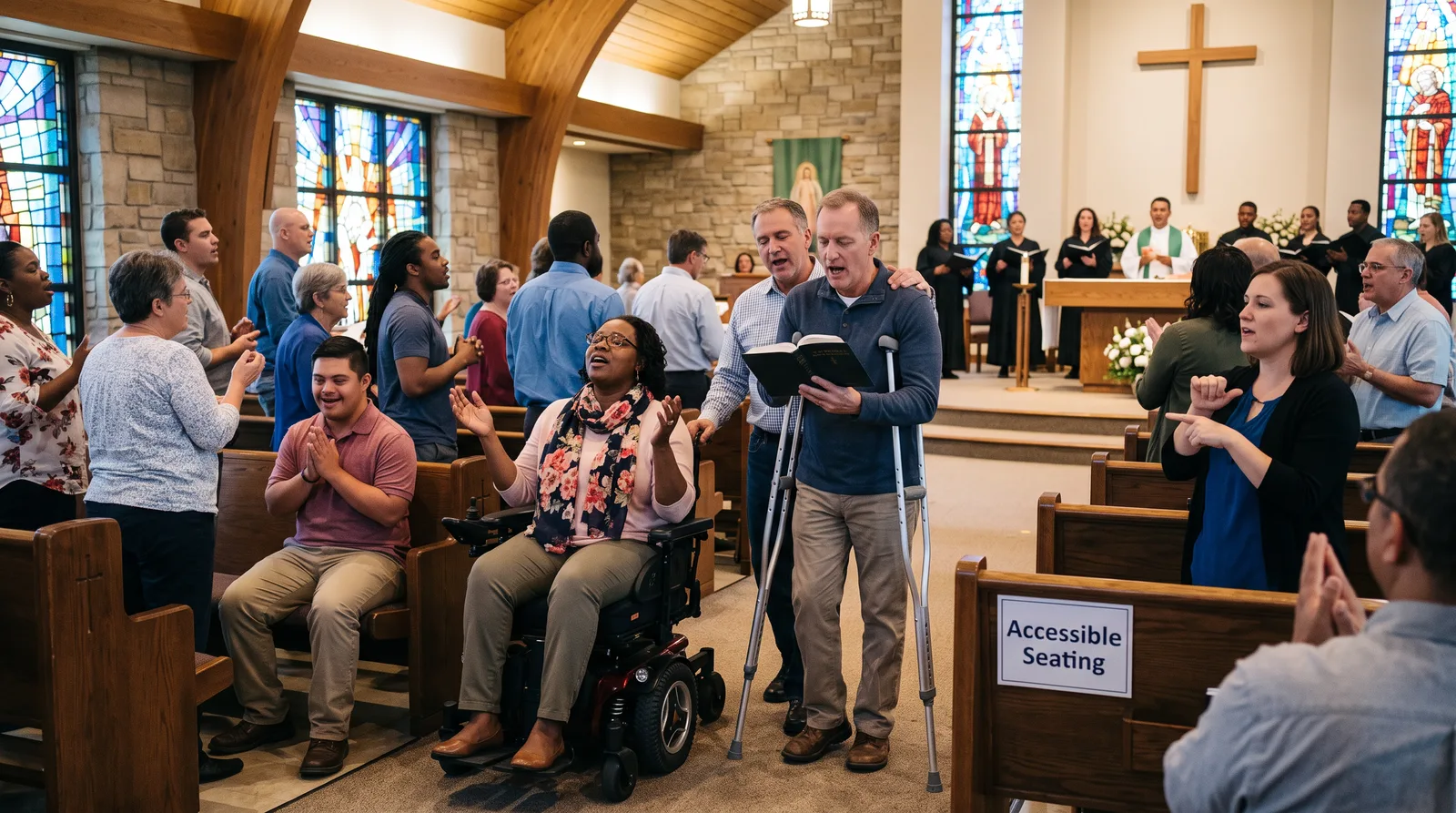
- 5.1Accessible Worship: Space, Liturgy, and Multi-Sensory PracticeIncluded
- 5.2Preaching Without Ableism: Language, Illustration, and Embodied DeliveryIncluded
- 5.3Pastoral Care for Disabled Persons and Their FamiliesIncluded
- 5.4Disability, Mental Health, and Neurodivergence in the CongregationIncluded
- 5.5Children, Youth, and Disability MinistryIncluded
- 5.6Growing in Grace: Sunday School, Christian Behavior, and Disability MinistryIncluded
- 5.7Disability Ministry Across the Lifespan: Youth, Conflict, and Teenage RelationshipsIncluded
Building a Theology of Disability for Your Context
Guides students to synthesize everything learned into a personal or congregational disability theology that is actionable and rooted.
- 6.1Disability Justice vs. Disability Charity: A Critical DistinctionIncluded
- 6.2Conducting a Congregational Disability AuditIncluded
- 6.3Advocacy, Policy, and the Church's Public WitnessIncluded
- 6.4Writing Your Personal Theology of DisabilityIncluded
- 6.5From Theology to Action: A Congregational Inclusion PlanIncluded
- 6.6Disabled Evangelists: Witnesses Who Shaped the ChurchIncluded
- 6.7Final Exam: Integrative AssessmentIncluded
Disability Ministry Across Life Stages: Youth Group, Conflict, and Relationships
- 7.1Life Stages of Disability: Ministry from Childhood Through AdulthoodIncluded
- 7.2Youth Group and Disability: When Two People Don't Get AlongIncluded
- 7.3Teenage Dating in Disability Ministry: Pastoral Care for Young RelationshipsIncluded
Salvation, Faith, and Disability: When Someone Accepts Jesus
- 8.1What Happens When a Person with a Disability Accepts Jesus ChristIncluded
- 8.2When Your Family Doesn't Share Your Faith: Disability, Spiritual Independence & Building Your Own Relationship With Jesus ChristIncluded
Transportation, Access & the Rural Church: Getting to God When the Road Is Hard
A ground-level, practical module for individuals with disabilities, church planters, pastors, and ministry leaders navigating the real barriers of transportation, geographic isolation, and absent infrastructure. Focused especially on rural and underserved communities where "just find another church" is not an option, and where access to worship requires creativity, advocacy, and faith.
- 9.1The Access Gap Nobody Talks About: Transportation and Disability in the ChurchIncluded
- 9.2Rural Disability and the Church: When Your Town Has No ResourcesIncluded
- 9.3Church Planting With and For People With DisabilitiesIncluded
- 9.4When the Church Comes to You: Home, Online, and Community-Based WorshipIncluded
- 9.5Building a Congregational Transportation NetworkIncluded
- 9.6Advocacy in a Town That Has Nothing: Disability, Resources, and the Local ChurchIncluded
- 9.7The Theology of Showing Up: Why Access Is a Gospel IssueIncluded
Ministry in Nursing Homes and Group Homes: Reaching Those Who Cannot Come to You
A pastoral and practical module equipping ministers, chaplains, volunteers, and disability advocates to serve people with disabilities who live in nursing homes, group homes, and residential care facilities — addressing access, dignity, spiritual care, family dynamics, and the theology of presence.
- 10.1Understanding the Nursing Home and Group Home ContextIncluded
- 10.2The Spiritual Needs of Residents: What the Church Often MissesIncluded
- 10.3How to Start a Nursing Home or Group Home MinistryIncluded
- 10.4Communicating the Gospel in Accessible Ways Inside Residential FacilitiesIncluded
- 10.5Group Homes and Supported Living: Unique Pastoral ChallengesIncluded
- 10.6Family, Facility Staff, and the Church: Navigating the Relationships Around a ResidentIncluded
- 10.7End-of-Life Ministry in Residential Care SettingsIncluded
- 10.8Sustaining Your Ministry Team: Avoiding Burnout in Hard PlacesIncluded
Who it's for
Is this you?

The Local Pastor
He serves a congregation that includes disabled members and wants to move beyond good intentions toward genuinely inclusive worship, preaching, and pastoral care.

The Seminary Student
He's training for ministry and wants to engage Disability Theology rigorously — Eiesland, Yong, Swinton — before he takes a pulpit, not after.
The Disability Advocate
She lives with disability herself and is hungry for theological frameworks that honor her experience as a source of genuine wisdom, not just a pastoral problem to be solved.

The Church Volunteer
She coordinates special needs ministry at her church and wants the theological grounding to do it with depth and dignity, not just logistical efficiency.

The Caregiver in the Pew
She has spent years caring for a disabled family member and is looking for a faith framework that takes her questions about suffering, embodiment, and resurrection seriously.

The Theology Enthusiast
He has no formal ministry role but is captivated by the intersection of doctrine and justice, and wants to engage Disability Theology as seriously as any other academic field.
Questions
Frequently asked
Your teacher
A note from your teacher
Tylia Flores
If you're here, I suspect you've sat with someone in your congregation — or in your own family, or in your own body — and realized that the Church's default responses to disability aren't quite enough. The well-meaning platitudes, the healing prayer that subtly implies something is wrong with the person if cure doesn't come, the accessibility ramp added as an afterthought while the liturgy itself remains closed to half the people it claims to welcome. You've felt the gap between what the Church professes about human dignity and what it actually practices. That gap is precisely where this school begins.
I created Disability & Ministry because this field deserves the same theological seriousness we give to any other question of doctrine, justice, or pastoral care. Disability Theology is not a niche concern — it is a lens that clarifies some of the most fundamental questions Christians ask: What does it mean to be made in the image of God? What is the body for? What does resurrection mean for bodies that have suffered? What does genuine community require of us? These are not peripheral questions. They are the questions, and disabled believers have been pressing the Church to answer them more faithfully for generations.
This school takes you through the full arc of that conversation. We start with conceptual foundations — the medical, social, and theological models of disability — so you can speak precisely and think clearly. We move through Scripture with fresh exegetical tools, learning to read the healing narratives, Paul's theology of weakness, and the eschatological body without flattening them into simplistic cure theology. We walk through Church history with honesty about both its moments of genuine welcome and its catastrophic failures. And we spend real time with the scholars — Eiesland, Yong, Swinton, Reynolds — who have done the hard work of building a constructive Disability Theology the Church can actually use.
But I also want you to leave this school as a practitioner. That means working through what accessible worship actually looks like — not just the physical access but the liturgical and sensory dimensions. It means examining the language in your sermons. It means developing pastoral care that serves disabled persons and their families with competence and dignity. And it means sitting down to write your own theology of disability — one that is rooted in Scripture and tradition, but shaped by the lived experience of the disabled believers in your specific community.
This isn't information to be consumed and filed away. It's formation — theological and pastoral — that I believe will change the way you read the Bible, design a service, preach a sermon, and sit with someone in their suffering. I'm honored to walk through it with you. Come in with your questions, your doubts, and your honest reckoning with how your community has fallen short. That's exactly the right starting place.
— Tylia Flores
Start your journey today
Get instant access — learn at your own pace with an AI coach in your corner.
$15/mo
Recurring billing · cancel anytime
Enrolling a child? Sign up as a parent — you'll add your student right here after.
Secure checkout · Instant access
- 10 modules, 54 lessons
- AI-adaptive lessons tuned to your level
- Quizzes & checkpoints to lock in progress
- Your own AI learning coach
- Learn on any device, at your pace
- Full access for as long as you're subscribed