Deploy a Certified Accelerant Detection K9 with Confidence
From ignitable liquid chemistry to courtroom-ready certification — this is the complete technical and fieldcraft curriculum for fire investigators and K9 handlers who refuse to cut corners.
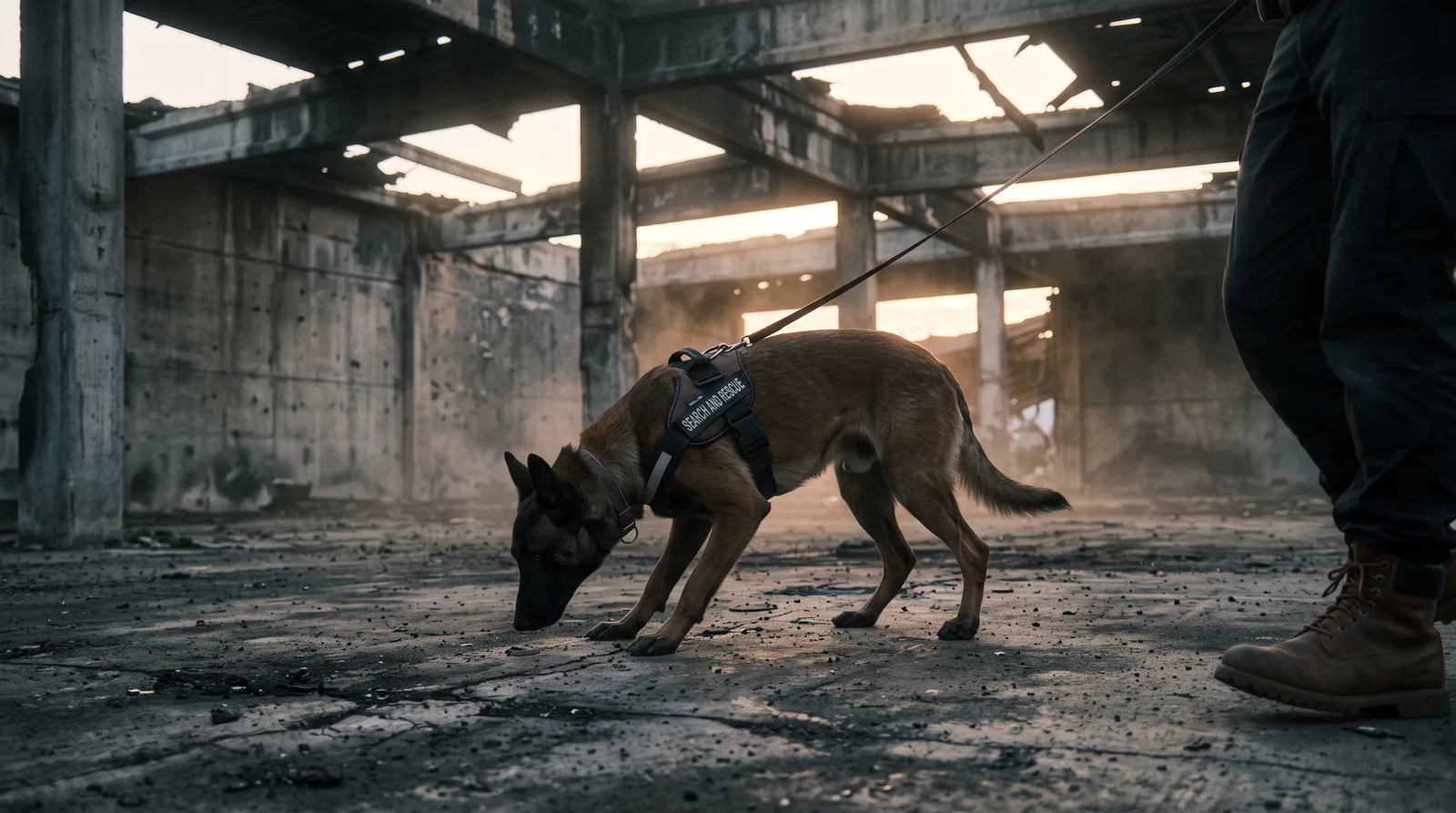
"Every alert your dog makes is only as defensible as the science, the training, and the documentation behind it — and this curriculum builds all three."
— Stephen B. Phillips
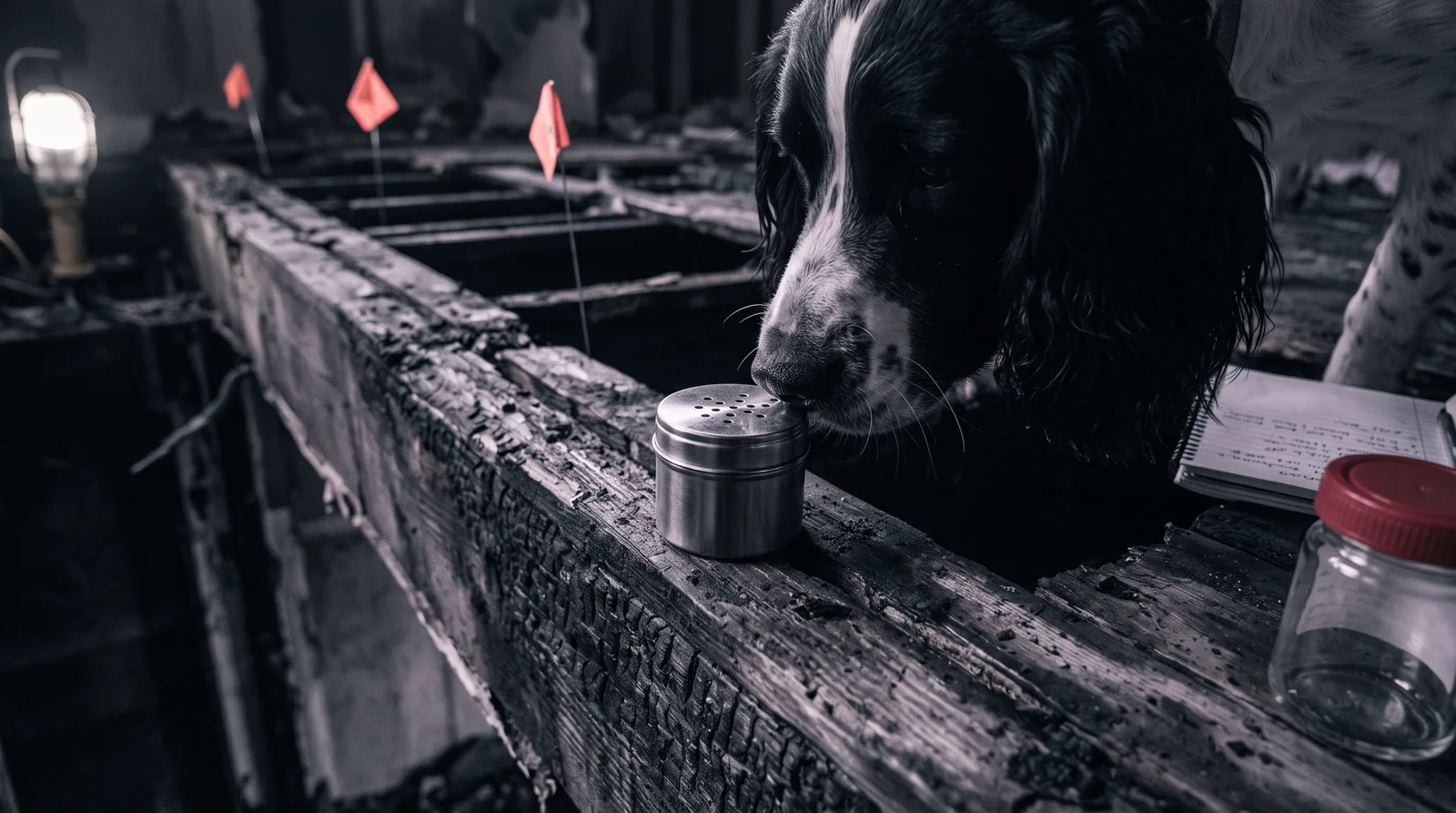
What you'll learn
What you'll be able to do
- Explain the chemistry of ignitable liquid residues and how a dog's olfactory system detects trace accelerant odors at fire scenes
- Design and execute a progressive odor imprinting program that builds reliable, repeatable alert behavior from puppyhood through advanced deployment
- Apply positive-reinforcement conditioning protocols to shape a dog's passive alert with precision and consistency
- Conduct systematic grid searches of fire scenes, interpreting a dog's body language and alert indicators to guide sample collection
- Document handler observations, training records, and alert logs in a format that meets evidentiary standards for courtroom testimony
- Prepare a K9 team for recognized certification programs (NAFC, ATF, or equivalent) including proofing, blind hides, and evaluator expectations
How it works
A school that adapts to you
This isn't a set of static videos. Every lesson is generated live and tuned to where you actually are.
We learn your level
A quick placement check tailors your starting point so you're never bored or lost.
Lessons adapt as you go
Each lesson is written for your pace and your goal, adjusting as your skills grow.
Your AI coach keeps you moving
Checkpoints, feedback, and gentle nudges turn progress into a real result.
The curriculum
What's inside your school
6 modules · 28 lessons

The Science Behind Accelerant Detection
Establishes the chemical and biological foundations that explain how and why dogs can locate ignitable liquid residues at fire scenes.
- 1.1Chemistry of Ignitable Liquids and CombustionIncluded
- 1.2How Fire Alters Odor SignaturesIncluded
- 1.3Canine Olfaction: Anatomy and CapabilityIncluded
- 1.4Odor Theory: Threshold, Plume, and PoolingIncluded
- 1.5Substrates, Interference Odors, and Pyrolysis ProductsIncluded
Candidate Selection and Pre-Training Foundations
Guides handlers through selecting the right dog and establishing the drive, socialization, and obedience base needed before odor work begins.
- 2.1Selecting the Right K9 CandidateIncluded
- 2.2Prey Drive, Play Drive, and Reward MotivationIncluded
- 2.3Foundation Obedience and Control SkillsIncluded
- 2.4Building the Handler–Dog RelationshipIncluded
Odor Imprinting and Alert Behavior Development
Walks handlers through a structured positive-reinforcement program that takes a dog from first odor exposure to a reliable, precise passive alert.
- 3.1Introduction to Target Odor: First ExposuresIncluded
- 3.2Positive-Reinforcement Conditioning PrinciplesIncluded
- 3.3Shaping the Passive AlertIncluded
- 3.4Proofing the Alert Against DistractorsIncluded
- 3.5Progressing Odor Concentration and Hide DifficultyIncluded
Fire Scene Search Techniques
Develops the fieldcraft skills handlers need to run safe, systematic, legally defensible searches of real fire scenes.
- 4.1Fire Scene Safety and Handler ProtocolsIncluded
- 4.2Grid Search MethodologyIncluded
- 4.3Reading Your Dog: Body Language and Alert IndicatorsIncluded
- 4.4Coordinating with Fire Investigators and Scene CommandIncluded
- 4.5Sample Collection and Chain of Custody BasicsIncluded
Documentation, Records, and Evidentiary Standards
Equips handlers and investigators with the documentation practices required to present K9 evidence that holds up in court.
- 5.1Training Record Requirements and Log FormatsIncluded
- 5.2Field Alert Logs and Scene DocumentationIncluded
- 5.3Chain of Custody and Laboratory CorrelationIncluded
- 5.4Expert Witness Preparation and Courtroom TestimonyIncluded
Certification Preparation and Career-Long Maintenance
Prepares K9 teams to pass recognized certification evaluations and sustain peak performance throughout the working life of the dog.
- 6.1Certification Landscape: NAFC, ATF, and Equivalent ProgramsIncluded
- 6.2Blind Hides and Evaluator ExpectationsIncluded
- 6.3Pre-Certification Proofing PlansIncluded
- 6.4Ongoing Maintenance Training and Proficiency StandardsIncluded
- 6.5Career Planning: Deployment Contexts and Team LongevityIncluded
Who it's for
Is this you?

Arson Investigators
He needs the complete picture — chemistry, canine behavior, and courtroom standards — to build and deploy a K9 team that holds up under legal scrutiny.

Fire Department K9 Handlers
She's responsible for a working K9 team and needs a rigorous, progression-based methodology to sharpen her imprinting, alert shaping, and proofing protocols.

Law Enforcement K9 Officers
He's an experienced handler transitioning into accelerant detection and needs to understand the unique chemistry, search techniques, and evidentiary standards of fire scene work.

Fire Investigation Supervisors
She oversees K9 program operations and needs command-level fluency in certification requirements, documentation standards, and team deployment contexts.

Aspiring ADK9 Handlers
He's preparing to enter the field and wants a structured, science-grounded foundation — from candidate selection through certification — before he ever works a live scene.

Fire Scene Investigators (Non-Handler)
He works alongside K9 teams at fire scenes and needs to understand odor theory, alert behavior, and chain of custody so he can collaborate effectively and support evidentiary integrity.
Questions
Frequently asked
Your teacher
A note from your teacher
Stephen B. Phillips
Stephen B. Phillips is the owner of The Dog Guy, NY LLC dba/Phillips Command Dogs. He is a Professional Dog Trainer with over 45 years of experience in all types of dog training. His website is www.thedogguy.net.
If you're reading this, you already know that an accelerant detection K9 team isn't a shortcut — it's a commitment. A commitment to the science, to the training methodology, to the documentation, and to being able to stand in a courtroom and defend every decision your team made from the day you started imprinting that dog. I built this school because I've seen what happens when that commitment is incomplete, and the consequences are too serious to leave to scattered resources and word-of-mouth protocols.
Let me be direct about what you'll find here. This isn't a general dog training program with a fire investigation coat of paint. The curriculum starts with ignitable liquid chemistry and canine olfaction — not because those topics are interesting (they are), but because a handler who can't explain what their dog is detecting, and why combustion alters an odor signature, has a gap that a competent defense attorney will find. Every technical section in this school exists to close a gap that matters in the field or in court.
The training methodology is built on positive-reinforcement conditioning principles that produce passive alert behavior that is reliable, repeatable, and defensible. We move through odor imprinting, alert shaping, progressive hide difficulty, and distractor proofing in a logical sequence — because the order matters. Rushing to field deployment before the alert behavior is solid doesn't produce a capable K9 team; it produces an unpredictable one. I've watched teams fail certification evaluations not because the dog lacked drive, but because the handler skipped foundational steps. This curriculum doesn't let you skip them.
The documentation and certification sections reflect the operational reality of this work. Your training logs are evidentiary documents. Your field alert records are subject to discovery. The way you describe a dog's body language and alert behavior in a report will be examined by people whose job is to find inconsistencies. This school prepares you for that — from the structure of your log formats through the specifics of blind hide protocols and evaluator expectations for NAFC and ATF certification.
Whether you're selecting your first K9 candidate, rebuilding a training program, or preparing an established team for certification, this curriculum is designed to meet you where you are and take you further than you'd get on your own. The work is serious. The material is precise. And if you're willing to put in the time, the team you build will be one you can stand behind — in the field and on the stand. I'd like to help you get there.
— Stephen B. Phillips
Start your journey today
Get instant access — learn at your own pace with an AI coach in your corner.
$597/yr
Recurring billing · cancel anytime
Secure checkout · Instant access
- 6 modules, 28 lessons
- AI-adaptive lessons tuned to your level
- Quizzes & checkpoints to lock in progress
- Your own AI learning coach
- Learn on any device, at your pace
- Full access for as long as you're subscribed