Learn to think like the examiner — and score accordingly
Ace Science Exams teaches you the exact mark-scheme logic, command-word techniques, and subject-specific language that Cambridge and UK board examiners reward in Chemistry, Biology, and Physics — so every answer you write earns the marks it deserves.

"The mark scheme isn't a mystery — it's a language, and I'm going to teach you to speak it fluently."
— The Chem Examiner Academy
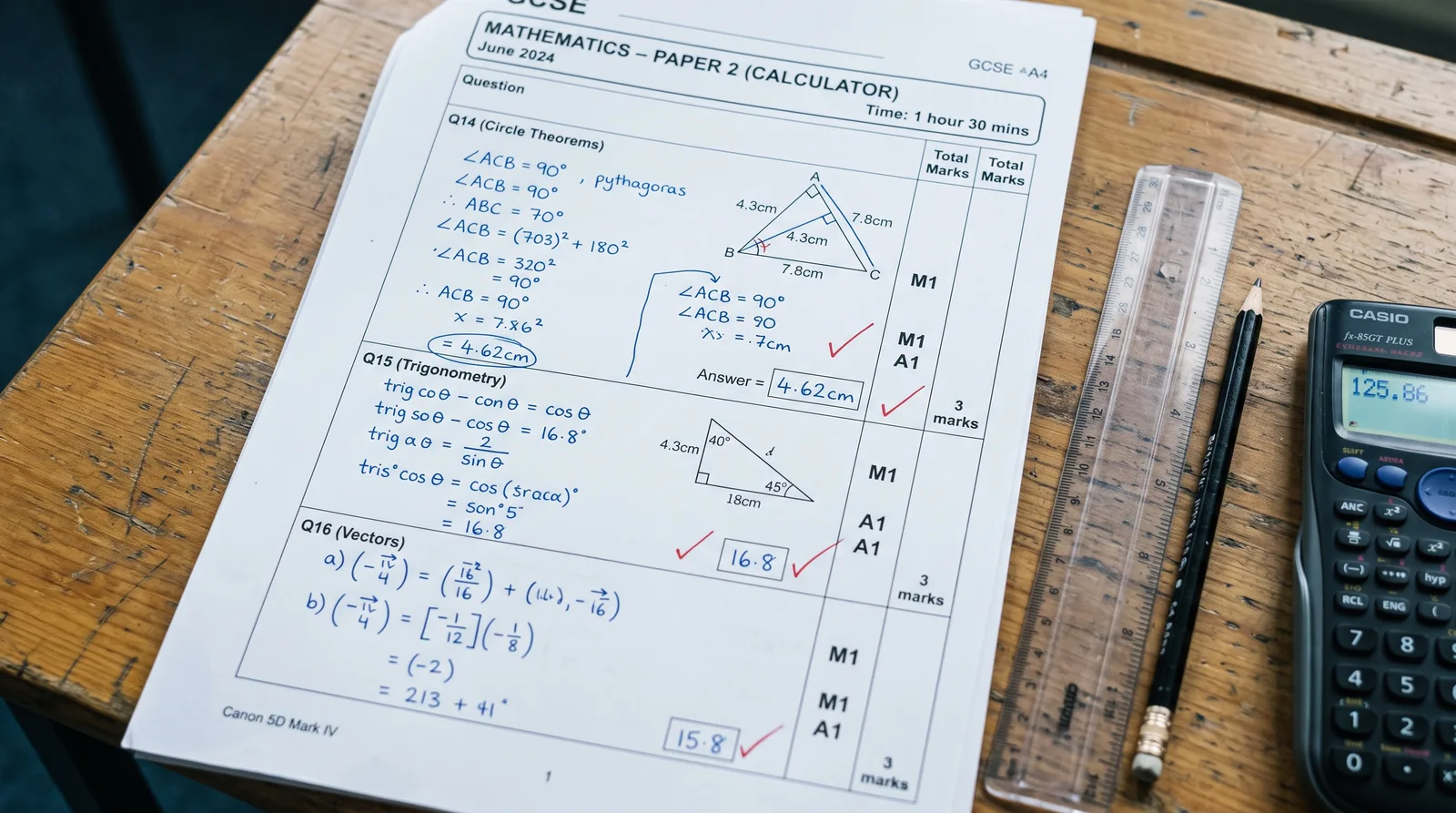
What you'll learn
What you'll be able to do
- Decode mark schemes across IGCSE, GCSE, IAS, IAL, AS, and A-Level to know exactly what examiners award marks for in Chemistry, Biology, and Physics.
- Apply subject-specific command word techniques (describe, explain, evaluate, calculate) to write responses that hit every marking point first time.
- Identify and avoid the most common examiner-penalised mistakes in all three science subjects across both Cambridge and UK board assessments.
- Structure extended-response and 6-mark questions with the logical flow and keyword density that examiners reward at the highest grade boundaries.
- Interpret data, graphs, and experimental results with the analytical language expected at A-Level and Advanced International level.
- Build a personalised exam-day strategy — time allocation, question triage, and mark-maximising habits — proven across multiple science papers and boards.
How it works
A school that adapts to you
This isn't a set of static videos. Every lesson is generated live and tuned to where you actually are.
We learn your level
A quick placement check tailors your starting point so you're never bored or lost.
Lessons adapt as you go
Each lesson is written for your pace and your goal, adjusting as your skills grow.
Your AI coach keeps you moving
Checkpoints, feedback, and gentle nudges turn progress into a real result.
The curriculum
What's inside your school
6 modules · 28 lessons

Cracking the Examiner's Code
Understand how mark schemes work across IGCSE, GCSE, IAS, IAL, AS, and A-Level so you know exactly what earns every mark before you write a word.
- 1.1How Mark Schemes Are Written and Why It MattersIncluded
- 1.2Cambridge vs UK Boards: Key Differences in MarkingIncluded
- 1.3Tier Boundaries and Grade Descriptors DecodedIncluded
- 1.4Reading the Question as an Examiner DoesIncluded
Command Words: The Language of Maximum Marks
Master every command word used across Chemistry, Biology, and Physics papers and learn the precise response structure each one demands.
- 2.1State, Define, and Identify — Low-Mark, High-Precision AnswersIncluded
- 2.2Describe — What Examiners Actually Want to SeeIncluded
- 2.3Explain — Linking Cause and Consequence Every TimeIncluded
- 2.4Evaluate and Discuss — Building the Balanced ArgumentIncluded
- 2.5Calculate and Show — Scoring Every Method MarkIncluded
Subject-Specific Examiner Expectations
Deep-dive into the marking priorities, killer keywords, and common pitfalls unique to Chemistry, Biology, and Physics across all levels.
- 3.1Chemistry: Precision Language for Equations, Mechanisms, and CalculationsIncluded
- 3.2Biology: Gaining Marks with Specific Terminology and Logical SequencingIncluded
- 3.3Physics: Units, Definitions, and the Mark Scheme's Mathematical ExpectationsIncluded
- 3.4The Most Common Examiner-Penalised Mistakes Across All Three SciencesIncluded
- 3.5IGCSE vs AS/A-Level Depth: Calibrating Your Answer to the Right LevelIncluded
Extended Response and High-Mark Questions
Build the structure, keyword density, and logical flow that examiners reward on 4, 6, and 9-mark extended-response questions.
- 4.1Anatomy of a Top-Mark Extended ResponseIncluded
- 4.2Planning and Sequencing Under Timed ConditionsIncluded
- 4.3Keyword Density and Linking Phrases That Examiners RewardIncluded
- 4.4Quality of Written Communication and Continuous Prose QuestionsIncluded
Data, Graphs, and Practical Exam Questions
Develop the analytical language and method to interpret experimental data, draw conclusions, and evaluate procedures at the level examiners expect.
- 5.1Describing Trends in Graphs and Tables: The Formula That WorksIncluded
- 5.2Drawing Valid Conclusions From Experimental ResultsIncluded
- 5.3Evaluating Experimental Method: Identifying Limitations and ImprovementsIncluded
- 5.4Practical Paper and Alternative-to-Practical Question StrategyIncluded
- 5.5Analysing Unfamiliar Contexts: Applying Knowledge to Novel DataIncluded
Exam-Day Strategy and Peak Performance
Build a personalised, proven exam-day system covering time management, question triage, and mark-maximising habits across all papers.
- 6.1Time Allocation: How to Distribute Minutes Across a Full PaperIncluded
- 6.2Question Triage: Choosing Your Order for Maximum ConfidenceIncluded
- 6.3Checking, Reviewing, and the Final Five MinutesIncluded
- 6.4Managing Exam Anxiety and Maintaining Accuracy Under PressureIncluded
- 6.5Building Your Personal Mark-Maximising Revision PlanIncluded
Who it's for
Is this you?

GCSE science student
She's putting in the revision hours but keeps dropping marks on 'explain' and 'evaluate' questions — this school shows her exactly what those command words demand.

A-Level Chemistry resitter
He knows the content cold but needs to bridge the gap between solid understanding and the precision language A-Level mark schemes actually reward.

Parent of a GCSE student
She wants to give meaningful feedback on her daughter's practice papers and finally understand what examiners are looking for in each science subject.

Private science tutor
He works with multiple students across IGCSE and A-Level and wants a structured, board-aware framework to sharpen how he teaches exam technique.

Cambridge IGCSE student
She's navigating Cambridge-specific mark schemes for the first time and needs to understand exactly how they differ from the answers her textbook teaches her to write.

Sixth-form IAL/AS student
He's juggling Biology, Chemistry, and Physics papers and needs a cross-subject exam strategy that covers data questions, practicals, and extended responses in one place.
Questions
Frequently asked
Your teacher
A note from your teacher

The Chem Examiner Academy
I know exactly where you are right now. You've put the hours in. You can walk someone through the content, you understand the concepts, and your revision notes are solid. But when the paper comes back, the marks aren't where they should be — and you can't quite work out why.
That gap is almost never about knowledge. It's about communication. Examiners are trained to award marks for specific things: particular keywords, a defined logical sequence, a unit in the right place, a balanced argument that hits both sides before reaching a conclusion. If your answer doesn't land on those precise points — even if the science behind it is correct — the mark simply doesn't get awarded. That's not a fault in the system. It's the system. And once you understand it, you can work with it.
That's the entire purpose of this school. I've spent a long time on the inside of how these examinations work — how mark schemes are constructed, what examiners are instructed to look for, where the most marks are lost across Chemistry, Biology, and Physics, and how the Cambridge approach differs from UK board marking. None of that knowledge should be a mystery to students. I built Ace Science Exams to put it directly in your hands.
Inside the school, you'll learn to read a question the way an examiner reads it — spotting the command word, calibrating your depth to the mark allocation, and structuring your response so every marking point is visible and unambiguous. You'll work through the subject-specific language that separates a top-band Chemistry answer from a mid-band one, the sequencing logic that Biology mark schemes reward, and the mathematical precision Physics papers demand. Extended responses, data questions, practical papers — every high-value question type is covered with a framework you can apply from day one.
I also know that exam performance isn't purely academic. There's pressure, there's anxiety, and there's the very real problem of running out of time on a paper where every mark counts. The final part of this school addresses all of it: how to triage a paper strategically, allocate your minutes with intention, use your checking time effectively, and build the kind of composed, mark-maximising habits that hold up under exam conditions.
If you're ready to stop leaving marks on the table and start writing answers that examiners genuinely want to reward — this is where that starts. Come in. Let's get to work.
— The Chem Examiner Academy
Start your journey today
Get instant access — learn at your own pace with an AI coach in your corner.
$5/mo
Recurring billing · cancel anytime
Enrolling a child? Sign up as a parent — you'll add your student right here after.
Secure checkout · Instant access
- 6 modules, 28 lessons
- AI-adaptive lessons tuned to your level
- Quizzes & checkpoints to lock in progress
- Your own AI learning coach
- Learn on any device, at your pace
- Full access for as long as you're subscribed