Every kid belongs in your gym
Move & Thrive 2nd gives California educators and parents a complete, standards-aligned adaptive PE roadmap — so no second grader ever sits on the sidelines again.
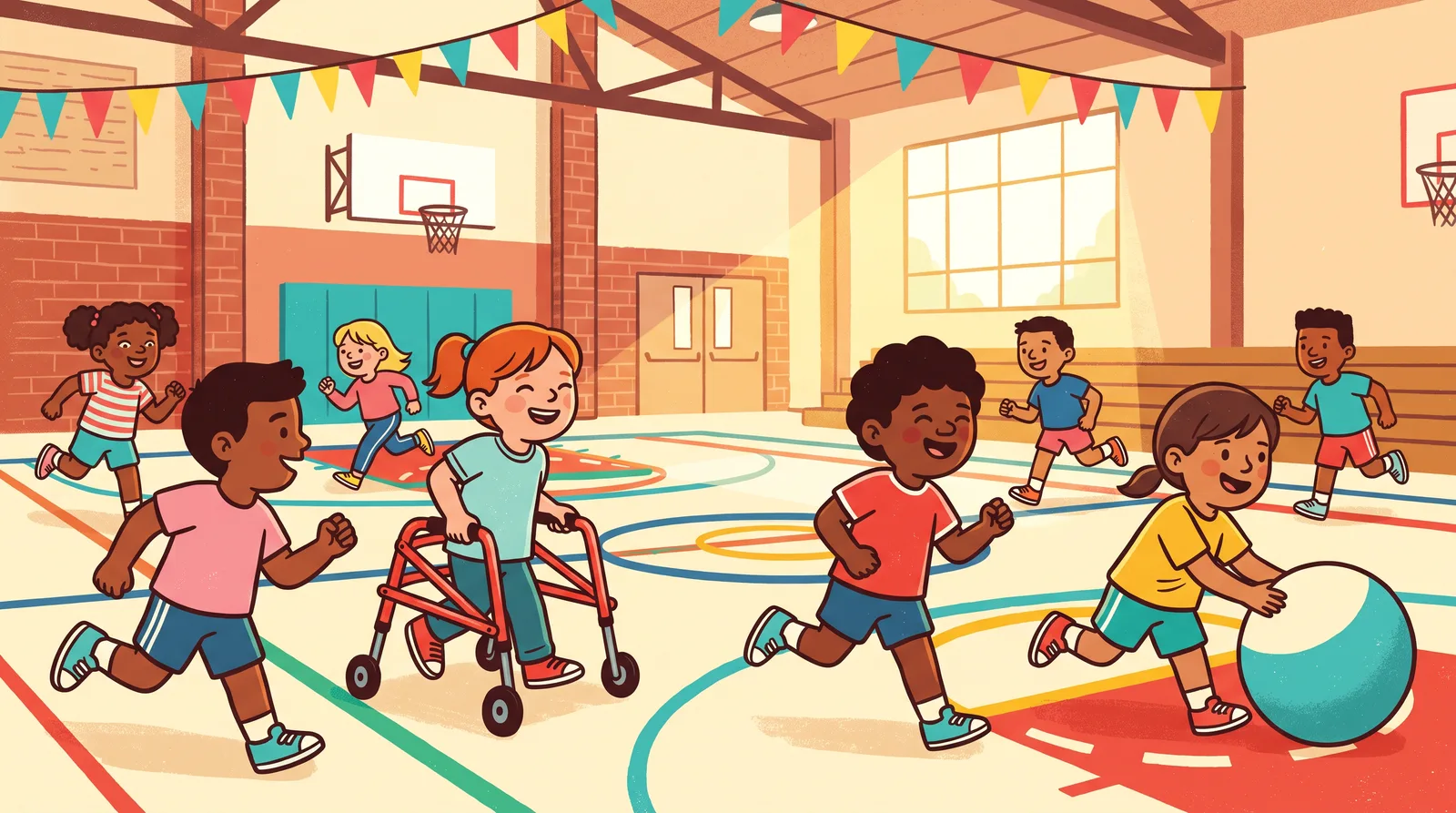
"Every modification we make is a message to a child that says: we built this for you, too."
— Dora
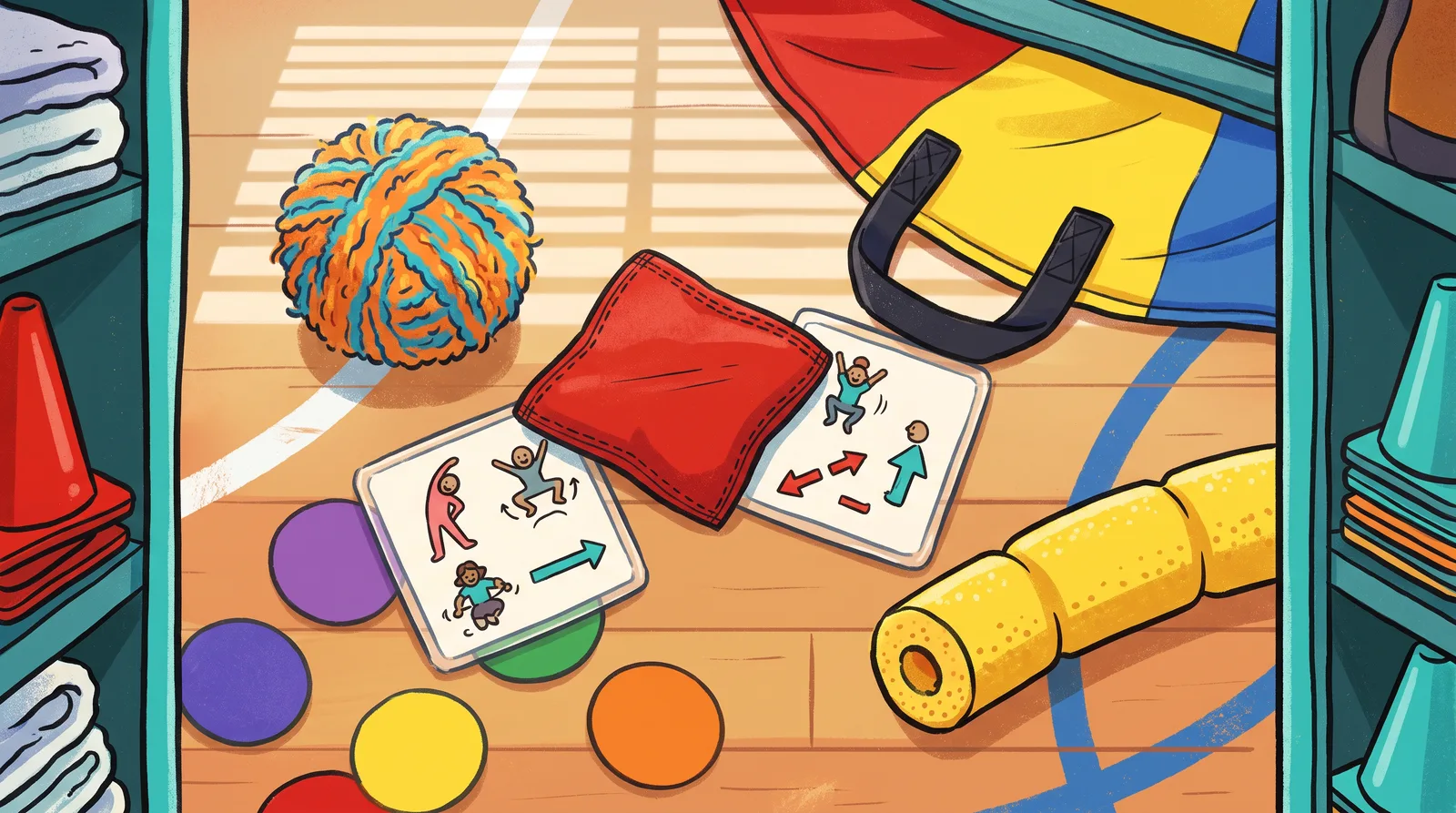
What you'll learn
What you'll be able to do
- Align lesson plans precisely to California's second-grade Physical Education Model Content Standards for students with disabilities.
- Design and adapt locomotor, non-locomotor, and manipulative skill activities so every student can participate meaningfully alongside peers.
- Apply evidence-based modification strategies — equipment swaps, space adjustments, rule changes — without singling out or stigmatizing any child.
- Conduct functional movement assessments appropriate for 7–8-year-olds and use results to set realistic, measurable IEP PE goals.
- Build an inclusive gym culture where second graders develop body awareness, cooperation, and intrinsic motivation to be active.
- Collaborate effectively with special education teams, paraeducators, and families to extend adapted movement practice beyond the gym.
How it works
A school that adapts to you
This isn't a set of static videos. Every lesson is generated live and tuned to where you actually are.
We learn your level
A quick placement check tailors your starting point so you're never bored or lost.
Lessons adapt as you go
Each lesson is written for your pace and your goal, adjusting as your skills grow.
Your AI coach keeps you moving
Checkpoints, feedback, and gentle nudges turn progress into a real result.
The curriculum
What's inside your school
6 modules · 26 lessons
California APE Standards & the Inclusive Mindset
Grounds educators in California's second-grade PE Model Content Standards for students with disabilities and establishes an equity-first philosophy.
- 1.1Navigating California's PE Model Content StandardsIncluded
- 1.2What Adaptive PE Really MeansIncluded
- 1.3Building an Equity-First Gym CultureIncluded
- 1.4Understanding Your Students: Disability Profiles at a GlanceIncluded
Functional Movement Assessment for 7–8-Year-Olds
Teaches practical, age-appropriate tools for observing and documenting student movement so results drive instruction and IEP goal-setting.
- 2.1Principles of Functional Movement AssessmentIncluded
- 2.2Assessment Tools You Can Use TomorrowIncluded
- 2.3Running an Inclusive Assessment SessionIncluded
- 2.4Turning Data into Instructional DecisionsIncluded
Writing Meaningful IEP PE Goals
Guides educators through translating assessment data into realistic, measurable IEP physical education goals aligned to California standards.
- 3.1Anatomy of a Strong PE IEP GoalIncluded
- 3.2From Assessment Data to Goal DraftsIncluded
- 3.3Aligning Goals to California StandardsIncluded
- 3.4Monitoring Progress and Adjusting GoalsIncluded
Adapting Locomotor & Non-Locomotor Skills
Equips educators with evidence-based strategies to modify walking, running, jumping, balancing, and other foundational movement skills for all ability levels.
- 4.1Locomotor Skills Through an Adaptive LensIncluded
- 4.2Modification Toolkit: Equipment, Space & RulesIncluded
- 4.3Non-Locomotor Skills: Balance, Stretch & Body AwarenessIncluded
- 4.4Peer-Inclusive Activity DesignIncluded
- 4.5Lesson Planning Practice: Locomotor & Non-LocomotorIncluded
Adapting Manipulative Skills & Game Play
Develops creative, stigma-free strategies for modifying throwing, catching, striking, and cooperative games so all second graders participate fully.
- 5.1Manipulative Skills UnpackedIncluded
- 5.2Equipment Swaps That WorkIncluded
- 5.3Rule and Space Modifications for GamesIncluded
- 5.4Cooperative Games as an Inclusion VehicleIncluded
- 5.5Lesson Planning Practice: Manipulative Skills & GamesIncluded
Collaboration, Family Engagement & Sustaining Inclusion
Prepares educators and parents to work as a coordinated team that extends adapted movement learning far beyond the gym walls.
- 6.1Teaming with Special Education Staff & ParaeducatorsIncluded
- 6.2Partnering with Families to Extend Movement at HomeIncluded
- 6.3Communicating APE Progress to FamiliesIncluded
- 6.4Building a Sustainable Inclusive PE ProgramIncluded
Who it's for
Is this you?

Elementary PE Teachers
She wants every student fully participating in her gym, not just watching from the bleachers, and needs a standards-aligned system to make it happen.

Special Education Teachers
He writes IEPs all day but needs concrete PE-specific goal frameworks and California-standard alignment to give his students' physical growth the same rigor as academics.

Paraeducators
She's on the gym floor with students every day and wants clear, practical guidance on how to support — not hover — during adaptive PE activities.

Parents of Students with IEPs
She's ready to ask better questions at IEP meetings and bring purposeful movement into her child's home routine, not just hope PE works out at school.

New APE Specialists
He just stepped into an adaptive PE role and needs a structured, jargon-light foundation that covers assessments, goal-writing, and lesson design all in one place.

Veteran Teachers Updating Practice
She has decades of classroom experience but wants to modernize her inclusion strategies to match current California standards and truly equity-first approaches.
Questions
Frequently asked
Your teacher
A note from your teacher
Dora
If you've ever watched a student sit out during a PE activity — not because they didn't want to play, but because the activity just wasn't built for them — you know exactly why this program exists.
I've spent years working at the intersection of physical education and special education, and the thing I hear most often from teachers, paraeducators, and parents is the same: "I want to include every kid, but I don't always know how." That gap between wanting inclusion and knowing how to build it is real, and it's not your fault. Most PE teacher preparation programs touch on adaptive PE briefly, if at all. IEP teams are stretched thin. And the California standards — as thorough as they are — don't always come with a clear road map for a 7-year-old who uses a mobility aid or a student with sensory processing differences who struggles in a loud gym.
Move & Thrive 2nd is the road map I wish I'd had. We start where everything should start: with a genuine understanding of what adaptive PE means, what California's standards actually require, and how to build a gym culture where every second grader walks in feeling like they belong. From there, we get practical fast — functional movement assessments you can run with real kids in real classrooms, goal-writing frameworks that hold up in an IEP meeting, and a modification toolkit (equipment, space, rules) that you can pull from the very next time you teach a locomotor or manipulative skills unit.
I want to be honest with you: this isn't a course full of lofty principles that sound great and then leave you figuring out the details on your own. Every section is built around what you can actually do — in your gym, with your students, this week. And because inclusion is a team sport, we also spend real time on collaboration: how to work alongside paraeducators and special education colleagues, how to talk with families so they feel like partners instead of recipients of information, and how to build something sustainable rather than burning yourself out trying to do it all alone.
Whether you're a PE teacher managing a full caseload of diverse learners, a special education teacher picking up PE responsibilities, a paraeducator looking for guidance on what "support" actually looks like during game time, or a parent who wants to understand and advocate for your child's PE experience — you belong in this course. Every child deserves a seat at the gym. Come learn how to make that real.
— Dora
Start your journey today
Get instant access — learn at your own pace with an AI coach in your corner.
$27/mo
Recurring billing · cancel anytime
Secure checkout · Instant access
- 6 modules, 26 lessons
- AI-adaptive lessons tuned to your level
- Quizzes & checkpoints to lock in progress
- Your own AI learning coach
- Learn on any device, at your pace
- Full access for as long as you're subscribed