Find your footing after infidelity — one steady day at a time
A structured 365-day emotional recovery course for individuals and couples navigating the first year after infidelity — paced to stabilize, not overwhelm. Whether you're the betrayed partner, the unfaithful partner, or working through it together, this course meets you exactly where you are.

"You don't need to be stable to start — you need to start in order to become more stable."— Leigh Baumann

What you'll learn
What you'll be able to do
- Stabilize your nervous system during acute crisis so you can think, communicate, and make decisions without being driven purely by panic or pain.
- Engage in truth-telling conversations that produce clarity rather than escalation — without re-traumatizing loops or interrogation cycles.
- Distinguish between accountability and shame, allowing the unfaithful partner to be honest and consistent without collapsing or becoming defensive.
- Rebuild a measurable sense of emotional safety over time through behavior-based trust actions, not promises alone.
- Identify and interrupt the recurring conflict patterns — pursue/withdraw, reassurance loops, shutdown cycles — that keep both partners stuck.
- Arrive at a clear, self-determined decision about the relationship's future — whether repair or separation — from a place of regulation and honesty rather than reactivity.
How it works
A school that adapts to you
This isn't a set of static videos. Every lesson is generated live and tuned to where you actually are.
We learn your level
A quick placement check tailors your starting point so you're never bored or lost.
Lessons adapt as you go
Each lesson is written for your pace and your goal, adjusting as your skills grow.
Your AI coach keeps you moving
Checkpoints, feedback, and gentle nudges turn progress into a real result.
The curriculum
What's inside your school
7 modules · 22 lessons

Ground Before You Go Further
For most participants this is day one through roughly day thirty — the acute crisis window. Before any truth-telling, accountability work, or repair is possible, both partners must achieve a baseline of nervous-system regulation. This module is completed individually first; partners share only what feels safe. It is offered to the betrayed partner, the unfaithful partner, and the couple together, with each lesson flagged accordingly. Nothing in this module requires agreement, confrontation, or disclosure.
- 1.1What Just Happened to Your Nervous SystemIncluded
- 1.2Creating a Minimum Safe StructureIncluded
- 1.3Surviving the First 30 DaysIncluded
Truth Without Destruction
Approximately days 31–90. Only when a minimum baseline of stabilization exists is it safe to move toward structured truth-telling. This module is the most carefully sequenced in the course: the lessons must be completed in order, and partners are strongly encouraged not to skip ahead. The goal of truth in this context is not full confession for its own sake, nor is it interrogation by the betrayed partner. The goal is the specific, structured disclosure that allows the betrayed partner's nervous system to stop scanning for unknown threats — because the unknown is often more activating than the known. This module explicitly excludes graphic sexual detail, which research consistently shows increases traumatization without increasing trust.
- 2.1What Truth Actually ServesIncluded
- 2.2The Structured Disclosure ConversationIncluded
- 2.3When the Story Keeps ChangingIncluded
Accountability Without Collapse
Approximately days 61–120, overlapping with and following the truth module. Accountability is one of the most misunderstood phases of infidelity recovery. Many unfaithful partners oscillate between two unhelpful states: defensive minimizing ('it wasn't that bad, you're overreacting') or shame-collapse ('I am a terrible person, I don't deserve forgiveness'). Neither state produces genuine accountability. Neither state rebuilds trust. This module teaches both partners — separately and together — what functional accountability actually looks and feels like: consistent, behavior-based, non-defensive, and not contingent on the betrayed partner's emotional response. It also protects the betrayed partner from the burden of managing the unfaithful partner's shame.
- 3.1What Accountability Actually Looks LikeIncluded
- 3.2Ownership Without Ongoing PunishmentIncluded
- 3.3Shame Spirals and How They Derail RecoveryIncluded
Rebuilding Emotional Safety
Approximately days 90–210. Emotional safety is not a feeling that returns spontaneously. It is rebuilt through accumulated evidence — small, consistent, behavior-based actions that gradually recalibrate the betrayed partner's nervous system from threat mode to conditional trust. This module addresses the structural conditions required for safety to return: eliminating the patterns that destroy it (pursue/withdraw, reassurance loops, shutdown cycles), installing the behaviors that create it, and helping both partners understand that safety is not the same as comfort — it is the sense that honesty is possible without catastrophic consequence. This module is completed together but with individual reflection built into every lesson.
- 4.1What Destroyed Safety and What Can Rebuild ItIncluded
- 4.2Pursue, Withdraw, and the Patterns That Keep You StuckIncluded
- 4.3Behavior-Based Trust: What It Is and How to Track ItIncluded
- 4.4Reassurance Loops and When They Stop WorkingIncluded
Communication Repair Under Stress
Approximately days 150–240, introduced after safety-building patterns are established. This module addresses a gap in the original draft: the couple now needs explicit, practiced communication skills designed specifically for high-stakes infidelity conversations — not generic communication advice. The lessons here are sequenced after safety-building because communication repair requires a minimum floor of regulated capacity. Partners who cannot yet regulate independently will turn any communication skill into a new weapon or a new source of shame. This module bridges emotional safety and the deeper processing work that follows.
- 5.1Why Infidelity Conversations Are DifferentIncluded
- 5.2Structured Turn-Taking for High-Stakes ConversationsIncluded
- 5.3Repair Attempts: How to Interrupt and Recover From EscalationIncluded
Grief, Identity, and What Was Actually Lost
Approximately days 210–300. This module cannot be placed earlier in the sequence because genuine grief requires a minimum floor of stabilization and safety. When grief is attempted in acute crisis, it collapses into either rage or despair and cannot be processed. By this stage in the course, both partners have enough regulation capacity and relational stability to sit with what was actually lost — and to begin to construct a new sense of self and, if applicable, a new relationship identity. This module applies to both partners, regardless of whether reconciliation is being pursued.
- 6.1What You Are Actually GrievingIncluded
- 6.2Identity After Infidelity — For Both PartnersIncluded
- 6.3Meaning Without MinimizingIncluded
The Decision at the End of the First Year
Approximately days 300–365. The final module brings the year's work to a close with structured, regulated decision-making about the future of the relationship. The decision may be reconciliation, separation, or an extended period of continued evaluation — all three are valid outcomes of a well-run recovery process. What this module guards against is a decision made from reactivity, exhaustion, social pressure, or residual chaos. The goal is that whatever each partner decides, they decide it from a place of self-knowledge, relational honesty, and emotional regulation.
- 7.1Taking Stock of the YearIncluded
- 7.2What Repair Requires and What Separation RequiresIncluded
- 7.3Making a Regulated DecisionIncluded
Who it's for
Is this you?

The betrayed partner in crisis
You found out recently and can barely function — this course starts exactly there, with your nervous system, before asking anything else of you.

The unfaithful partner seeking accountability
You want to be honest and consistent, but shame keeps pulling you under — the course teaches you what real accountability looks like without requiring you to disappear into punishment.

The couple attempting repair
You've decided to try, but every conversation escalates — the course gives you structured, sequenced tools for truth-telling and communication that don't reopen wounds without purpose.

The person unsure whether to stay
You're not ready to decide, and the course doesn't ask you to — it paces you through the full year so the decision at the end is informed, regulated, and genuinely yours.

The partner doing this alone
Your partner won't engage, but you still need a path forward — the course is fully usable by one person and helps you stabilize, grieve, and decide on your own terms.

The person already in therapy
You have a therapist but need more structure between sessions — the course works as a precise, week-by-week companion that deepens the work you're already doing.
Questions
Frequently asked
Your teacher
A note from your teacher
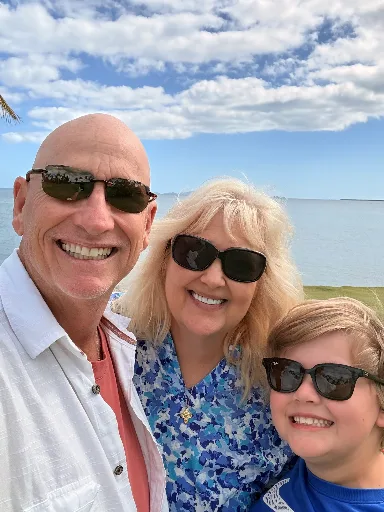
Leigh Baumann
If you are reading this in the first days or weeks after discovery, I want you to know something: the way you are feeling right now — the inability to eat, sleep, or stop replaying what you now know — that is not weakness. That is a nervous system doing exactly what nervous systems do when something catastrophic happens. You are not broken. You are in acute stress. And the very first thing this course does is help you understand that, so you can begin to work with your body rather than against it.
I built After Betrayal because the first year after infidelity is genuinely unlike anything else most people face — and yet most of the available help is either too clinical to feel human, too soft to feel credible, or too focused on one partner to be fair to what's actually happening in the room. Real recovery requires both people to have a place to stand. It requires truth-telling that doesn't collapse into interrogation. It requires accountability that doesn't dissolve into shame. And it requires space to grieve what was actually lost — not just the relationship as it was, but your sense of yourself, your version of the past, your feeling of being known.
The curriculum follows the real shape of the first year. Not the shape we wish it had, where clarity comes quickly and the pain is linear. The actual shape: the chaos of the early weeks, the long and difficult work of disclosure, the slow rebuilding of emotional safety through behavior rather than promises, the recurring conflict patterns that surface and need to be named, the grief that arrives in waves and has to be honored, and finally — at the end of the year — the decision about what comes next. Every step is sequenced with care. Nothing is rushed. Nothing is skipped over.
This course does not take sides. If you are the betrayed partner, your pain is taken seriously here — not minimized, not explained away. If you are the unfaithful partner, your capacity to be honest and accountable is taken seriously here — not assumed to be absent, not reduced to punishment. Both of you are carrying something real. Both of you deserve a structured, humane path forward.
The decision at the end of the year — repair or separation — is yours to make. This course will not make it for you. What it will do is give you the regulation, the clarity, and the self-knowledge to make it honestly. Not from panic. Not from a wish for the pain to stop. From a real understanding of what you've been through, what you've learned, and what you actually want.
You don't have to have any of this figured out to begin. You just have to be willing to take the next step. I'll be here for every one of them.
— Leigh Baumann
Start your journey today
Join get instant access — learn at your own pace with an AI coach in your corner.
$79/mo
Recurring billing · cancel anytime
Secure checkout · Instant access
- 7 modules, 22 lessons
- AI-adaptive lessons tuned to your level
- Quizzes & checkpoints to lock in progress
- Your own AI learning coach
- Learn on any device, at your pace
- Full access for as long as you're subscribed