Understand the human past the way archaeologists do
A university-grade introduction to archaeology — excavation methods, material culture, dating science, and deep human prehistory — taught with academic rigour and zero condescension, from a professor who has spent a career doing this work.
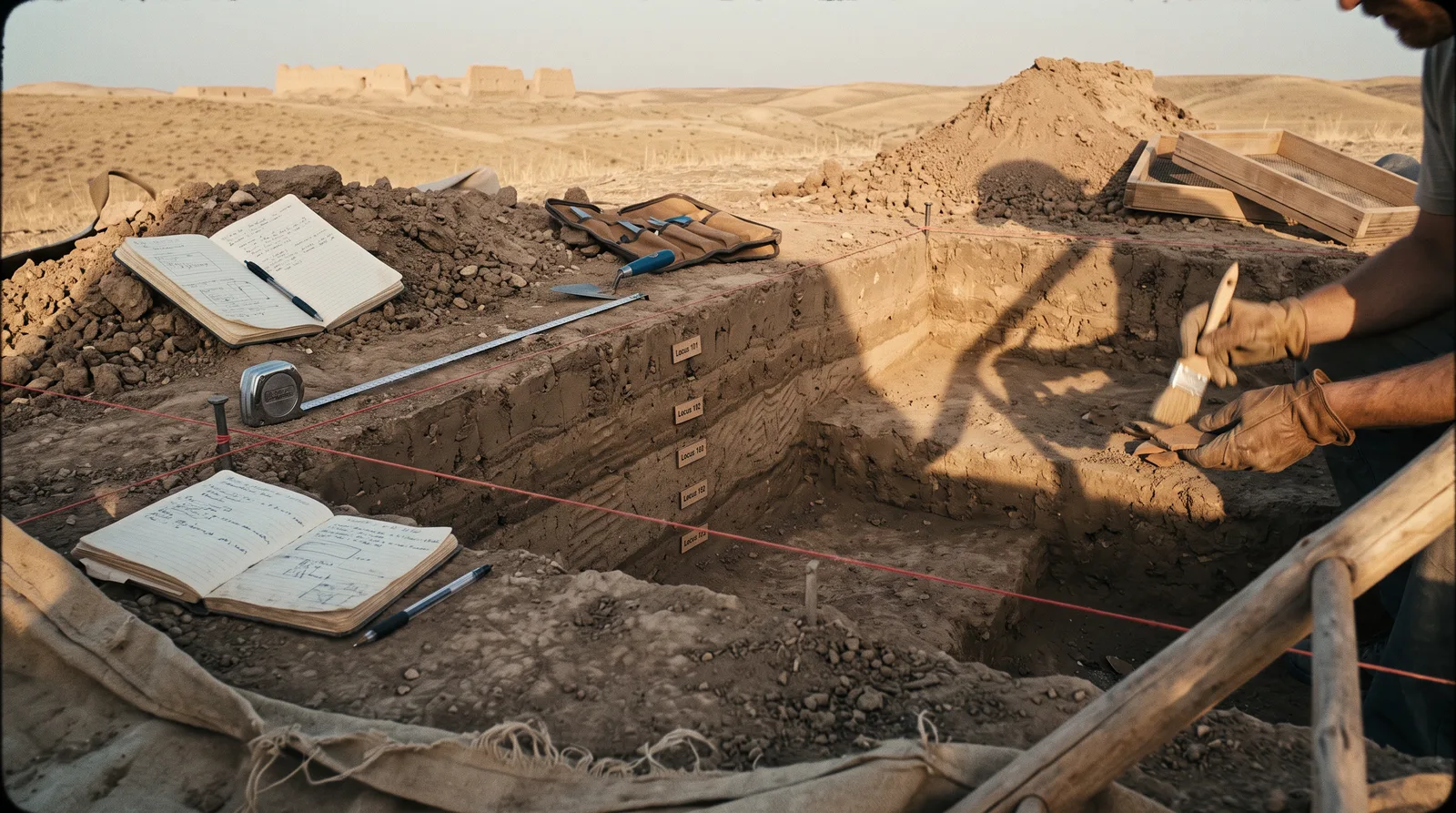
"Archaeology is not about finding things — it is about understanding them, and that is a skill I know I can teach you."
— AI Professor Courses
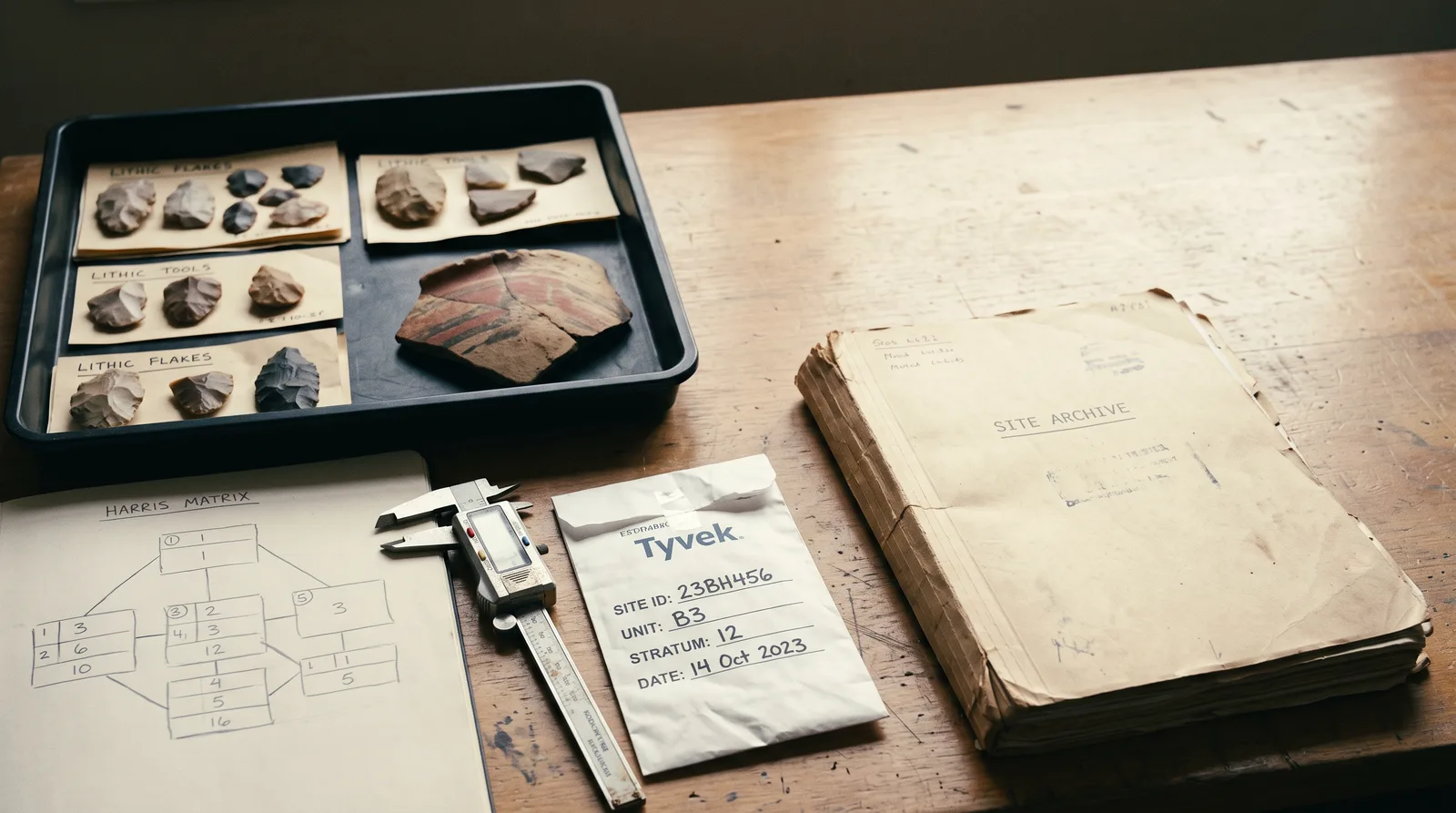
What you'll learn
What you'll be able to do
- Explain the core theoretical frameworks of archaeology — culture history, processual, and post-processual — and apply them to interpret a site
- Describe and distinguish the major field methods: systematic survey, stratigraphic excavation, context recording, and site formation processes
- Identify and analyse common artefact classes (lithics, ceramics, faunal remains) using standard typological and functional criteria
- Interpret radiocarbon, dendrochronology, and other absolute and relative dating methods, and evaluate their reliability for a given context
- Read and critically evaluate a published archaeological site report or journal article using discipline-standard criteria
- Trace key episodes in human prehistory and history — from the Lower Palaeolithic to historical-period sites — using primary archaeological evidence
How it works
A school that adapts to you
This isn't a set of static videos. Every lesson is generated live and tuned to where you actually are.
We learn your level
A quick placement check tailors your starting point so you're never bored or lost.
Lessons adapt as you go
Each lesson is written for your pace and your goal, adjusting as your skills grow.
Your AI coach keeps you moving
Checkpoints, feedback, and gentle nudges turn progress into a real result.
The curriculum
What's inside your school
7 modules · 31 lessons

What Is Archaeology?
Establishes the discipline's identity, scope, and intellectual foundations before any technical content begins.
- 1.1Defining Archaeology: Goals, Scope, and MisconceptionsIncluded
- 1.2A Brief History of the DisciplineIncluded
- 1.3The Archaeological Record: What Survives and WhyIncluded
- 1.4Ethics, Ownership, and Indigenous PerspectivesIncluded
Theoretical Frameworks
Introduces and contrasts the major interpretive schools — culture history, processual, and post-processual — so students can apply them analytically.
- 2.1Culture History: Describing the PastIncluded
- 2.2Processual Archaeology: Science and ExplanationIncluded
- 2.3Post-Processual and Interpretive ApproachesIncluded
- 2.4Applying Theory to a Real SiteIncluded
Field Methods: Survey and Excavation
Covers how archaeologists locate, record, and excavate sites using systematic, reproducible methods.
- 3.1Remote Sensing and Landscape SurveyIncluded
- 3.2Systematic Surface Survey and Sampling StrategiesIncluded
- 3.3Stratigraphic Excavation: The Harris MatrixIncluded
- 3.4Context Recording, Finds Processing, and Site ArchivesIncluded
- 3.5Site Formation Processes: Natural and Cultural DisturbanceIncluded
Material Culture: Artefacts and Analysis
Trains students to identify and analyse the three major artefact classes using standard typological and functional criteria.
- 4.1Lithic Analysis: Reading Stone ToolsIncluded
- 4.2Ceramic Analysis: Typology, Fabric, and FunctionIncluded
- 4.3Faunal Remains: ZooarchaeologyIncluded
- 4.4Archaeobotany and Environmental ReconstructionIncluded
- 4.5Interpreting Assemblages: From Artefacts to BehaviourIncluded
Dating the Past
Explains how archaeologists assign age to sites and materials using both relative and absolute chronometric methods.
- 5.1Relative Dating: Stratigraphy, Typology, and SeriationIncluded
- 5.2Radiocarbon Dating: Principles and CalibrationIncluded
- 5.3Dendrochronology, Thermoluminescence, and Other Absolute MethodsIncluded
- 5.4Evaluating Dating Evidence: Reliability, Error, and ContextIncluded
Human Prehistory and History Through Archaeological Evidence
Traces humanity's story from the Lower Palaeolithic to historical-period sites using primary archaeological data.
- 6.1The Lower Palaeolithic and the Origins of Tool UseIncluded
- 6.2The Middle and Upper Palaeolithic: Modern Behaviour EmergesIncluded
- 6.3The Neolithic Revolution: Farming, Sedentism, and New SocietiesIncluded
- 6.4Bronze Age and Iron Age: Complexity, Trade, and UrbanismIncluded
- 6.5Historical Archaeology: Documents, Material Culture, and Underrepresented VoicesIncluded
Reading and Evaluating Archaeological Literature
Builds the critical reading skills needed to engage professionally with site reports and peer-reviewed journal articles.
- 7.1Anatomy of an Archaeological Site ReportIncluded
- 7.2Reading a Peer-Reviewed Journal ArticleIncluded
- 7.3Evaluating Evidence and Argument QualityIncluded
- 7.4Putting It All Together: A Critical Review ExerciseIncluded
Who it's for
Is this you?

The lifelong history enthusiast
He has read every popular book on ancient Rome and Mesopotamia and is ready for something that goes beyond the conclusions and shows him the evidence.

The undergraduate student
She is enrolled in a history or anthropology degree and wants a structured, professor-led resource to consolidate her coursework and sharpen her analytical skills.
The retired professional
With time finally on his side, he wants to pursue a subject he has always found fascinating — and do it properly, not just at a surface level.

The science-minded learner
She is drawn to the technical side — radiocarbon calibration, lithic analysis, zooarchaeology — and wants to understand the scientific rigour behind archaeological claims.

The heritage and culture advocate
He works in or around museums, cultural preservation, or Indigenous community organisations and wants a rigorous grounding in archaeological ethics, methods, and theory.

The avid traveller and site visitor
She visits ancient sites whenever she can and wants the conceptual vocabulary to read a landscape, understand an excavation, and get far more out of what she sees.
Questions
Frequently asked
Your teacher
A note from your teacher

AI Professor Courses
If you have ever finished a book about the ancient world and thought, but how do we actually know that? — welcome. That question is the engine of archaeology, and it is exactly what this school is built around.
I have spent my career teaching introductory and advanced archaeology to undergraduates, and I have noticed the same pattern again and again: the people who are most eager to understand the past are rarely the ones sitting in lecture halls. They are curious adults, avid readers, history enthusiasts, and self-directed learners who want something more substantial than a documentary and more accurate than a popular account, but who have never had a path into the discipline that treats them as the intelligent adults they are. This school is that path.
What you will find here is a genuine university-level introduction — not a simplified version of one, not an edited highlights reel, but the real intellectual architecture of the discipline: how archaeologists think about the past theoretically, how they recover evidence in the field, how they analyse material culture in the laboratory, how they date what they find, and how they construct and evaluate arguments from fragmentary evidence. We will cover everything from the Harris Matrix and lithic typology to radiocarbon calibration and post-processual critique. By the end, you will not just know more about the ancient world — you will know how that knowledge is produced and tested.
I am also acutely aware that archaeology has a complicated history of its own — of colonial collection practices, of who gets to tell whose past, and of the ethical obligations that come with excavating the material remains of other people's ancestors. Those conversations are woven into this school from the beginning, not appended as an afterthought, because they are part of what it means to practise archaeology responsibly today.
You do not need a trowel, a field permit, or a university library card. You need curiosity, a willingness to engage with evidence carefully, and an appetite for a discipline that is simultaneously a science, a humanity, and one of the most consequential things human beings do. I have genuinely loved this subject for my entire professional life — and I am looking forward to sharing that with you.
— AI Professor Courses
Start your journey today
Get instant access — learn at your own pace with an AI coach in your corner.
$5/mo
Recurring billing · cancel anytime
Secure checkout · Instant access
- 7 modules, 31 lessons
- AI-adaptive lessons tuned to your level
- Quizzes & checkpoints to lock in progress
- Your own AI learning coach
- Learn on any device, at your pace
- Full access for as long as you're subscribed