Finally understand biochemistry — for real
Rigorous, professor-led lectures walk you through every major pathway, molecule, and mechanism — from Michaelis-Menten kinetics to the electron transport chain — so you can ace your exams and actually know why the answers are right.

I don't move on until it makes sense — not just until it's been said.
— AI Professor Courses
What you'll learn
What you'll be able to do
- Explain the structure and function of the four major biomolecules — proteins, lipids, carbohydrates, and nucleic acids — at a college exam level
- Trace metabolic pathways including glycolysis, the citric acid cycle, and oxidative phosphorylation from substrate to ATP yield
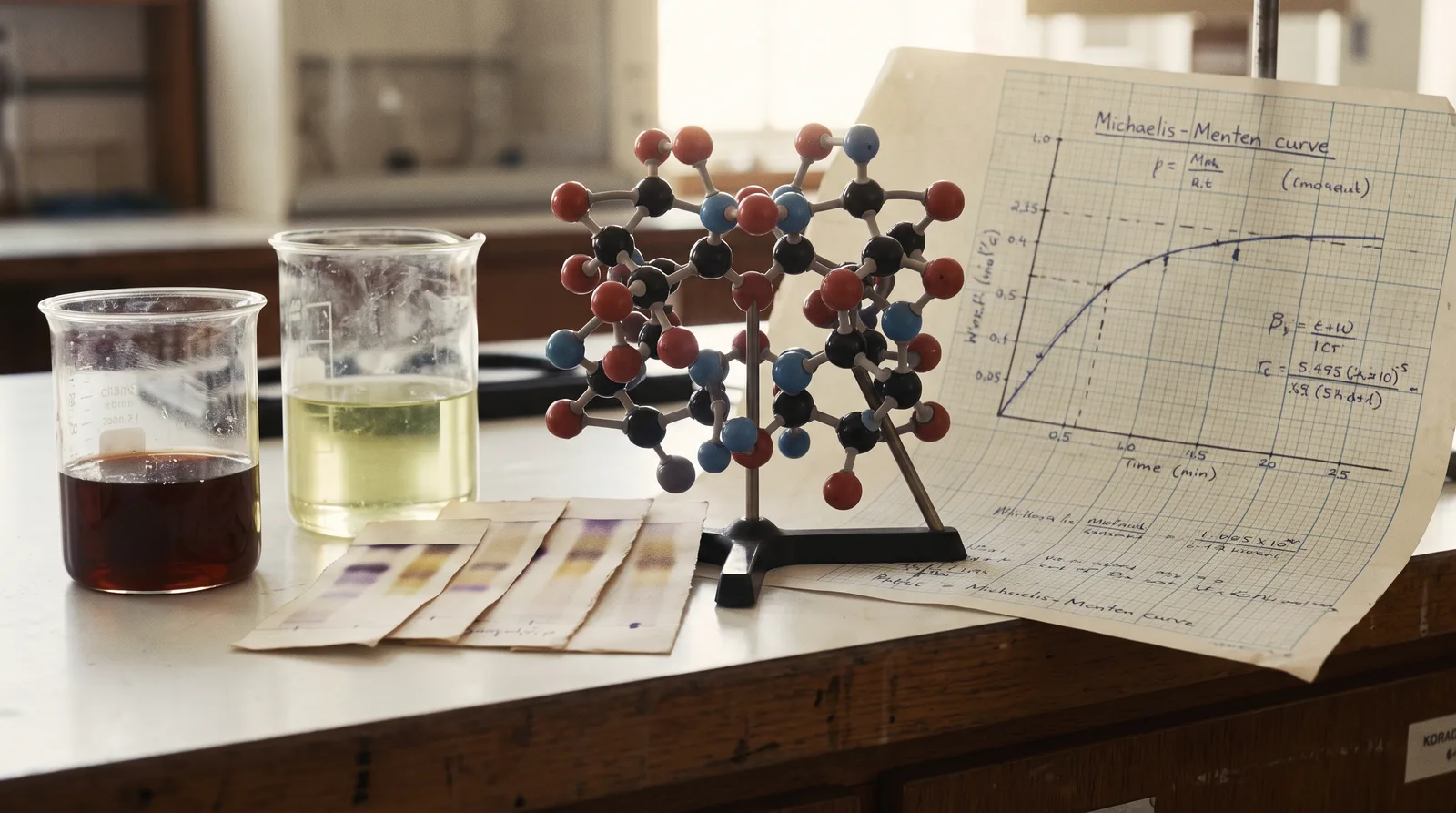
- Decode enzyme kinetics: interpret Michaelis-Menten curves, Km, Vmax, and the mechanisms of competitive and non-competitive inhibition
- Apply molecular biology fundamentals — DNA replication, transcription, and translation — and connect them to real disease mechanisms
- Analyze biochemical lab data including gel electrophoresis, spectrophotometry, and chromatography results with professional fluency
- Prepare confidently for high-stakes exams such as the MCAT, USMLE Step 1, and university biochemistry finals using tested study strategies
How it works
A school that adapts to you
This isn't a set of static videos. Every lesson is generated live and tuned to where you actually are.
We learn your level
A quick placement check tailors your starting point so you're never bored or lost.
Lessons adapt as you go
Each lesson is written for your pace and your goal, adjusting as your skills grow.
Your AI coach keeps you moving
Checkpoints, feedback, and gentle nudges turn progress into a real result.
The curriculum
What's inside your school
6 modules · 29 lessons

The Chemical Foundation of Life
Establishes the core chemistry principles — water, pH, buffers, and thermodynamics — that every biochemistry concept depends on.
- 1.1Water, pH, and the Biochemical EnvironmentIncluded
- 1.2Acids, Bases, and Biological BuffersIncluded
- 1.3Thermodynamics and Biochemical EnergyIncluded
- 1.4Functional Groups and Molecular ReactivityIncluded
The Four Major Biomolecules
Builds a rigorous, exam-ready understanding of the structure, function, and clinical relevance of proteins, carbohydrates, lipids, and nucleic acids.
- 2.1Amino Acids and Protein StructureIncluded
- 2.2Protein Function, Folding, and Misfolding DiseasesIncluded
- 2.3Carbohydrate Structure and Biological RolesIncluded
- 2.4Lipid Classes, Membrane Structure, and SignalingIncluded
- 2.5Nucleotides and Nucleic Acid StructureIncluded
Enzyme Kinetics and Regulation
Develops a deep, quantitative understanding of how enzymes work, how their activity is measured, and how inhibitors alter kinetics — a core MCAT and board exam topic.
- 3.1How Enzymes Work: Active Sites and Catalytic MechanismsIncluded
- 3.2Michaelis-Menten Kinetics: Km, Vmax, and kcatIncluded
- 3.3Lineweaver-Burk Plots and Data InterpretationIncluded
- 3.4Competitive, Non-Competitive, and Uncompetitive InhibitionIncluded
- 3.5Allosteric Regulation, Cooperativity, and Feedback ControlIncluded
Metabolism: Energy Extraction and Biosynthesis
Traces the major metabolic pathways from glucose to ATP and introduces the integration of carbohydrate, fat, and amino acid metabolism.
- 4.1Glycolysis: From Glucose to PyruvateIncluded
- 4.2Pyruvate Fate: Fermentation, Acetyl-CoA, and the Bridge ReactionIncluded
- 4.3The Citric Acid CycleIncluded
- 4.4Oxidative Phosphorylation and the Electron Transport ChainIncluded
- 4.5Fatty Acid Oxidation, Gluconeogenesis, and Metabolic IntegrationIncluded
Molecular Biology: From DNA to Disease
Covers DNA replication, gene expression, and translation at a mechanistic level, then connects each process to real human disease and therapeutic targets.
- 5.1DNA Replication: Machinery, Fidelity, and RepairIncluded
- 5.2Transcription: From Gene to mRNAIncluded
- 5.3Translation: Reading the Genetic CodeIncluded
- 5.4Gene Regulation and EpigeneticsIncluded
- 5.5Mutations, Molecular Disease, and Therapeutic TargetsIncluded
Biochemical Lab Techniques and Exam Mastery
Builds professional fluency in reading and interpreting common biochemistry lab methods, then equips students with proven strategies for acing high-stakes exams.
- 6.1Gel Electrophoresis: SDS-PAGE and Agarose GelsIncluded
- 6.2Spectrophotometry and the Beer-Lambert LawIncluded
- 6.3Chromatography Techniques: HPLC, Ion Exchange, and AffinityIncluded
- 6.4Interpreting Experimental Data and FiguresIncluded
- 6.5MCAT, USMLE Step 1, and Final Exam StrategyIncluded
Who it's for
Is this you?

Pre-med undergraduates
Needs to master biochemistry for both their university final and the biochemistry-heavy sections of the MCAT, without sacrificing GPA in the process.

Pharmacy students
Wants the mechanistic depth behind drug-enzyme interactions, metabolic pathways, and receptor biochemistry that their program covers at speed.

Nursing students
Needs to connect biochemical concepts — lipid signaling, protein function, metabolic disease — directly to clinical relevance in their coursework.

USMLE Step 1 preppers
Graduated from undergrad with gaps in biochemistry and needs a rigorous, complete course to build the foundation Step 1 demands.

Biology & biochem majors
Wants a thorough, university-caliber treatment of the subject to build the research and graduate-school-ready foundation their degree should provide.

Students re-taking biochem
Struggled through a fast-paced university course the first time and wants real explanations — not just more memorization — before the next attempt.
Questions
Frequently asked
Your teacher
A note from your teacher
AI Professor Courses
If you're reading this, there's a good chance biochemistry has already humbled you — or you can feel it coming. Maybe you sat through a lecture on the citric acid cycle and walked out with three pages of notes and zero understanding of what actually happened. Maybe you've memorized the steps of glycolysis five times and still can't explain why any of them matter. Maybe your exam is in three weeks and the Michaelis-Menten graph in your textbook looks like a foreign language.
I know that feeling — because I've sat across from hundreds of students who felt exactly that way. And almost none of them had a talent problem. They had an instruction problem. Biochemistry is a dense, interconnected subject, and when it's taught as a list of facts to absorb rather than a system to understand, even brilliant students get lost.
That's why I built this school. Not to give you another set of slides to screenshot, but to actually teach you biochemistry — the way it makes sense, not just the way it fits on a page. We start with the chemical environment that makes life possible: water, pH, buffers, thermodynamics. We build through the four major biomolecules with enough structural detail that you'll understand why proteins fold and why misfolding causes disease — not just that it does. We work through enzyme kinetics until a Lineweaver-Burk plot is something you can read and reason about, not something you dread. We trace every major metabolic pathway from substrate to product and connect the pieces into a unified picture of how a cell extracts and uses energy. And we finish with the molecular biology and lab technique fluency that graduate programs, clinical training, and high-stakes exams all expect.
I use precise scientific language throughout — because you need to know the vocabulary — but I will never let vocabulary become a wall. Every term earns its place by doing explanatory work. If something isn't clear, we go again from a different angle until it is. That's the standard I hold myself to.
If you're pre-med, nursing, pharmacy, or heading to graduate school, this curriculum is designed for exactly where you are and exactly where you're going. Come ready to engage with the material seriously, and I'll meet you there every step of the way. Let's get to work.
— AI Professor Courses
Start your journey today
Get instant access — learn at your own pace with an AI coach in your corner.
$5/mo
Recurring billing · cancel anytime
Secure checkout · Instant access
- 6 modules, 29 lessons
- AI-adaptive lessons tuned to your level
- Quizzes & checkpoints to lock in progress
- Your own AI learning coach
- Learn on any device, at your pace
- Full access for as long as you're subscribed