Master biology the way a professor actually teaches it
From the chemistry of life to climate change, AI Biology Professor walks you through a complete college-level biology curriculum — with the precision of a lecture hall and none of the anxiety that comes with it.
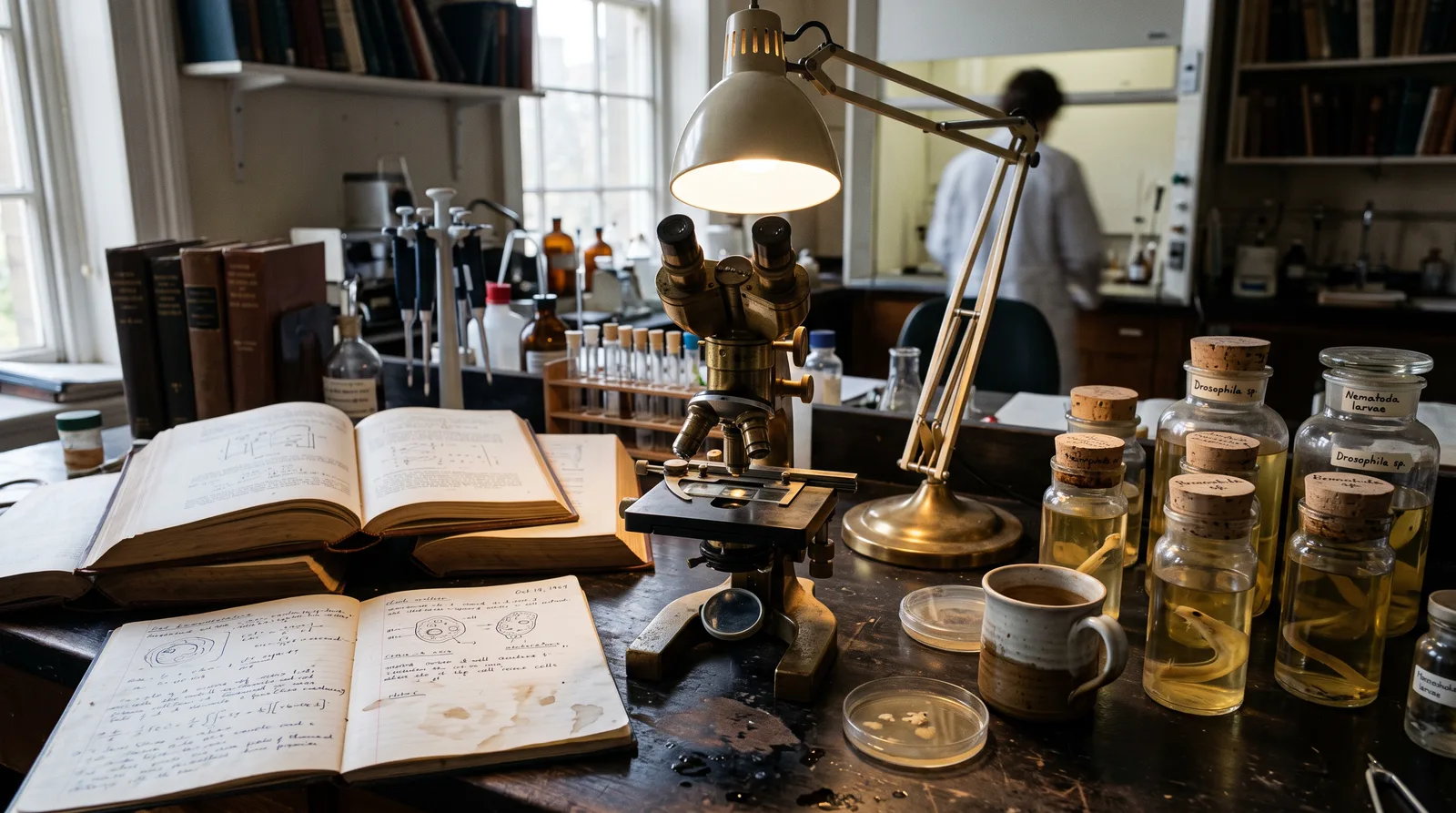
"Biology only feels hard when it's taught as a list of facts — teach it as a set of connected ideas, and the whole subject opens up."
— AI Professor Courses
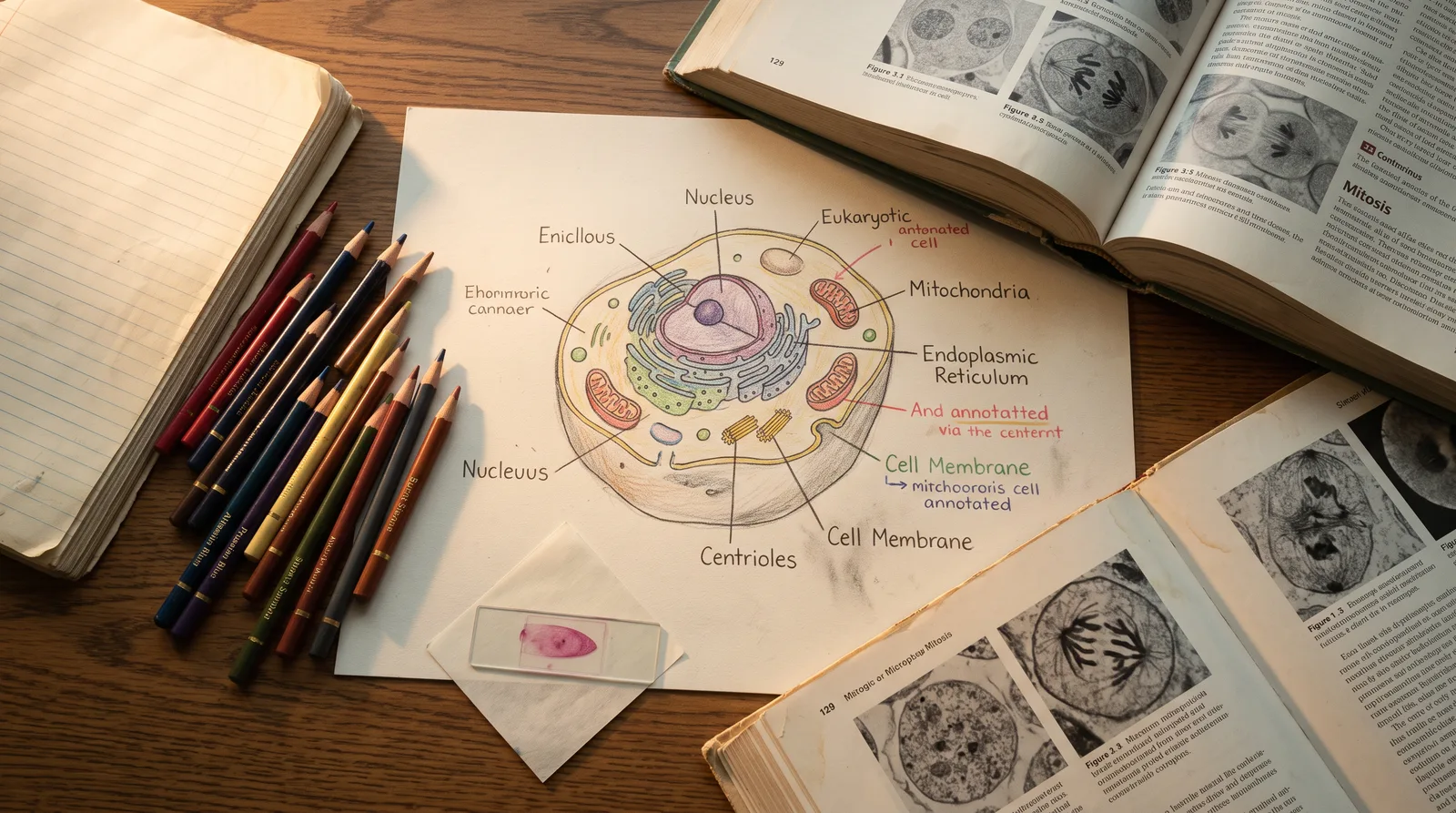
What you'll learn
What you'll be able to do
- Explain the structure and function of cells, organelles, and biological macromolecules with college-level accuracy
- Trace the mechanisms of DNA replication, transcription, and translation from first principles
- Analyze how natural selection, genetic drift, and speciation drive evolutionary change
- Describe how organ systems interact to maintain homeostasis in living organisms
- Interpret experimental data, construct hypotheses, and apply the scientific method to biological questions
- Connect ecology concepts — energy flow, population dynamics, and biomes — to real-world environmental issues
How it works
A school that adapts to you
This isn't a set of static videos. Every lesson is generated live and tuned to where you actually are.
We learn your level
A quick placement check tailors your starting point so you're never bored or lost.
Lessons adapt as you go
Each lesson is written for your pace and your goal, adjusting as your skills grow.
Your AI coach keeps you moving
Checkpoints, feedback, and gentle nudges turn progress into a real result.
The curriculum
What's inside your school
7 modules · 32 lessons

The Scientific Foundation: Thinking Like a Biologist
Establishes the scientific method, experimental reasoning, and quantitative literacy that underpin every topic in the course.
- 1.1The Scientific Method in BiologyIncluded
- 1.2Constructing and Testing HypothesesIncluded
- 1.3Interpreting Data, Graphs, and ControlsIncluded
- 1.4The Chemistry of LifeIncluded
Cells and Biological Macromolecules
Builds college-level mastery of cell structure, organelle function, membrane dynamics, and the four classes of biological macromolecules.
- 2.1Prokaryotic vs. Eukaryotic CellsIncluded
- 2.2Organelles and Their FunctionsIncluded
- 2.3The Cell Membrane and TransportIncluded
- 2.4Biological Macromolecules: Carbohydrates, Lipids, Proteins, and Nucleic AcidsIncluded
- 2.5Enzymes and Cellular MetabolismIncluded
Energy, Photosynthesis, and Cellular Respiration
Traces how cells capture, convert, and use energy through the interconnected pathways of photosynthesis and cellular respiration.
- 3.1Energy and ATP: The Cell's CurrencyIncluded
- 3.2Photosynthesis: Capturing Light EnergyIncluded
- 3.3Cellular Respiration: Glycolysis and the Krebs CycleIncluded
- 3.4The Electron Transport Chain and ATP SynthesisIncluded
Genetics, DNA, and Molecular Biology
Covers DNA structure, replication, gene expression, and inheritance from first principles through to modern molecular applications.
- 4.1DNA Structure and ReplicationIncluded
- 4.2Transcription: From DNA to RNAIncluded
- 4.3Translation: From RNA to ProteinIncluded
- 4.4Mendelian Genetics and Inheritance PatternsIncluded
- 4.5Mutations, Gene Regulation, and BiotechnologyIncluded
Evolution and the Diversity of Life
Analyzes the mechanisms of evolutionary change — natural selection, genetic drift, and speciation — and surveys life's major domains.
- 5.1Darwin, Natural Selection, and Evidence for EvolutionIncluded
- 5.2Population Genetics and Genetic DriftIncluded
- 5.3Speciation and MacroevolutionIncluded
- 5.4Phylogeny and the Tree of LifeIncluded
- 5.5Survey of Life's Diversity: Bacteria to AnimalsIncluded
Human Physiology: Organ Systems and Homeostasis
Examines how the major organ systems are structured, how they function, and how they coordinate to maintain homeostasis.
- 6.1Principles of Homeostasis and Feedback LoopsIncluded
- 6.2The Nervous and Endocrine SystemsIncluded
- 6.3The Cardiovascular and Respiratory SystemsIncluded
- 6.4Digestion, Excretion, and the Immune SystemIncluded
Ecology: Energy, Populations, and the Living Planet
Connects ecological principles — energy flow, population dynamics, community interactions, and biomes — to pressing real-world environmental challenges.
- 7.1Energy Flow and Trophic LevelsIncluded
- 7.2Population Dynamics and Growth ModelsIncluded
- 7.3Community Ecology: Competition, Predation, and SymbiosisIncluded
- 7.4Biomes and Ecosystem ServicesIncluded
- 7.5Biodiversity, Conservation, and Climate ChangeIncluded
Who it's for
Is this you?

Pre-Med Undergrad
Needs a rock-solid grasp of cell biology, physiology, and molecular genetics before MCAT prep begins in earnest.

AP Biology Student
Wants professor-level explanations — not just flashcard definitions — to genuinely master the concepts the AP exam tests.

Self-Taught Science Enthusiast
Has always been curious about how living systems work and wants a rigorous, sequenced course to finally fill the gaps.

Career-Changer Entering Healthcare
Needs to rebuild their biology foundation from the ground up before applying to nursing, PA, or allied health programs.

Returning Adult Learner
Left school years ago with a surface-level science education and wants the real, college-caliber version they never got.

Community College Transfer Student
Preparing to transfer into a four-year biology or health sciences program and needs to close the gap before day one.
Questions
Frequently asked
Your teacher
A note from your teacher
AI Professor Courses
Let me guess where you are right now.
Maybe you are sitting in — or about to walk into — an introductory biology course and you already sense that the lecture format is not going to be enough. The professor moves fast, the slides are dense, and by the time you have finished writing down what a ribosome does, three new terms have appeared on the board. Or perhaps you have been out of school for a while and you want to finally understand biology properly — not the surface-level version you were handed in high school, but the real thing, the version that actually explains how life works.
Either way, you are not lacking intelligence or curiosity. You are lacking a guide who will slow down at the right moments, connect the dots that textbooks leave disconnected, and treat you as someone fully capable of understanding complex material — because you are.
That is the entire premise of Campus Bio Lab. I designed this curriculum the way I wish introductory biology had always been taught: sequentially, logically, and with an honest insistence on the why behind every concept. We do not just name the steps of the Krebs cycle — we ask why the cell needs to run them at all. We do not just define natural selection — we ask what a population actually looks like when it is under selective pressure, and what the fossil record and molecular evidence tell us about where it went. Every major concept in this course is a question before it is an answer.
Here is what I want you to know about the material itself: biology is coherent. The chemistry of life leads directly into cell biology. Cell biology leads into molecular genetics. Molecular genetics leads into evolution. Evolution leads into the staggering diversity of life forms and organ systems we study in physiology and ecology. Follow that thread carefully and the whole subject becomes not just learnable but genuinely beautiful. I have watched that shift happen in students at every level, and it is why I still find this work worth doing.
If you are prepared to engage seriously — to sit with a difficult concept until it resolves, to ask the next question rather than accept the first answer — then Campus Bio Lab is built for you. Come learn biology the way it was meant to be taught.
— AI Professor Courses
Start your journey today
Get instant access — learn at your own pace with an AI coach in your corner.
$5/mo
Recurring billing · cancel anytime
Secure checkout · Instant access
- 7 modules, 32 lessons
- AI-adaptive lessons tuned to your level
- Quizzes & checkpoints to lock in progress
- Your own AI learning coach
- Learn on any device, at your pace
- Full access for as long as you're subscribed