
What Is AI-Powered Strategic Planning? A Beginner's Roadmap for Business Leaders
Dr. Agus Masrianto · August 23, 2026 · 5 min read
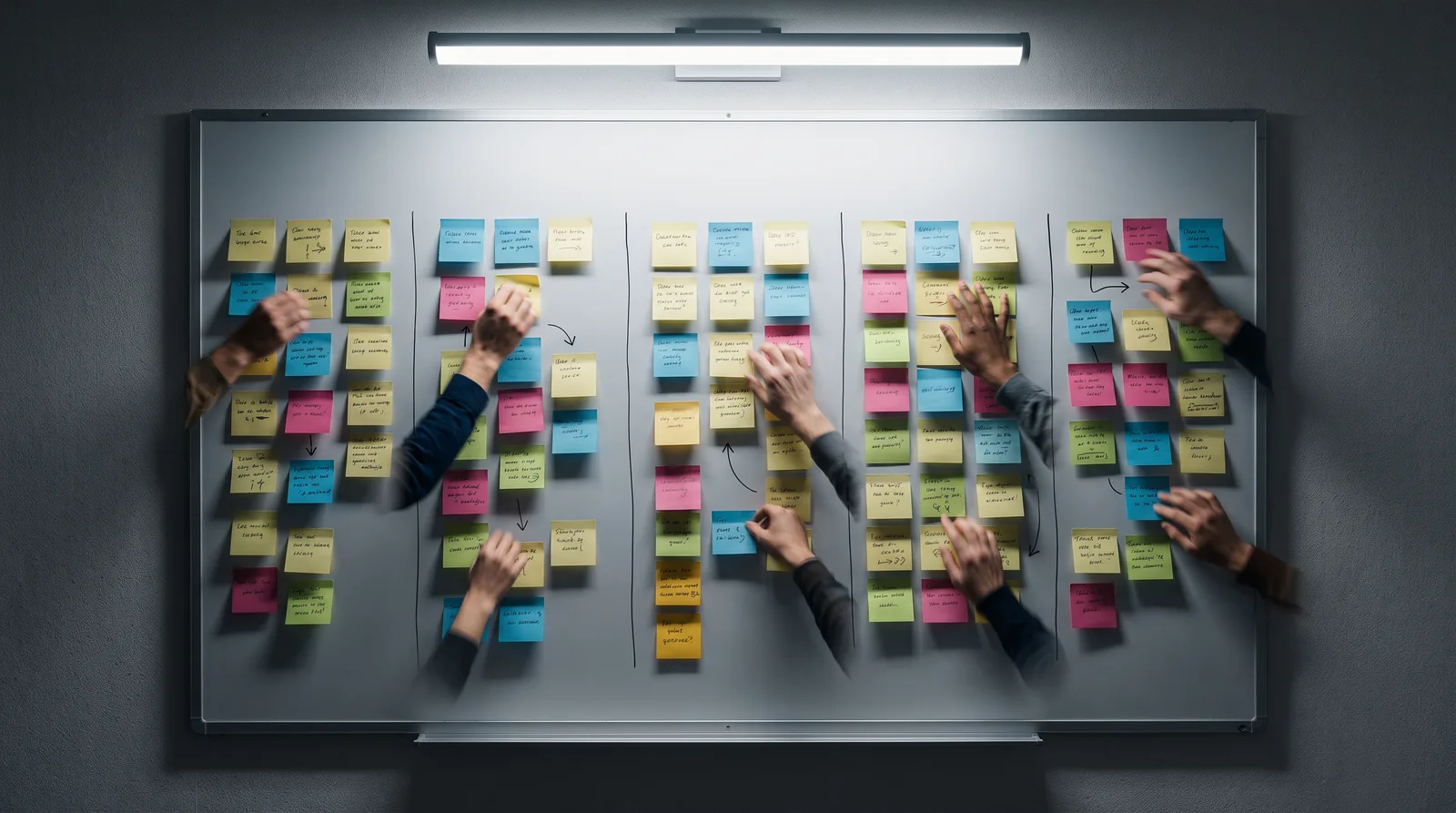
If you've ever sat through a three-month strategic planning cycle — the retreats, the consultants, the decks that get revised seventeen times before anyone makes a decision — you know the frustration. By the time the plan is "done," the market has already moved.
AI changes that equation. Not because it thinks for you, but because it eliminates the drag: the research bottlenecks, the blank-page moments, the formatting marathons that eat executive time without adding strategic value.
Here's a plain-language roadmap for how AI-powered strategic planning actually works, phase by phase.
Why Traditional Strategic Planning Struggles
Traditional strategic planning fails businesses in three predictable ways.
It's slow. Gathering competitive intelligence, synthesizing market data, and building financial scenarios can take weeks before a single strategic option is even on the table.
It's expensive. Consultant-grade analysis is priced accordingly. Most small and mid-size businesses simply can't afford it on a recurring basis.
It ages badly. A plan built on data from six months ago is already stale. In fast-moving industries, that's a liability, not a roadmap.
AI addresses all three — when it's applied through a structured process rather than used ad hoc.
The 5 Phases of AI-Enhanced Strategic Planning
Think of AI-powered strategic planning as a five-phase cycle. Each phase has a clear input, a clear output, and specific moments where AI does the heavy lifting.
Phase 1 — Environmental Scanning
Before you can plan, you need to understand the landscape. In traditional planning, this is where teams spend weeks pulling industry reports, reading competitor filings, and synthesizing macro trends.
With AI, you can compress this dramatically. You prompt an AI model to summarize sector trends, surface regulatory shifts, and map competitive positioning — then you interrogate those outputs critically. Your role shifts from researcher to analyst. The AI drafts; you judge.
What you produce: A structured environmental brief — your PESTLE analysis, your competitive map, your market assumptions — ready for strategic review.
Phase 2 — Internal Assessment
This phase is about honest self-diagnosis: what your organization does well, where it leaks value, and what resources you're actually working with.
AI helps here by structuring your thinking. Feed it your financial summaries, your team descriptions, your customer feedback themes, and ask it to help you build a capabilities inventory or identify patterns in your operational data. It won't know your business from the inside — that's your expertise — but it will help you organize what you know into a form that's strategically useful.
What you produce: A clear-eyed internal assessment — strengths, weaknesses, capacity constraints, and core competencies mapped against your market context.
Phase 3 — Strategic Options Generation
This is where most planning processes get stuck. Teams either anchor too early on one direction or generate so many ideas that nothing gets prioritized.
AI is a genuinely useful thinking partner at this stage. Ask it to generate strategic options given your environmental and internal assessment. Ask it to steelman options you're skeptical of. Ask it to surface risks you haven't considered. You're not outsourcing the decision — you're expanding the range of possibilities before you narrow down.
What you produce: A curated menu of strategic options, each with a brief rationale, a risk flag, and a resource implication.
Phase 4 — Plan Development
Now you're building the actual plan: goals, initiatives, owners, timelines, and metrics. This is where AI becomes a powerful drafting tool.
Use it to turn your strategic choices into structured initiative briefs. Use it to build out your KPI framework. Use it to draft the narrative sections of your plan — the "why this, why now" language that makes a strategy document readable instead of just functional.
One important discipline: always rewrite AI-drafted narrative in your own voice. A strategy document needs to sound like it came from your leadership, not from a language model.
What you produce: A complete strategic plan document — goals, initiatives, metrics, timeline, and budget assumptions — formatted for boardroom presentation.
Phase 5 — Review and Iteration
A strategic plan is not a finished artifact. It's a living framework. Build in a quarterly review cadence from day one, and use AI to help you run those reviews efficiently: comparing actuals against assumptions, flagging where the environment has shifted, and suggesting where the plan needs to be updated.
What you produce: A rhythm of review that keeps the plan relevant — and a team that treats strategy as an ongoing practice, not an annual event.
What a 90-Day Sprint Actually Looks Like
Rather than spreading this work across a fiscal year, you can structure it as a focused 90-day sprint:
- Days 1–20: Environmental scanning and internal assessment
- Days 21–45: Strategic options generation and leadership alignment
- Days 46–70: Plan development and financial modeling
- Days 71–90: Final document, stakeholder presentation, and review cadence setup
This isn't rushed — it's focused. The difference is that AI handles the research and drafting workload that typically extends timelines, freeing your leadership team to spend their hours on judgment, alignment, and decision-making.
The Skill That Actually Matters
The biggest misconception about AI-powered strategic planning is that it's about prompting. It's not. Prompting is a craft you can learn in days.
The skill that matters is strategic judgment — knowing which outputs to trust, which to push back on, and which questions to ask that an AI would never think to raise on its own. That's irreplaceable, and that's what makes the difference between a plan that looks good and one that actually guides decisions.
AI gives you leverage. But leverage only multiplies what you bring to it.
If you want to go deeper on exactly how to structure this sprint — including the specific prompts, frameworks, and capstone deliverable — that's precisely what my course AIBM: AI for Strategic Planning is built around. The roadmap above is real. The course makes it executable.