Master general chemistry — for real this time
Get the rigorous, step-by-step professor guidance that large lecture halls never deliver — covering every major topic in general chemistry, from atomic theory and stoichiometry to thermodynamics and electrochemistry, with the kind of clarity that turns confusion into confidence.

"My goal is simple: by the time you leave this school, you won't just know the answer — you'll know exactly why it's right."
— AI Professor Courses
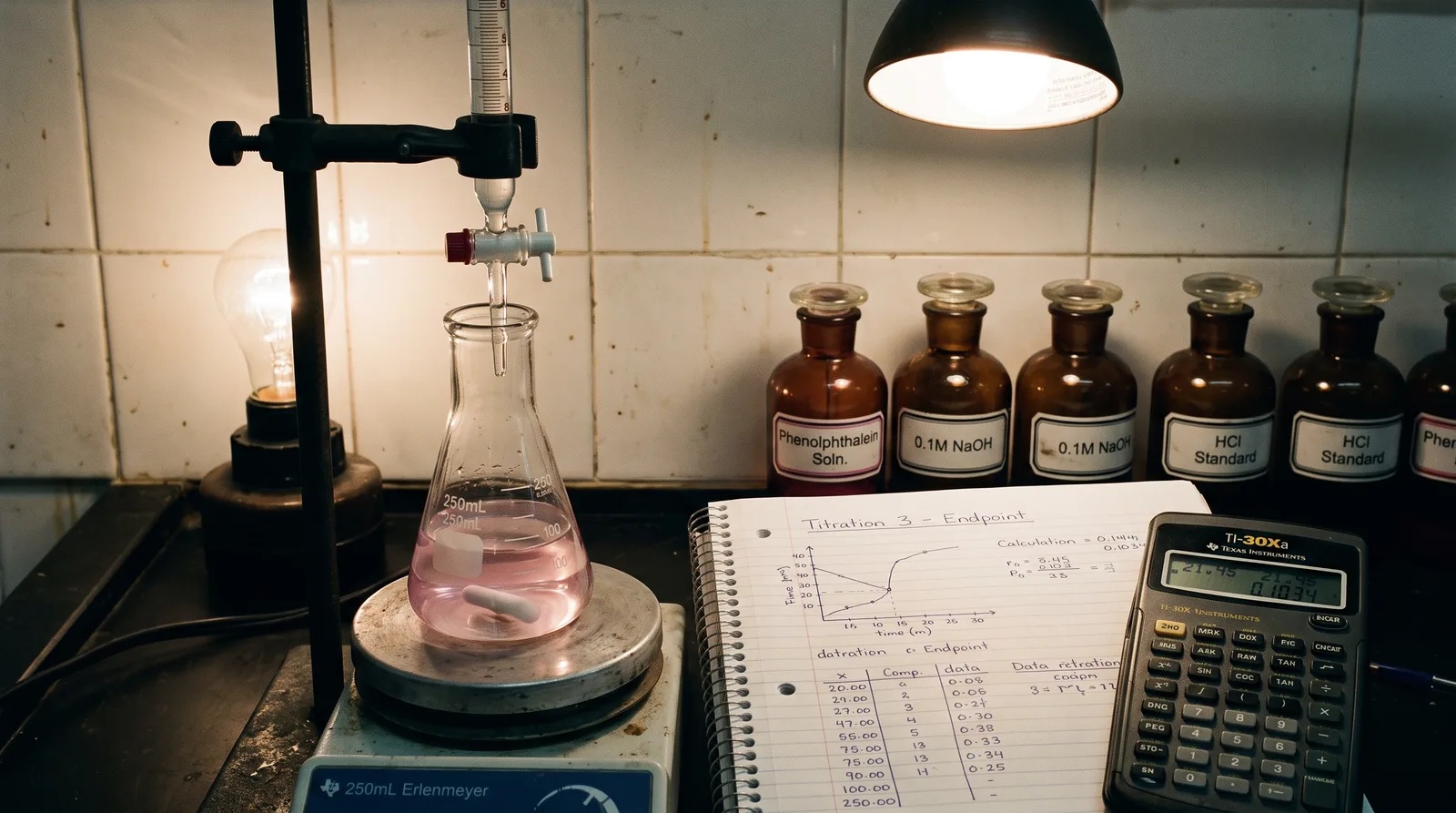
What you'll learn
What you'll be able to do
- Balance complex chemical equations and confidently apply stoichiometry to real-world problems
- Explain atomic structure, electron configuration, and periodic trends from first principles
- Solve acid-base, buffer, and equilibrium problems using ICE tables and Le Chatelier's Principle
- Calculate enthalpy, entropy, and Gibbs free energy changes to predict reaction spontaneity
- Interpret and write Lewis structures, VSEPR geometries, and molecular polarity
- Apply gas laws, solution chemistry, and electrochemistry to quantitative problem sets
How it works
A school that adapts to you
This isn't a set of static videos. Every lesson is generated live and tuned to where you actually are.
We learn your level
A quick placement check tailors your starting point so you're never bored or lost.
Lessons adapt as you go
Each lesson is written for your pace and your goal, adjusting as your skills grow.
Your AI coach keeps you moving
Checkpoints, feedback, and gentle nudges turn progress into a real result.
The curriculum
What's inside your school
6 modules · 29 lessons

Matter, Measurement, and the Language of Chemistry
Builds the essential vocabulary, unit skills, and mathematical tools every general chemistry course demands from day one.
- 1.1The Scientific Method and States of MatterIncluded
- 1.2Units, Significant Figures, and Dimensional AnalysisIncluded
- 1.3Atomic Theory and the Structure of the AtomIncluded
- 1.4Isotopes, Atomic Mass, and the Mole ConceptIncluded
- 1.5Naming Compounds and Writing Chemical FormulasIncluded
Chemical Reactions and Stoichiometry
Develops the core skill of balancing equations and using stoichiometric relationships to solve quantitative reaction problems.
- 2.1Types of Chemical ReactionsIncluded
- 2.2Balancing Chemical EquationsIncluded
- 2.3Mole Ratios and Stoichiometric CalculationsIncluded
- 2.4Limiting Reagents, Percent Yield, and ExcessIncluded
- 2.5Solution Stoichiometry and MolarityIncluded
Atomic Structure, Electron Configuration, and Periodicity
Explains how quantum mechanics governs electron arrangement and drives the periodic trends students see on every exam.
- 3.1Light, Photons, and the Bohr ModelIncluded
- 3.2Quantum Numbers and Atomic OrbitalsIncluded
- 3.3Electron Configuration and Orbital DiagramsIncluded
- 3.4Periodic Trends: Atomic Radius, Ionization Energy, and ElectronegativityIncluded
Chemical Bonding and Molecular Geometry
Covers how atoms bond, how molecules are shaped, and what those shapes mean for polarity and reactivity.
- 4.1Ionic vs. Covalent Bonding and Bond PolarityIncluded
- 4.2Lewis Structures and Formal ChargeIncluded
- 4.3Resonance, Exceptions to the Octet Rule, and Bond OrderIncluded
- 4.4VSEPR Theory and Molecular GeometryIncluded
- 4.5Molecular Polarity and Intermolecular ForcesIncluded
Gases, Solutions, and Colligative Properties
Applies quantitative gas laws and solution theory to real-world problems involving pressure, concentration, and phase behavior.
- 5.1The Gas Laws: Boyle, Charles, Gay-Lussac, and AvogadroIncluded
- 5.2Mixtures of Gases: Dalton's Law and Molar MassIncluded
- 5.3Kinetic Molecular Theory and Real GasesIncluded
- 5.4Concentration Units and Solution PreparationIncluded
- 5.5Colligative Properties: Boiling Point Elevation, Freezing Point Depression, and OsmosisIncluded
Thermodynamics and Equilibrium
Unifies energy, entropy, and equilibrium to let students predict whether reactions will occur and how far they will proceed.
- 6.1Thermochemistry: Enthalpy and CalorimetryIncluded
- 6.2Entropy, the Second Law, and Gibbs Free EnergyIncluded
- 6.3Chemical Equilibrium and the Equilibrium ConstantIncluded
- 6.4ICE Tables and Le Chatelier's PrincipleIncluded
- 6.5Acid-Base Equilibria, Buffers, and ElectrochemistryIncluded
Who it's for
Is this you?

Pre-med undergraduates
Needs to build airtight general chemistry foundations for the MCAT and upper-division biology and biochemistry courses.

Ambitious high schoolers
Ready for college-level rigor and wants a head start on university chemistry — far beyond what AP class alone provides.

STEM majors mid-semester
Currently enrolled in general chemistry and needs clear, expert explanation to fill gaps before the next exam.

Engineering students
Requires a solid grasp of thermodynamics, gas laws, and solution chemistry as the quantitative backbone for upper-level coursework.

Career-changers returning to science
Left chemistry behind years ago and needs a rigorous, from-scratch refresher before applying to a health or science program.

Self-taught science learners
Pursuing chemistry independently and wants professor-quality instruction — precise, complete, and properly sequenced — not scattered tutorials.
Questions
Frequently asked
Your teacher
A note from your teacher

AI Professor Courses
If you've ever sat in a general chemistry lecture, looked down at your notes, and realized you wrote down a lot of words without understanding a single one of them — I want you to know that's not a you problem. That's a teaching problem. And it's exactly why I built this school.
I've spent years working with students who are genuinely intelligent, genuinely motivated, and genuinely convinced that they're "just bad at chemistry." They're not. What they've never had is someone willing to slow down, back up to first principles, and explain — in plain terms, with full rigor — why the octet rule has exceptions, why entropy favors disorder, what an ICE table is actually doing, and why Gibbs free energy tells you something a simple energy calculation can't. That's what I do here. Every lesson.
The curriculum you'll find in this school covers all of general chemistry, but it's not a survey. We go deep. We balance equations by understanding oxidation states and atom counts, not by guessing. We derive periodic trends from quantum mechanics, not from memorizing a chart. We work through buffer problems by writing out every equilibrium expression, because when you understand what the math represents, you stop making errors and start building intuition. That intuition is what carries you into organic chemistry, biochemistry, the MCAT — and into a scientific career.
I also want to be direct about something: I will never make you feel foolish for asking "why." That question is the sign of a scientist. Every "why" in this course gets a real answer — not a hand wave, not a "just trust the formula," not a "you'll learn that later." If a concept is in this curriculum, we treat it seriously. You deserve that.
Whether you're a pre-med sophomore who needs to ace the final, a high schooler who wants to get ahead, or someone who took chemistry years ago and wants to actually understand it this time — you're in the right place. Come in, ask every question, and let's do the work together.
— AI Professor Courses
Start your journey today
Get instant access — learn at your own pace with an AI coach in your corner.
$5/mo
Recurring billing · cancel anytime
Secure checkout · Instant access
- 6 modules, 29 lessons
- AI-adaptive lessons tuned to your level
- Quizzes & checkpoints to lock in progress
- Your own AI learning coach
- Learn on any device, at your pace
- Full access for as long as you're subscribed