Never freeze on a dosage calculation again
Our AI Tutor walks you through every calculation type — from unit conversions to pediatric weight-based dosing to IV titrations — with step-by-step breakdowns and hundreds of practice problems designed to get you to that 90% or 100% pass rate on your first attempt. Designed for nursing students.

"We don't just want you to pass your competency exam — we want you to feel the math click, so you carry that confidence straight to the bedside."
— R.N., Editor -- Nexus AI Catalog
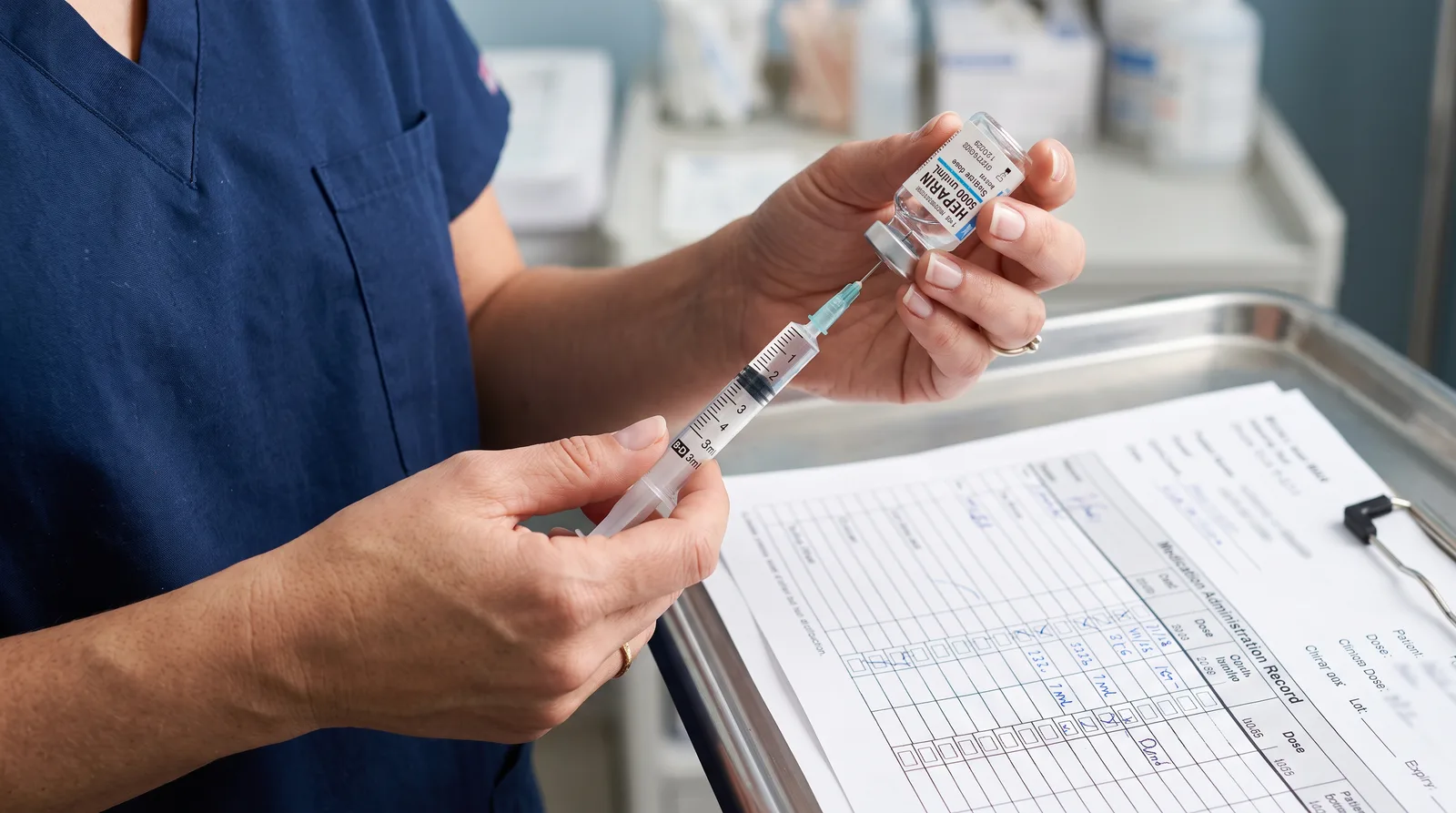
What you'll learn
What you'll be able to do
- Accurately solve IV drip rate, flow rate, and infusion time problems using dimensional analysis and ratio-proportion methods
- Calculate safe pediatric and weight-based medication doses with confidence
- Convert fluently between metric, household, and apothecary units without a calculator
- Interpret medication orders and drug labels to verify doses before administration
- Pass high-stakes dosage calculation exams (including the common 90% or 100% pass-rate competency tests) on the first attempt
- Apply a systematic, error-checking framework to any new calculation problem encountered in clinical practice
How it works
AI Tutor Adapts To Your Learning Needs
Every lesson is generated live and tuned to where you actually are.
The AI Tutor learns your level
A quick placement check tailors your starting point so you're never bored or lost.
Lessons adapt as you go
Each lesson is written for your pace and your goal, adjusting as your skills grow.
Your AI Tutor keeps you moving
Checkpoints, feedback, and gentle nudges turn progress into a real result.
The curriculum
What's inside your school
6 modules · 30 lessons

Math Foundations & Unit Conversions
Builds the arithmetic confidence and unit fluency every dosage calculation method depends on.
- 1.1Fractions, Decimals, and Percentages ReviewIncluded
- 1.2The Metric System Inside and OutIncluded
- 1.3Household & Apothecary UnitsIncluded
- 1.4Temperature & Time ConversionsIncluded
- 1.5Conversion Practice GauntletIncluded
Reading Medication Orders & Drug Labels
Trains students to accurately interpret every element of a medication order and drug label before calculating a dose.
- 2.1Anatomy of a Medication OrderIncluded
- 2.2Decoding Drug LabelsIncluded
- 2.3Abbreviations & Terminology FluencyIncluded
- 2.4Label & Order Interpretation PracticeIncluded
Core Calculation Methods
Teaches dimensional analysis and ratio-proportion — the two primary frameworks used to solve any dosage problem systematically.
- 3.1Dimensional Analysis Step by StepIncluded
- 3.2Ratio & Proportion MethodIncluded
- 3.3Formula Method & When to Use ItIncluded
- 3.4Choosing & Checking Your MethodIncluded
- 3.5Core Method Drill — 50 ProblemsIncluded
Oral & Injectable Medication Calculations
Applies core methods to the most common real-world calculation types students face in clinical rotations.
- 4.1Oral Solid & Liquid Dose CalculationsIncluded
- 4.2Parenteral & Injection Dose CalculationsIncluded
- 4.3Reconstituting Powdered MedicationsIncluded
- 4.4Insulin Calculations & Sliding ScalesIncluded
- 4.5Oral & Injectable Practice — 50 ProblemsIncluded
IV Therapy & Infusion Calculations
Covers every IV calculation type — drip rates, flow rates, and infusion times — using both manual and pump-based setups.
- 5.1IV Basics — Fluids, Sets & PumpsIncluded
- 5.2Flow Rate Calculations (mL/hr)Included
- 5.3Drip Rate Calculations (gtt/min)Included
- 5.4Infusion Time & Volume RemainingIncluded
- 5.5IV Medication & Titration CalculationsIncluded
- 5.6IV Calculation Practice — 50 ProblemsIncluded
Pediatric, Weight-Based & High-Alert Medications
Addresses the highest-stakes calculation categories — weight-based dosing, safe-dose verification, and critical care drugs.
- 6.1Weight-Based Dosing FundamentalsIncluded
- 6.2Pediatric Safe Dose Range VerificationIncluded
- 6.3Critical Care & High-Alert Drug CalculationsIncluded
- 6.4Pediatric & Weight-Based Practice — 40 ProblemsIncluded
- 6.5NCLEX-Style Mixed Exam SimulationIncluded
Who it's for
Is this you?

The math-anxious ADN student
She's sharp and compassionate but freezes on numbers — this school's step-by-step method breakdowns and clinical anchors finally make the math feel manageable.

The BSN student facing competency exams
He needs to hit 90% or 100% on his school's high-stakes dosage exam and wants structured, intensive practice — not scattered YouTube videos.

The returning student re-entering nursing school
She's been away from academics for years and needs to rebuild her math foundations before clinical rotations without feeling behind or embarrassed.

The clinical rotation prepper
He's starting his first clinical rotation soon and wants to be fully confident reading medication orders, decoding drug labels, and verifying doses before he's ever at a real bedside.

The NCLEX countdown studier
She's in final-semester review mode and wants a focused, comprehensive refresher on every dosage and pharmacology calculation category likely to appear on the NCLEX.

The detail-oriented student who wants mastery
He doesn't just want to pass — he wants to understand all three calculation methods deeply and develop an error-checking habit he can rely on throughout his nursing career.
Questions
Frequently asked
Your teacher
A note from your teacher

R.N., Editor --- Nexus AI Catalog
If you're here, there's a good chance you've felt that particular panic — staring at a dosage problem during a nursing school exam, or maybe in the middle of a clinical simulation, and suddenly your mind just... goes blank. The numbers blur. You second-guess the formula. You wonder if you're really cut out for this.
I want you to know: that feeling has nothing to do with your intelligence, and everything to do with how dosage calculations are usually taught. Most students get a brief formula review, a short worksheet, and then get thrown into problems before they've ever built a real foundation. No wonder it feels impossible.
I built Dosage Calc Pro because I believe every nursing student deserves to walk into their competency exam — and into clinical — feeling genuinely prepared, not just hoping for the best. This school doesn't skip the fundamentals. We start with the math you might have learned years ago and never felt fully confident about: fractions, decimals, unit conversions. We move through reading real medication orders and drug labels, learning how to decode the information a physician or provider is actually giving you. And then we build your calculation skills one method at a time — dimensional analysis, ratio-proportion, the formula method — until you understand not just how to solve a problem, but why the method works. That "why" is what sticks with you under pressure.
Here's what I care most about: I want every formula to feel like it lives in the real world, not on an abstract worksheet. So every lesson is tied to a clinical scenario — the pediatric patient who needs a weight-based antibiotic, the post-op adult on a heparin drip, the insulin sliding scale you'll actually manage on a medical-surgical floor. When you understand the stakes, the math stops feeling like a hurdle and starts feeling like a skill you're proud to have.
The practice volume in this school is intentional. Confidence doesn't come from watching someone else solve problems — it comes from solving them yourself, getting feedback, and doing it again. By the time you finish the NCLEX-Style Mixed Exam Simulation, you will have worked through more dosage calculation problems than most students see in an entire semester. That's the goal.
You belong in nursing. Let's get the math out of your way.
— R.N., Editor --- Nexus AI Catalog
Start your journey today
Get instant access — learn at your own pace with an AI coach in your corner.
$5/mo
Recurring billing · cancel anytime
Secure checkout · Instant access
- 6 modules, 30 lessons
- AI-adaptive lessons tuned to your level
- Quizzes & checkpoints to lock in progress
- Your own AI learning coach
- Learn on any device, at your pace
- Full access for as long as you're subscribed