Think, Write, and Brief Like a Professional Intelligence Analyst
Master the full intelligence cycle — from raw data to finished analytic product — using the same structured techniques, IC writing standards, and cognitive discipline demanded by the U.S. Intelligence Community and law enforcement agencies.
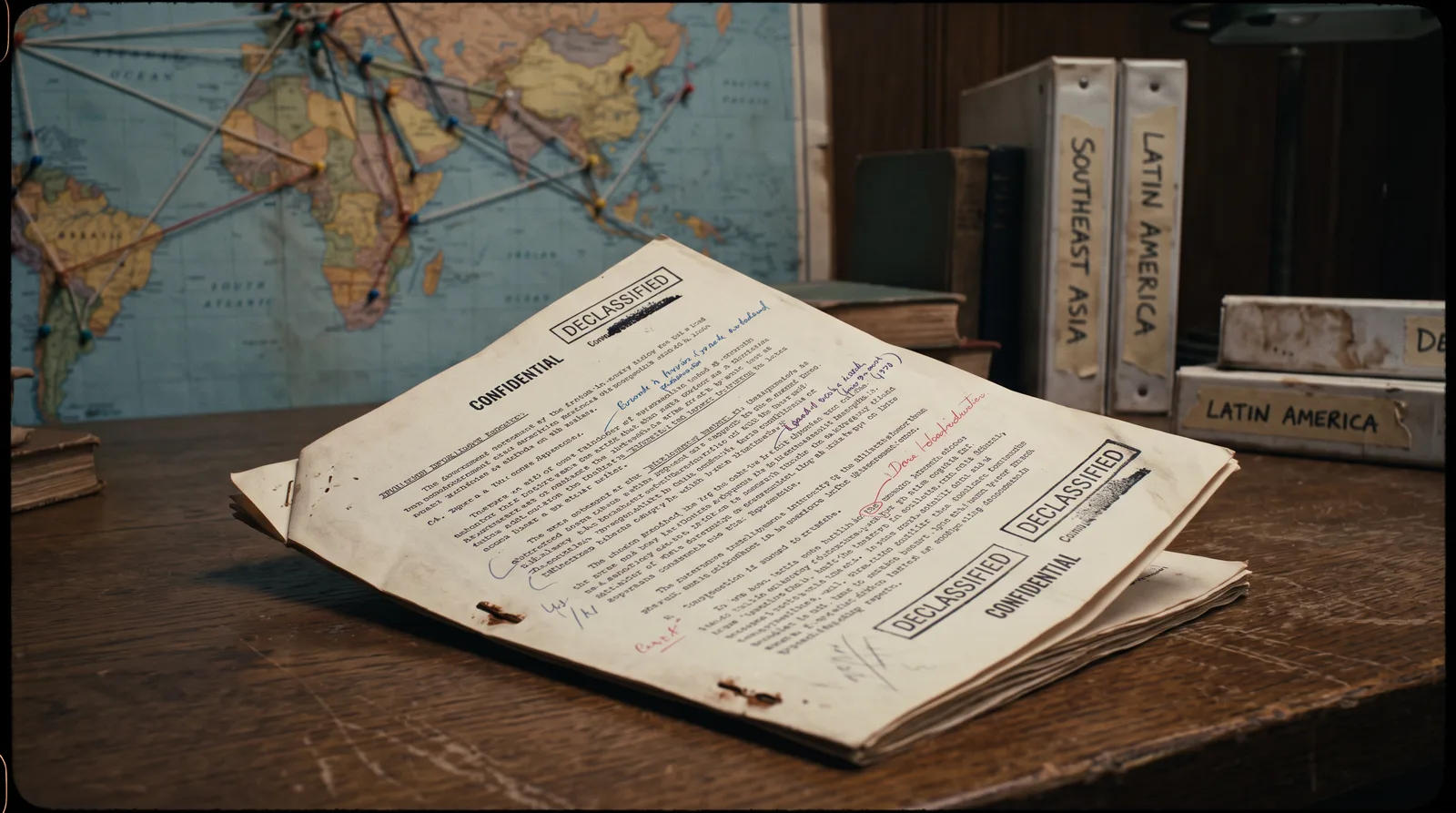
"I will hold you to the standard of the profession you're entering — because the Intelligence Community certainly will."
— AI Professor Courses

What you'll learn
What you'll be able to do
- Produce a structured analytic product — such as an Intelligence Assessment or Finished Intelligence report — using proper IC writing standards and source attribution.
- Apply structured analytic techniques (SATs) including Analysis of Competing Hypotheses (ACH), Red Team Analysis, and Key Assumptions Checks to real-world threat scenarios.
- Distinguish between the roles, missions, and legal authorities of the 18 U.S. Intelligence Community agencies and their interfaces with law enforcement.
- Identify and mitigate cognitive biases — including mirror imaging, anchoring, and confirmation bias — that degrade analytic objectivity.
- Conduct criminal intelligence analysis using established methodologies such as link analysis, timeline analysis, and telephone toll analysis within a lawful investigative framework.
- Brief decision-makers confidently by translating complex intelligence into clear, concise, and actionable verbal and written products tailored to the consumer's needs.
How it works
A school that adapts to you
This isn't a set of static videos. Every lesson is generated live and tuned to where you actually are.
We learn your level
A quick placement check tailors your starting point so you're never bored or lost.
Lessons adapt as you go
Each lesson is written for your pace and your goal, adjusting as your skills grow.
Your AI coach keeps you moving
Checkpoints, feedback, and gentle nudges turn progress into a real result.
The curriculum
What's inside your school
6 modules · 30 lessons

Foundations of Intelligence: Theory, History, and the IC
Establishes the conceptual and institutional bedrock of intelligence, covering core definitions, the intelligence cycle, and the structure of the U.S. Intelligence Community.
- 1.1What Is Intelligence? Definitions, Disciplines, and PurposeIncluded
- 1.2The Intelligence Cycle: From Collection to DisseminationIncluded
- 1.3The U.S. Intelligence Community: All 18 AgenciesIncluded
- 1.4Legal Authorities and Oversight: FISA, Executive Orders, and Congressional OversightIncluded
- 1.5IC–Law Enforcement Interface: Where National Security Meets Criminal JusticeIncluded
Analytic Thinking: Cognitive Bias and Critical Reasoning
Trains students to recognize and counteract the cognitive pitfalls that degrade analytic objectivity and sound judgment.
- 2.1How Analysts Think: Mental Models and HeuristicsIncluded
- 2.2Mirror Imaging and Ethnocentric BiasIncluded
- 2.3Anchoring, Confirmation Bias, and GroupthinkIncluded
- 2.4Identifying and Challenging AssumptionsIncluded
- 2.5Building an Analytic Mindset: Objectivity, Rigor, and Intellectual HumilityIncluded
Structured Analytic Techniques (SATs)
Provides hands-on instruction in the IC's approved structured methods for producing defensible, bias-resistant analytic judgments.
- 3.1Introduction to Structured Analytic TechniquesIncluded
- 3.2Key Assumptions Check (KAC)Included
- 3.3Analysis of Competing Hypotheses (ACH)Included
- 3.4Red Team Analysis and Devil's AdvocacyIncluded
- 3.5Indicators, Warnings, and Scenario DevelopmentIncluded
Intelligence Writing and Finished Products
Develops the IC writing standards, analytic line construction, and product formats required to communicate intelligence clearly and credibly.
- 4.1IC Writing Standards: Clarity, Precision, and the Bottom Line Up FrontIncluded
- 4.2Source Attribution, Reliability, and CaveatingIncluded
- 4.3Writing the Intelligence AssessmentIncluded
- 4.4Finished Intelligence Formats: PIRs, MIRs, and Warning ReportsIncluded
- 4.5Peer Review and Quality Control in Analytic ProductionIncluded
Criminal Intelligence Analysis
Applies intelligence tradecraft specifically to the law enforcement and criminal justice environment using established investigative analytic methodologies.
- 5.1Criminal Intelligence vs. National Security IntelligenceIncluded
- 5.2Link Analysis and Network MappingIncluded
- 5.3Timeline Analysis and Event ChartingIncluded
- 5.4Telephone Toll Analysis and Communications IntelligenceIncluded
- 5.5Financial Analysis, Commodity Flow, and Threat FinanceIncluded
Briefing Decision-Makers and Career Readiness
Prepares students to deliver polished verbal and written intelligence products to senior consumers and to launch their IC or law enforcement analytic careers.
- 6.1Know Your Consumer: Tailoring Intelligence to the Decision-MakerIncluded
- 6.2Constructing and Delivering the Intelligence BriefIncluded
- 6.3Handling Challenges: Pushback, Questions, and UncertaintyIncluded
- 6.4The IC Hiring Landscape: Agencies, Clearances, and the Application ProcessIncluded
- 6.5Capstone: Full-Cycle Intelligence Product and BriefingIncluded
Who it's for
Is this you?

Criminal Justice undergrads
Building a competitive résumé and analytic portfolio before graduation to stand out in federal and local law enforcement hiring pools.

Homeland security grad students
Deepening applied tradecraft skills — SATs, IC agency structures, and finished intelligence writing — that graduate seminars describe but rarely practice.

Law enforcement officers
Seeking promotion into an analytical role and needing formal command of criminal intelligence methodologies and IC writing standards.

Federal agency applicants
Preparing for IC analyst interviews and hiring processes by mastering the terminology, agency missions, and analytic techniques screeners actually test.

Political science students
Translating strong academic research skills into the applied tradecraft — BLUF writing, structured analysis, and decision-maker briefings — that IC roles require.

Intelligence community career-changers
Professionals from adjacent fields pivoting into the IC who need rigorous, credential-relevant training without enrolling in another full degree program.
Questions
Frequently asked
Your teacher
A note from your teacher
AI Professor Courses
If you've picked up this page, there's a good chance you already know you want to work in intelligence or law enforcement analysis — but you're not entirely sure how to close the gap between what your degree covers and what an actual analytic shop expects from you on Day One. That gap is real, and it's larger than most academic programs acknowledge. I built Intel Analysis Academy specifically to close it.
I've spent my career at the intersection of intelligence tradecraft and education — studying how working analysts think, how finished intelligence gets produced, and how the frameworks taught in IC doctrine translate into real decisions under real pressure. What I found, repeatedly, is that students and early-career professionals arrive with strong academic foundations but without the applied vocabulary, the structured methodology, or the writing discipline that professional analytic environments demand. They know about intelligence. They don't yet know how to do it. That distinction is the entire purpose of this academy.
Here's what I want you to understand about how this curriculum is designed: nothing in it is decorative. When we work through the 18 agencies of the Intelligence Community, it's because a professional analyst must know the distinct mission, authority, and collection discipline of each one — and because confusing the roles of the DIA, the NGA, and the NSA is the kind of error that marks a candidate as unprepared. When we drill cognitive biases — mirror imaging, anchoring, confirmation bias — it's because these are documented contributors to intelligence failures, and recognizing them in your own reasoning is a professional skill, not a personality trait. When we write Intelligence Assessments and Warning Reports, we write them to IC standards, with BLUF structure, proper caveating, and defensible source attribution — because that is the standard, and anything less is not a finished product.
The Structured Analytic Techniques unit is where I see students most visibly shift their thinking. ACH, Red Team Analysis, and the Key Assumptions Check are not academic frameworks invented for classrooms — they are the tools analysts use to make their reasoning auditable and to protect decision-makers from confident, well-written, wrong conclusions. Learning to apply them changes how you approach every analytical problem afterward, inside intelligence and out.
I also take criminal intelligence seriously as its own discipline. Link analysis, timeline charting, telephone toll analysis, and threat finance are not watered-down versions of national security analysis — they are rigorous methodologies with their own doctrine, their own legal constraints, and their own professional standards. If your path runs through law enforcement, a sheriff's intelligence unit, or a federal task force, this curriculum speaks directly to your environment.
My commitment to you is simple: I will hold you to the standard of the profession you are entering. The vocabulary will be correct. The frameworks will be the ones actually used. The writing standards will be IC standards. And by the time you complete the Capstone, you will have produced an analytic product and delivered a briefing that you can point to — with confidence — when someone asks what you can do. Come ready to think precisely, write clearly, and challenge your own assumptions. That's what analysts do.
— AI Professor Courses
Start your journey today
Get instant access — learn at your own pace with an AI coach in your corner.
$5/mo
Recurring billing · cancel anytime
Secure checkout · Instant access
- 6 modules, 30 lessons
- AI-adaptive lessons tuned to your level
- Quizzes & checkpoints to lock in progress
- Your own AI learning coach
- Learn on any device, at your pace
- Full access for as long as you're subscribed