Pass Nursing School! - Free Lesson!
We're more than just NCLEX questions. By design, AI Nursing School Professor mirrors the same teaching curriculum you receive in nursing school. Experience personalized learning assessments, AI-Adaptive individualized learning plans in real time, engaging quizzes, flashcards, strengths and weaknesses study guides, and so much more.
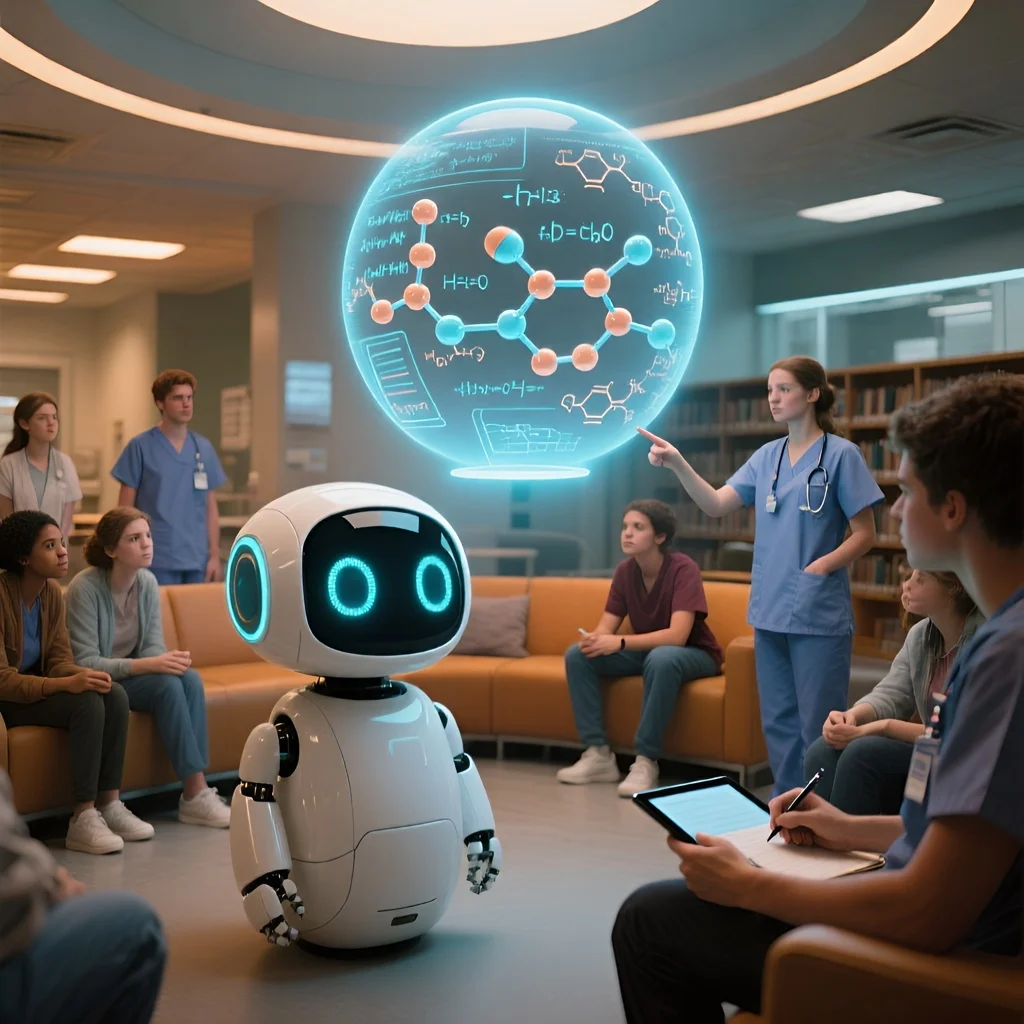
"The science stops being intimidating the moment you see how it connects to the patient in front of you — and that's exactly what I'm here to show you."
— Editor R.N., --- Nexus AI Catalog
What's Included?
Subscribers Receive: -24/7 Unlimited AI Tutoring -24/7 AI Tutoring In 26 Modules & 113 Lessons -Pre-Nursing & Nursing Courses Included -Personalized AI Tutor Generated Downloadable Study Guides -Personalized AI Tutor Generated Flashcards -Personalized AI Tutor Generated NCLEX Style Quizzes -Free Downloads Of Certain Study Materials -Micro-Learning Subject Videos -Weekly Program Updates -Message Instructor -Bonus Community
What you'll learn
What you'll be able to do
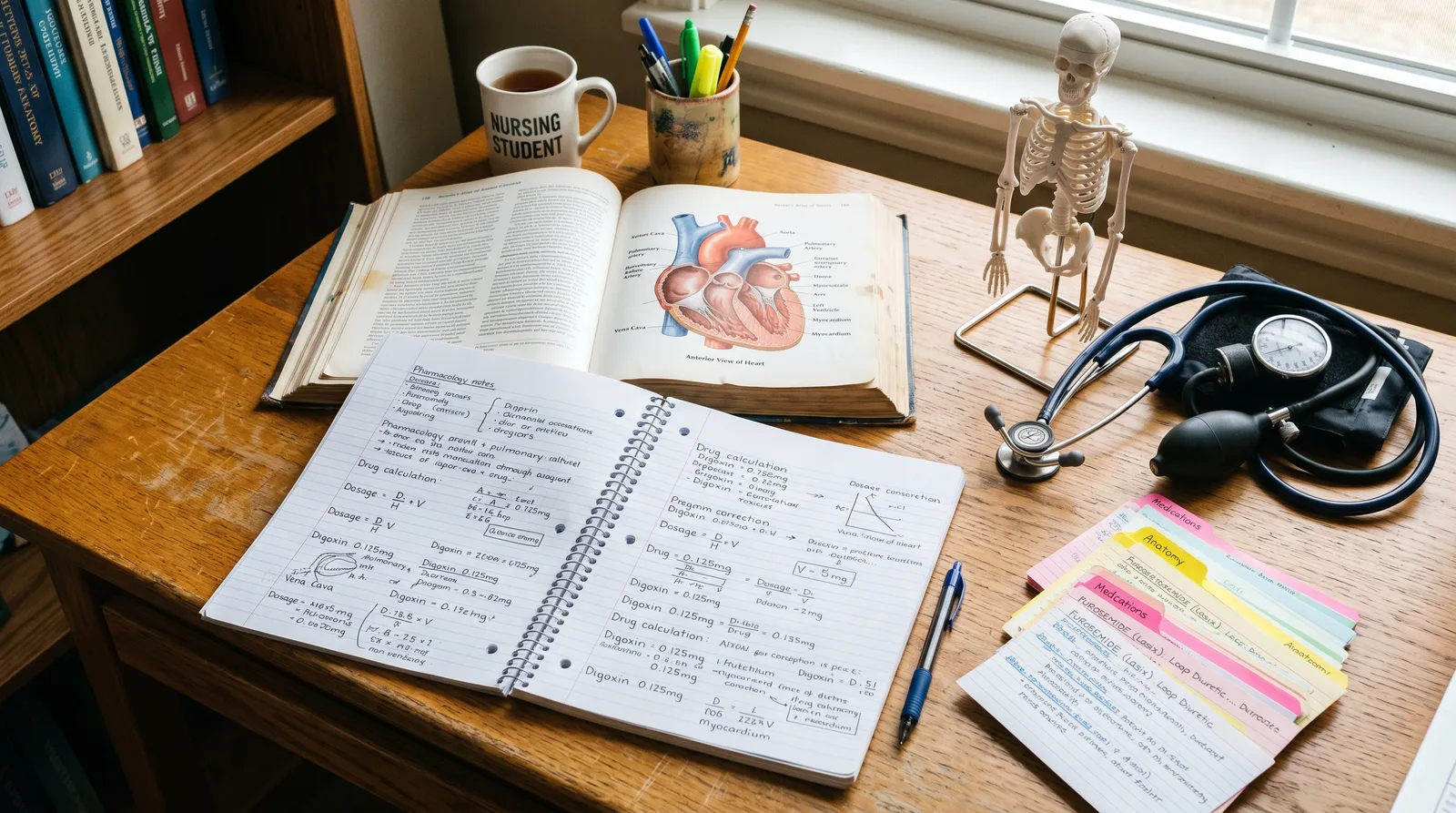
- Confidently navigate core nursing sciences — anatomy & physiology, microbiology, chemistry, and biochemistry — and apply them directly to patient care scenarios.
- Accurately perform drug dosage calculations and interpret pharmacology principles to support safe medication administration.
- Analyze disease processes through pathophysiology and connect abnormal findings to nursing assessment and care planning.
- Build and document professional nursing care plans using the full nursing process, from assessment through evaluation.
- Apply critical thinking, deductive reasoning, logic, and statistical literacy to research methods and evidence-based nursing practice.
- Articulate nursing ethics, historical foundations, psychological and sociological frameworks, and their role in culturally competent, patient-centered care.
How it works
Powered By AI-Adaptive Learning - New AI Technology
Experience the future of learning with AI technology. Here at AI Tutor For Nursing Students, every lesson is generated live and tuned to where you actually are in the learning process. The AI Adaptive Study technology conducts an assessment of your knowledge base, then tailors the lessons, tutoring, quizzes and flashcards to your level, then advances you at your own pace. You can ask the AI Tutor questions and it will explain a topic to you another way - until you master it!
The AI Tutor learn your level
A quick placement check tailors your starting point so you're never bored or lost.
Lessons adapt as you go
Each lesson is written for your pace and your goal, adjusting as your skills grow.
Your AI Tutor you moving
Checkpoints, feedback, and gentle nudges turn progress into a real result.
The curriculum
What's inside your school
26 modules · 113 lessons
Medical Terminology & Joint Commission–Approved Abbreviations
Master the universal language of healthcare — from Greek and Latin word roots to the official abbreviations you'll read and write every shift. This module builds your medical vocabulary systematically, teaches you exactly which abbreviations are Joint Commission–approved for safe use in clinical documentation, and drills everything with quizzes and testing exercises so you can decode any chart, order, or report with confidence at the bedside.
- 1.1How Medical Words Are Built: Roots, Prefixes & SuffixesIncluded
- 1.2Clinical Abbreviations You Must Know: Joint Commission–Approved ListIncluded
- 1.3Medical Terminology Across Body Systems: Applied Clinical VocabularyIncluded
- 1.4Cumulative Quizzes & Mastery TestingIncluded
Psychology, Abnormal Psychology & Sociology
Equips students with the behavioral and social science frameworks essential for delivering holistic, culturally competent, and patient-centered nursing care. Moving from foundational psychological theory through the major mental health conditions to sociological determinants of health, this module develops the empathy, communication insight, and structural awareness nurses need to understand patient behavior, support mental health, reduce disparities, and work effectively within diverse communities and healthcare teams.
- 2.1Psychology Frameworks: Erickson, Maslow, Communication, Health Behavior ChangesIncluded
- 2.2Abnormal PsychologyIncluded
- 2.3Sociology, Social Determinants & Culturally Competent CareIncluded
Anatomy & Physiology
Establishes the structural and functional blueprint of the human body — the prerequisite lens through which all nursing sciences are understood. Students progress systematically from microscopic cellular organization through every major organ system, building the anatomical vocabulary and physiological reasoning needed to interpret patient data, recognize normal vs. abnormal findings, and understand why disease and treatment work the way they do.
- 3.1Cells, Tissues & the Body's OrganizationIncluded
- 3.2The Integumentary, Skeletal & Muscular SystemsIncluded
- 3.3Cardiorespiratory & Circulatory SystemsIncluded
- 3.4Nervous, Endocrine & Immune SystemsIncluded
- 3.5Renal, Digestive, Reproductive & Special SensesIncluded
Microbiology & Diagnostic Microbiology
Equips students with the microbiological literacy essential for understanding infection, implementing evidence-based infection control, and correctly interpreting laboratory reports. The module moves from foundational microbial science through host-pathogen dynamics, practical diagnostic interpretation, and the principles of antimicrobial therapy — ensuring students can translate lab data into safe, informed nursing actions.
- 4.1The Microbial World: Bacteria, Viruses, Fungi & ParasitesIncluded
- 4.2Infection, Immunity & the Chain of InfectionIncluded
- 4.3Diagnostic Microbiology: Reading Lab ResultsIncluded
- 4.4Antimicrobial Therapy & ResistanceIncluded
Chemistry, Organic Chemistry & Biochemistry
Provides the chemical and molecular science foundation that underpins drug action, metabolic processes, and physiological mechanisms. Sequenced to build from general atomic and bonding concepts through organic functional groups to the macromolecular chemistry of life, this module ensures students can read drug structures, understand metabolism, interpret acid-base balance, and appreciate why biochemical disruptions cause the disease states explored in pathophysiology.
- 5.1Introduction to Chemistry: Matter, Bonds & SolutionsIncluded
- 5.2Introduction to Organic Chemistry: Functional Groups & Drug StructuresIncluded
- 5.3Introduction to Biochemistry: Metabolism, Macromolecules & EnergyIncluded
Pharmacology & Drug Dosage Calculations
Develops safe, competent, and confident medication administration skills by pairing the theoretical principles of how drugs work with the mathematical precision required to dose them correctly. Sequenced so that pharmacokinetic and pharmacodynamic principles precede drug classifications — and foundational calculation methods are mastered before advancing to complex IV and high-risk drug math — this module directly supports the target outcome of safe medication administration.
- 6.1Pharmacokinetics & PharmacodynamicsIncluded
- 6.2Drug Classifications & Major Drug FamiliesIncluded
- 6.3Drug Dosage Calculations: FoundationsIncluded
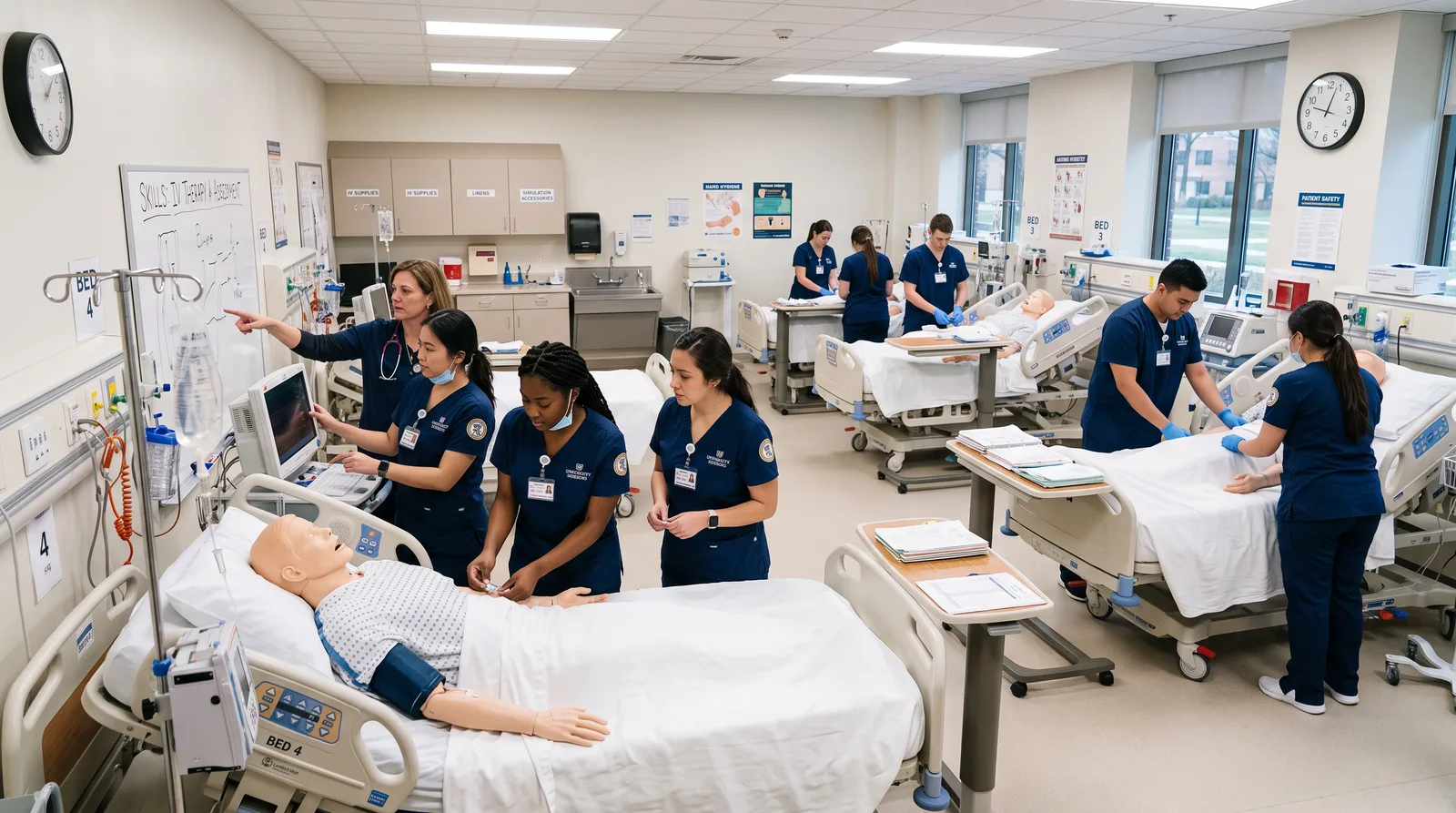
- 6.4IV Therapy, Infusion Rates & High-Risk Drug CalculationsIncluded
Pathophysiology
Bridges the basic sciences — anatomy, physiology, microbiology, and biochemistry — to clinical nursing practice by explaining how disease disrupts normal structure and function. Sequenced from cellular mechanisms through organ-specific disease processes to complex multisystem disorders, this module trains students to reason from mechanism to manifestation, anticipate complications, and ground their nursing assessment and care-planning decisions in pathophysiological evidence.
- 7.1Cellular Injury, Inflammation & HealingIncluded
- 7.2Cardiovascular & Respiratory PathophysiologyIncluded
- 7.3Endocrine, Renal & Neurological PathophysiologyIncluded
- 7.4Oncology, Immune Disorders & Multisystem PathophysiologyIncluded
The Nursing Process, Assessment & Care Plans
Translates all preceding scientific and theoretical knowledge into organized, professional nursing practice. The module follows the natural sequence of the nursing process — Assessment → Diagnosis → Planning → Implementation → Evaluation — and ensures students can collect systematic subjective and objective data, formulate evidence-based diagnoses, write SMART goals, build comprehensive care plans, and close the loop through evaluation and revision. Legal documentation standards are woven throughout.
- 8.1Nursing Assessment: Subjective & Objective Data CollectionIncluded
- 8.2Nursing Diagnosis & Clinical ReasoningIncluded
- 8.3Planning: Goals, Outcomes & Evidence-Based InterventionsIncluded
- 8.4Nursing Care Plans: Building & Documenting Comprehensive PlansIncluded
- 8.5Implementation & Evaluation: Closing the LoopIncluded
Medical-Surgical Nursing: Theory, Skills & Clinical Practice
This module takes you through the entire spectrum of Medical-Surgical Nursing, both theory and practice, using a body systems and disease process approach. It also includes sections on safe medication administration, vascular access and fluid managment, urinary catheters, and wound care.
- 9.1Bedside Foundations: Core Skills Every Med-Surg Nurse Must OwnIncluded
- 9.2Safe Medication Administration & Blood Glucose MonitoringIncluded
- 9.3Vascular Access & Fluid Management: IVs, Phlebotomy & MonitoringIncluded
- 9.4Urinary Catheterization, Wound Care & Skin IntegrityIncluded
- 9.5Body Systems, Disease Processes & Med-Surg Clinical ScenariosIncluded
Operating Room Nursing: Perioperative Theory & Practice
Master the full surgical continuum — from the moment a patient is scheduled for surgery to their safe handoff in recovery — through the lens of evidence-based perioperative nursing. You will step into each OR role, develop sharp clinical judgment for intraoperative crises, and apply the legal and ethical frameworks that govern the surgical suite.
- 10.1The Perioperative Team: Roles, Responsibilities & the Surgical SuiteIncluded
- 10.2The Preoperative Phase: Assessment, Preparation & Patient SafetyIncluded
- 10.3The Intraoperative Phase: Scrub, Circulate & Sterile Field MasteryIncluded
- 10.4The Postoperative Phase: PACU Care, Recovery & Discharge ReadinessIncluded
- 10.5OR Emergencies, Special Circumstances & Legal-Ethical PracticeIncluded
Laboratory Values: Interpretation, Clinical Significance & Patient Care Application
Create a module with lessons that teach, tutor, and quiz nursing students on all lab values. Create scenerios to test knowledge.
- 11.1Complete Blood Count (CBC): Reading the Full Blood PictureIncluded
- 11.2Comprehensive Metabolic Panel (CMP) & Basic Metabolic Panel (BMP): Electrolytes, Kidneys & GlucoseIncluded
- 11.3Coagulation Studies, Cardiac Markers & Arterial Blood Gases (ABGs)Included
- 11.4Urinalysis, Thyroid, Iron Studies & Common Therapeutic Drug LevelsIncluded
Obstetrics & Gynecology: Maternal-Newborn Nursing Across the Continuum
From the first prenatal visit to the final postpartum discharge, this module walks you through the full spectrum of OB-GYN nursing with clinical precision and compassionate purpose. You will master the physiological and psychological dimensions of pregnancy, labor, delivery, and the newborn period — including high-stakes emergencies, pharmacological interventions, fetal monitoring, and the tender care required when outcomes are not what families hoped for.
- 12.1Prenatal Care & the Physiology of PregnancyIncluded
- 12.2Labor, Delivery & Intrapartum Nursing CareIncluded
- 12.3Epidurals, C-Sections & Operative ObstetricsIncluded
- 12.4Fetal Monitoring & Complications of LaborIncluded
- 12.5Postpartum Care, Newborn Assessment & OB-GYN EmergenciesIncluded
Pediatric & Neonatal Nursing: Care Across Childhood
Master the science and art of caring for patients from the first breath through adolescence. This module walks you through the unique physiology, developmental milestones, and clinical reasoning skills that define pediatric and neonatal nursing — so you can assess, intervene, and advocate for your smallest and most vulnerable patients with confidence and precision.
- 13.1Neonatal Physiology & Newborn Transition to Extrauterine LifeIncluded
- 13.2Growth, Development & Pediatric Health MaintenanceIncluded
- 13.3Pediatric Assessment: Head-to-Toe with a Developmental LensIncluded
- 13.4Common Pediatric Diseases, Disorders & Nursing ManagementIncluded
- 13.5Family-Centered Care, Pediatric Pain Management & End-of-Life EthicsIncluded
Psychiatric Nursing: Theory, Practice & Patient-Centered Mental Health Care
Step into the world of psychiatric nursing with the clinical confidence of a seasoned mental health nurse. This module walks you through the full spectrum of psychiatric disorders, evidence-based treatment approaches, legal and ethical responsibilities, and the deeply human skills required to care for patients in mental health crises and long-term recovery. From the locked inpatient unit to the community outpatient clinic, you'll learn to assess, intervene, and advocate — while protecting both your patients and yourself.
- 14.1Psychiatric Disorders: Recognition, Classification & Clinical PresentationIncluded
- 14.2Pharmacological & Non-Pharmacological Treatment of Psychiatric DisordersIncluded
- 14.3Inpatient & Outpatient Psychiatric Settings: Roles, Environments & Transitions of CareIncluded
- 14.4Suicidal Ideation, Homicidal Ideation & Crisis InterventionIncluded
- 14.5Legal Frameworks, Mandatory Treatment & State Regulations in Psychiatric NursingIncluded
- 14.6PTSD, Stress, Coping & the Therapeutic Use of Support SystemsIncluded
Nursing Ethics, History & Professional Foundations
Anchors students in the professional identity, moral philosophy, legal framework, and historical legacy of nursing. Understanding where nursing came from, what values it stands on, and what legal and ethical boundaries define practice equips students to make defensible decisions under pressure, advocate for patients, and enter the profession with integrity and cultural awareness. This module is placed after clinical skills development so students can connect abstract principles to concrete practice experiences.
- 15.1History of Nursing: From Florence Nightingale to Modern PracticeIncluded
- 15.2Nursing Ethics: Principles, Dilemmas & the ANA CodeIncluded
- 15.3Legal Dimensions of Nursing PracticeIncluded
Emergency Cardiac Care: ACLS, PALS, BLS & Trauma Protocols (2026 Guidelines)
Master the evidence-based algorithms, clinical decision-making, and hands-on skills behind every major emergency life support standard — Basic Life Support, Advanced Cardiac Life Support, Pediatric Advanced Life Support, and current trauma protocols — so you can respond with confidence, precision, and speed when seconds define outcomes. Each lesson connects guideline science directly to your role as a nurse at the bedside, in the code room, and in the trauma bay.
- 16.1Basic Life Support: High-Quality CPR & Early DefibrillationIncluded
- 16.2Advanced Cardiac Life Support: Arrest Algorithms & Post-Resuscitation CareIncluded
- 16.3Pediatric Advanced Life Support: Age-Adapted Algorithms & Family-Centered Emergency CareIncluded
- 16.4Trauma Nursing: ATLS-Aligned Primary Survey, Hemorrhage Control & Damage Control ResuscitationIncluded
Nursing Informatics: Theory, Technology & Data-Driven Practice
Master the tools, systems, and frameworks that define modern nursing in a digital healthcare environment — from electronic health records and clinical decision support to data privacy, telehealth, and informatics leadership. This module bridges nursing science and technology so you can work smarter, document precisely, and advocate for patients in any digitally integrated care setting.
- 17.1Foundations of Nursing InformaticsIncluded
- 17.2Electronic Health Records & Clinical DocumentationIncluded
- 17.3Health Data, Interoperability & Information StandardsIncluded
- 17.4Privacy, Security & Ethical Use of Health InformationIncluded
- 17.5Clinical Decision Support, Telehealth & the Future of Nursing InformaticsIncluded
Epidemiology for Nurses: Population Health, Disease Patterns & Clinical Application
Epidemiology is the backbone of public health and a critical lens every nurse needs to provide safe, informed, population-aware care. This module takes you from the foundational vocabulary and core measures of disease to outbreak investigation, surveillance systems, and the direct clinical decisions nurses make every day using epidemiological thinking — all grounded in real patient populations and real nursing roles.
- 18.1The Epidemiological Foundation: Why Nurses Think in PopulationsIncluded
- 18.2Measuring Disease: Rates, Ratios & Risk in Nursing PracticeIncluded
- 18.3Outbreak Investigation & Surveillance: The Nurse as Disease DetectiveIncluded
- 18.4Epidemiology of Infectious & Chronic Disease: From ICU to CommunityIncluded
- 18.5Applying Epidemiology to Nursing Practice: Screening, Prevention & Health EquityIncluded
Geriatric Nursing: Theory, Practice & Care Across Aging Environments
Master the full spectrum of gerontological nursing — from the biology of aging to the clinical complexity of long-term and sub-acute care. You will learn to recognize what is normal aging versus what demands urgent intervention, manage the layered medical, psychosocial, and functional needs of older adults, and deliver compassionate, evidence-based care in skilled nursing facilities, rehabilitation units, memory care wings, and beyond.
- 19.1The Aging Body: Normal Changes, Atypical Presentations & Geriatric SyndromesIncluded
- 19.2Geriatric Assessment Tools & Nursing Process in the Older AdultIncluded
- 19.3Pharmacology & Polypharmacy in the Older AdultIncluded
- 19.4Long-Term Care: Nursing Practice, Regulatory Standards & Resident-Centered CareIncluded
- 19.5Sub-Acute Care, Rehabilitation & Managing Geriatric Emergencies in Post-Acute SettingsIncluded
Nursing Specialties: Roles, Environments & Real-World Scenarios
Step inside every major nursing specialty — from the adrenaline of a trauma bay to the quiet precision of a home visit — and discover where your skills, personality, and passions could take you. Through immersive scenarios, real clinical situations, and role-specific breakdowns, this module helps you understand what nurses in each specialty actually do, what knowledge they rely on, and how to begin building the path toward any specialty you choose.
- 20.1Critical Care Intensive Care Units: The Science of Keeping the Unstable AliveIncluded
- 20.2Emergency Nursing, Trauma Resuscitation & Special Procedures: High-Stakes Decisions at the Front LineIncluded
- 20.3Step-Down, Intermediate Care & Transitional Units: Bridging the ICU and the FloorIncluded
- 20.4Community, School, Home Health & Flight Nursing: Delivering Expert Care Beyond the Hospital WallsIncluded
- 20.5Forensic Nursing, Organ Procurement & Expanded Nursing Roles: Where Clinical Expertise Meets Law, Leadership & InnovationIncluded
Clinical Frameworks Every Nurse Uses Daily
Master four of the most frequently applied frameworks in nursing practice — fall risk screening, Maslow's hierarchy, Erikson's developmental stages, and the Five Rights of medication administration. This module bridges theory and bedside decision-making, showing you exactly how each framework shapes real patient assessments, care planning priorities, and safe clinical actions.
- 21.1Fall Risk Assessment: Identifying, Scoring & ActingIncluded
- 21.2Maslow's Hierarchy of Needs: Prioritizing Patient Care from the Ground UpIncluded
- 21.3Erikson's Eight Stages of Development: Lifespan Theory at the BedsideIncluded
- 21.4The Five Rights of Medication Administration: Your Non-Negotiable Safety FrameworkIncluded
EKG Interpretation & 12-Lead Mastery: From Lead II to the Full Picture
Master the skill of reading and recording electrocardiograms from the ground up — starting with the foundational rhythm strip of Lead II and building to full 12-lead interpretation and hands-on electrode placement. You will connect every waveform, interval, and axis deviation directly to the cardiac physiology and clinical decisions that define safe, competent nursing practice.
- 22.1The Electrical Heart: Cardiac Physiology Behind Every EKGIncluded
- 22.2Lead II Rhythm Interpretation: Reading the Gold-Standard Monitoring LeadIncluded
- 22.3Performing a 12-Lead EKG: Indications, Electrode Placement & TechniqueIncluded
- 22.4Lead EKG Interpretation: Axis, Zones & Clinical Pattern RecognitionIncluded
Research Methods & Statistics for Evidence-Based Practice
Develops the research literacy and statistical reasoning skills nurses need to critically evaluate published evidence, apply findings to practice, and participate in quality improvement. Positioned near the end of the curriculum so students can apply research concepts to content they have already mastered across all prior modules, this module transforms students from passive consumers of information into active, questioning practitioners of evidence-based nursing.
- 23.1Introduction to Nursing Research & Evidence-Based PracticeIncluded
- 23.2Statistics for Nursing: Descriptive & Inferential AnalysisIncluded
- 23.3Quantitative, Qualitative & Mixed-Methods ResearchIncluded
Critical Thinking, Logic & Deductive Reasoning
Placed as the culminating module, this course equips students to integrate and synthesize everything they have learned by developing the formal reasoning tools that govern expert clinical judgment. Covering intellectual standards of critical thinking, the architecture of formal logic, and NCLEX-style clinical judgment, this module serves as the professional capstone — ensuring graduates can think, not just recall, and can demonstrate the systematic reasoning competencies tested in licensure and demanded in practice.
- 24.1Foundations of Critical ThinkingIncluded
- 24.2Formal Logic: Deductive & Inductive ReasoningIncluded
- 24.3Clinical Judgment & NCLEX-Style ReasoningIncluded
From Student Nurse to Licensed RN: Navigating the Transition
Graduation is not the finish line — it's the starting gate. This module walks you through every critical milestone between pinning ceremony and your first independent shift: conquering the NCLEX, decoding licensure paperwork, landing your first role, and building the clinical confidence and professional identity that turn a new graduate into a competent, credentialed Registered Nurse. Expect honest, practical guidance grounded in what the real transition actually looks like — not the idealized version.
- 25.1NCLEX-RN Decoded: Strategy, Structure & a Study Plan That WorksIncluded
- 25.2Licensure, Endorsement & the Regulatory Landscape Every New RN Must KnowIncluded
- 25.3Landing Your First RN Role: Résumés, Interviews & Choosing the Right UnitIncluded
- 25.4New Nurse Orientation & the Reality of Your First Year on the FloorIncluded
- 25.5Building Your Professional Identity: Continuing Education, Certification & Career GrowthIncluded
Practice Scenarios
Step into the clinical environment and put everything you've learned into action. Across 100 immersive, AI-generated patient scenarios — spanning medical-surgical, critical care, pediatric, obstetric, psychiatric, and emergency settings — you will receive a patient condition and must sequence five or more nursing interventions in the correct clinical order to resolve, stabilize, or treat that patient. Every scenario integrates physician notification, lab draw and interpretation, safe medication administration, and documentation, all mapped to 2026 NCLEX Next Generation standards. Your AI-Adaptive engine generates unique visuals, infographics, and clinical roadmaps in real time, ensuring no two practice sessions are identical and every gap in your sequencing logic is caught and corrected before it reaches a real bedside.
- 26.1Medical-Surgical & General Adult ScenariosIncluded
- 26.2Critical Care, Emergency & Trauma ScenariosIncluded
- 26.3Pediatric, Neonatal & Obstetric ScenariosIncluded
- 26.4Psychiatric, Ethical & Multisystem Complex ScenariosIncluded
- 26.5Cumulative NCLEX-Style Simulation: 10 Unfolding Case StudiesIncluded
Who it's for
Is this you?

Pre-Nursing Students
Build the anatomy, chemistry, and microbiology foundation that nursing school entrance exams and first-semester courses demand — before the pressure is on.

LPN-to-RN Bridge Students
Fill the academic gaps in pathophysiology, pharmacology, and research methods that bridge programs expect you to master quickly.

BSN Program Enrollees
Get on-demand help with care plans, nursing diagnoses, ethics papers, and NCLEX-style clinical reasoning during the most demanding semesters of your degree.

Career Changers
Return to science after years away with a tutor that rebuilds your biology and chemistry foundations while fast-tracking you through nursing's professional frameworks.

Struggling Science Students
Finally understand — not just memorize — pharmacokinetics, cellular pathology, and biochemistry with step-by-step explanations tied directly to clinical outcomes.

NCLEX Preppers
Sharpen clinical judgment, deductive reasoning, and evidence-based thinking across every tested subject area so you walk into exam day genuinely prepared.
Questions
Frequently asked
Your teacher
A note from your teacher
AI Professor Courses
AI Tutor For Nursing Students was developed by the Nexus AI Catalog, a go-to catalog site for AI courses, prompts, tools, agents, books, and more. Sign up for the Nexus AI Catalog newsletter at www.nexusaicatalog.com.
AI Tutor For Nursing Students was edited by a real ICU/ER Travel Nurse (R.N.) who has helped nursing students and practicing nurses master subjects, topics and clinical skills throughout the United States.
If you're reading this, you're probably carrying a lot right now. A course load that feels relentless, a science vocabulary that sometimes seems designed to intimidate, and the very real financial pressure of paying for an education that's supposed to lead to a career helping people — not drowning you in debt before you ever touch a patient. Our R.N. Editor at the Nexus AI Catalog has seen that look on students' faces too many times. The exhaustion mixed with determination. The moment someone almost gives up on nursing not because they aren't capable, but because they couldn't get the right explanation at the right time.
AI Tutor For Nursing Students does not replace your program or your professors, but to be the resource that's always there — at 11 p.m. before an anatomy practical, at 6 a.m. before a pharmacology quiz, or on a Sunday afternoon when you're building your first nursing care plan and you need someone to walk you through the nursing diagnosis step by step without making you feel behind. Every subject in here — from how a cell membrane maintains homeostasis to how the ANA Code of Ethics applies to a real clinical dilemma — is taught the way I believe nursing science should be taught: precisely, with genuine respect for your intelligence, and always connected back to the patient.
Here's the thing you need to know about nursing education: the science is not the enemy. Pathophysiology, pharmacokinetics, microbial resistance, inferential statistics — these feel overwhelming until someone shows you the logic running underneath them. Once you see the pattern, once you understand why a failing kidney alters drug excretion or why inflammation triggers the findings you're assessing, it stops being memorization and starts being understanding. That's the difference between a nurse who follows protocols and a nurse who thinks. This custom learning engine and AI Tutor for Nursing Students is built to grow the latter.
You chose nursing because you want to make a real difference in people's lives. Let's make sure the science, the reasoning, and the professional foundation underneath that calling are rock solid. Everything you need is here — and it's ready when you are.
— AI Professor Courses
Start your journey today
Get instant access — learn at your own pace with an AI coach in your corner.
$5/mo
Recurring billing · cancel anytime
Secure checkout · Instant access
- 26 modules, 113 lessons
- AI-adaptive lessons tuned to your level
- Quizzes & checkpoints to lock in progress
- Your own AI learning coach
- Learn on any device, at your pace
- Full access for as long as you're subscribed