See through the AI noise — and protect yourself
A plain-language, jargon-free guide for everyday adults who want to spot deepfakes, stop data leaks, and know exactly when to trust AI — and when not to. No computer science degree required.

"My job isn't to make you afraid of AI — it's to make sure AI doesn't get to make a fool of you."
— AI Professor Courses
What you'll learn
What you'll be able to do
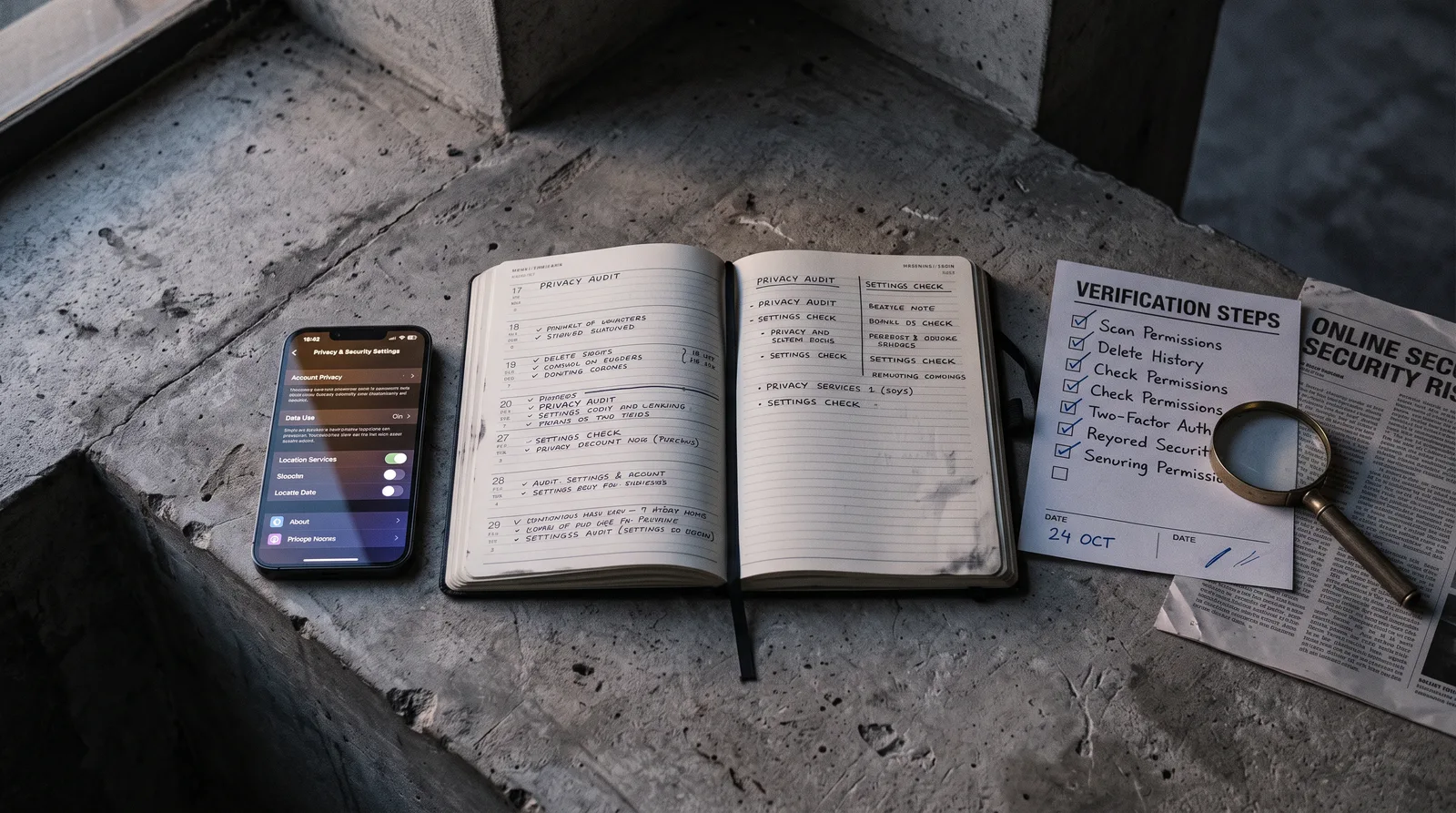
- Spot AI-generated deepfakes, synthetic images, and manipulated audio using free, accessible verification tools
- Audit and lock down your personal data exposure across major AI platforms and chatbot services
- Identify AI hallucinations and fact-check AI-generated content before trusting or sharing it
- Set up practical privacy habits — from prompt hygiene to account settings — that protect your data every day
- Understand when to trust AI output and when to insist on human judgment in high-stakes decisions
- Confidently evaluate news, social media posts, and digital media to determine what is real and what is fabricated
How it works
A school that adapts to you
This isn't a set of static videos. Every lesson is generated live and tuned to where you actually are.
We learn your level
A quick placement check tailors your starting point so you're never bored or lost.
Lessons adapt as you go
Each lesson is written for your pace and your goal, adjusting as your skills grow.
Your AI coach keeps you moving
Checkpoints, feedback, and gentle nudges turn progress into a real result.
The curriculum
What's inside your school
6 modules · 26 lessons

How AI Actually Works (Without the Jargon)
Builds the foundational mental models non-technical adults need to understand where AI risks come from and why they matter.
- 1.1What AI Is — and What It Isn'tIncluded
- 1.2Where Your Data Goes When You Use AIIncluded
- 1.3Why AI Gets Things WrongIncluded
- 1.4The Trust Problem: Why AI Feels More Reliable Than It IsIncluded
AI Hallucinations: Spotting and Fact-Checking AI Mistakes
Gives you a repeatable, tool-backed process for identifying false or fabricated AI-generated content before you trust or share it.
- 2.1What an AI Hallucination Looks Like in the WildIncluded
- 2.2Red Flags: A Checklist for Suspicious AI OutputIncluded
- 2.3Free Fact-Checking Tools and How to Use ThemIncluded
- 2.4When to Stop Googling and Call a Human ExpertIncluded
Deepfakes and Synthetic Media: See Through the Fake
Trains you to detect AI-generated images, video, and audio using visual cues and free verification tools.
- 3.1What Deepfakes Are and Why They're Spreading FastIncluded
- 3.2Visual and Audio Clues That Reveal a FakeIncluded
- 3.3Using Free Detection Tools: Reverse Image Search and BeyondIncluded
- 3.4Evaluating News and Social Media Posts for Fabricated ContentIncluded
- 3.5What to Do When You Find a Fake — and How to Report ItIncluded
Protecting Your Personal Data on AI Platforms
Helps you audit your current data exposure across chatbots and AI services and take concrete steps to reduce it.
- 4.1What AI Platforms Collect — and What They Do With ItIncluded
- 4.2Your Data Audit: Finding Out What's Already Out ThereIncluded
- 4.3Locking Down Your Account and Privacy SettingsIncluded
- 4.4Prompt Hygiene: What Never to Type Into a ChatbotIncluded
- 4.5Opting Out, Deleting Data, and Knowing Your RightsIncluded
Everyday Privacy Habits for the Long Haul
Turns one-time fixes into sustainable daily routines that keep your data and identity protected over time.
- 5.1Building a Personal AI Privacy RoutineIncluded
- 5.2Safe AI Use at Work: What Your Employer's Tools Can SeeIncluded
- 5.3Talking to Kids and Family About AI RisksIncluded
- 5.4Staying Current: How to Keep Up as AI Keeps ChangingIncluded
Confident AI Judgment: Trusting Yourself More Than the Algorithm
Synthesizes everything into a personal decision-making framework for knowing when to use AI, when to verify, and when to walk away.
- 6.1The Trust Spectrum: Low-Stakes vs. High-Stakes AI UseIncluded
- 6.2Your Personal AI Verification ChecklistIncluded
- 6.3Real-World Scenarios: Practice Making the CallIncluded
- 6.4Confident, Not Paranoid: Finding Your Balanced Relationship With AIIncluded
Who it's for
Is this you?

Skeptical professionals
They use AI tools at work but worry about what their employer's platforms can see — and want clear boundaries and smarter habits before something goes wrong.

Concerned parents
They want to talk to their kids about deepfakes and AI-generated content with confidence, not panic — and need to understand the risks themselves first.
News-savvy retirees
They've seen too many viral stories that turned out to be fake and want a reliable system for separating real information from AI-generated manipulation.

Privacy-minded everyday users
They've always had a gut feeling that these apps collect too much data — and now they want to do something about it, starting with a personal data audit.

Non-technical small business owners
They're adopting AI tools to stay competitive but need to know what they're risking — for themselves, their customers, and their business reputation.

Socially active content sharers
They post and share regularly and want to stop accidentally amplifying deepfakes or AI hallucinations — so they can share with confidence, not cringe.
Questions
Frequently asked
Your teacher
A note from your teacher
AI Professor Courses
If you've ever read a headline about deepfakes or AI data collection and felt a low-grade anxiety you couldn't quite shake — I want you to know that feeling makes complete sense. You're not being irrational. The technology is genuinely moving fast, the risks are real, and most of the content out there explaining it is either written for engineers or designed to scare you into clicking. Neither one actually helps you.
That's the gap I set out to close with this school.
I work in the world of cybersecurity and digital safety, and I've spent years translating technical risk into plain language for people who just want to know what to do. Not a lecture on how neural networks work. Not a list of alarming statistics with no next step. Practical, specific, honest guidance — the kind a knowledgeable friend would give you over coffee if they happened to know a lot about this stuff.
Here's what I've learned from doing that work: most people don't need more information about AI. They need a clear framework for making good decisions with it. They need to know how to spot a fake image without becoming a forensic analyst. They need to know what they've already handed over to AI platforms — and how to claw some of it back. They need to know the difference between a low-stakes question where a chatbot is perfectly fine and a high-stakes moment where trusting an algorithm could genuinely cost them. That's exactly what this curriculum delivers.
What I won't do is talk down to you, bury you in jargon, or pretend this is more complicated than it needs to be. Every lesson in this school is built around real examples, free tools, and actions you can take the same day you learn them. You'll finish this course knowing more than most people — not because you became a tech expert, but because you built the judgment to ask the right questions and catch the right warning signs.
You can handle this. That's not a pep talk — it's a fact. Come find out for yourself.
— AI Professor Courses
Start your journey today
Get instant access — learn at your own pace with an AI coach in your corner.
$5/mo
Recurring billing · cancel anytime
Secure checkout · Instant access
- 6 modules, 26 lessons
- AI-adaptive lessons tuned to your level
- Quizzes & checkpoints to lock in progress
- Your own AI learning coach
- Learn on any device, at your pace
- Full access for as long as you're subscribed