Get cited by AI — or get bypassed by it
Master AEO, GEO, and LLMO from first principles: learn to reverse-engineer RAG pipelines, deploy schema at the code level, and architect content that Gemini, Perplexity, ChatGPT Search, Copilot, and every major AI engine extracts, trusts, and cites — starting with your very next publish. This course is rich in additional features not found anywhere else. It includes an AI Teacher who guides you through the material and answers all of your questions 24/7. You will also be able to generate a personal study guide you can download and keep. A Certificate of Completion is also included. This course is updated weekly with new multi-media to enhance your learning experience.

I don't teach you to chase algorithm updates — I teach you to understand the machine well enough that the updates become obvious.
— AI Professor Courses
What you'll learn
What you'll be able to do
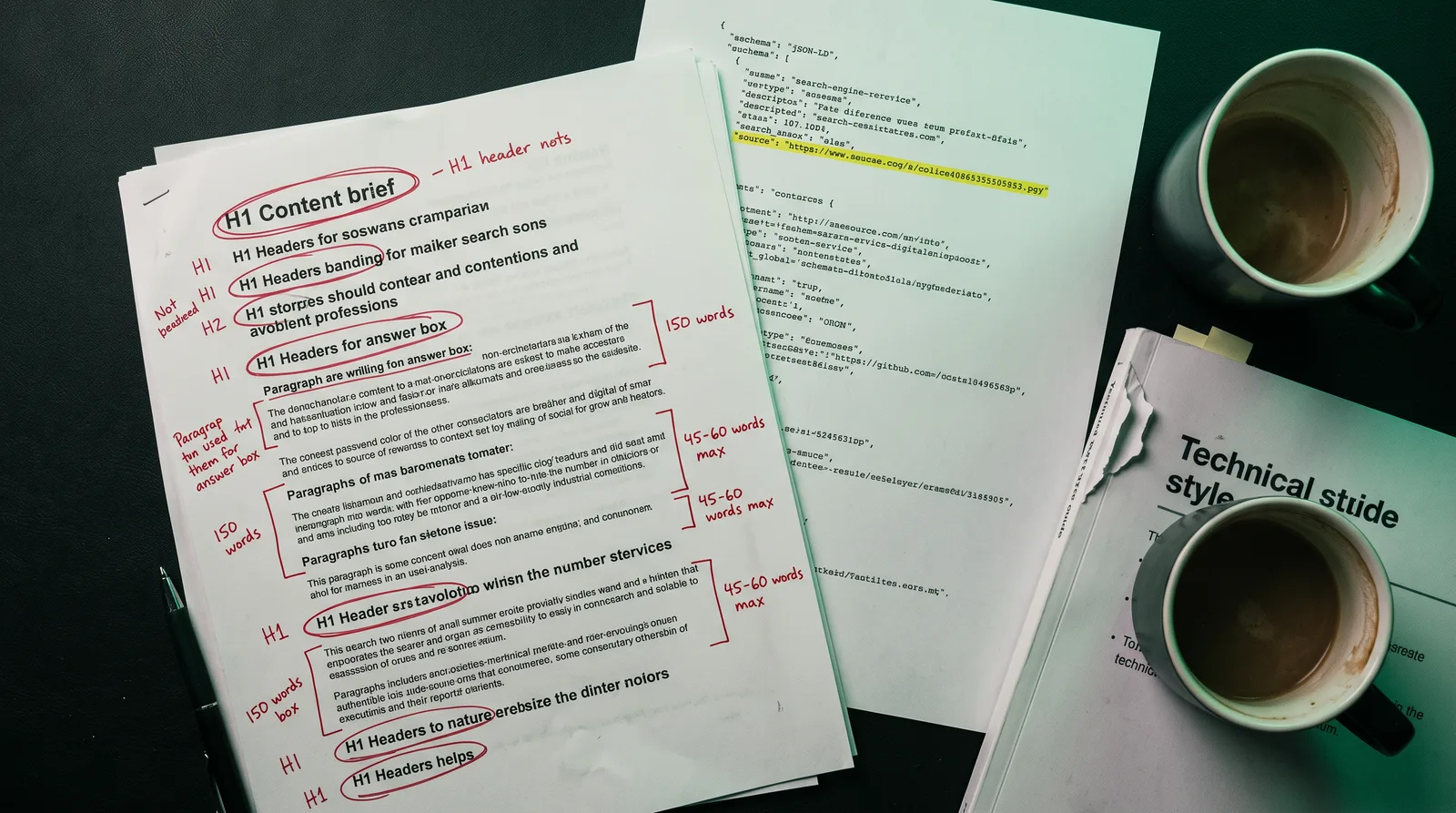
- Structure H1 questions and 40–60 word direct-answer boxes that AI engines extract and cite verbatim across Gemini, Perplexity, ChatGPT Search, and Copilot
- Deploy FAQ, Article, and Course schema markup at the code level to build trust signals that AI crawlers prioritize over competitors
- Reverse-engineer how Retrieval-Augmented Generation (RAG) works across 10+ major AI ecosystems and use that knowledge to engineer content that wins citations
- Rewrite existing content using conversational, intent-matched phrasing that mirrors real human chat queries rather than rigid keyword strings
- Build a Multi-Engine Optimization Framework that tailors content structure, density, and entity coverage to perform across every major AI answer engine simultaneously
- Audit and diagnose any webpage or article for AI-readiness, identifying structural, semantic, and technical gaps that are costing it citations and organic AI visibility
How it works
A school that adapts to you
This isn't a set of static videos. Every lesson is generated live and tuned to where you actually are.
We learn your level
A quick placement check tailors your starting point so you're never bored or lost.
Lessons adapt as you go
Each lesson is written for your pace and your goal, adjusting as your skills grow.
Your AI coach keeps you moving
Checkpoints, feedback, and gentle nudges turn progress into a real result.
The curriculum
What's inside your school
6 modules · 27 lessons

The AI Search Revolution: Why Old SEO Is Dead
Establishes why the shift from keyword-based search to AI answer engines is irreversible and what it demands from modern content professionals.
- 1.1From Blue Links to Answer Boxes: The New Search LandscapeIncluded
- 1.2Why Keyword Stuffing and 3,000-Word Fluff Articles Are DeadIncluded
- 1.3The AEO, GEO, AIO, and LLMO Glossary: Knowing the BattlefieldIncluded
- 1.4The Competitive Cost of Ignoring AI SearchIncluded
How RAG Works: Reverse-Engineering AI Answer Engines
Teaches how Retrieval-Augmented Generation selects, retrieves, and cites sources across every major AI ecosystem so students can engineer content to win those citations.
- 2.1RAG Unpacked: How AI Engines Find, Retrieve, and Cite SourcesIncluded
- 2.2Engine-by-Engine Breakdown: Gemini, ChatGPT Search, and PerplexityIncluded
- 2.3Engine-by-Engine Breakdown: Copilot, Grok, Meta AI, and ClaudeIncluded
- 2.4Engine-by-Engine Breakdown: You.com, DeepSeek, Phind, Brave Search, Brave Leo, DuckDuckGo AI, Komo Search, and Emerging EnginesIncluded
- 2.5What Every AI Engine Has in Common: Universal Ranking SignalsIncluded
Direct-Answer Architecture and Snippet Placement
Teaches students to engineer page structure so AI engines extract and cite their content verbatim at the top, middle, and section levels of any response.
- 3.1H1 Question Framing: Writing Headlines AI Engines Answer FromIncluded
- 3.2The 40–60 Word Answer Box: Crafting AI-Ready Top-Level ResponsesIncluded
- 3.3Section-Level Formatting to Capture Secondary and Follow-Up QueriesIncluded
- 3.4Layered Content Architecture: Balancing Depth, Scanability, and AI ExtractionIncluded
Entity Recognition and Technical Trust Signals
Covers the code-level and structural signals — schema markup, entity clarity, and crawl optimization — that make AI crawlers treat a site as a high-trust source.
- 4.1How AI Crawlers Read Entity Signals and Why They Trump KeywordsIncluded
- 4.2Deploying FAQ Schema for AI Snippet ExtractionIncluded
- 4.3Article and Course Schema: Signaling Authority at the Code LevelIncluded
- 4.4Technical Trust Signals: Site Speed, Crawlability, and AI IndexabilityIncluded
- 4.5E-E-A-T for AI: Demonstrating Experience, Expertise, Authority, and Trust to LLMsIncluded
Semantic Intent and Conversational Content Optimization
Trains students to rewrite and create content that mirrors real human chat queries, feeds AI models the exact linguistic density they need, and earns consistent citations.
- 5.1Mapping Conversational Intent: How Humans Actually Ask AI EnginesIncluded
- 5.2Conversational Phrasing vs. Rigid Keywords: Rewriting for AI ComprehensionIncluded
- 5.3Semantic Density and Co-Occurrence: Feeding LLMs the Signals They NeedIncluded
- 5.4Rewriting Existing Content for AI Readiness: A Structured WorkflowIncluded
Multi-Engine Optimization Framework and AI Readiness Auditing
Equips students to build a systematic, scalable framework for winning citations across all major AI engines and diagnosing any content asset for AI-readiness gaps.
- 6.1Building Your Multi-Engine Optimization (MEO) FrameworkIncluded
- 6.2Tailoring Content Structures Engine by Engine Without Duplicating EffortIncluded
- 6.3The AI Readiness Audit: Diagnosing Structural and Semantic GapsIncluded
- 6.4The AI Readiness Audit: Diagnosing Technical and Indexability GapsIncluded
- 6.5Putting It All Together: Building Your Personal AEO/GEO/LLMO Action PlanIncluded
Who it's for
Is this you?

In-house SEO Lead
You've built solid organic rankings and now watch AI answer boxes intercept your best queries — this gives you the technical framework to defend and extend visibility in both worlds.

Digital Marketing Agency Owner
Your clients are asking about AI search and you need a repeatable, scalable audit-and-optimization methodology you can deliver across every account and niche.

Content Strategist
You plan and commission content at scale and need to embed AEO architecture — direct-answer boxes, entity signals, conversational intent mapping — into every brief from here on.

Growth-Focused Entrepreneur
You run a content-driven business and can't afford to cede AI citations to better-funded competitors — this is the technical playbook that levels the field.

Freelance SEO Consultant
You need to future-proof your service offering and give clients a concrete GEO and LLMO deliverable before a competitor who already has one takes the call.

B2B Content & Demand Gen Manager
Your buyers are researching in AI chat interfaces before they ever visit your site — you need your brand cited as the authoritative source at that zero-click moment of intent.
Questions
Frequently asked
Your teacher
A note from your teacher
AI Professor Courses
If you're reading this, you've probably already noticed it: the queries that used to send traffic to your pages are now being answered — fully, confidently, and without a click — by Gemini, Perplexity, or ChatGPT Search. Your rankings may look fine in a traditional rank tracker. Your traffic tells a different story.
I built this school because the gap between "understanding that AI search is changing things" and "knowing precisely what to do about it" is enormous — and most of what's circulating right now to fill that gap is either surface-level trend commentary or recycled SEO advice with an "AI" label slapped on it. Neither is going to help you earn citations from a RAG pipeline. Neither is going to get your content extracted verbatim into an AI answer box. Rigorous, mechanism-level understanding will.
Here's what I want you to actually walk away with: not a checklist, but a mental model. When you understand how Retrieval-Augmented Generation works — how an AI engine decides what to retrieve, what to trust, and what to quote — you can apply that understanding to every engine that exists today and every engine that launches next quarter. That's the intellectual foundation this school is built on. The specific tactics for H1 framing, 40–60 word answer boxes, schema deployment, entity salience, and semantic density all follow logically from that foundation, which means they stick.
I'll be honest with you about one thing: this is not a beginner's course. I don't spend time explaining what a meta description is or why content marketing matters. I assume you already know traditional SEO. What I'm offering is the precise, technical upgrade path — from keyword-era practitioner to AI-era authority. If you bring that foundation, I'll show you exactly how to make AI engines cite you instead of your competitors.
The opportunity window here is real, and it is not permanent. The practitioners who build AEO and GEO infrastructure now will hold citation advantages that are genuinely difficult to displace later. I'd like to help you be one of them. Come in, do the work, and let's build your AI search authority together.
— AI Professor Courses
Start your journey today
Get instant access — learn at your own pace with an AI coach in your corner.
$5/mo
Recurring billing · cancel anytime
Secure checkout · Instant access
- 6 modules, 27 lessons
- AI-adaptive lessons tuned to your level
- Quizzes & checkpoints to lock in progress
- Your own AI learning coach
- Learn on any device, at your pace
- Full access for as long as you're subscribed