Learn to see the world like a sociologist
A rigorous, college-level sociology education — lectures, research methods, theory, and academic writing — taught the way a real professor teaches it, at a fraction of what a single university credit hour costs.

"I don't want you to memorize sociology — I want you to think with it, argue with it, and never look at the social world the same way again."
— AI Professor Courses
What you'll learn
What you'll be able to do
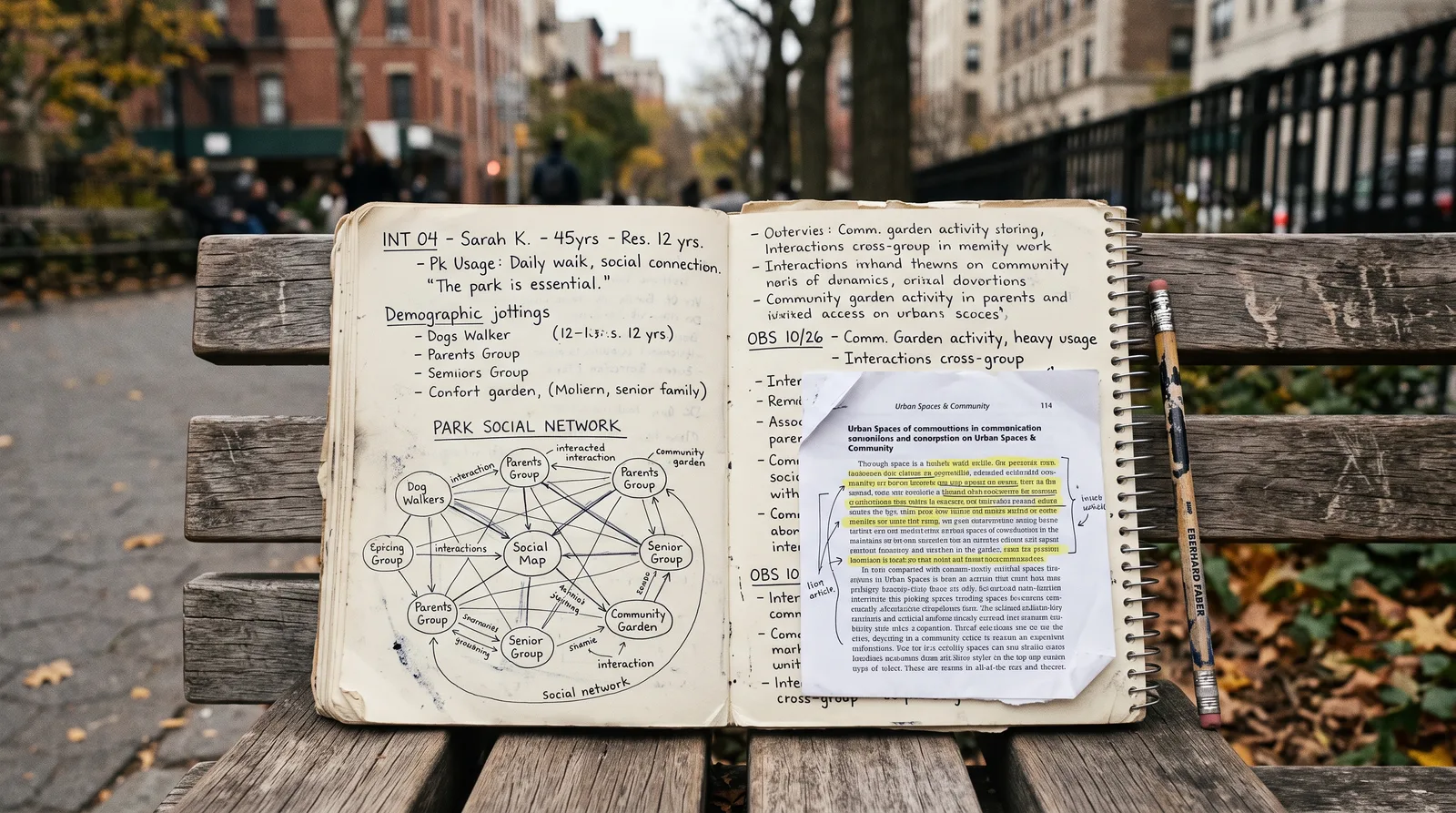
- Explain and apply the three core sociological paradigms — functionalism, conflict theory, and symbolic interactionism — to real-world events
- Analyze how race, class, gender, and power intersect to produce social inequality and stratification
- Read and critically evaluate primary sociological texts and peer-reviewed research with confidence
- Design and interpret basic sociological research using qualitative and quantitative methods
- Trace how institutions — family, education, religion, media, and government — shape individual behavior and group identity
- Construct well-argued, evidence-based sociological essays and discussion responses at the college level
How it works
A school that adapts to you
This isn't a set of static videos. Every lesson is generated live and tuned to where you actually are.
We learn your level
A quick placement check tailors your starting point so you're never bored or lost.
Lessons adapt as you go
Each lesson is written for your pace and your goal, adjusting as your skills grow.
Your AI coach keeps you moving
Checkpoints, feedback, and gentle nudges turn progress into a real result.
The curriculum
What's inside your school
6 modules · 29 lessons

Thinking Like a Sociologist
Introduces the sociological imagination, core vocabulary, and the three foundational paradigms students will use throughout the course.
- 1.1What Is Sociology?Included
- 1.2The Sociological ImaginationIncluded
- 1.3Functionalism: Society as a SystemIncluded
- 1.4Conflict Theory: Power and InequalityIncluded
- 1.5Symbolic Interactionism: Meaning and Everyday LifeIncluded
Doing Sociology: Research Methods
Equips students to design, conduct, and critically evaluate sociological research using both qualitative and quantitative approaches.
- 2.1How Sociologists Ask QuestionsIncluded
- 2.2Quantitative Methods: Surveys and StatisticsIncluded
- 2.3Qualitative Methods: Interviews, Ethnography, and ObservationIncluded
- 2.4Reading Peer-Reviewed ResearchIncluded
- 2.5Ethics in Sociological ResearchIncluded
Culture, Socialization, and Identity
Explores how culture is produced and transmitted, and how individuals become social beings through lifelong socialization.
- 3.1Culture: Norms, Values, and SymbolsIncluded
- 3.2Socialization Across the Life CourseIncluded
- 3.3Deviance, Social Control, and LabelingIncluded
- 3.4Media, Technology, and the Social SelfIncluded
Social Stratification: Class, Race, and Gender
Provides a rigorous analysis of how race, class, gender, and power intersect to produce inequality and reproduce social hierarchies.
- 4.1Social Class and Economic Inequality in AmericaIncluded
- 4.2Race, Ethnicity, and RacismIncluded
- 4.3Gender, Sexuality, and PatriarchyIncluded
- 4.4Intersectionality: Where Race, Class, and Gender MeetIncluded
- 4.5Global Stratification and World SystemsIncluded
Social Institutions and Their Power
Examines the major institutions — family, education, religion, media, and government — and how they shape behavior, reinforce norms, and distribute power.
- 5.1Family: Structure, Change, and DiversityIncluded
- 5.2Education: Opportunity, Reproduction, and the Hidden CurriculumIncluded
- 5.3Religion: Belief, Community, and Social ControlIncluded
- 5.4Government, Power, and Political SociologyIncluded
- 5.5Media as a Social InstitutionIncluded
Writing and Arguing Like a Sociologist
Develops the academic writing, critical reading, and argumentation skills needed to produce college-level sociological essays and discussion responses.
- 6.1The Anatomy of a Sociological ArgumentIncluded
- 6.2Using Theory as a LensIncluded
- 6.3Integrating Evidence and Citing SourcesIncluded
- 6.4Writing Discussion Posts and Short-Response EssaysIncluded
- 6.5The Full Sociological Essay: From Prompt to Final DraftIncluded
Who it's for
Is this you?

Intro Sociology students
She's taking Intro Soc this semester and wants a rigorous parallel resource that explains the paradigms and helps her write essays that actually impress her professor.

Career changers
He's moving from business into social work or public policy and needs the theoretical fluency and research-methods literacy that his new field assumes.

Self-directed adult learners
She never had the chance to study sociology formally, but the questions it asks — about inequality, institutions, and power — are the questions she's been asking her whole life.

Graduate school preppers
He's preparing applications for graduate programs in sociology, education, or public health and needs a solid command of core theory, methods, and disciplinary writing conventions.

Journalists & content creators
She writes about culture, inequality, or politics and wants to move beyond surface-level takes by grounding her analysis in real sociological frameworks and peer-reviewed evidence.
Educators & trainers
He teaches at the high school level or leads DEI and organizational training, and wants a deeper, more rigorous command of social stratification, institutions, and intersectionality.
Questions
Frequently asked
Your teacher
A note from your teacher
AI Professor Courses
If you've ever watched the news, sat in a meeting, or navigated a family dinner and thought, there's something deeper going on here that I can't quite name — you already have the instinct that drives sociology. What you may not yet have is the vocabulary, the theoretical frameworks, or the research literacy to make that instinct rigorous. That's precisely what this school is for.
I built this curriculum because I believe the college sociology course is one of the most genuinely transformative educational experiences available — and it shouldn't require a $60,000-a-year tuition bill to access it. The three paradigms alone — functionalism, conflict theory, symbolic interactionism — will permanently change how you read a news story, interpret a policy debate, or understand why your workplace operates the way it does. But only if they're taught with the precision and the demand for application that a serious course requires. That's the standard I hold here.
What you'll find is that I don't let you off the hook with definitions. Knowing that symbolic interactionism focuses on meaning in everyday life is not the same as being able to use it as a lens to analyze, say, how dress codes in schools reproduce class distinctions. The goal at every stage is the latter — and the writing unit at the end of this school exists precisely because argument is where sociological thinking becomes visible and testable. I will push you to construct claims, marshal evidence from peer-reviewed research, and anticipate counterarguments. That is what thinking in a discipline actually looks like.
I also want to be honest about what sociology demands emotionally as well as intellectually. The units on stratification — social class and economic inequality in America, race and racism, gender and patriarchy, global inequality and world systems — require you to examine structures that you live inside. That can be uncomfortable. It should be. The sociological imagination, as Mills conceived it, is specifically the capacity to see your own biography as a product of historical and social forces. This school will develop that capacity, and it will not always be flattering or comfortable. I consider that a feature, not a bug.
If you're ready to do the work — to read carefully, think critically, and write with precision — I'm ready to teach you. The door to the seminar is open. Come in and take a seat.
— AI Professor Courses
Start your journey today
Get instant access — learn at your own pace with an AI coach in your corner.
$5/mo
Recurring billing · cancel anytime
Secure checkout · Instant access
- 6 modules, 29 lessons
- AI-adaptive lessons tuned to your level
- Quizzes & checkpoints to lock in progress
- Your own AI learning coach
- Learn on any device, at your pace
- Full access for as long as you're subscribed