Learn to read the secret language of transformation
Unlock the symbolic language of alchemy — from ancient philosophy to Jungian psychology — and learn to read one of history's most fascinating traditions of transformation with clarity and confidence.
"Alchemy rewards exactly one thing above all else: the willingness to look carefully — and I'm here to teach you how."
— Carla Paton
What you'll learn
What you'll be able to do
- Identify and interpret the major symbols of alchemy — mercury, sulfur, salt, the Philosopher's Stone, and the alchemical marriage — and explain what each represents philosophically and spiritually.
- Trace the four classic stages of the alchemical process (nigredo, albedo, citrinitas, rubedo) and articulate how they map onto transformation in both nature and the human psyche.
- Describe the historical arc of alchemy from ancient Greco-Egyptian origins through the Islamic Golden Age, the Renaissance, and into modernity.
- Distinguish between practical laboratory alchemy and spiritual or philosophical alchemy, understanding how the two traditions informed and borrowed from each other.
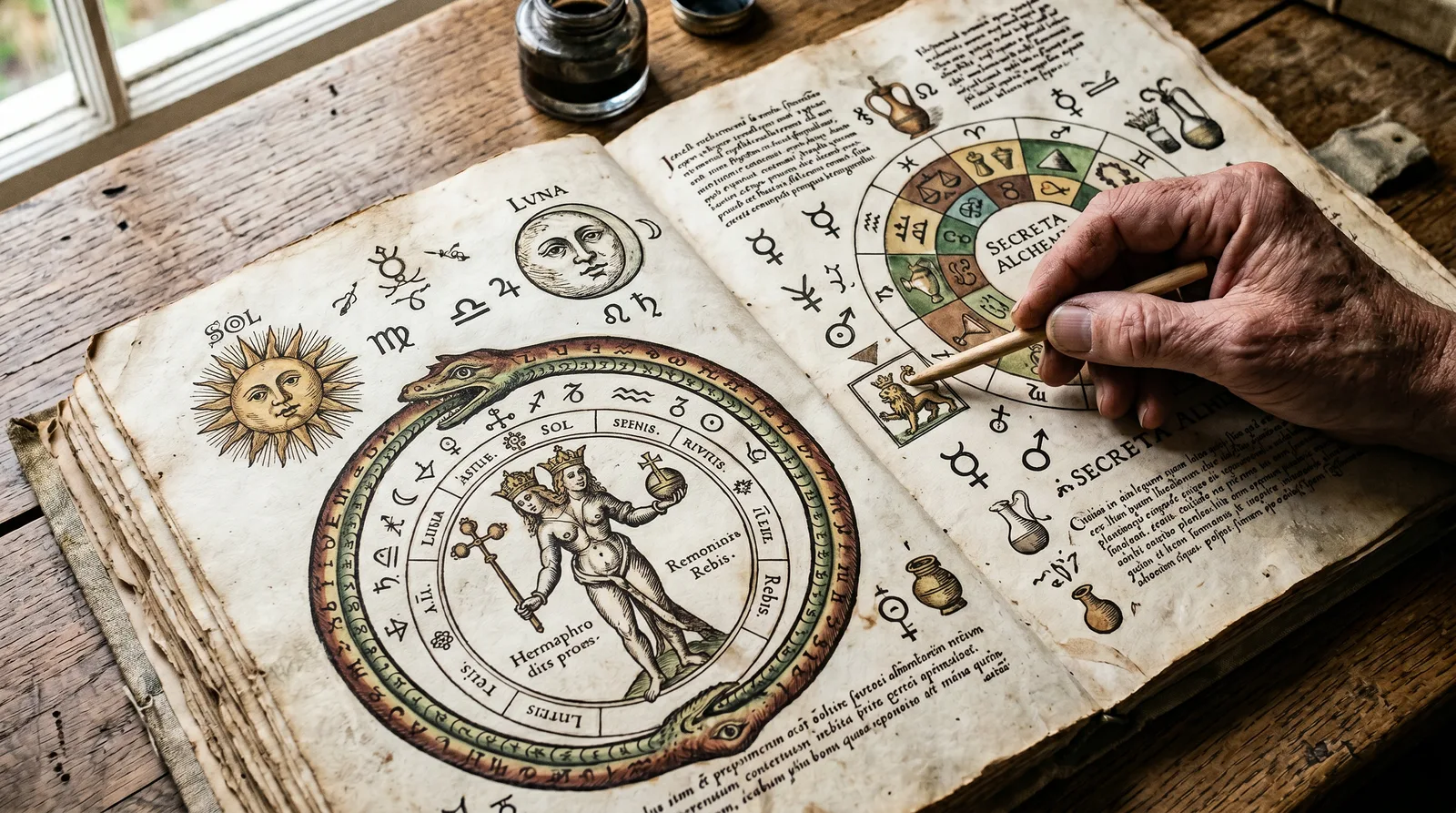
- Decode the visual grammar of alchemical illustration — planets, metals, animals, colors, and mythological figures — and read historical alchemical artwork with informed insight.
- Recognize alchemical themes and symbolism in literature, tarot, mythology, dreams, and Jungian psychology, applying the tradition as a living interpretive framework.
How it works
A school that adapts to you
This isn't a set of static videos. Every lesson is generated live and tuned to where you actually are.
We learn your level
A quick placement check tailors your starting point so you're never bored or lost.
Lessons adapt as you go
Each lesson is written for your pace and your goal, adjusting as your skills grow.
Your AI coach keeps you moving
Checkpoints, feedback, and gentle nudges turn progress into a real result.
The curriculum
What's inside your school
6 modules · 21 lessons
What Is Alchemy? History, Origins, and the Two Traditions
This foundational module orients beginners in the world of alchemy by tracing its historical arc from ancient Greco-Egyptian origins through the Islamic Golden Age, the Renaissance, and the age of Paracelsus. It closes by drawing the essential distinction between practical laboratory alchemy and spiritual-philosophical alchemy — a conceptual anchor that underpins every module that follows. No prior knowledge is assumed; the goal is to give students a confident chronological and conceptual map before any symbols are introduced.
- 1.1The Birth of Alchemy: Greco-Egyptian Roots and the Hermetic TraditionIncluded
- 1.2Alchemy in the Islamic Golden Age and Its Journey into EuropeIncluded
- 1.3Renaissance Alchemy and the Age of ParacelsusIncluded
- 1.4Laboratory and Spiritual Alchemy: One Tradition or Two?Included
The Symbolic Grammar of Alchemy: Planets, Metals, Colors, and Creatures
Before students can decode alchemical illustrations or interpret the stages of the Great Work, they need fluency in alchemy's visual and symbolic vocabulary. This module systematically builds that vocabulary by introducing the system of planetary-metal correspondences, the rich bestiary of symbolic animals, and the alchemical meaning of color. It is intentionally placed before the stages module (Module 3) and the core symbols module (Module 4) so that students arrive at those discussions already able to recognize the grammar behind the images. A new lesson on mythological figures and the human body has been added to ensure full coverage of the course's stated visual literacy outcomes.
- 2.1The Seven Planets and Their Metals: A World Built on CorrespondenceIncluded
- 2.2The Alchemical Bestiary: Animals as Symbols of ProcessIncluded
- 2.3The Language of Color: Reading the Alchemical RainbowIncluded
- 2.4Mythological Figures, the Human Body, and the Divine in Alchemical ArtIncluded
The Great Work: Stages of the Alchemical Process
With the historical foundation of Module 1 and the symbolic vocabulary of Module 2 now in place, students are ready to trace the sequential logic of alchemy's central narrative: the Great Work (Opus Magnum). This module follows the four classic stages of transformation — nigredo, albedo, citrinitas, and rubedo — in order, examining their chemical, symbolic, and psychological meanings. The sequencing within this module is carefully preserved from the draft: starting with the darkness of nigredo before moving through illumination to the completed Philosopher's Stone ensures students experience the transformative arc as a lived journey rather than a list of terms.
- 3.1Nigredo: The Blackening and the Beginning of TransformationIncluded
- 3.2Albedo and Citrinitas: Washing, Illumination, and the Return of LightIncluded
- 3.3Rubedo: The Reddening, the Philosopher's Stone, and CompletionIncluded
The Three Principles and the Philosopher's Stone: Core Symbols in Depth
This module moves from the sequential logic of the Great Work to a deep, sustained examination of alchemy's most important individual symbols: the three principles of Mercury, Sulfur, and Salt; the concept of the alchemical marriage as the union of opposites; and the Philosopher's Stone as the ultimate goal and symbol of perfection. Placed after Module 3, this module benefits from students' ability to situate these symbols within the processual arc they have already studied. The ordering within the module — principles first, then their conjunction, then the Stone that results — mirrors the internal logic of the alchemical work itself.
- 4.1Mercury, Sulfur, and Salt: The Three Principles of All ThingsIncluded
- 4.2The Alchemical Marriage: Conjunction, Opposites, and WholenessIncluded
- 4.3The Philosopher's Stone: Perfection, Projection, and the Goal of the WorkIncluded
Alchemy and the Psyche: Jung, Individuation, and the Living Tradition
This module explores alchemy's most influential modern afterlife: its adoption and transformation by Carl Jung as a symbolic map of the unconscious and of the individuation process. It also extends the tradition into the contemporary world, examining how alchemical imagery persists in tarot, literature, dreams, and modern spirituality. Placed fifth — after students have full mastery of the symbols, stages, and core concepts — this module rewards that knowledge by showing students how all of it remains vitally alive. A new lesson on applying alchemical reading as a personal interpretive practice has been added to bridge the Jungian content and the final visual literacy module.
- 5.1Jung Discovers Alchemy: The Unconscious in the LaboratoryIncluded
- 5.2Shadow, Anima, Individuation, and the Alchemical Stages as Psychological MapIncluded
- 5.3Alchemy Alive: Tarot, Literature, Dreams, and Contemporary SymbolismIncluded
- 5.4Practicing the Alchemical Lens: Building Your Personal Interpretive FrameworkIncluded
Reading Alchemical Art: A Practical Visual Literacy Workshop
The final module is a hands-on workshop in visual literacy, bringing together every thread of the course into the practical skill of reading historical alchemical illustrations with confidence and insight. Placed last, this module presupposes full fluency in the symbolic grammar (Module 2), the processual stages (Module 3), the core symbols (Module 4), and the interpretive frameworks (Module 5). The draft's structure — method introduction, masterwork close-readings, and an independent analysis — is an excellent capstone design and has been preserved in full, with richer lesson descriptions and more scaffolded activities added to ensure students arrive at genuine independent competence.
- 6.1How to Read an Alchemical Illustration: A Step-by-Step MethodIncluded
- 6.2Masterworks: Close Reading the Splendor Solis and Rosarium PhilosophorumIncluded
- 6.3Your Independent Reading: Final Image AnalysisIncluded
Who it's for
Is this you?

Tarot enthusiasts
You've sensed the alchemical current running through your deck's imagery — this course gives you the precise symbolic vocabulary to finally name it.

Jungian psychology readers
You've followed Jung into the unconscious; now trace the medieval alchemical manuscripts that gave him his map.

History of ideas students
From Greco-Egyptian Hermeticism to Renaissance courts to modern depth psychology, alchemy is a throughline in Western intellectual history you're ready to follow properly.

Mythology lovers
The gods, creatures, and symbolic dramas of alchemical tradition are mythology in another key — and this course teaches you to read both more deeply.

Writers & creative thinkers
Whether you're building fictional worlds or seeking richer symbolic frameworks, alchemy offers an interpretive lens that transforms how you see stories and images.

Curious lifelong learners
No prior background required — just the conviction that history's most fascinating symbolic traditions deserve a serious, unhurried look.
Questions
Frequently asked
Your teacher
A note from your teacher
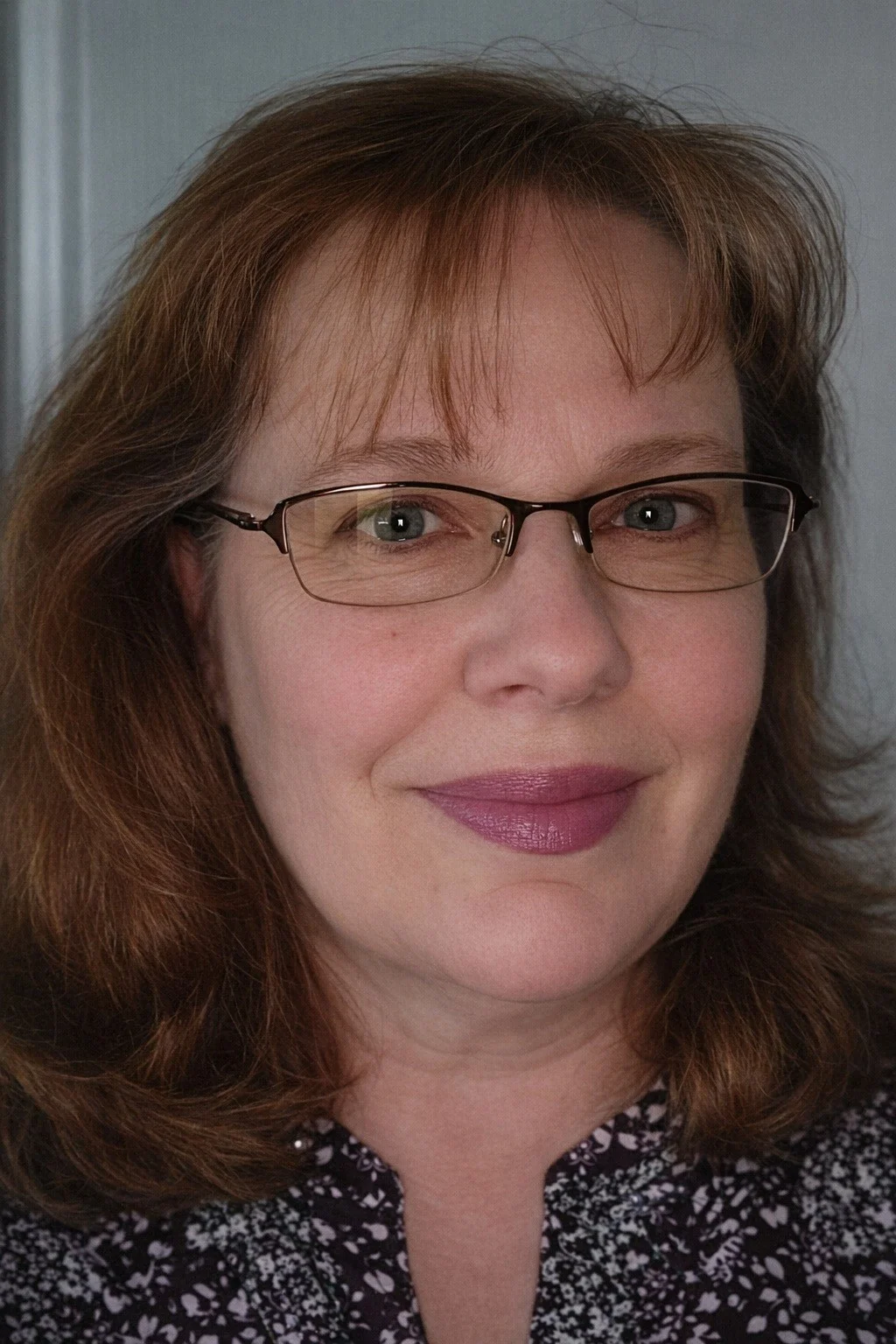
Carla Paton
If you've found your way here, I suspect you already sense that alchemy is something more than the caricature — more than a doomed attempt to turn lead into gold by people who didn't yet know any better. Perhaps you've encountered alchemical imagery in a tarot deck and felt its weight without being able to name it. Perhaps you've read Jung and wondered where all those strange medieval symbols came from. Perhaps the history of ideas has always drawn you, and alchemy sits at the center of a web of threads — Hermeticism, Renaissance philosophy, the birth of chemistry, the interior life — that you've wanted to follow all the way in.
That pull you feel is well-founded. Alchemy is one of the richest symbolic traditions the Western world produced — historically vast, philosophically serious, and visually extraordinary. But it is also genuinely difficult to enter without a guide. The primary texts are dense, the imagery is deliberately obscure, and the secondary literature ranges from the rigorously academic to the wildly speculative, with not always enough signposts between them. I built The Alchemical Library because I wanted to create the course I wished had existed when I first started following those threads.
What you'll find here is a structured, unhurried journey through the whole tradition — from its Greco-Egyptian origins and the Hermetic writings attributed to Thoth and Hermes, through the Islamic scholars who preserved and transformed it, through Paracelsus and the Renaissance workshops, and into the twentieth century, when Jung opened a manuscript and realized that medieval alchemists had been mapping the unconscious all along. Every major symbol gets the careful attention it deserves: mercury, sulfur, and salt as principles of all matter; the four stages of the Work as a language of transformation; the planets and their metals as a world built entirely on correspondence. And in the final module, we sit together with two of the most beautiful alchemical illustrated manuscripts ever made and learn to read them, image by image.
I want to be honest with you about what this course is and isn't. It is not a course in occult practice, and it does not ask you to believe anything. It is a course in understanding — in developing the informed, precise, historically grounded ability to read a tradition that shaped Western thought for two millennia and still surfaces, recognizably, in the symbols and stories we live with today. If that is what you're looking for, I'd be honored to be your guide.
Come in. The library is open.
— Carla Paton
Start your journey today
Get instant access — learn at your own pace with an AI coach in your corner.
$29/mo
Recurring billing · cancel anytime
Secure checkout · Instant access
- 6 modules, 21 lessons
- AI-adaptive lessons tuned to your level
- Quizzes & checkpoints to lock in progress
- Your own AI learning coach
- Learn on any device, at your pace
- Full access for as long as you're subscribed