Train Every Athlete, Every Sport, Every Stage
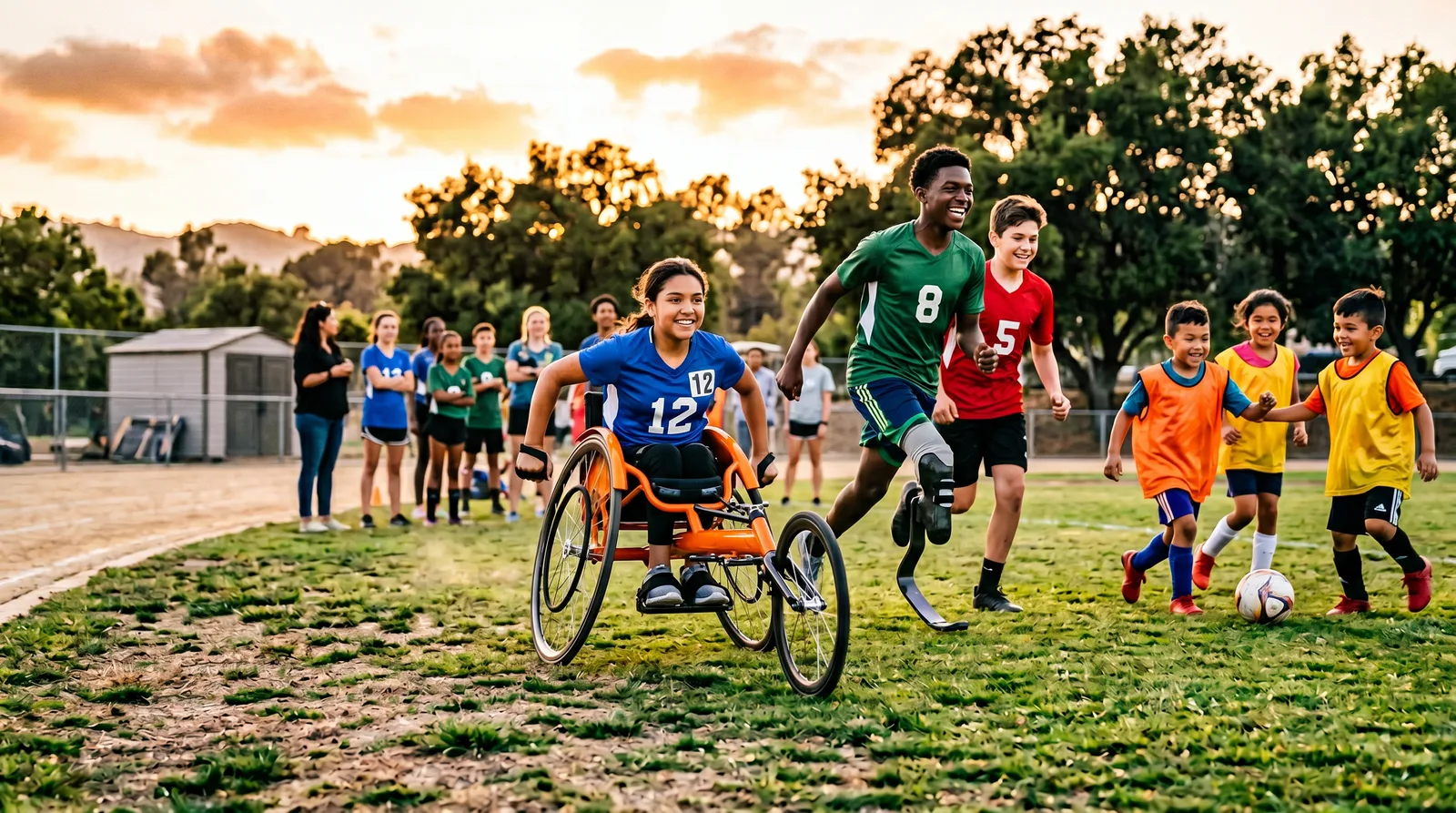
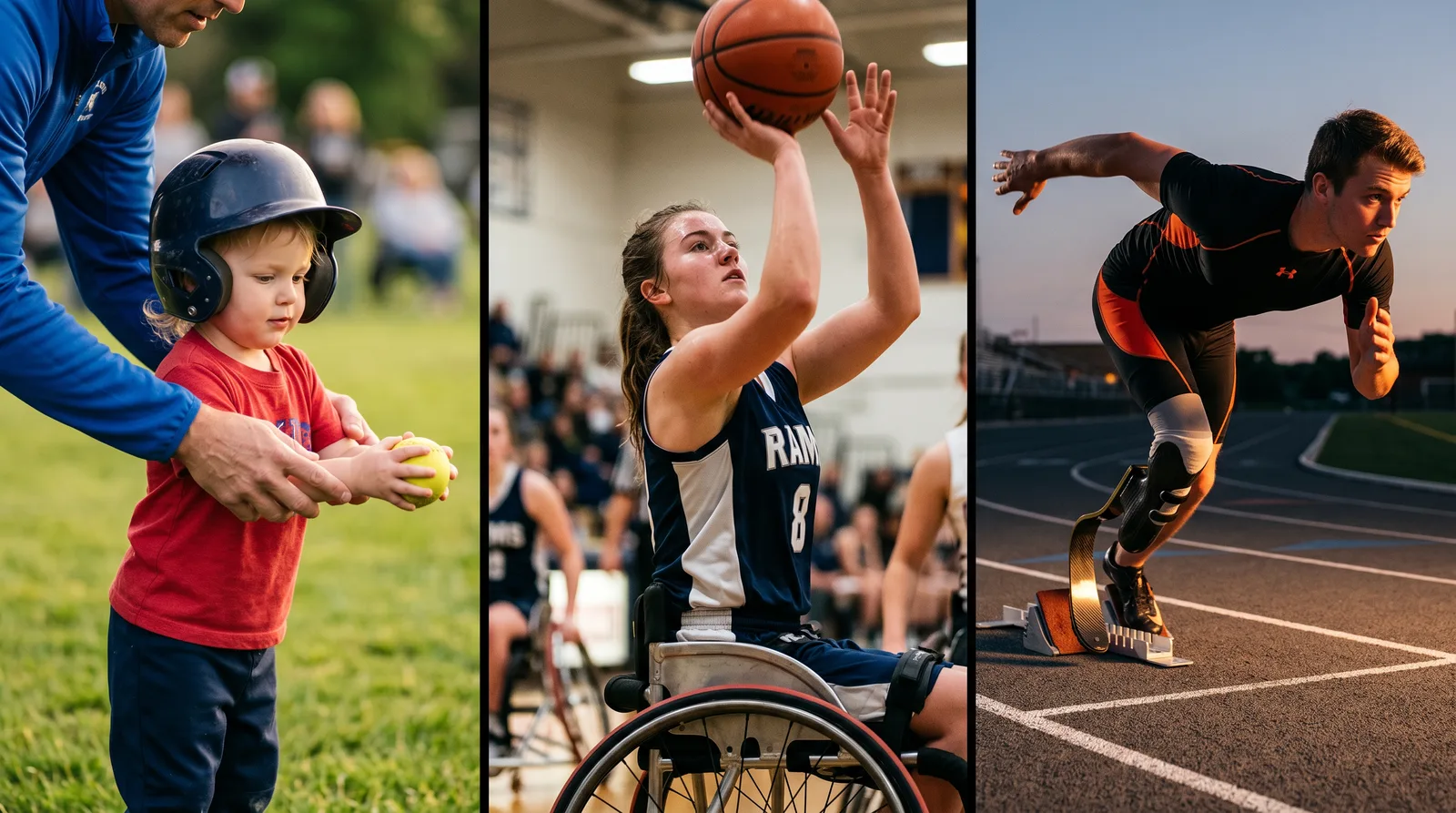
From first steps to championship strategy—All-American Sports Academy delivers structured, inclusive, developmentally matched sports instruction for athletes ages 2–21, right from home. Traditional, adaptive, Paralympic, and Special Olympics pathways included.
"Every athlete deserves a pathway built for their body, their sport, and exactly where they are right now—and that's what I designed this academy to deliver."— Pauline Smith EdD
What you'll learn
What you'll be able to do
- Design and execute a safe, age-appropriate training plan—covering warm-up, sport-specific drills, conditioning, and cool-down—for any American sport across toddler through young-adult developmental stages.
- Demonstrate correct technique for foundational and advanced skills in at least one traditional, one adaptive (wheelchair or amputee), and one Special Olympics discipline, applying governing-body-approved form cues.
- Apply the official rules, officiating signals, and game-management principles of multiple American sports so athletes can compete confidently and coaches can guide compliant, fair play.
- Build sport-specific physical preparation programs—strength, speed, agility, mobility, and endurance—scaled to an athlete's age band, ability, and equipment (including adaptive gear and prosthetics).
- Identify and prevent the most common youth and adaptive-sport injuries by implementing recognized safety standards (USA Sport governing bodies, SafeSport, and Special Olympics Healthy Athletes guidelines) in practice and competition settings.
- Develop and communicate tactical game strategies—offensive systems, defensive schemes, set plays, and situational decision-making—appropriate to an athlete's sport, role, and competitive level.
How it works
A school that adapts to you
This isn't a set of static videos. Every lesson is generated live and tuned to where you actually are.
We learn your level
A quick placement check tailors your starting point so you're never bored or lost.
Lessons adapt as you go
Each lesson is written for your pace and your goal, adjusting as your skills grow.
Your AI coach keeps you moving
Checkpoints, feedback, and gentle nudges turn progress into a real result.
The curriculum
What's inside your school
6 modules · 30 lessons

Foundations of Movement & Athlete Development (Ages 2–5)
The gateway module for toddlers and pre-kindergarteners, grounded in developmentally appropriate motor learning theory. Every lesson prioritizes free exploration, play-based discovery, and joyful movement before any sport-specific language is introduced. Outcomes align with SHAPE America's National Standards for Physical Education (K–12), AAP gross-motor milestones, and SafeSport's age-appropriate child-protection guidelines. Inclusive design ensures activities are adaptable for children with early-identified mobility, sensory, or cognitive differences.
- 1.1Body Awareness & Spatial ReasoningIncluded
- 1.2Locomotor Skills — Running, Jumping & HoppingIncluded
- 1.3Object Control — Throwing, Catching & KickingIncluded
- 1.4Balance, Stability & Core ReadinessIncluded
- 1.5Introduction to Team Play, Rules & SafeSport BasicsIncluded
Multi-Sport Skill Development & Physical Literacy (Ages 6–9)
The sampling stage, where children should be exposed to the widest possible variety of sports and movement patterns before specialization. Aligned with the American Development Model (ADM) published by the United States Olympic & Paralympic Committee (USOPC) and Long-Term Athlete Development (LTAD) principles. All six SHAPE America physical literacy domains are addressed. Safety, warm-up/cool-down, and basic rules are embedded in every sport context so students build habits, not just skills. First formal adaptive sport exposure occurs here through parallel activity modifications.
- 2.1Structured Warm-Up, Cool-Down & Injury Prevention EssentialsIncluded
- 2.2Ball Sports Fundamentals — Football, Basketball & SoccerIncluded
- 2.3Running, Track & Field, and Swimming FoundationsIncluded
- 2.4Racket & Stick Sports — Tennis, Baseball, Softball & HockeyIncluded
- 2.5Gymnastics, Cheer & Dance Sport FundamentalsIncluded
Sport-Specific Technical Mastery & Rules Literacy (Ages 10–13)
The technical investment stage, aligned with LTAD Stage 3 (Learning to Train). Athletes ages 10–13 are in a sensitive period for motor skill encoding, making this the highest-leverage window for sport-specific technique instruction. Every lesson pairs technique with official rules and officiating signals so athletes simultaneously build skill and rules literacy. All content references current official rulebooks: NFL FLAG / USA Football, NFHS Basketball, USSF, US Lacrosse, USA Hockey, NFHS Baseball/Softball, USA Wrestling, USTA, and USGA. SafeSport and concussion protocols are reinforced in every sport context.
- 3.1Football — Technique, Playbook & OfficiatingIncluded
- 3.2Basketball — Advanced Skills, Strategy & Game ManagementIncluded
- 3.3Baseball, Softball & Adaptive Throwing SportsIncluded
- 3.4Soccer, Lacrosse & Field Hockey — Possession & Transition SystemsIncluded
- 3.5Combat, Racket & Individual Sports — Wrestling, Tennis, Golf & MoreIncluded
Adaptive Sports Excellence — Wheelchair, Amputee & Special Olympics Pathways (Ages 10–21)
A dedicated, standalone module ensuring that adaptive sport receives equal curricular depth—not a footnote—within this academy. Structured around the three primary adaptive pathways: wheelchair sports (governed by NWBA, USTA Wheelchair, IWRF, IPC), amputee sports (Challenged Athletes Foundation, Amputee Coalition, USATF), and Special Olympics (Special Olympics International program standards, Healthy Athletes guidelines, Unified Sports framework). Classification systems, athlete rights under the ADA and Section 504, and inclusive design principles are taught as prerequisites before technical instruction begins. All able-bodied students participate fully in adaptive sport lessons as a standard practice—not as observers.
- 4.1Adaptive Equipment, Classification & Athlete RightsIncluded
- 4.2Wheelchair Sport Mechanics & Performance — Basketball, Tennis, Racing & RugbyIncluded
- 4.3Amputee Sport Technique — Running, Field Events, Swimming & Team SportsIncluded
- 4.4Special Olympics Coaching, Healthy Athletes & Unified SportsIncluded
- 4.5Adaptive Strength, Conditioning & Injury PreventionIncluded
Physical Preparation & Sport Science for Young Athletes (Ages 10–21)
The performance science backbone of the entire academy, covering the full spectrum of physical preparation from foundational youth strength training through advanced periodization and athlete monitoring. Grounded in NSCA Youth Resistance Training Guidelines, ACSM Youth Fitness Standards, USADA anti-doping education for young athletes, and USA Sport governing-body strength and conditioning endorsements. This module explicitly bridges to adaptive athlete needs (addressed in Module 4) and to tactical performance demands (addressed in Module 6). Nutrition content aligns with AND/DC/ACSM joint position statement on nutrition for young athletes and USADA clean-sport nutrition education.
- 5.1Foundations of Youth Strength & Power DevelopmentIncluded
- 5.2Speed, Agility & Change-of-Direction TrainingIncluded
- 5.3Energy Systems, Conditioning & PeriodizationIncluded
- 5.4Nutrition, Hydration & Recovery for Young AthletesIncluded
- 5.5Mental Performance, Resilience & Pre-Competition ReadinessIncluded
Tactical Mastery, Strategy & Leadership (Ages 13–21)
The capstone module, synthesizing all prior technical, physical, adaptive, and safety knowledge into advanced tactical application and athlete leadership. Aligned with LTAD Stage 4 (Training to Compete) and Stage 5 (Training to Win). Every tactical system taught is cross-referenced with official governing-body rules to ensure all strategies are compliant and not just effective. Officiating literacy reaches its highest level, enabling students to serve as certified junior officials. The leadership and coaching pathway content maps to NFHS Fundamentals of Coaching certification, SafeSport Training completion, and USA Sport National Governing Body (NGB) level-1 coaching pathways, giving advanced students a clear bridge to coaching careers.
- 6.1Offensive Systems — Installing and Executing Attacking SchemesIncluded
- 6.2Defensive Systems — Principles, Schemes & AdjustmentsIncluded
- 6.3Situational Playmaking — Late-Game, Special Teams & High-Pressure MomentsIncluded
- 6.4Officiating Knowledge & Competing with Rules MasteryIncluded
- 6.5Athlete Leadership, Coaching Principles & Career PathwaysIncluded
Who it's for
Is this you?

Toddler Sport Parents
Parents of 2–5 year olds get safe, playful, developmentally spot-on movement activities that build the physical foundations every young athlete needs before a single sport is introduced.

Youth Multi-Sport Kids (6–9)
Young athletes sampling football, basketball, soccer, tennis, and more get structured skill-building, warm-up habits, and sport fundamentals that set them up for life.

Competitive Tweens (10–13)
Athletes entering serious competition learn technical mastery, rules literacy, and position-specific skills across every major American sport—no more winging it at game time.

Adaptive & Paralympic Athletes
Wheelchair, amputee, and Special Olympics athletes (ages 10–21) get a full, expert-built pathway covering sport mechanics, adaptive equipment, classification, and competition-ready conditioning.

High-School & College-Bound Athletes (13–21)
Serious teen competitors get periodized strength and conditioning, offensive and defensive tactical systems, mental performance training, and the leadership skills that separate good athletes from great ones.

Coaches, PE Teachers & Sports Parents
Adults guiding young athletes learn safe training plan design, officiating knowledge, injury prevention standards, inclusive adaptive coaching, and how to build a culture of fair, confident competition.
Questions
Frequently asked
Your teacher
A note from your teacher

Pauline Smith EdD
I know what it feels like to watch a young athlete not quite know where to start—or to be the parent, coach, or educator scrambling to find resources that actually match where that athlete is right now. Not too advanced, not too basic, and definitely not a one-size-fits-all PDF that treats a seven-year-old and a seventeen-year-old the same way. That gap is exactly why All-American Sports Academy exists.
Here's what I built this around: athlete development is not a straight line, and it is not the same for every body. A toddler learning to hop and catch needs playful, concrete movement games—not a lecture on defensive rotations. A thirteen-year-old running a route needs precise technique cues, rules literacy, and position-specific conditioning—not the same drills they did at age six. And a wheelchair tennis athlete or a Special Olympics competitor needs a coach who actually understands classification, adaptive equipment, governing-body standards, and the specific mechanics of their sport—not a vague "just modify it" afterthought. Every module in this academy was designed to honor those differences.
What you'll find here is a complete, progressive education—six modules spanning ages 2 through 21, covering every major American sport, with a full dedicated pathway for wheelchair, amputee, and Special Olympics athletes that carries the exact same technical rigor as every other part of the curriculum. Safety standards from USA Sport governing bodies, SafeSport, and Special Olympics Healthy Athletes guidelines are woven in from the very first lesson for toddlers through the advanced periodization and mental performance work for young competitors in their final years before adulthood. This is not a collection of tips. It is a structured, sequenced academy.
I also want to speak directly to the adults in the room—the coaches, the PE teachers, the sports parents who are doing everything they can for the young athletes they care about. This curriculum is built for you too. You'll walk away knowing how to design a safe training plan, read an officiating signal, communicate a tactical system, protect athletes from common injuries, and build a culture of fair, inclusive competition. The young athlete in your life deserves that level of preparation behind them.
If you're ready to stop searching for scattered resources and start working through a system that grows with your athlete—from first steps all the way to championship-level strategy and leadership—this is your home. Come in, get to work, and let's build something great together. Every athlete. Every sport. Every stage. Let's go.
— Pauline Smith EdD
Start your journey today
Join get instant access — learn at your own pace with an AI coach in your corner.
$39/mo
Recurring billing · cancel anytime
Secure checkout · Instant access
- 6 modules, 30 lessons
- AI-adaptive lessons tuned to your level
- Quizzes & checkpoints to lock in progress
- Your own AI learning coach
- Learn on any device, at your pace
- Full access for as long as you're subscribed