Get job-ready for a healthcare career
Allied Health Academy gives aspiring medical assistants, phlebotomists, pharmacy techs, and more the clinical skills, medical knowledge, and professional confidence to walk into their first role — or their next one — fully prepared. Practitioner-led. Certification-focused. Built for real clinical settings.
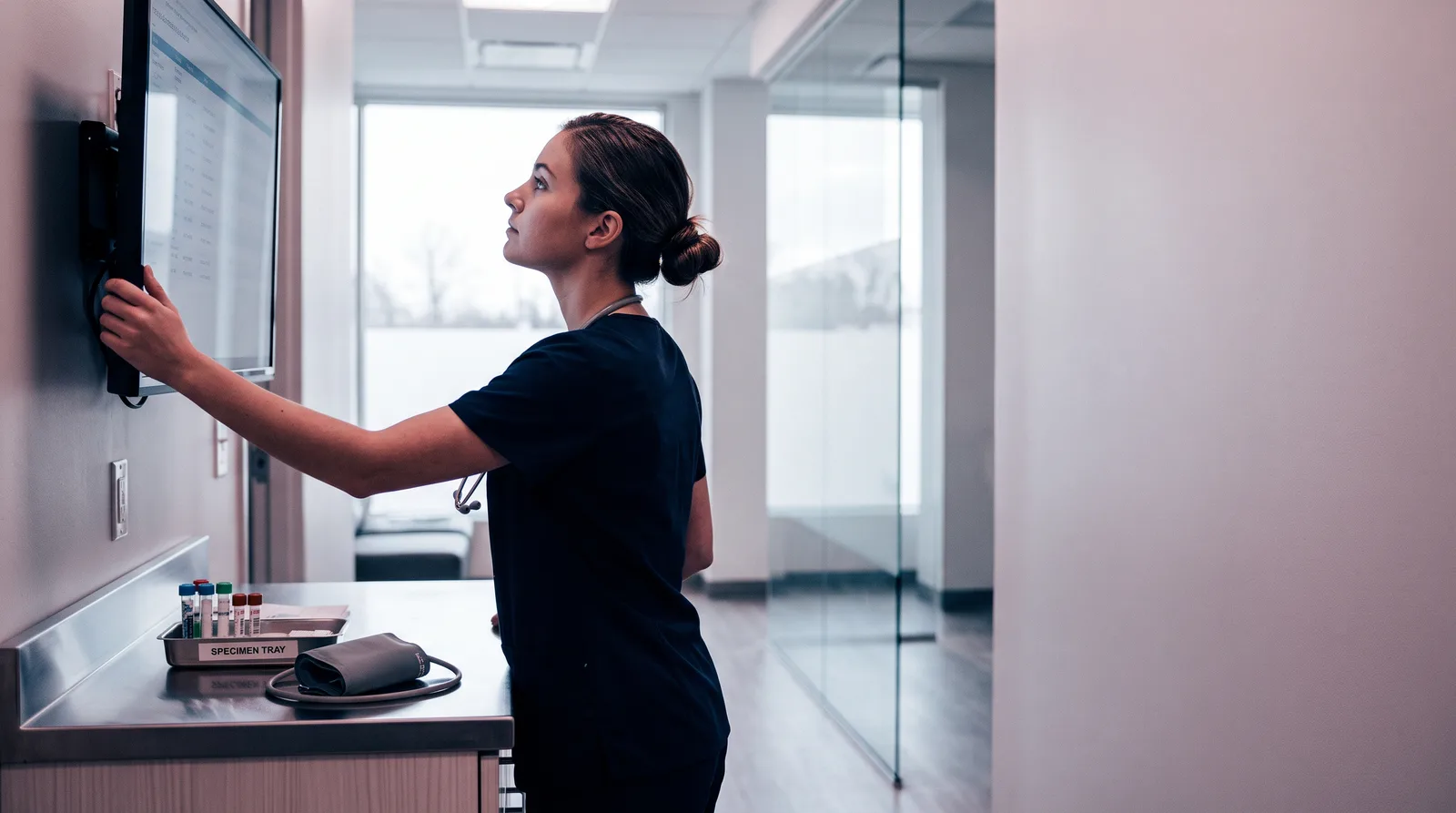
"Technical skill and human connection aren't separate goals — in allied health, they're the same goal, and that's exactly what I designed this program to build."
— Tamekka Burnett
What you'll learn
What you'll be able to do
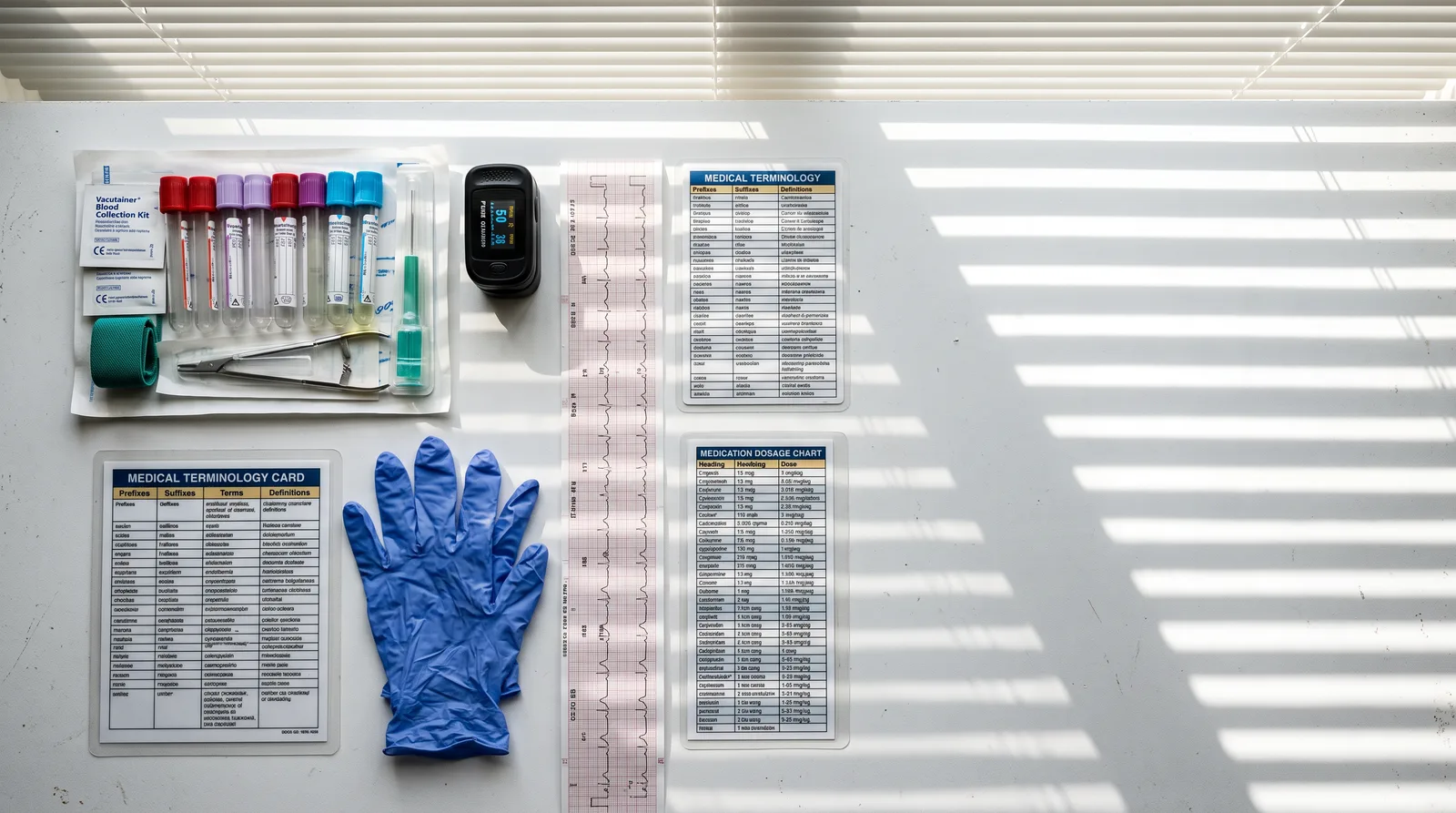
- Accurately perform and document essential clinical procedures such as vital signs, venipuncture, and EKG setup
- Apply medical terminology fluently across charting, communication, and patient documentation
- Demonstrate safe patient handling, infection control, and HIPAA-compliant privacy practices
- Navigate the roles and responsibilities across key allied health disciplines — from radiology to respiratory therapy
- Prepare confidently for nationally recognized certification exams (CMA, CPT, CCMA)
- Communicate professionally with patients, physicians, and interdisciplinary care teams in real clinical settings
How it works
A school that adapts to you
This isn't a set of static videos. Every lesson is generated live and tuned to where you actually are.
We learn your level
A quick placement check tailors your starting point so you're never bored or lost.
Lessons adapt as you go
Each lesson is written for your pace and your goal, adjusting as your skills grow.
Your AI coach keeps you moving
Checkpoints, feedback, and gentle nudges turn progress into a real result.
The curriculum
What's inside your school
6 modules · 29 lessons

Foundations of Allied Health
Establishes the core knowledge, professional standards, and healthcare landscape every allied health professional needs from day one.
- 1.1The Allied Health EcosystemIncluded
- 1.2Healthcare Law, Ethics, and HIPAAIncluded
- 1.3Professionalism and Workplace ReadinessIncluded
- 1.4The Healthcare Team and Scope of PracticeIncluded
Medical Terminology and Documentation
Builds fluency in medical language and accurate clinical documentation practices used across all allied health roles.
- 2.1Word Roots, Prefixes, and SuffixesIncluded
- 2.2Body Systems TerminologyIncluded
- 2.3Abbreviations, Symbols, and Medical ShorthandIncluded
- 2.4Charting, EHR Basics, and Clinical DocumentationIncluded
- 2.5Medical Terminology in ContextIncluded
Infection Control, Safety, and Patient Handling
Covers the safety protocols, standard precautions, and physical care techniques that protect both patients and healthcare workers.
- 3.1Standard Precautions and PPEIncluded
- 3.2Hand Hygiene and Aseptic TechniqueIncluded
- 3.3Bloodborne Pathogens and OSHA ComplianceIncluded
- 3.4Safe Patient Handling and Mobility AssistanceIncluded
- 3.5Emergency Preparedness and Incident ReportingIncluded
Core Clinical Skills and Procedures
Develops hands-on competency in the essential clinical procedures performed daily across medical assistant, phlebotomy, and health aide roles.
- 4.1Vital Signs: Measurement and DocumentationIncluded
- 4.2Venipuncture and Capillary Blood CollectionIncluded
- 4.3EKG Setup and Cardiac Monitoring BasicsIncluded
- 4.4Specimen Collection, Handling, and Chain of CustodyIncluded
- 4.5Injections, Medication Administration, and Dosage CalculationsIncluded
Patient Communication and Advocacy
Equips students with the communication strategies and cultural competency skills needed to support diverse patients across care settings.
- 5.1Therapeutic Communication TechniquesIncluded
- 5.2Health Literacy and Patient EducationIncluded
- 5.3Cultural Competency and Inclusive CareIncluded
- 5.4Communicating with Physicians and Care TeamsIncluded
- 5.5Patient Advocacy and Navigating the Healthcare SystemIncluded
Allied Health Disciplines and Certification Prep
Explores specialized allied health fields in depth and prepares students for nationally recognized certification exams.
- 6.1Pharmacy Technology FundamentalsIncluded
- 6.2Surgical Technology and Sterile Field PrinciplesIncluded
- 6.3Radiology and Respiratory Therapy OverviewsIncluded
- 6.4Certification Exam Strategies: CMA, CCMA, and CPTIncluded
- 6.5Career Launch: Resume, Externship, and Job ReadinessIncluded
Who it's for
Is this you?

Career changers
Ready to leave their current field behind and build a stable, meaningful healthcare career with structured, start-from-scratch training.

New medical assistants
Recently hired or about to start their first clinical role and want to shore up their skills and terminology before day one on the job.

Aspiring phlebotomists
Focused on mastering venipuncture, specimen handling, and chain of custody — and preparing to pass the CPT certification exam.
Pharmacy & surgical tech students
Exploring specialized allied health pathways and looking for a foundational program that covers both clinical skills and discipline-specific knowledge.

Certification exam candidates
Studying for the CMA, CCMA, or CPT and need a comprehensive, organized curriculum that maps directly to what's tested.
Health aides seeking advancement
Already working in patient care but ready to formalize their knowledge, expand their scope, and move into a higher-credential role.
Questions
Frequently asked
Your teacher
A note from your teacher
Tamekka Burnett
If you're reading this, there's a good chance you already know you want to work in healthcare — you just want to make sure you're doing this right. Maybe you're starting from scratch and feeling a little overwhelmed by the sheer scope of the field. Maybe you've been working as a health aide or medical assistant for a while and you know there are gaps in your knowledge you need to fill before you can move forward. Wherever you're starting, I built Allied Health Academy with you specifically in mind.
Here's what I've seen over and over again: people who are bright, motivated, and genuinely passionate about patient care struggle to break into this field — not because they lack talent, but because nobody gave them a clear, structured path. Allied health training is often scattered, rushed, or buried in jargon before the fundamentals are even solid. That's not how real competence is built. Real competence is built step by step, with each concept connected to the next, and always anchored to what actually happens in a clinical setting.
That's the philosophy behind every section of this program. We start with the ecosystem — understanding where you fit, what the rules are, and how to carry yourself as a professional from day one. Then we move into the knowledge layer: medical terminology deep enough to chart and communicate accurately, safety and infection control practices that protect both you and your patients, and the clinical procedures that form the backbone of every allied health role. Nothing is introduced without context. Nothing is drilled without explanation. And nothing is left out just because it's challenging.
I also believe strongly that clinical skills and communication skills belong in the same program. The allied health professionals who advance fastest — and who patients trust most — are the ones who can perform a venipuncture calmly and also explain what they're doing to a nervous patient in a way that actually lands. That intersection of technical precision and human connection is what this academy is designed to develop.
By the time you finish, you'll be ready to sit for a nationally recognized certification exam, put together a resume that reflects real, marketable skills, and walk into an interview with the kind of confidence that only comes from knowing your material cold. I'm glad you're here. Let's get to work.
— Tamekka Burnett
Start your journey today
Get instant access — learn at your own pace with an AI coach in your corner.
$59/mo
Recurring billing · cancel anytime
Secure checkout · Instant access
- 6 modules, 29 lessons
- AI-adaptive lessons tuned to your level
- Quizzes & checkpoints to lock in progress
- Your own AI learning coach
- Learn on any device, at your pace
- Full access for as long as you're subscribed