
Read American History the Way It Actually Happened
A rigorous, nonpartisan deep-dive — grounded in primary sources, honest scholarship, and civic purpose — that takes you from the Civil War and Reconstruction through Indigenous sovereignty, civil rights, and the founding era's Pennsylvania roots.

"I'm not here to give you a more satisfying version of American history — I'm here to give you the tools to read the actual record yourself."
— Dale Porter
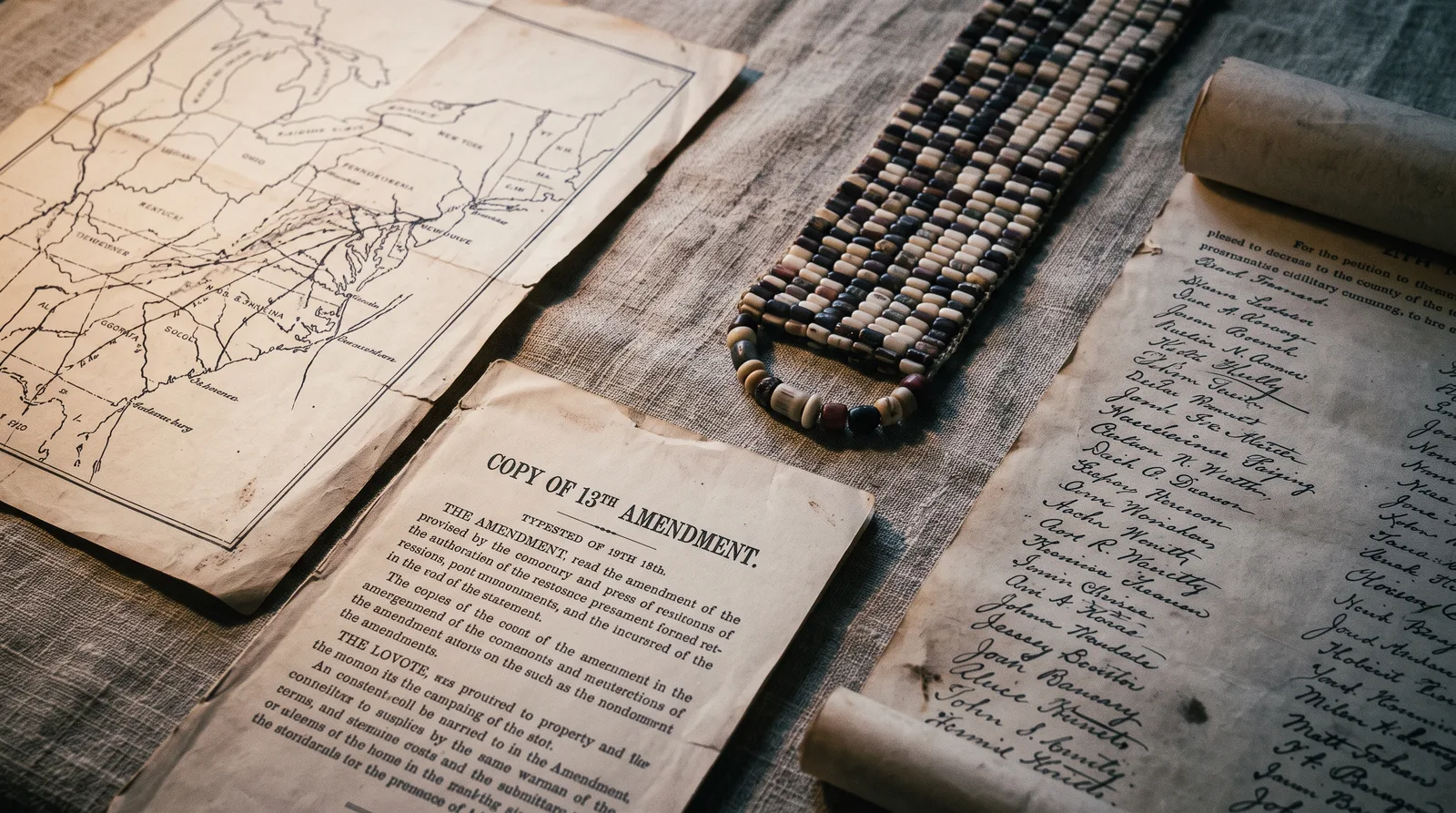
What you'll learn
What you'll be able to do
- Explain the constitutional, economic, and moral causes of the Civil War and trace how Reconstruction both advanced and ultimately failed to secure equal citizenship.
- Analyze the full arc of American civil rights struggles — from abolitionism through women's suffrage, labor rights, and the modern movement — using key legislation, court cases, and firsthand accounts.
- Describe the distinct political and legal status of Native nations as sovereign peoples, and trace U.S. federal Indian policy from treaty-making and forced removal through termination and self-determination.
- Identify Pennsylvania's outsized role in the founding era — the Continental Congress, constitutional debates, key battles including Edge Hill — and connect local history to national consequence.
- Read and interpret primary sources (treaties, constitutional amendments, congressional testimony, speeches) to form evidence-based historical arguments rather than relying on simplified narratives.
- Apply a nonpartisan, multi-perspective analytical framework to contested historical events, distinguishing between established fact, interpretation, and present-day political myth.
How it works
A school that adapts to you
This isn't a set of static videos. Every lesson is generated live and tuned to where you actually are.
We learn your level
A quick placement check tailors your starting point so you're never bored or lost.
Lessons adapt as you go
Each lesson is written for your pace and your goal, adjusting as your skills grow.
Your AI coach keeps you moving
Checkpoints, feedback, and gentle nudges turn progress into a real result.
The curriculum
What's inside your school
6 modules · 29 lessons

Reading American History: Sources, Methods, and Honest Inquiry
Establishes the analytical and primary-source skills students will apply across every course module.
- 1.1Why History Is Contested — and Why It MattersIncluded
- 1.2Working with Primary SourcesIncluded
- 1.3A Nonpartisan Framework for American HistoryIncluded
- 1.4Mapping the Big Picture: Connecting Four Defining StrugglesIncluded
The American Civil War and Constitutional Crisis
Examines the constitutional, economic, and moral fault lines over slavery that produced secession, war, and the reshaping of federal authority.
- 2.1Slavery, the Constitution, and the Road to SecessionIncluded
- 2.2Secession, Federal Authority, and the Meaning of UnionIncluded
- 2.3Emancipation: Politics, Morality, and the ProclamationIncluded
- 2.4The War's Human Cost: Soldiers, Civilians, and Enslaved PeopleIncluded
- 2.5Reconstruction: Promise, Resistance, and RetreatIncluded
The History of American Civil Rights
Traces the full arc of struggles for equal rights — from abolitionism through suffrage and labor to the modern civil rights movement — through legislation, court cases, and firsthand voices.
- 3.1Abolition: The First Civil Rights MovementIncluded
- 3.2After Reconstruction: Jim Crow, Disenfranchisement, and ResistanceIncluded
- 3.3Women's Suffrage: The Long Fight for the 19th AmendmentIncluded
- 3.4Labor Rights as Civil RightsIncluded
- 3.5The Modern Civil Rights Movement: Strategy, Law, and LegacyIncluded
Indigenous Peoples and the United States: Sovereignty, Policy, and Survival
Examines Native nations as distinct sovereign peoples and traces U.S. federal Indian policy from treaty-making through forced removal, assimilation campaigns, termination, and the modern self-determination era.
- 4.1Distinct Nations: Understanding Indigenous Sovereignty Before and After ContactIncluded
- 4.2Treaties: Promises Made, Promises BrokenIncluded
- 4.3Forced Removal, Warfare, and Land LossIncluded
- 4.4Reservations, Boarding Schools, and the Assault on CultureIncluded
- 4.5Citizenship, Termination, and the Road to Self-DeterminationIncluded
- 4.6Reclaiming Sovereignty: Modern Tribal Nations, Cultural Restoration, and Unfinished JusticeIncluded
Pennsylvania and the Birth of the Republic
Highlights Pennsylvania's outsized role in independence, constitutional design, and the Revolutionary War — connecting local sites and figures to national consequence.
- 5.1Philadelphia as the Crucible of American GovernmentIncluded
- 5.2The Constitutional Convention: Pennsylvania's Framers and the Great DebateIncluded
- 5.3The Battle of Edge Hill and the Winter Campaign of 1777–1778Included
- 5.4Pennsylvania, Slavery, and the Gradual Abolition Act of 1780Included
- 5.5Local History, National Consequence: Reading Pennsylvania as a Primary SourceIncluded
Synthesis: Evidence, Argument, and Civic Purpose
Brings together all four historical threads, sharpens students' ability to make evidence-based arguments, and connects honest historical knowledge to active civic life.
- 6.1Recurring Patterns: Rights Promised, Rights Denied, Rights ReclaimedIncluded
- 6.2Separating Fact, Interpretation, and Myth in Common NarrativesIncluded
- 6.3Constructing an Evidence-Based Historical ArgumentIncluded
- 6.4History as Civic Tool: Applying What You KnowIncluded
Who it's for
Is this you?

Disillusioned textbook readers
Fed up with oversimplified accounts from both ends of the spectrum, they're ready for a fact-grounded, primary-source approach that respects their intelligence.

Secondary school educators
History and social studies teachers who want a rigorous nonpartisan framework and primary-source strategies they can bring directly into contested classroom conversations.

Civil rights history enthusiasts
Deeply invested in understanding the full arc — from abolitionism through suffrage, labor rights, and the modern movement — using legislation, court cases, and firsthand testimony.

Lifelong learners
Retired or semi-retired adults who want serious intellectual engagement with American history at the depth a great university lecture series would offer.

Civics & law students
Undergraduates or self-directed learners who need to understand constitutional history, landmark legislation, and how legal frameworks shaped rights and sovereignty over time.

Pennsylvania history buffs
Residents or descendants with a personal connection to the founding era who want to understand how Philadelphia, Valley Forge, and the Gradual Abolition Act connect to the national story.
Questions
Frequently asked
Your teacher
A note from your teacher

Dale Porter
If you have ever closed an American history book — or turned off a documentary — because it felt like it was arguing with you rather than informing you, I understand that frustration. And if you have ever felt the opposite problem, that the account you were given was too tidy, too comfortable, too careful to avoid the hard parts, I understand that one too. Both of those experiences are signals that something real is missing: honest, rigorous engagement with the historical record as it actually exists.
That is what American Record is built to provide. Not a corrective version of history to replace the one you distrust. Not a more politically satisfying narrative. The actual record — the treaties, the constitutional amendments, the congressional testimony, the court decisions, the firsthand accounts — read carefully, sourced honestly, and analyzed with a framework that does not grant any faction a free pass. The Civil War's causes. What Reconstruction actually accomplished and why it failed. The full arc of civil rights from abolitionism through the modern movement. What Indigenous sovereignty means legally and historically, and what federal policy actually did to it. What happened in Philadelphia in 1787, and why it matters that Pennsylvania's own framers were in the room arguing.
I will be honest with you about something: this material is contested precisely because it matters. The same events that define American civic identity — the founding, emancipation, the civil rights movement, the treatment of Native nations — are also the events most subject to political mythology, from every direction. The course is designed to help you see those mythologies clearly, trace where they diverge from the documented record, and develop the analytical habits to evaluate historical claims on your own terms. That is not a partisan skill. It is the foundational skill of democratic citizenship.
What you will leave with is not a finished opinion about American history — it is something more durable: the ability to read a primary source, weigh competing interpretations, construct an evidence-based argument, and apply that discipline to new questions as they arise. History, taught this way, is a civic tool. I invite you to pick it up.
— Dale Porter
Start your journey today
Get instant access — learn at your own pace with an AI coach in your corner.
$29/mo
Recurring billing · cancel anytime
Secure checkout · Instant access
- 6 modules, 29 lessons
- AI-adaptive lessons tuned to your level
- Quizzes & checkpoints to lock in progress
- Your own AI learning coach
- Learn on any device, at your pace
- Full access for as long as you're subscribed
Optional add-ons inside
- Community Access Pass$5/month
Available in the school store after you join.