Understand what it means to be human — by starting with God
A doctrinally grounded, intellectually honest study of Christian anthropology — tracing the imago Dei from Genesis through the great tradition to the pressing questions of our time. This is theology that takes human dignity, sin, and redemption with full seriousness.
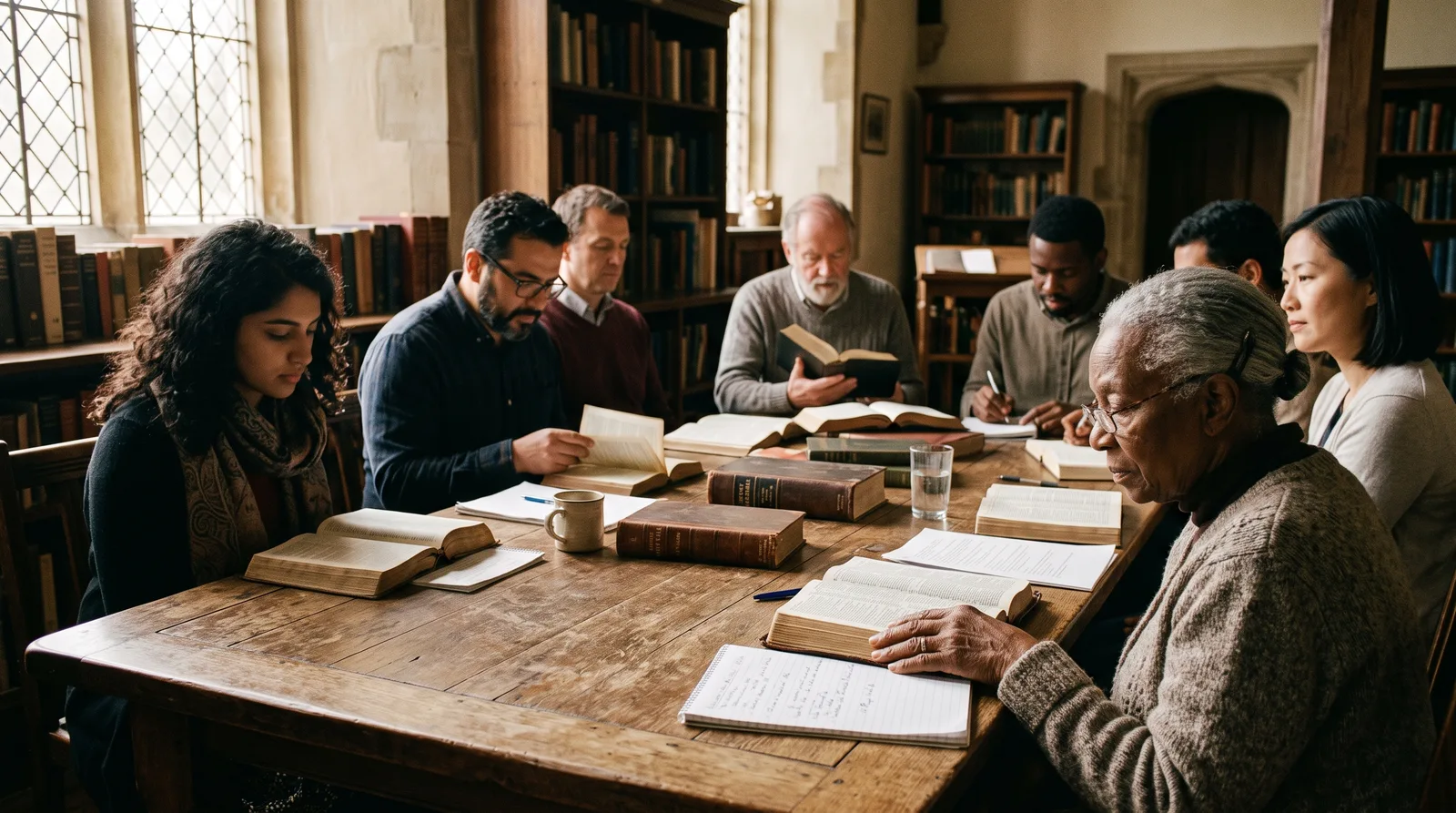
"I want to give you not just conclusions to hold, but a framework sturdy enough to carry the full weight of what it means to be human."
— Theoria

What you'll learn
What you'll be able to do
- Articulate the biblical meaning of the imago Dei and explain its implications for human dignity, vocation, and ethics
- Trace the doctrine of Christian anthropology through key thinkers from Irenaeus and Augustine to Barth and contemporary evangelical scholarship
- Examine the effects of the fall on human nature — including original sin, moral freedom, conscience, and inherited corruption — across major theological traditions
- Interpret foundational biblical passages in Genesis and the New Testament that define what Scripture teaches about human nature, personhood, and destiny
- Engage current cultural debates on gender, sexuality, race, disability, and technology through a framework shaped by biblical theology rather than contemporary assumption
- Construct a coherent, integrated account of human identity that holds together the goodness of creation, the reality of sin, and the hope of redemption through Christ
How it works
A school that adapts to you
This isn't a set of static videos. Every lesson is generated live and tuned to where you actually are.
We learn your level
A quick placement check tailors your starting point so you're never bored or lost.
Lessons adapt as you go
Each lesson is written for your pace and your goal, adjusting as your skills grow.
Your AI coach keeps you moving
Checkpoints, feedback, and gentle nudges turn progress into a real result.
The curriculum
What's inside your school
6 modules · 27 lessons

What Is Christian Anthropology?
Orients students to the discipline, establishes Scripture as the primary source, and situates Christian anthropology within systematic theology.
- 1.1The Question of HumanityIncluded
- 1.2Scripture, Tradition, and MethodIncluded
- 1.3Anthropology Within Systematic TheologyIncluded
- 1.4A Survey of the Great TraditionIncluded
Created in the Image of God
Examines the Genesis creation narratives and the biblical teaching on the imago Dei as the foundation for human identity, dignity, and vocation.
- 2.1Reading the Creation NarrativesIncluded
- 2.2The Meaning of the Imago DeiIncluded
- 2.3Human Personhood: Body, Soul, and SpiritIncluded
- 2.4Vocation, Stewardship, and CreativityIncluded
- 2.5Human Dignity and the Ethics of LifeIncluded
Humanity in Relationship
Explores the relational dimensions of human nature — with God, with one another, and with creation — as integral to what it means to be human.
- 3.1Made for God: The Vertical RelationshipIncluded
- 3.2Male and Female: Equality, Difference, and ComplementarityIncluded
- 3.3Community, Culture, and CallingIncluded
- 3.4Humanity and the Rest of CreationIncluded
The Fall and the Fracture of Human Nature
Investigates the entrance of sin into human experience and its comprehensive effects on individuals, relationships, communities, and creation.
- 4.1Reading Genesis 3: The Anatomy of the FallIncluded
- 4.2Original Sin: Biblical and Historical PerspectivesIncluded
- 4.3Inherited Corruption and Original GuiltIncluded
- 4.4Human Freedom, Conscience, and Moral ResponsibilityIncluded
- 4.5Grace and the Human ResponseIncluded
Redemption, Restoration, and the New Humanity
Traces the biblical narrative of redemption as the restoration of the imago Dei through Christ, the true image-bearer and the last Adam.
- 5.1Christ as the True Image of GodIncluded
- 5.2Regeneration, Sanctification, and the Renewal of the ImageIncluded
- 5.3The Resurrection and the Destiny of the BodyIncluded
- 5.4New Creation and the Consummation of HumanityIncluded
Human Identity and the Questions of Our Time
Applies the biblical and theological framework developed throughout the course to pressing contemporary debates about human identity, ethics, and technology.
- 6.1Gender, Sexuality, and Biblical AnthropologyIncluded
- 6.2Race, Culture, and the Unity of HumanityIncluded
- 6.3Disability, Suffering, and Human WholenessIncluded
- 6.4Technology, Transhumanism, and the Human FutureIncluded
- 6.5Integrating It All: A Coherent Christian AnthropologyIncluded
Who it's for
Is this you?

Seminary students
Building theological foundations and needs a rigorous, tradition-informed treatment of Christian anthropology to complement formal coursework.

Ministry leaders
Preaching, counseling, and leading through contested cultural questions — and needs more than intuition to speak with both conviction and care.

Serious laypeople
Reads widely, thinks deeply, and is hungry for theology that doesn't condescend or oversimplify — just honest, rigorous engagement with hard questions.

Adult educators
Teaching Sunday school, small groups, or adult formation classes and wants a doctrinally substantive foundation to shape their curriculum.

Thoughtful skeptics
Grappling with questions of human identity and dignity from the outside — or the edge — and wants to encounter the strongest version of the Christian answer.

Ethics & justice advocates
Working in bioethics, disability advocacy, racial justice, or social ministry and wants a coherent theological anthropology grounding their convictions.
Questions
Frequently asked
Your teacher
A note from your teacher
Theoria
If you're here, I suspect you've felt a particular kind of frustration — the sense that the answers being offered to deep questions about human identity are too thin. Too reactive. Too shaped by the moment rather than by the long, steady witness of Scripture and the great tradition. You know there's more, and you're ready to do the work to find it.
That's exactly what The Image Bearer is built for.
Christian anthropology — the doctrine of what it means to be human — sits at the intersection of nearly every significant theological and ethical question we face. You cannot think clearly about human dignity, sexual ethics, suffering, technology, race, or vocation without a coherent account of the human person. And you cannot build that account without going back, carefully, to where Scripture and the tradition actually begin: the image of God.
This course takes you through the full arc of that story. We read the creation narratives slowly and carefully. We engage the great voices — Irenaeus, Augustine, Aquinas, Calvin, Barth — not to collect names but to think with minds that have gone before us. We take the fall seriously — not as a footnote but as the event that explains the fracture at the center of human experience. And we let the New Testament reshape everything: Christ as the true image of God, redemption as the renewal of the image, and the resurrection as the final word on what the human body is for.
I've designed this course for people who are serious — not people who already have all the answers, but people who are willing to sit with hard questions long enough to think them through. You don't need a seminary degree. You need intellectual honesty, a willingness to read carefully, and a desire to understand human nature in the light of the God who made it. If that describes you, I'd be honored to be your guide through this material.
The questions we're asking are old ones. But they have never been more urgent. Come and think them through with me.
— Theoria
Start your journey today
Get instant access — learn at your own pace with an AI coach in your corner.
$39/mo
Recurring billing · cancel anytime
Secure checkout · Instant access
- 6 modules, 27 lessons
- AI-adaptive lessons tuned to your level
- Quizzes & checkpoints to lock in progress
- Your own AI learning coach
- Learn on any device, at your pace
- Full access for as long as you're subscribed