
I've watched talented athletes underperform not because they lacked ability, but because they showed up to the game already running on empty — or worse, weighed down by the wrong meal. Pre-game nutrition isn't a minor detail. It's part of your preparation, just like film study and warm-ups. Get it right, and you give your body every chance to perform. Get it wrong, and you're fighting your own digestive system while trying to read a defense.
Here's what the science actually says — and what I tell the athletes I work with.
The Goal of a Pre-Game Meal
Your body's primary fuel source during high-intensity sport is glycogen — stored carbohydrate energy sitting in your muscles and liver. Your pre-game meal has one job: top off those glycogen stores without leaving you feeling heavy, sluggish, or nauseous when the whistle blows.
That means you're optimizing for three things:
- High carbohydrates — your fast, reliable fuel
- Moderate, lean protein — to protect muscle and keep you satiated without slowing digestion
- Low fat and low fiber — both slow gastric emptying, meaning the food sits in your stomach longer, which is the last place you want it at kickoff
The Timing Breakdown
Timing matters as much as food choice. Here's a simple framework:
3–4 hours before game time: Your main pre-game meal. This is where you load the fuel tank. Aim for a full, balanced plate — more on what that looks like below.
60–90 minutes before game time: A small, easy-to-digest carbohydrate snack if you need a top-off. Think a banana, a handful of pretzels, or a piece of white toast with a light spread of honey. Keep it simple. Keep the portion small.
30 minutes or less: Just water or a sports drink if it's hot. No solid food this close to game time.
What Your Plate Should Look Like (3–4 Hours Out)
A solid pre-game meal follows roughly this breakdown: 50–60% carbohydrates, 25–30% lean protein, 10–15% fat.
Carbohydrate options that work well:
- White rice (easier to digest than brown)
- Pasta with a light tomato-based sauce
- White bread or a plain bagel
- Potatoes or sweet potatoes (skip the heavy toppings)
Lean protein options:
- Grilled chicken breast
- Turkey
- Eggs (scrambled or hard-boiled)
- Low-fat Greek yogurt as a side
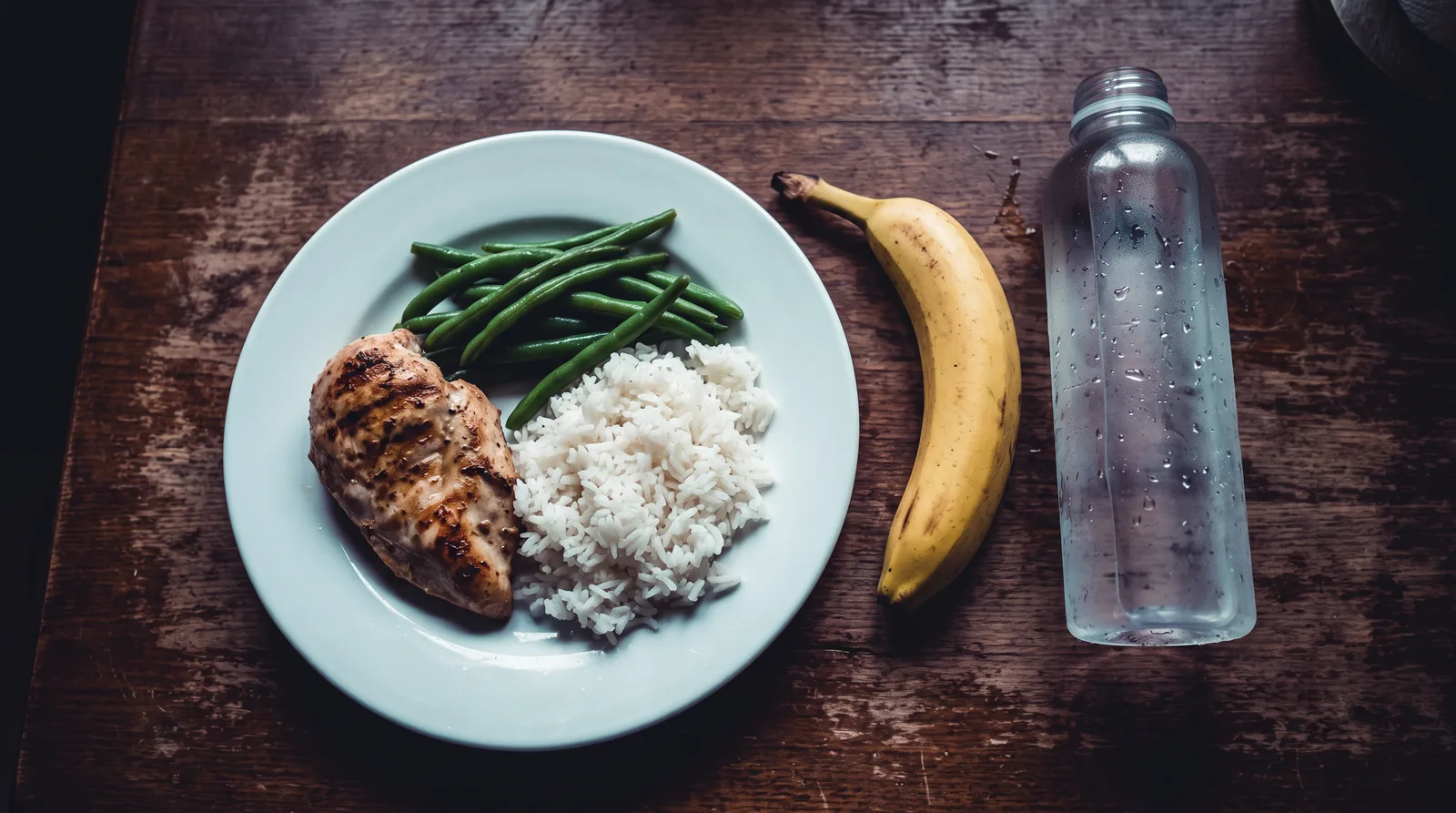
A real example of a solid pre-game meal: Grilled chicken breast, a generous portion of white rice, and a side of steamed green beans — finished off with a banana and a bottle of water. Simple. Proven. Effective.
What to Skip (And Why)
This is where most athletes go wrong — especially at away games, early kick times, or when a well-meaning parent hands them something that feels normal but backfires on the field.
High-fat foods: Burgers, fried chicken, pizza, bacon — these foods take 4–6+ hours to fully digest. Eating them 2–3 hours before a game means your body is still processing them when you need all your blood flow going to your muscles, not your gut.
High-fiber foods: Beans, brassicas like broccoli and cauliflower, whole-grain everything — fiber is great for everyday health, but pre-game it can cause bloating, cramping, and GI distress mid-play. Save the kale salad for recovery day.
Sugary junk and energy drinks: A candy bar or a sugar-heavy energy drink gives you a spike and a crash — and that crash often lands right around the second quarter. Energy drinks also raise heart rate unpredictably, which is the last thing you need before physical exertion.
Eating too late: Eating a heavy meal 60–90 minutes before game time means the food is still sitting in your stomach when you're sprinting. That's how you get side stitches, nausea, and a performance that doesn't match your ability.
Hydration Is Part of the Meal
You can eat perfectly and still show up dehydrated, which tanks speed, decision-making, and endurance. Start hydrating the day before — not the morning of. On game day, drink consistently throughout the day, not in one giant gulp right before warmups. A general target: 16–20 oz of water in the 2 hours leading up to game time, then small sips as needed.
Put It Together the Night Before
The smartest thing an athlete can do is plan the pre-game meal the night before, not scramble for fast food on the way to the stadium. Know your kick time. Count back 3–4 hours. Set the meal. This is what preparation actually looks like — and it's the same discipline that separates serious athletes from everyone else.
Your legs, your lungs, and your mind will all perform better when they're fueled right. That's not a theory. That's just good preparation meeting good science.
If you want to go deeper on how nutrition ties into speed development and overall athletic performance, that's exactly what we cover in Athlete Fuel.