
If you watch a high school offensive line long enough, you'll start to notice something. The kids who look decent in pass protection fall apart in the run game, and the physical road-graders who maul people at the point of attack get beat around the edge on third down. The coaches shake their heads. The linemen get blamed. But the real problem? Nobody ever explained to them that run blocking and pass blocking are not the same skill dressed in different clothes. They are fundamentally different physical and mental tasks — and treating them as interchangeable is costing your offense plays every single week.
Let's break down exactly what separates them.
The Stance and First Step Tell the Whole Story
Everything starts before the ball is snapped. In run blocking, a lineman's stance is lower and more loaded — weight forward, ready to fire out and generate horizontal movement. The first step is a flat, drive step directly at the defender's near number. The entire goal is to close ground fast and get your body between the defender and the ballcarrier's path.
Pass blocking is the opposite. The first step is a quick, vertical kick-slide — back and slightly outside — designed to create depth and set an anchor. Weight stays more balanced and centered. A lineman who fires out in pass pro like he's pulling for a sweep is already beaten before the quarterback touches the ball.
Teach your linemen this rule: Run block = attack. Pass block = invite.
In the run game, you are the aggressor going to the defender. In pass pro, you are setting a wall and making the defender come to you.
Leverage: Low Wins, But Not the Same Kind of Low
Both run and pass blocking reward leverage — but leverage means something different depending on the call.
In run blocking, you want to strike on the rise. Fire out low, make contact under the defender's pads, then drive your hips through and finish. The punch is delivered upward and through, lifting the defender's center of gravity so your legs can churn underneath him. You're trying to move him.
In pass blocking, staying low is still critical, but your anchor is your objective — not movement. A pass blocker who tries to drive a bull-rushing defensive tackle five yards up the field is wasting energy and pulling himself out of position. The job is to absorb, redirect, and stay in front. Hips stay square, feet keep churning, and hands reset quickly after contact.
The confusion happens when a lineman gets bull-rushed in pass pro and instinctively tries to "win" by driving forward the way he does in the run game. He leans, loses his base, and gets walked into the quarterback's lap.
Assignment Reads: Zone vs. Man vs. Gap
The mental game is where this really separates players.
In most run-blocking schemes — whether inside zone, outside zone, or gap/power — every lineman has a defined area or a specific double-team assignment before the snap. The read is pre-snap: Where is the mike linebacker? Where is the backside end? Am I covered or uncovered? The decision-making happens mostly before the ball moves.
Pass protection flips this. Yes, you have a gap responsibility, but your assignment can change based on what the defense shows post-snap. Is the linebacker scraping over the top? Is the end looping inside? Did the safety walk down late? A lineman in pass pro has to process movement after the snap and make real-time decisions — slide, help inside, or stay on his man.
This is why Football IQ matters as much as physical ability on the offensive line. A physically dominant lineman who can't process a late blitz will give up a free rusher even if he's strong enough to bench press the defensive end. The mental rep is the rep most practices skip entirely.
The Footwork Drill That Ties It Together
Here's something you can run at practice tomorrow. Set up two separate individual periods for your linemen — one labeled "Run" and one labeled "Pass." Don't mix them.
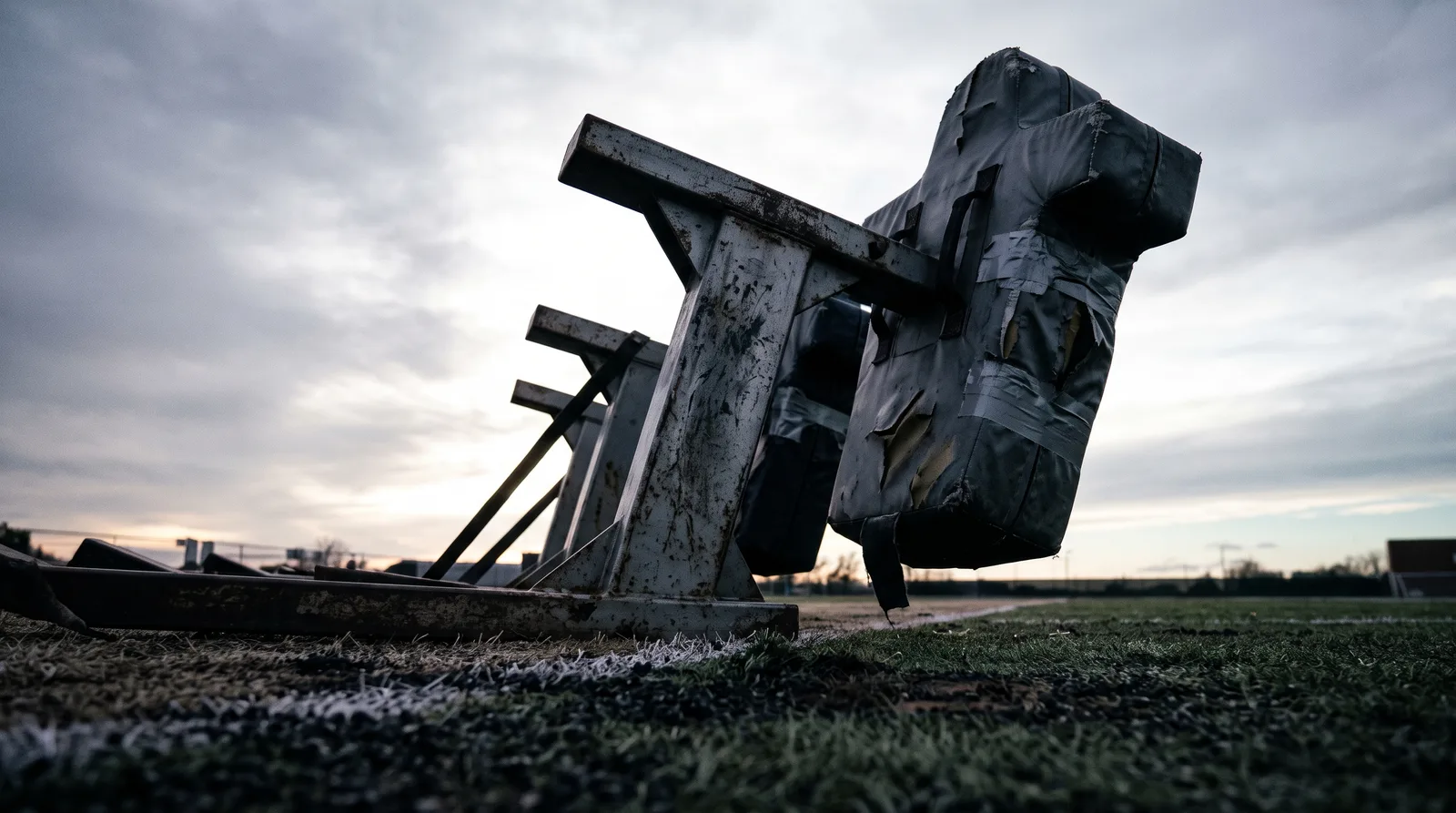
In the Run period: Work on the first step, pad level at contact, and finishing through the defender. Use chutes, sleds, and a partner to feel the strike-and-drive sequence.
In the Pass period: Work exclusively on the kick-slide, hand punch and reset, and anchor under pressure. Mirror drills with a pass rusher working moves are gold here.
When linemen consciously practice these as distinct skills with distinct footwork patterns, they stop defaulting to one mode in both situations. The muscle memory gets sorted — and that's when both phases of their game start to improve simultaneously.
Why This Matters Beyond the Line
Coaches and quarterbacks who understand these distinctions become better at calling the right plays in the right situations. A banged-up offensive line that can anchor in pass pro but isn't generating push in the run game is telling you something — and the answer isn't to yell at them to block harder. It's to adjust your scheme to what they're actually able to execute that day.
The offensive line is the most intellectually demanding position group on the field. When you teach them that run blocking and pass blocking are separate crafts — each with its own footwork, leverage principles, and assignment logic — you stop getting generic effort and start getting intentional execution.
That's how smart teams outblock more athletic ones before the ball is ever snapped.