
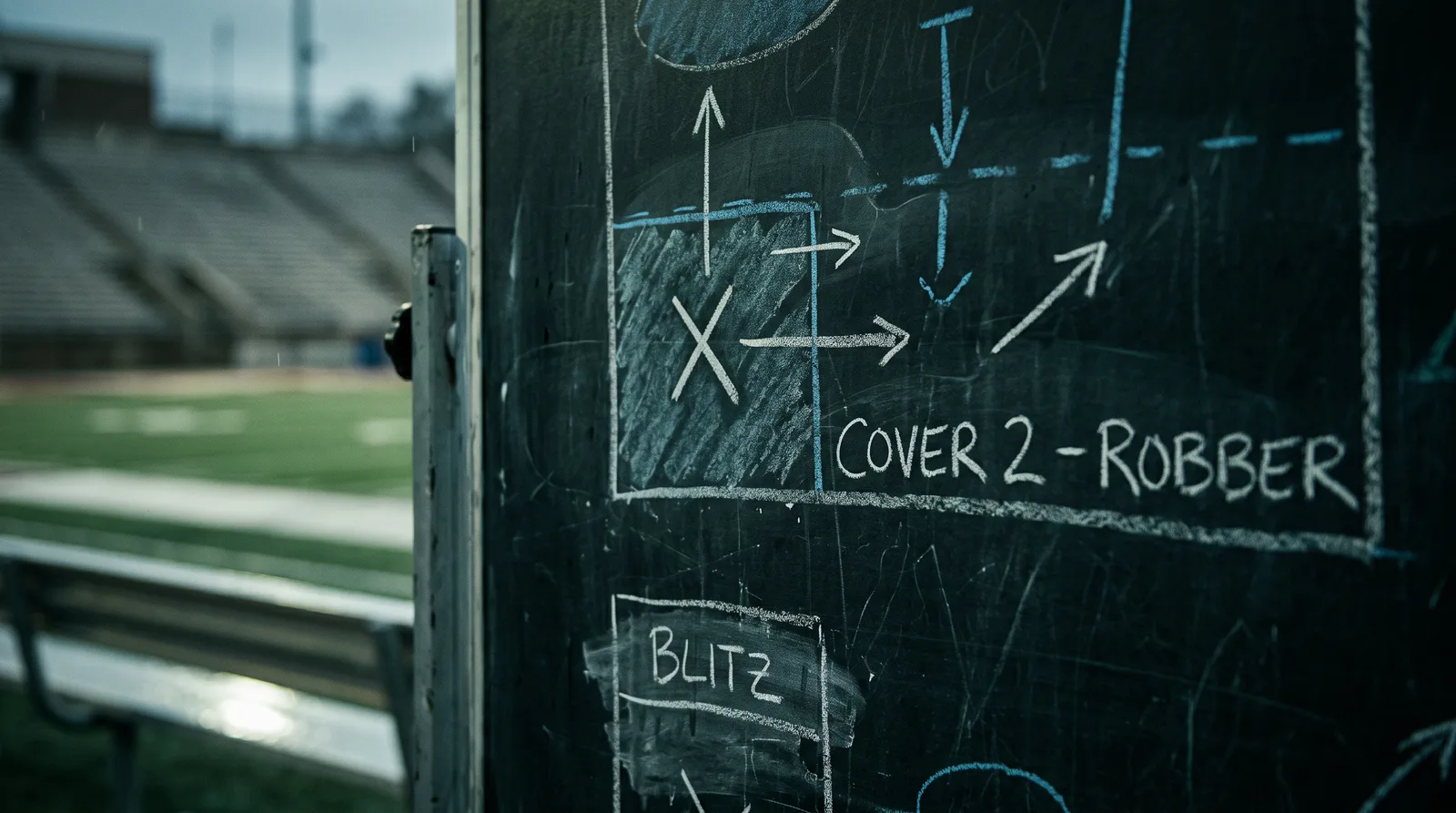
If you've ever watched a receiver run wide open through the middle of the field and wondered how nobody was there — the answer is almost always a coverage recognition problem. Either the offense knew what the defense was running, or the defense confused itself. Coverage recognition is the difference between a 4-yard gain and a 40-yard touchdown. Let's break it down so you can start seeing the field the way smart players do.
The Core Difference
Man coverage means each defender is assigned a specific player to cover, wherever that player goes. The corner lined up across from the X receiver? He goes with that receiver on every route, regardless of where the route goes.
Zone coverage means each defender is responsible for a geographic area of the field — a zone — and covers any eligible receiver who enters that zone. No one is following a single player. Instead, defenders are watching the quarterback and reacting to routes that threaten their area.
That's the foundation. Everything else builds on this.
How to Recognize Man Coverage Pre-Snap
Before the ball is snapped, defenders will often give you free information. Here's what to look for:
- Press alignment. Corners lined up within a yard of receivers are usually playing man. They need to be close to jam and mirror.
- Defenders mirroring your motion. If a receiver goes in motion and a DB follows him across the formation, that's a man indicator. Zone defenders don't chase motion — they stay in their area.
- No safety help in the middle. If both safeties are near the line or walked down toward the box, the corners are likely on their own — that's Cover 0 or Cover 1 man.
How to Recognize Zone Coverage Pre-Snap
Zone defenses tend to show a different picture:
- Off-coverage alignment. Corners playing 5–8 yards off the line of scrimmage are often settling into a zone. They have cushion because they don't need to jam — they're dropping to a spot.
- Two high safeties. When you see both safeties sitting at depth in the middle of the field, that's the classic Cover 2 or Cover 4 look. The field is being divided into zones.
- Defenders not reacting to motion. If a receiver goes in motion and the DBs barely flinch, they're playing zone. Their job is their area, not a body.
What This Means for Skill Position Players
Once you can identify the coverage, you can attack it.
Against man coverage, the advantage goes to athletes who can separate. Routes with sharp breaks — slants, curls, comeback routes — are designed to create separation from a trailing defender. Picks and rubs (where legal) are also used to free up man-covered receivers. If you're a running back, understand that your man may blitz — there's nobody underneath to cover you if your blocker picks up the right guy.
Against zone coverage, spacing and timing are your weapons. Zone defenses have gaps — the seams between zones where no defender has clean ownership. Routes like the curl-flat combination, the shallow cross, and the classic four verticals all attack zone by flooding zones or hitting the voids between them. As a receiver, your job in zone is to find the soft spot, sit down, and give your quarterback a target. Don't run through your break — settle.
A Simple Rule to Play Faster
Here's the single most practical takeaway: check for motion. Before every snap, if your offense uses a receiver or back in motion, watch the defense react. If someone chases, call man. If nobody moves, call zone. It takes about two seconds and eliminates a huge amount of guessing.
This is how quarterbacks and receivers build pre-snap communication. It's also how smart defenders decide whether to play their technique or adjust their leverage based on the route combinations they expect.
The Mental Game Is the Real Game
Zone vs. man isn't just terminology — it's the entire chess match of football happening before the ball moves. Players who can read coverage aren't just reacting to the game. They're anticipating it.
This is exactly the kind of football IQ that separates good players from great ones — and it's completely trainable. You don't need elite athleticism to read a two-high safety shell. You need reps, a framework, and the habit of watching the right things before the snap.
Start with motion. Watch the safeties. Check the corner's depth. Do that every single play, and within a few weeks, you'll see the field in a way most players never do.
That's where Football IQ is built — one pre-snap read at a time.