
Know exactly what the Constitution says — and what courts have actually decided
Work through all ten amendments of the Bill of Rights, amendment by amendment, case by case — so you can tell the difference between a settled legal holding and a viral misconception the moment you hear one.
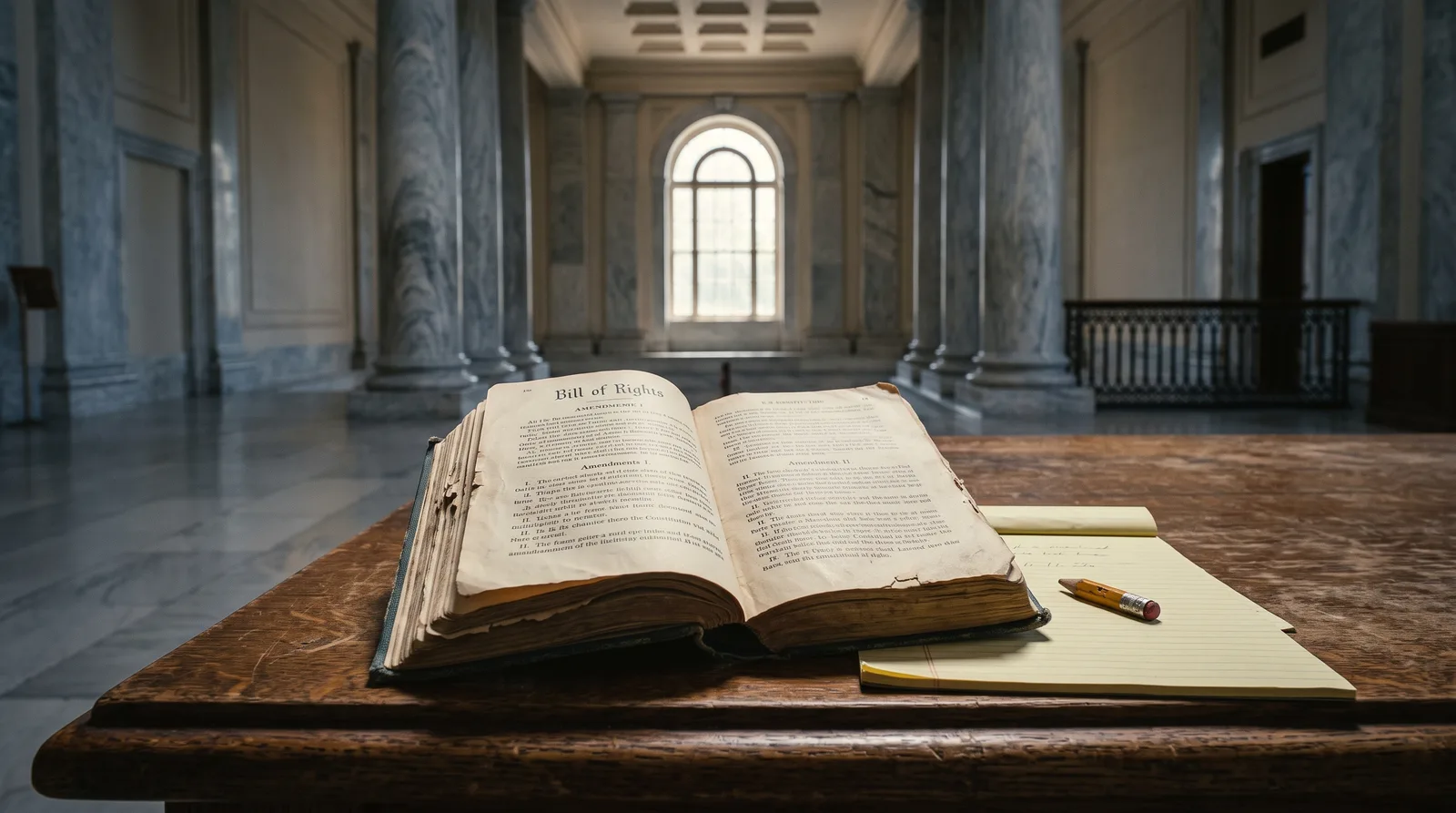
"The Constitution means what the Court has held it means — and the sooner you learn the difference between that and what you heard on YouTube, the better off you'll be."
— Dale Porter
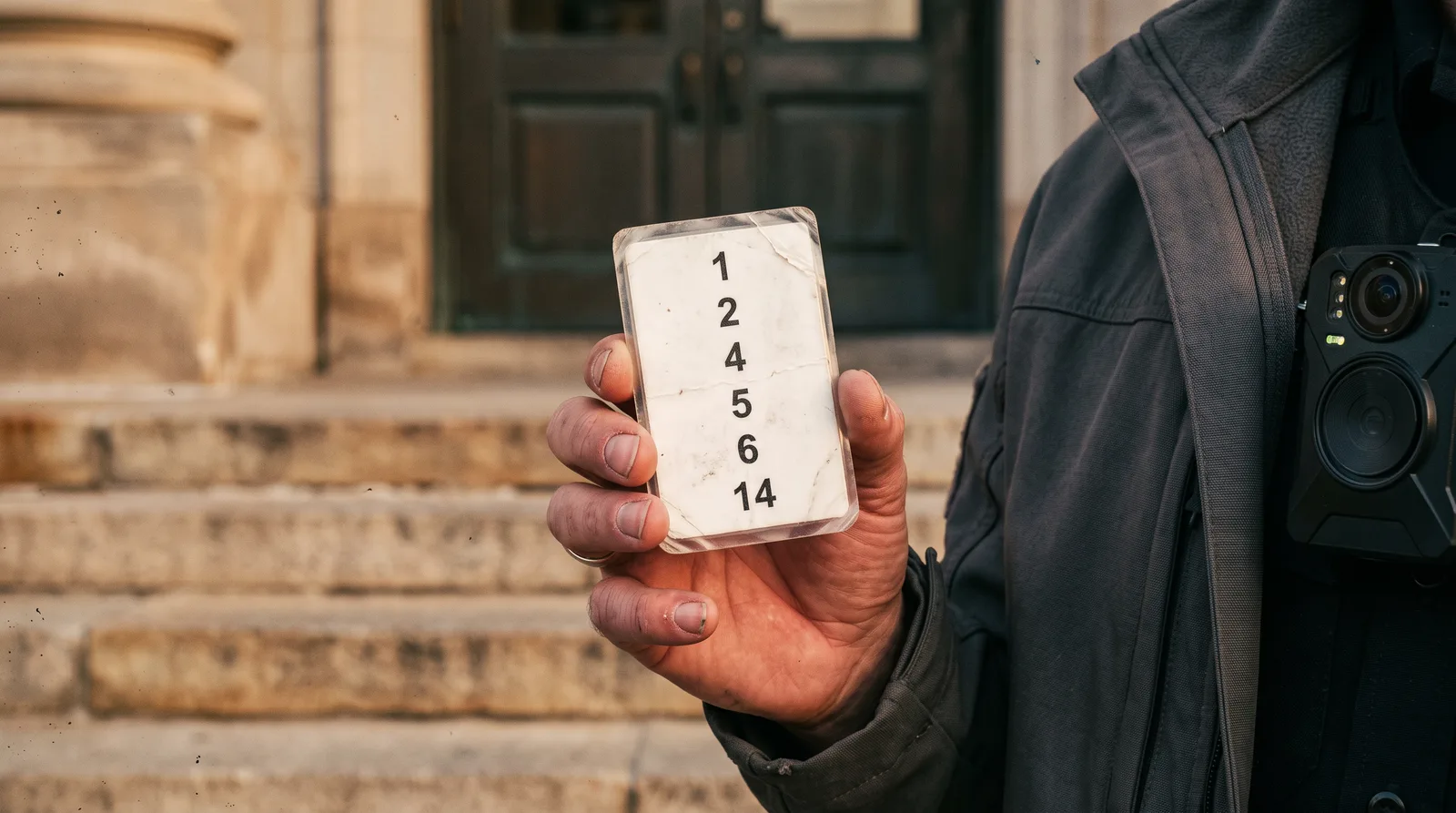
What you'll learn
What you'll be able to do
- Recite and accurately interpret all ten amendments, including the precise constitutional text versus the popular understanding most people carry
- Identify the controlling Supreme Court precedent for each amendment — from Tinker v. Des Moines to Heller v. DC — and explain what the holding actually says versus what commentators claim it says
- Critically analyze 1st Amendment audit videos, correctly identifying which auditor assertions and which officer responses are legally accurate under settled case law
- Distinguish between what the Bill of Rights protects against (government action) and what it does not cover, eliminating the single most pervasive constitutional misconception
- Apply the correct legal standard — strict scrutiny, intermediate scrutiny, or reasonable time/place/manner — to determine whether a government restriction on rights is likely constitutional
- Spot and debunk the top misconceptions surrounding each amendment, including common myths about free speech, the right to record police, the 5th Amendment right to silence, and the 4th Amendment's warrant requirements
How it works
A school that adapts to you
This isn't a set of static videos. Every lesson is generated live and tuned to where you actually are.
We learn your level
A quick placement check tailors your starting point so you're never bored or lost.
Lessons adapt as you go
Each lesson is written for your pace and your goal, adjusting as your skills grow.
Your AI coach keeps you moving
Checkpoints, feedback, and gentle nudges turn progress into a real result.
The curriculum
What's inside your school
7 modules · 37 lessons

Constitutional Foundations: How the Bill of Rights Actually Works
Establishes the legal framework — government action, incorporation, and scrutiny standards — that every subsequent amendment analysis depends on.
- 1.1The Bill of Rights Was Not Written for You — It Was Written Against the GovernmentIncluded
- 1.2Incorporation: How the 14th Amendment Made the Bill of Rights Apply to StatesIncluded
- 1.3Strict Scrutiny, Intermediate Scrutiny, and Reasonable Time, Place, and MannerIncluded
- 1.4How Courts Actually Settle Constitutional Questions: Precedent, Holdings, and DictaIncluded
- 1.5The Single Biggest Misconception: 'I Have Constitutional Rights!' — Against Whom?Included
The First Amendment: Free Speech, Press, Religion, Assembly, and Petition
Delivers a case-law-grounded analysis of every First Amendment clause, with dedicated attention to 1st Amendment auditor scenarios and the most litigated misconceptions.
- 2.1What the First Amendment Actually Says — and What It Does NotIncluded
- 2.2Categories of Unprotected Speech: Threats, Incitement, Obscenity, and Fighting WordsIncluded
- 2.3Public Forums, Traditional Forums, and the Right to Record Police in PublicIncluded
- 2.41st Amendment Auditors: What They Get Right, What They Get Wrong, and Why It MattersIncluded
- 2.5Law Enforcement and the First Amendment: Lawful Orders, Retaliation, and Qualified ImmunityIncluded
- 2.6Free Exercise, Establishment Clause, and the Top Misconceptions About 'Separation of Church and State'Included
- 2.7Freedom of Assembly and Petition: Permits, Protests, and Heckler's Veto DoctrineIncluded
The Second Amendment: Arms, Heller, McDonald, and What Bruen Changed
Cuts through the most politically charged misconceptions about the right to keep and bear arms using the Supreme Court's own language in its landmark trilogy.
- 3.1Text and History: What 'Well Regulated Militia' and 'Keep and Bear Arms' Actually MeanIncluded
- 3.2District of Columbia v. Heller: The Individual Right, Its Scope, and Its Explicit LimitsIncluded
- 3.3McDonald v. City of Chicago and State-Level Gun Laws After IncorporationIncluded
- 3.4New York State Rifle & Pistol Association v. Bruen: The New Historical-Tradition TestIncluded
- 3.5Top Second Amendment Myths: 'Any Regulation Is Unconstitutional' and Other MisreadingsIncluded
The Third, Fourth, and Fifth Amendments: Soldiers, Searches, Seizures, and Silence
Groups the privacy and criminal-procedure amendments together, emphasizing the warrant exceptions, the true scope of Miranda, and the most common misstatements citizens and officers make.
- 4.1The Third Amendment: The Forgotten Amendment and Its Rare but Real ApplicationsIncluded
- 4.2The Fourth Amendment: What 'Unreasonable Search and Seizure' Really RequiresIncluded
- 4.3Warrant Exceptions: Exigent Circumstances, Plain View, Consent, and the Automobile ExceptionIncluded
- 4.4Terry Stops, Reasonable Suspicion, and the Myth That You Can Never Be Briefly Detained Without a WarrantIncluded
- 4.5The Fifth Amendment: Grand Juries, Double Jeopardy, Takings, and the Real Right to SilenceIncluded
- 4.6Miranda v. Arizona: What the Warning Means, When It Applies, and the Myths That Surround ItIncluded
The Sixth, Seventh, and Eighth Amendments: Fair Trials, Civil Juries, and Punishment
Covers the trial-rights amendments, correcting misconceptions about the right to counsel, speedy trial, jury selection, and what 'cruel and unusual' actually prohibits.
- 5.1The Sixth Amendment: Speedy Trial, Public Trial, Impartial Jury, and the Confrontation ClauseIncluded
- 5.2The Right to Counsel: Gideon v. Wainwright, Ineffective Assistance, and the 'I Want a Lawyer' TriggerIncluded
- 5.3The Seventh Amendment: Civil Jury Trials and Why It Almost Never Applies in State CourtIncluded
- 5.4The Eighth Amendment: Bail, Fines, and What 'Cruel and Unusual Punishment' Has and Has Not BannedIncluded
The Ninth and Tenth Amendments, Unenumerated Rights, and Putting It All Together
Closes the course by covering the two most misunderstood amendments and synthesizing all prior learning into a practical framework for auditors, citizens, and legal students.
- 6.1The Ninth Amendment: Unenumerated Rights and Why It Is Not a Blank Check for Any Claimed RightIncluded
- 6.2The Tenth Amendment: State Sovereignty, Federal Limits, and the 'Nullification' MythIncluded
- 6.31st Amendment Audits Revisited: Applying the Full Bill of Rights to Real EncountersIncluded
- 6.4Spotting Constitutional Myths in the Wild: Social Media, News, and Political RhetoricIncluded
- 6.5Know Your Rights in Practice: A Citizen's Legal Checklist from Stop to CourthouseIncluded
First Amendment Audits: A Field Guide to Your Rights in Public
A practical, case-law-grounded field guide for peaceful First Amendment auditors — and for anyone who wants to understand exactly what the Constitution permits, protects, and prohibits when a citizen with a camera meets a government official in public. Every rule traced to its controlling precedent, every common officer response dissected for legal accuracy, and every auditor overreach called out with equal candor.
- 7.1What a First Amendment Audit Actually Is — and What the Law Says You Can DoIncluded
- 7.2Where You Can Legally Stand, Shoot, and Speak — Public Forums and Their LimitsIncluded
- 7.3What Officers Can Legally Do — and Where They Cross the LineIncluded
- 7.4Seizure of Cameras, Deletion of Footage, and Your Remedies When Rights Are ViolatedIncluded
- 7.5Auditor Conduct: What Undermines Your Rights and What Keeps Them IntactIncluded
Who it's for
Is this you?

1st Amendment Auditors
You film in public and cite the Constitution constantly — this school will tell you exactly which of those citations will hold up in court and which ones won't.

Paralegal Candidates
Building a foundation in constitutional doctrine before entering a law office means you'll understand why attorneys argue what they argue, not just file what they file.

Law Enforcement Students
Understanding Terry, Miranda, the public-forum doctrine, and qualified immunity from the case law up makes you a sharper, better-protected officer before you ever hit the street.

Civically Engaged Adults
You vote, you debate, you care — and you're tired of arguing about constitutional rights without knowing what the Supreme Court has actually decided.

News & Media Consumers
When a reporter says a law is 'almost certainly unconstitutional,' you want the analytical tools to decide for yourself whether that claim survives scrutiny.

Community Advocates
Knowing the precise legal boundary between a lawful protest permit requirement and an unconstitutional heckler's veto makes your advocacy sharper and harder to dismiss.
Questions
Frequently asked
Your teacher
A note from your teacher

Dale Porter
If you have ever watched a First Amendment audit video and found yourself unsure who was right — or walked away from a news segment about a Supreme Court ruling wondering what the decision actually said — you are exactly where this school starts.
Constitutional knowledge in America is loud and confident and frequently wrong. The myths are not fringe beliefs held by uninformed people; they are repeated by journalists, politicians, and well-meaning activists who never bothered to read the actual holding of the cases they cite. People invoke Miranda to mean things Miranda does not say. They quote Heller to argue positions Heller explicitly forecloses. They tell you the First Amendment protects them from consequences it has never, in two hundred years of jurisprudence, protected anyone from. This is not a political observation — the misreadings are just as common on the left as on the right, and just as common among people who think they are experts as among people who admit they are guessing.
I built this school because that gap — between what people are certain the Constitution says and what the Supreme Court has actually decided — is one of the most consequential gaps in American civic life. When a person records police in a public space without understanding the public-forum doctrine, or invokes the Fifth without understanding when that right actually attaches, or argues that any gun regulation is automatically unconstitutional after Heller, they are not exercising constitutional knowledge. They are exercising constitutional mythology. My job is to replace the mythology with the real thing: the text, the cases, the holdings, and the analytical frameworks courts actually apply.
What you will get in this school is the same approach I would use with a first-year law student who needs to be deprogrammed of their lay assumptions before they can think clearly about the law. We read the constitutional text carefully — it is shorter and more specific than most people realize. We work through the landmark cases not as names to drop but as holdings to understand, with equal attention to what the Court held and what it conspicuously did not hold. We apply the scrutiny frameworks so that the next time you hear "that law is unconstitutional," you have the tools to assess whether that claim would survive contact with an actual court. And throughout, I will point out — with as much precision as I can and as much dry humor as the subject allows — exactly where the most popular constitutional myths break down under scrutiny.
This is not a course about politics. It is a course about law. The Bill of Rights has been interpreted by courts, and those interpretations are what govern your life. Come learn what they actually say.
— Dale Porter
Start your journey today
Get instant access — learn at your own pace with an AI coach in your corner.
$39/mo
Recurring billing · cancel anytime
Secure checkout · Instant access
- 7 modules, 37 lessons
- AI-adaptive lessons tuned to your level
- Quizzes & checkpoints to lock in progress
- Your own AI learning coach
- Learn on any device, at your pace
- Full access for as long as you're subscribed
Optional add-ons inside
- Community Access Pass$5/month
Available in the school store after you join.