
Building & Architecture diploma course
A rigorous, trade-standard diploma that takes you from site safety and mortar mixing all the way to reading architectural drawings and laying brickwork to a professional finish — no experience needed, just the drive to do the job properly.
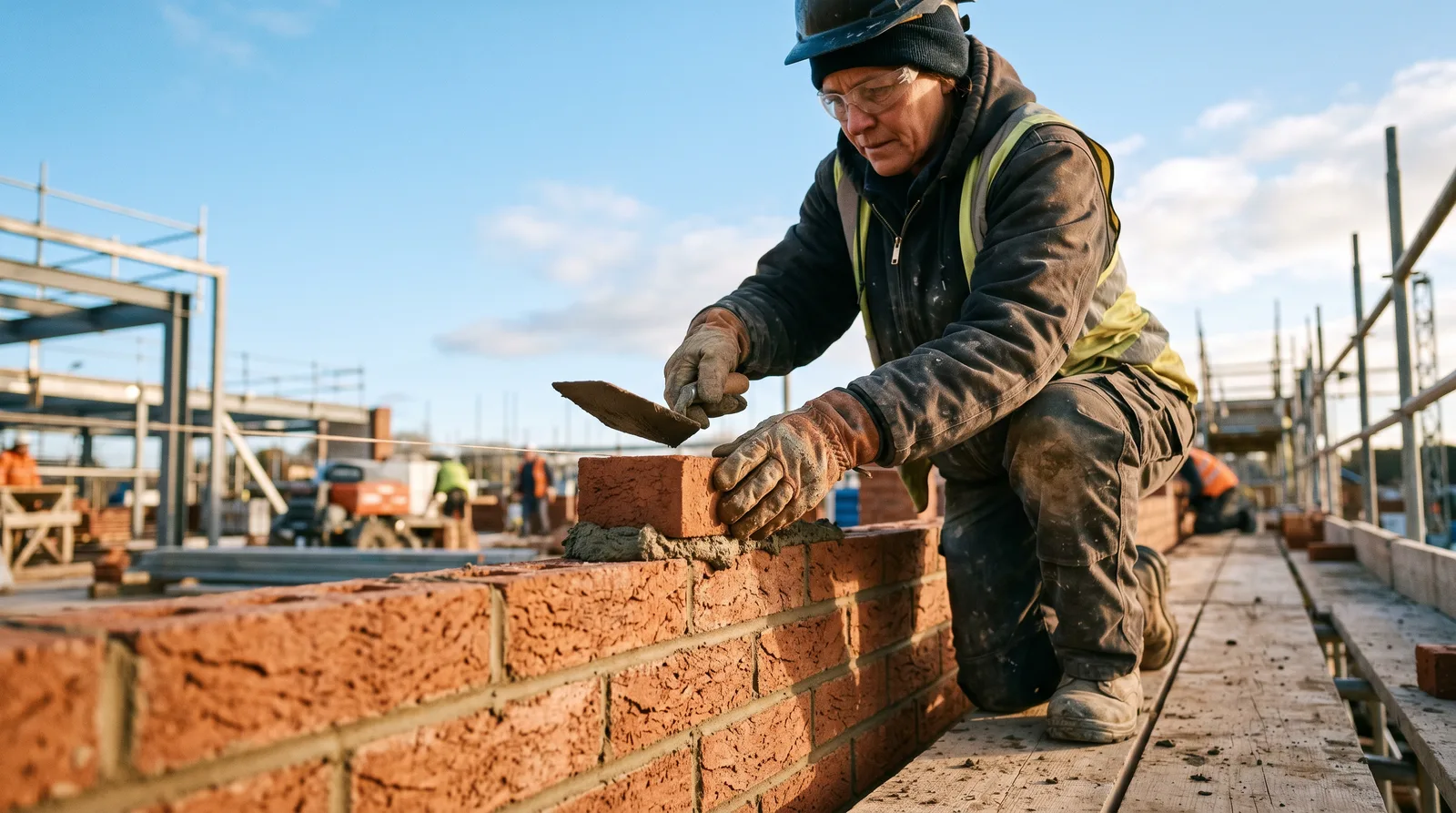
I don't just want you to know what to do — I want you to understand why, because that's what makes a tradesperson someone worth hiring.
— Renstay College

What you'll learn
What you'll be able to do
- Lay brickwork to a professional standard, including corners, bonds, and openings
- Read and interpret architectural drawings, floor plans, and site elevations
- Understand structural load paths and select appropriate foundations for different ground conditions
- Set out a building accurately on site using profiles, string lines, and levelling tools
- Specify and mix mortar correctly for different applications, weather conditions, and brick types
- Identify and apply building regulations and safety standards relevant to residential construction
How it works
A school that adapts to you
This isn't a set of static videos. Every lesson is generated live and tuned to where you actually are.
We learn your level
A quick placement check tailors your starting point so you're never bored or lost.
Lessons adapt as you go
Each lesson is written for your pace and your goal, adjusting as your skills grow.
Your AI coach keeps you moving
Checkpoints, feedback, and gentle nudges turn progress into a real result.
The curriculum
What's inside your school
41 modules · 286 lessons

Introduction to Building Construction
This module introduces learners to the exciting world of building construction and provides the essential foundation required for a successful career in the construction industry. Students will explore how buildings are planned, designed, constructed, and maintained while gaining an understanding of the professionals, materials, tools, and processes involved. The module emphasizes industry standards, workplace expectations, and the importance of teamwork, safety, and quality workmanship. By the end of this module, learners will understand the complete building construction process and be prepared to begin practical construction activities in subsequent modules.
- 1.1Construction Industry OverviewIncluded
- 1.2Types of BuildingsIncluded
- 1.3Residential vs Commercial ConstructionIncluded
- 1.4Roles of Construction ProfessionalsIncluded
- 1.5Construction Process from Start to FinishIncluded
- 1.6Building Materials OverviewIncluded
- 1.7Building Careers and OpportunitiesIncluded
- 1.8Introduction to Construction ToolsIncluded
Construction Site Safety
This module equips learners with the essential knowledge, skills, and attitudes required to work safely on construction sites. Students will learn how to identify hazards, prevent accidents, use personal protective equipment (PPE), and comply with industry safety standards and regulations. The module emphasizes risk assessment, safe work practices, emergency preparedness, and the importance of maintaining a safety-first culture on every construction project. By the end of this module, learners will be able to recognize workplace hazards, implement appropriate control measures, and carry out construction tasks safely and responsibly.
- 2.1Construction Safety PrinciplesIncluded
- 2.2PPE Selection and UseIncluded
- 2.3Hazard IdentificationIncluded
- 2.4Working at HeightsIncluded
- 2.5Ladder SafetyIncluded
- 2.6Scaffold SafetyIncluded
- 2.7Excavation SafetyIncluded
- 2.8Concrete SafetyIncluded
- 2.9Manual HandlingIncluded
- 2.10Fire SafetyIncluded
- 2.11Electrical SafetyIncluded
- 2.12Site Emergency ProceduresIncluded
Construction Mathematics
This module provides learners with the mathematical knowledge and calculation skills required
for accurate and efficient building construction. Students will learn how to perform
measurements, convert units, calculate areas, volumes, angles, quantities, reinforcement
requirements, and concrete mixes used in real construction projects. The module emphasizes
practical problem-solving and the application of mathematics in estimating materials, reducing
waste, improving accuracy, and ensuring quality workmanship. By the end of this module,
learners will confidently perform construction calculations required on building sites and during
project planning.
- 3.1Construction MeasurementsIncluded
- 3.2Unit ConversionsIncluded
- 3.3AreasIncluded
- 3.4VolumesIncluded
- 3.5Building AnglesIncluded
- 3.6Pythagoras in ConstructionIncluded
- 3.7Roof CalculationsIncluded
- 3.8Material CalculationsIncluded
- 3.9Reinforcement CalculationsIncluded
- 3.10Concrete Mix CalculationsIncluded
Construction Tools and Equipment
This module introduces learners to the wide range of hand tools, power tools, measuring
instruments, and construction equipment used in modern building projects. Students will learn
the purpose, operation, maintenance, and safe handling of tools commonly used for
excavation, masonry, concrete work, carpentry, finishing, and material handling. Emphasis is
placed on selecting the correct tool for each task, maintaining equipment in good working
condition, and following industry safety standards. By the end of this module, learners will
confidently identify, operate, inspect, maintain, and safely use construction tools and
equipment to perform practical building tasks efficiently.
- 4.1Hand ToolsIncluded
- 4.2Measuring ToolsIncluded
- 4.3Power ToolsIncluded
- 4.4Concrete EquipmentIncluded
- 4.5Cutting EquipmentIncluded
- 4.6Compaction EquipmentIncluded
- 4.7Lifting EquipmentIncluded
- 4.8Maintenance of ToolsIncluded
- 4.9Tool SafetyIncluded
Building Materials
This module introduces learners to the essential building materials used in residential,
commercial, and industrial construction. Students will study the properties, classifications,
manufacturing processes, applications, advantages, limitations, storage requirements, and
quality standards of common construction materials. The module emphasizes selecting
suitable materials for different building components to ensure structural strength, durability,
sustainability, and cost-effectiveness. By the end of this module, learners will confidently
identify, inspect, test, store, and use building materials according to industry best practices and
construction specifications.
- 5.1CementIncluded
- 5.2SandIncluded
- 5.3AggregateIncluded
- 5.4ConcreteIncluded
- 5.5TimberIncluded
- 5.6SteelIncluded
- 5.7BricksIncluded
- 5.8BlocksIncluded
- 5.9Roofing MaterialsIncluded
- 5.10Waterproofing MaterialsIncluded
- 5.11Insulation MaterialsIncluded
Site Preparation
This module introduces learners to the essential activities carried out before the construction of
any building begins. Students will learn how to assess a construction site, conduct surveys,
investigate soil conditions, clear vegetation and obstacles, establish building positions, perform
excavation works, prepare temporary site facilities, install preliminary drainage systems, and
establish site levels. Proper site preparation is critical for ensuring structural stability,
construction accuracy, worker safety, and efficient project execution. By the end of this module,
learners will be able to prepare a construction site professionally and according to industry
standards before foundation work begins.
- 6.1Site SurveyIncluded
- 6.2Clearing the SiteIncluded
- 6.3Soil InvestigationIncluded
- 6.4Setting Out BuildingsIncluded
- 6.5ExcavationIncluded
- 6.6Temporary WorksIncluded
- 6.7Drainage PreparationIncluded
- 6.8Site LevelsIncluded
Foundations
This module introduces learners to the principles and practices of foundation construction,
which form the structural base of every building. Students will learn how different foundation
systems transfer building loads safely to the ground, how soil conditions influence foundation
selection, and how to construct durable foundations using proper excavation, reinforcement,
concrete placement, and damp-proofing techniques. The module combines engineering
principles with practical construction methods to ensure learners develop the competence
required to construct safe and long-lasting foundations. By the end of this module, students will
be able to select, set out, reinforce, construct, and inspect various foundation systems
according to industry standards and building regulations.
- 7.1Foundation PrinciplesIncluded
- 7.2Soil Bearing CapacityIncluded
- 7.3Strip FoundationsIncluded
- 7.4Pad FoundationsIncluded
- 7.5Raft FoundationsIncluded
- 7.6Pile FoundationsIncluded
- 7.7Foundation ReinforcementIncluded
- 7.8Foundation ConcreteIncluded
- 7.9Damp Proof CoursesIncluded
Concrete Construction
This module provides learners with comprehensive knowledge and practical skills in reinforced
concrete construction, one of the most important aspects of modern building. Students will
study the materials used to produce quality concrete, mix design principles, reinforcement
installation, formwork construction, and the construction of slabs, beams, and columns. The
module also covers concrete curing methods, quality control, and the identification and repair
of common concrete defects. By the end of this module, learners will be able to produce, place,
reinforce, cure, inspect, and evaluate reinforced concrete structures in accordance with
industry standards and best construction practices.
- 8.1Concrete IngredientsIncluded
- 8.2Concrete Mix DesignIncluded
- 8.3Mixing ConcreteIncluded
- 8.4ReinforcementIncluded
- 8.5FormworkIncluded
- 8.6SlabsIncluded
- 8.7BeamsIncluded
- 8.8ColumnsIncluded
- 8.9Concrete CuringIncluded
- 8.10Concrete DefectsIncluded
Floor Construction
This module introduces learners to the principles, methods, and materials used in the
construction of building floors. Students will learn how different floor systems are designed and
constructed to provide safe, durable, and level surfaces capable of supporting structural and
occupancy loads. The module covers ground-supported floors, suspended floors, reinforced
concrete floors, floor finishing techniques, and waterproofing systems. Learners will also study
quality control procedures, construction sequencing, and common floor defects. By the end of
this module, students will be able to construct, inspect, finish, and protect various floor
systems according to modern construction standards and best practices.
- 9.1Ground FloorsIncluded
- 9.2Suspended FloorsIncluded
- 9.3Reinforced FloorsIncluded
- 9.4Concrete FloorsIncluded
- 9.5Floor FinishesIncluded
- 9.6Floor WaterproofingIncluded
Walls and Structural Construction
This module introduces learners to the principles of wall construction and structural stability in
residential, commercial, and industrial buildings. Students will study the different types of walls
used in construction, their structural functions, materials, reinforcement techniques, and
methods of ensuring strength, durability, and safety. The module also explores retaining walls,
expansion joints, and structural design considerations that enable buildings to resist vertical
and horizontal forces. By the end of this module, learners will be able to construct, reinforce,
inspect, and maintain various wall systems in accordance with modern construction standards
and industry best practices.
- 10.1Load Bearing WallsIncluded
- 10.2Partition WallsIncluded
- 10.3Reinforced WallsIncluded
- 10.4Retaining WallsIncluded
- 10.5Structural StabilityIncluded
- 10.6Expansion JointsIncluded
Roofing Systems
This module introduces learners to the design, construction, and installation of roofing systems
used in residential, commercial, and industrial buildings. Students will study various roof types,
structural components, roof framing systems, trusses, rafters, roof coverings, waterproofing
techniques, rainwater drainage systems, and roof ventilation. The module emphasizes
structural strength, weather protection, energy efficiency, and safe installation practices. By the
end of this module, learners will be able to construct, install, inspect, maintain, and repair
complete roofing systems that comply with modern building standards and industry best
practices.
- 11.1Roof TypesIncluded
- 11.2Roof StructuresIncluded
- 11.3TrussesIncluded
- 11.4RaftersIncluded
- 11.5Roof CoveringsIncluded
- 11.6WaterproofingIncluded
- 11.7GuttersIncluded
- 11.8Roof VentilationIncluded
Doors, Windows and Staircases
This module introduces learners to the design, selection, installation, and finishing of doors,
windows, and staircases in residential, commercial, and industrial buildings. Students will learn
about different types of doors and windows, installation techniques, staircase design
principles, construction methods, handrails, and balustrade systems. The module emphasizes
precision, structural integrity, safety, accessibility, weatherproofing, and quality workmanship.
By the end of this module, learners will be able to install, construct, inspect, and maintain
doors, windows, staircases, handrails, and balustrades according to modern building standards
and industry best practices.
- 12.1Door TypesIncluded
- 12.2Door InstallationIncluded
- 12.3Window InstallationIncluded
- 12.4Stair DesignIncluded
- 12.5Stair ConstructionIncluded
- 12.6HandrailsIncluded
- 12.7BalustradesIncluded
Building Finishes
This module introduces learners to the final finishing works that enhance the appearance,
durability, comfort, and value of buildings. Students will develop practical skills in plastering,
rendering, skimming, painting, decorative finishes, ceiling installation, and drywall
construction. The module emphasizes proper surface preparation, material selection,
application techniques, quality workmanship, and finishing standards used in modern
residential, commercial, and industrial construction. By the end of this module, learners will be
able to produce smooth, durable, attractive, and professionally finished building surfaces that
meet industry specifications and client expectations.
- 13.1Internal PlasteringIncluded
- 13.2External PlasteringIncluded
- 13.3RenderingIncluded
- 13.4SkimmingIncluded
- 13.5PaintingIncluded
- 13.6Decorative FinishesIncluded
- 13.7Ceiling InstallationIncluded
- 13.8Drywall SystemsIncluded
Waterproofing and Damp Control
This module introduces learners to the principles and practical methods used to protect
buildings from water penetration, moisture damage, and damp-related deterioration. Students
will study the causes of dampness, waterproofing systems, damp-proof membranes, protective
coatings, basement waterproofing, roof waterproofing, and drainage solutions. The module
emphasizes proper material selection, installation techniques, inspection procedures, and
maintenance practices that extend the lifespan of buildings and improve occupant comfort. By
the end of this module, learners will be able to identify moisture problems, install effective
waterproofing systems, and implement damp control measures in accordance with modern
construction standards and industry best practices.
- 14.1Damp ProblemsIncluded
- 14.2Damp Proof MembranesIncluded
- 14.3Waterproof CoatingsIncluded
- 14.4Basement WaterproofingIncluded
- 14.5Roof WaterproofingIncluded
- 14.6Drainage SystemsIncluded
Building Services
This module introduces learners to the essential building services that make residential,
commercial, and industrial buildings safe, functional, and comfortable for occupants. Students
will gain a practical understanding of plumbing systems, basic electrical installations, heating,
ventilation and air conditioning (HVAC), rainwater harvesting, sewerage systems, and potable
water supply systems. The module emphasizes coordination between building trades,
compliance with building regulations, system installation standards, safety procedures, and
maintenance requirements. By the end of this module, learners will understand how building
services are integrated into construction projects and will be able to install, inspect, and
troubleshoot basic building service systems while working effectively alongside specialist
trades.
- 15.1Plumbing BasicsIncluded
- 15.2Electrical BasicsIncluded
- 15.3HVAC OverviewIncluded
- 15.4Rainwater SystemsIncluded
- 15.5Sewer SystemsIncluded
- 15.6Water Supply SystemsIncluded
Multi-storey Building Construction
This module introduces learners to the principles, systems, and construction techniques used
in multi-storey residential, commercial, and industrial buildings. Students will study structural
framing systems, reinforced concrete and structural steel frames, lift shafts, suspended floor
slabs, high-rise construction methods, and temporary support systems. The module
emphasizes structural stability, sequencing of construction activities, safety requirements,
quality control, and compliance with building regulations. By the end of this module, learners
will understand how multi-storey buildings are planned and constructed, and will be able to
participate in the construction of safe, durable, and structurally sound multi-level buildings
using modern industry practices.
- 16.1Structural FramesIncluded
- 16.2Reinforced Concrete FramesIncluded
- 16.3Steel FramesIncluded
- 16.4Lift ShaftsIncluded
- 16.5Floor SlabsIncluded
- 16.6High-rise Construction MethodsIncluded
- 16.7Temporary SupportsIncluded
Construction Defects and Repairs
This module equips learners with the knowledge and practical skills required to identify,
diagnose, repair, and prevent common construction defects found in residential, commercial,
and industrial buildings. Students will study structural and non-structural defects caused by
poor workmanship, material failure, environmental conditions, foundation movement, moisture
penetration, and inadequate maintenance. The module emphasizes systematic inspection
techniques, root-cause analysis, repair methods, quality control, and preventive maintenance.
By the end of this module, learners will be able to assess building defects accurately,
recommend appropriate repair solutions, and carry out repair work safely and professionally
while complying with construction standards and building regulations.
- 17.1CracksIncluded
- 17.2SettlementIncluded
- 17.3Water DamageIncluded
- 17.4Concrete RepairsIncluded
- 17.5Wall RepairsIncluded
- 17.6Roof RepairsIncluded
- 17.7Structural RepairsIncluded
Construction Project Management
- 18.1Construction PlanningIncluded
- 18.2SchedulingIncluded
- 18.3Labour ManagementIncluded
- 18.4Site SupervisionIncluded
- 18.5ProcurementIncluded
- 18.6Cost ControlIncluded
- 18.7Quality ControlIncluded
- 18.8Final InspectionIncluded
Introduction to Bricklaying
- 19.1Masonry OverviewIncluded
- 19.2Brick TypesIncluded
- 19.3Block TypesIncluded
- 19.4Mortar BasicsIncluded
- 19.5Masonry SafetyIncluded
Bricklaying Tools
- 20.1TrowelsIncluded
- 20.2Spirit LevelsIncluded
- 20.3String LinesIncluded
- 20.4Brick HammersIncluded
- 20.5Jointing ToolsIncluded
- 20.6Brick SawsIncluded
Mortar Technology
- 21.1Mortar MixesIncluded
- 21.2Mixing MortarIncluded
- 21.3Mortar AdditivesIncluded
- 21.4Mortar StrengthIncluded
- 21.5Mortar DefectsIncluded
Basic Bricklaying Skills
- 22.1Laying First CourseIncluded
- 22.2LevelingIncluded
- 22.3PlumbingIncluded
- 22.4BondingIncluded
- 22.5Joint FinishingIncluded
- 22.6Brick CuttingIncluded
Brick Bonds
- 23.1Stretcher BondIncluded
- 23.2English BondIncluded
- 23.3Flemish BondIncluded
- 23.4Stack BondIncluded
- 23.5Garden Wall BondIncluded
- 23.6Rat Trap BondIncluded
Wall Construction
- 24.1Straight WallsIncluded
- 24.2CornersIncluded
- 24.3JunctionsIncluded
- 24.4Curved WallsIncluded
- 24.5Boundary WallsIncluded
- 24.6Garden WallsIncluded
Openings
- 25.1Door OpeningsIncluded
- 25.2Window OpeningsIncluded
- 25.3LintelsIncluded
- 25.4ArchesIncluded
- 25.5Reinforced OpeningsIncluded
Decorative Brickwork
- 26.1Brick PatternsIncluded
- 26.2Decorative BondsIncluded
- 26.3Feature WallsIncluded
- 26.4PillarsIncluded
- 26.5ChimneysIncluded
Blockwork Construction
- 27.1Hollow BlocksIncluded
- 27.2Concrete BlocksIncluded
- 27.3Lightweight BlocksIncluded
- 27.4Reinforced BlockworkIncluded
- 27.5Retaining Block WallsIncluded
Advanced Masonry
- 28.1Stone MasonryIncluded
- 28.2Natural Stone WallsIncluded
- 28.3Retaining WallsIncluded
- 28.4Structural MasonryIncluded
- 28.5Reinforced MasonryIncluded
Introduction to Architecture
- 29.1History of ArchitectureIncluded
- 29.2Architectural StylesIncluded
- 29.3Building Design PrinciplesIncluded
- 29.4Sustainable DesignIncluded
- 29.5Design ThinkingIncluded
Architectural Drawing
- 30.1Drawing EquipmentIncluded
- 30.2ScalesIncluded
- 30.3LinesIncluded
- 30.4SymbolsIncluded
- 30.5Orthographic ProjectionIncluded
- 30.6Isometric DrawingIncluded
Reading Construction Drawings
- 31.1Site PlansIncluded
- 31.2Floor PlansIncluded
- 31.3ElevationsIncluded
- 31.4SectionsIncluded
- 31.5Foundation PlansIncluded
- 31.6Roof PlansIncluded
- 31.7Structural DrawingsIncluded
Residential House Design
- 32.1Single Bedroom HouseIncluded
- 32.2Two Bedroom HouseIncluded
- 32.3Three Bedroom HouseIncluded
- 32.4Luxury House DesignIncluded
- 32.5Duplex DesignIncluded
Commercial Building Design
- 33.1Office BuildingsIncluded
- 33.2Shopping CentresIncluded
- 33.3SchoolsIncluded
- 33.4HospitalsIncluded
- 33.5WarehousesIncluded
- 33.6Industrial BuildingsIncluded
Computer Aided Design (CAD)
- 34.1Introduction to CADIncluded
- 34.22D DrawingIncluded
- 34.33D DrawingIncluded
- 34.4Floor PlansIncluded
- 34.5ElevationsIncluded
- 34.6Printing DrawingsIncluded
Building Information Modelling (BIM)
- 35.1BIM FundamentalsIncluded
- 35.2Digital ModelsIncluded
- 35.3CollaborationIncluded
- 35.4Clash DetectionIncluded
- 35.5Construction DocumentationIncluded
Structural Design Basics
- 36.1LoadsIncluded
- 36.2BeamsIncluded
- 36.3ColumnsIncluded
- 36.4SlabsIncluded
- 36.5FoundationsIncluded
- 36.6Structural StabilityIncluded
Quantity Surveying
- 37.1Quantity Take-offIncluded
- 37.2Bill of QuantitiesIncluded
- 37.3Material EstimationIncluded
- 37.4Labour EstimationIncluded
- 37.5Equipment CostsIncluded
- 37.6Tender PricingIncluded
Building Regulations and Codes
- 38.1Building CodesIncluded
- 38.2Planning PermissionIncluded
- 38.3Fire RegulationsIncluded
- 38.4AccessibilityIncluded
- 38.5Environmental RegulationsIncluded
- 38.6InspectionsIncluded
Sustainable and Green Buildings
- 39.1Green ConstructionIncluded
- 39.2Solar IntegrationIncluded
- 39.3Rainwater HarvestingIncluded
- 39.4Energy EfficiencyIncluded
- 39.5Passive DesignIncluded
- 39.6Green MaterialsIncluded
Construction Business & Entrepreneurship
- 40.1Starting a Construction CompanyIncluded
- 40.2Business RegistrationIncluded
- 40.3Tendering for ProjectsIncluded
- 40.4Winning ContractsIncluded
- 40.5Client ManagementIncluded
- 40.6Pricing JobsIncluded
- 40.7Construction MarketingIncluded
- 40.8Financial ManagementIncluded
- 40.9Managing EmployeesIncluded
- 40.10Growing a Construction BusinessIncluded
CAPSTONE PROJECTS (Practical)
- 41.1Project 1 – Build a Brick BBQ StandIncluded
- 41.2Project 2 – Construct a Garden WallIncluded
- 41.3Project 3 – Build a Brick PillarIncluded
- 41.4Project 4 – Construct a Small StoreroomIncluded
- 41.5Project 5 – Build a One-Room HouseIncluded
- 41.6Project 6 – Construct a Two-Bedroom HouseIncluded
- 41.7Project 7 – Design and Build a Three-Bedroom HouseIncluded
- 41.8Project 8 – Produce Full Architectural Plans for a HouseIncluded
- 41.9Project 9 – Prepare a Bill of Quantities and Cost EstimateIncluded
- 41.10Project 10 – Complete a Full Residential House Construction from Site Layout to Final FinishesIncluded
- 41.11Project 11 – Construct a Reinforced Concrete Two-Storey Residential BuildingIncluded
- 41.12Project 12 – Final Industry Portfolio including architectural drawings, construction schedule, quantity estimates, quality inspection reports, and photographic evidence of practical work.Included
Who it's for
Is this you?

Career changers
Ready to leave the desk behind and build a practical, hands-on trade career from a rigorous, structured starting point.

Construction apprentices
Already on site but want the technical foundation — structural principles, drawing interpretation, and craft theory — to accelerate their development.

Self-builders
Planning their own residential project and need to understand drawings, foundations, regulations, and bricklaying to manage or contribute to the build confidently.

School leavers entering trades
Stepping into the construction industry for the first time and want a professional, diploma-level grounding before hitting site.

Architectural students
Studying design and want a real-world understanding of how buildings are actually constructed — from mortar mixes to cavity wall detailing.

Renovation enthusiasts
Taking on substantial home improvement or extension projects and want to understand the structural and regulatory context well enough to plan and supervise properly.
Questions
Frequently asked
Your teacher
A note from your teacher

Renstay College
If you're reading this, there's a good chance you already know you want to build things — you just don't know where to start. Maybe you've watched trades working on site and thought, I could do that, but you don't know the right way to pick up those skills without getting it wrong on the job. Maybe you're changing careers and want something solid under your feet — literally and figuratively. Or maybe you're planning a self-build and you're tired of nodding along in meetings without fully understanding what anyone's talking about.
That's exactly where this programme begins.
I built Build & Blueprint because the construction industry has a knowledge gap that no one talks about enough. There's a huge difference between someone who has been shown how to do something on site — pick it up, muddle through, don't ask too many questions — and someone who actually understands why they're doing it that way. The second person lays better brickwork. The second person catches the problem before it becomes expensive. The second person earns respect on site faster, because they speak the language fluently.
This course teaches you that language from the ground up. We start with materials, tools, and site safety — the unglamorous stuff that experienced tradespeople wish someone had properly explained to them early on. Then we move into reading architectural drawings, because if you can't read a plan, you're always going to be dependent on someone else's interpretation. Structural principles come next — how loads actually travel through a building, what's happening below ground, and why the foundation choice matters so much. Then we get into the craft itself: mixing mortar to the right specification, laying courses, building corners, forming openings, getting your brickwork plumb and true. Finally, we bring it all together with cavity wall construction, weatherproofing, flashings, DPCs, and the building regulations that govern residential construction.
Every section is sequenced the way a real building project is sequenced. Every skill is introduced when you actually need it, not crammed in for completeness. I want you to finish this programme feeling like you could walk onto a site and contribute — not just theoretically, but practically, confidently, and safely.
If you're ready to do the work, I'm ready to show you how it's done properly. Let's get started.
— Renstay College
Start your journey today
Get instant access — learn at your own pace with an AI coach in your corner.
$19/mo
Recurring billing · cancel anytime
Enrolling a child? Sign up as a parent — you'll add your student right here after.
Secure checkout · Instant access
- 41 modules, 286 lessons
- AI-adaptive lessons tuned to your level
- Quizzes & checkpoints to lock in progress
- Your own AI learning coach
- Learn on any device, at your pace
- Full access for as long as you're subscribed