Level Up Your Child's Thinking — One Smart Move at a Time
Cadet J's Strategy Station turns classic games like chess and checkers into irresistible missions that build real critical thinking skills — designed for K–8 learners, and easy for parents, teachers, and program leaders to run.
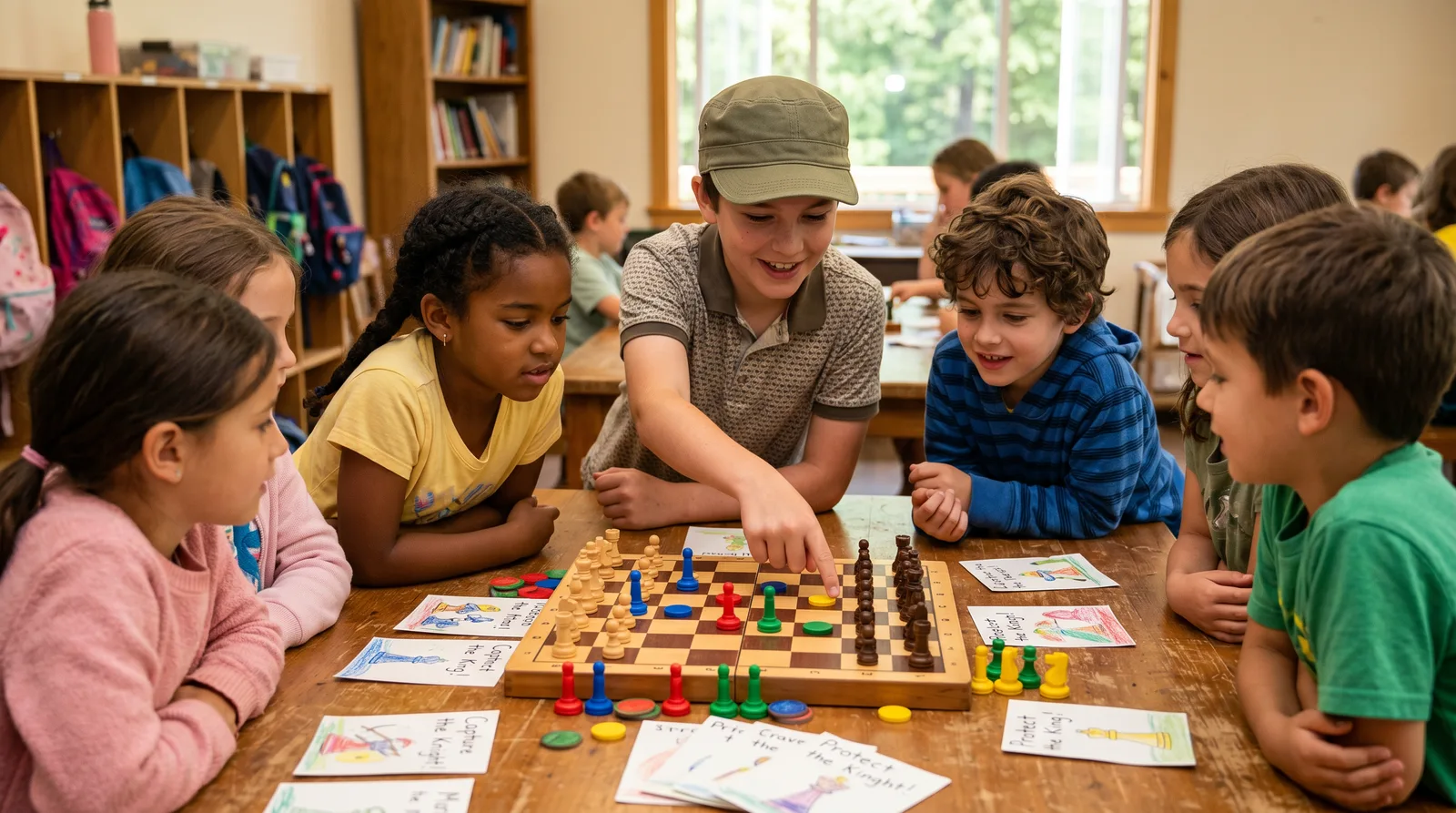
I never ask kids to move first — I ask them to look first, because that's where all the real thinking lives.
— Iconic Academies
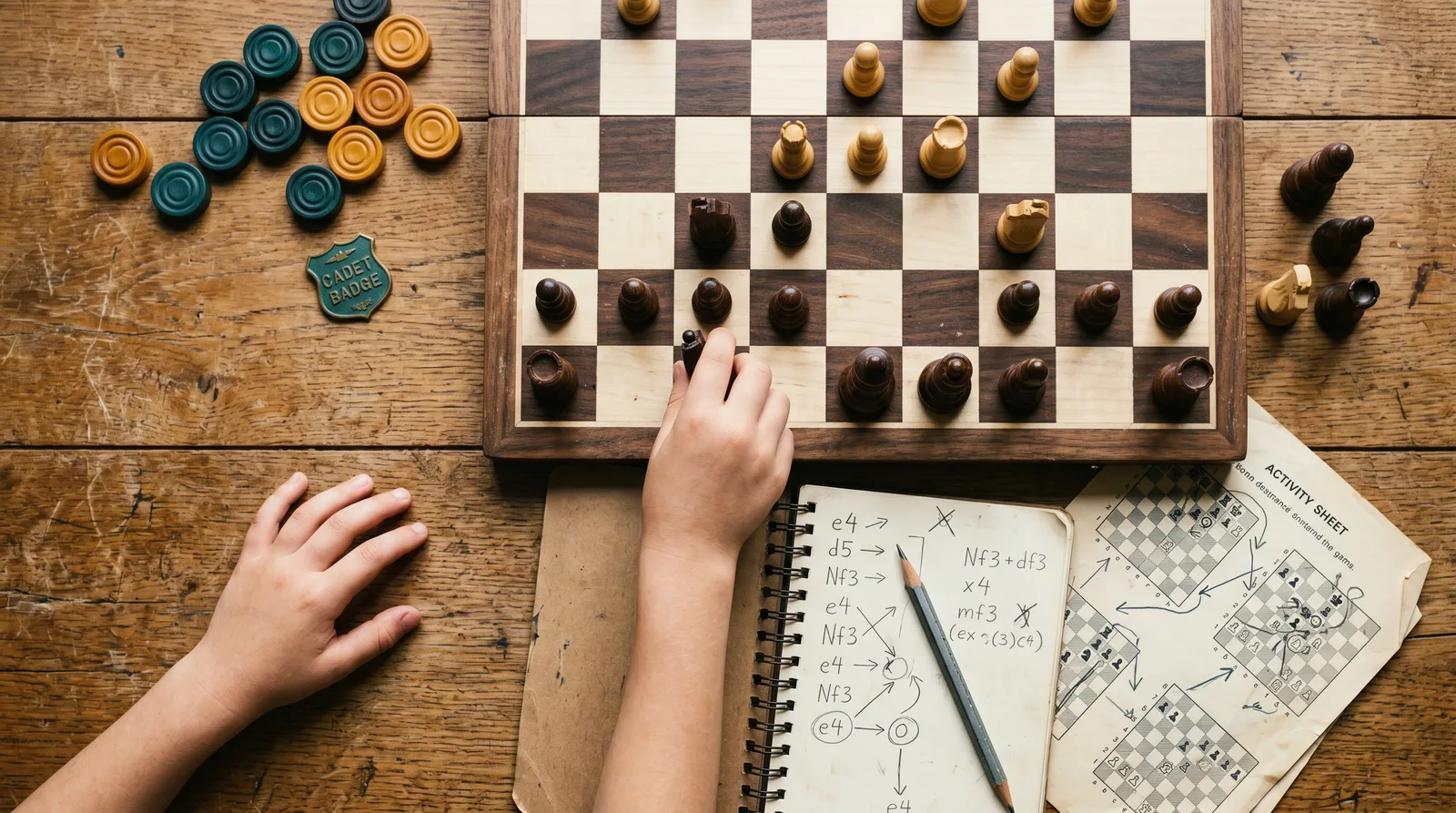
What you'll learn
What you'll be able to do
- Play and teach foundational chess pieces, checkers, and classic strategy games with growing confidence across all grade levels.
- Apply critical thinking frameworks — observe, analyze, plan, move — to in-game decisions and real-life problem-solving.
- Recognize and extend patterns, use coordinate logic, and reason spatially through hands-on game missions and printable activities.
- Demonstrate good sportsmanship, reflective thinking, and perseverance after both wins and tough moves.
- Lead or facilitate game sessions independently using printable mission packs — solo, with siblings, in classrooms, or at camp.
- Connect game strategies to California Common Core Math reasoning, CS computational thinking, and SEL self-management skills through adult-facing guides.
How it works
A school that adapts to you
This isn't a set of static videos. Every lesson is generated live and tuned to where you actually are.
We learn your level
A quick placement check tailors your starting point so you're never bored or lost.
Lessons adapt as you go
Each lesson is written for your pace and your goal, adjusting as your skills grow.
Your AI coach keeps you moving
Checkpoints, feedback, and gentle nudges turn progress into a real result.
The curriculum
What's inside your school
6 modules · 30 lessons
Mission Briefing: How Cadets Think
Establishes the core Cadet J framework — Observe, Analyze, Plan, Move — and builds the habits of mind that underpin every game and mission ahead.
- 1.1Look First: The Power of Slowing DownIncluded
- 1.2Think Next: Asking Better Questions Before You MoveIncluded
- 1.3Move Last: Planning One Step AheadIncluded
- 1.4The Cadet Code: Sportsmanship, Reflection, and Try AgainIncluded
- 1.5Mission Ready: Your First Game LogIncluded
Pattern Patrol: Patterns, Matching, and Memory
Develops pattern recognition, visual memory, and sequence logic through classic matching and memory-style games scaled across all grade bands.
- 2.1What Comes Next? Spotting and Extending PatternsIncluded
- 2.2Memory Mission: Concentration and the Science of RecallIncluded
- 2.3Crack the Code: Sequences, Symbols, and Hidden RulesIncluded
- 2.4Mirror, Grid, Shape: Spatial Patterns on the Game BoardIncluded
- 2.5Pattern Boss Challenge: Design Your Own PuzzleIncluded
Grid Command: Coordinates, Logic, and Map Thinking
Builds coordinate reasoning, logical deduction, and spatial navigation through grid-based classic games and printable map missions.
- 3.1X Marks the Square: Reading a Game GridIncluded
- 3.2Battlezone Grid: A Coordinate Strategy GameIncluded
- 3.3Logic Locks: Deduction Puzzles with Yes/No CluesIncluded
- 3.4Four in Command: Connecting Strategy on a GridIncluded
- 3.5Map Mission: Design a Game Board from ScratchIncluded
Checkers Academy: Rules, Tactics, and Fair Play
Teaches the complete rules of checkers, core tactical ideas, and the sportsmanship habits that make every game a learning mission.
- 4.1Setting the Board: Checkers Rules for Every CadetIncluded
- 4.2Jump, King, and Corner: Core Checkers TacticsIncluded
- 4.3Think Ahead: Planning Two Moves at a TimeIncluded
- 4.4After the Game: Replaying and Reflecting on Key MomentsIncluded
- 4.5Checkers Mission Pack: Solo Puzzles and Partner ChallengesIncluded
Chess Station: Pieces, Power, and First Moves
Introduces every chess piece, its movement and value, and the beginning principles of safe, purposeful chess play across grade bands.
- 5.1Meet the Pieces: Who Does What on the Chess BoardIncluded
- 5.2Pawns First: The March, the Capture, and PromotionIncluded
- 5.3Rooks, Bishops, and Knights: Three Very Different PowersIncluded
- 5.4Queen, King, and the Goal of the GameIncluded
- 5.5Opening Principles: Control the Center, Develop Your PiecesIncluded
Strategy HQ: Planning, Pressure, and Game Leadership
Consolidates all critical thinking skills into deeper strategy missions, game facilitation practice, and a final capstone challenge that connects games to real-world thinking.
- 6.1Probability Patrol: Odds, Choices, and Why Luck Isn't a StrategyIncluded
- 6.2Game Design Lab: Build, Test, and Improve a GameIncluded
- 6.3Pressure-Test Mission: Timed Challenges and Prepared ThinkingIncluded
- 6.4Lead the Mission: Facilitating a Game for OthersIncluded
- 6.5Capstone: The Cadet J Strategy ShowcaseIncluded
Who it's for
Is this you?

The Game-Night Parent
Wants structured, screen-optional activities the whole family can do together — including kids of different ages — without needing to be a chess expert themselves.

The Elementary Teacher
Needs standards-aligned enrichment that's genuinely engaging, low-prep, and gives students real math reasoning and SEL practice without another worksheet.

The After-School Coordinator
Runs a program with limited setup time and mixed-grade groups, and needs print-and-play missions that kids can lead themselves after the first session.

The Summer Camp Leader
Fills activity blocks with something more purposeful than free play — these missions work outdoors, in multipurpose rooms, and with groups of very different ages and abilities.

The Middle School Enrichment Seeker
Looking for a challenge beyond the standard curriculum — the Strategy HQ zone's game design lab, probability missions, and leadership capstone are built exactly for this student.

The Homeschool Organizer
Needs flexible, self-directed learning that covers critical thinking, logic, and math reasoning in a format kids actually look forward to — and that works across multiple grade levels at once.
Questions
Frequently asked
Your teacher
A note from your teacher

Iconic Academies
Hey there — I'm so glad you found this place.
If you're reading this, there's a good chance you've been looking for something that feels different. Maybe you're a parent who wants your kids off screens but genuinely engaged — not just handed a board game with no direction. Maybe you're a teacher who knows your students have brilliant minds but are tired of worksheets that don't light anything up. Maybe you run an after-school program and you need something that actually works in a room full of wiggly, wonderful kids with fifteen minutes to set up and zero minutes to waste. I see you. All of you.
I built Cadet J's Strategy Station because I believe that the best thinking skills kids will ever develop — patience, pattern recognition, planning, resilience, the ability to say "wait, let me look again" — are all hiding inside the games they already want to play. Chess and checkers aren't just games. A coordinate grid isn't just math. A deduction puzzle isn't just a brain teaser. They're laboratories for the kind of thinking that shows up on a tough test, a hard conversation, and every moment in life when the right answer isn't obvious. My job — our job together — is to make sure kids experience that connection for themselves, one move at a time.
Here's what I want you to know about how this station is designed: I never ask kids to go fast. The very first mission is called "Look First," and that's not an accident. In a world that rewards speed, I want cadets to discover that slowing down and noticing more is actually a superpower. Every zone builds on that promise — from Pattern Patrol, where kids spot and extend sequences and design their own puzzles, to Grid Command, where coordinate logic becomes a strategy game, to the Chess Station, where they discover that a pawn's march and a knight's leap are genuinely different kinds of power. And in Strategy HQ, they don't just play — they lead. They design games, test them, improve them, and eventually run a session for someone else. That's real.
I also want to address the thing I hear most: "My kid isn't a 'game person.'" First of all — give them a mission pack and a partner and check back in twenty minutes. But more importantly: this isn't about being good at games. It's about being willing to think, to try, to reflect, and to try again. The Cadet Code isn't a poster on the wall; it's a practice we come back to after every tough move. Sportsmanship, reflection, and perseverance aren't soft skills — they're the whole game.
So whether you're a parent sitting down at the kitchen table on a rainy Saturday, a teacher looking for that one activity that actually makes kids talk to each other, or a camp counselor who needs something that works with 24 kids and one folding table — you're in the right place. Pull up a chair. The mission starts the moment you say, "Okay, cadet. What do you notice?"
I can't wait to see what your cadets do next.
— Iconic Academies
Start your journey today
Get instant access — learn at your own pace with an AI coach in your corner.
$18/mo
Recurring billing · cancel anytime
Secure checkout · Instant access
- 6 modules, 30 lessons
- AI-adaptive lessons tuned to your level
- Quizzes & checkpoints to lock in progress
- Your own AI learning coach
- Learn on any device, at your pace
- Full access for as long as you're subscribed