
Master O Level Geography. Walk into your exam ready.
Cambridge Geo Mastery takes you through every syllabus 2217 topic — rivers to tectonics, population to development, maps to mark schemes — so you know exactly what to write, and exactly why it earns marks.

Every mark you leave on the table has a reason — and I'll show you exactly how to stop leaving them there.
— Renstay College
What you'll learn
What you'll be able to do
- Explain and apply core physical geography processes — rivers, coasts, weather, and tectonics — using accurate terminology and real-world examples
- Analyse human geography themes including population, settlement, urbanisation, and economic development with Cambridge case-study evidence
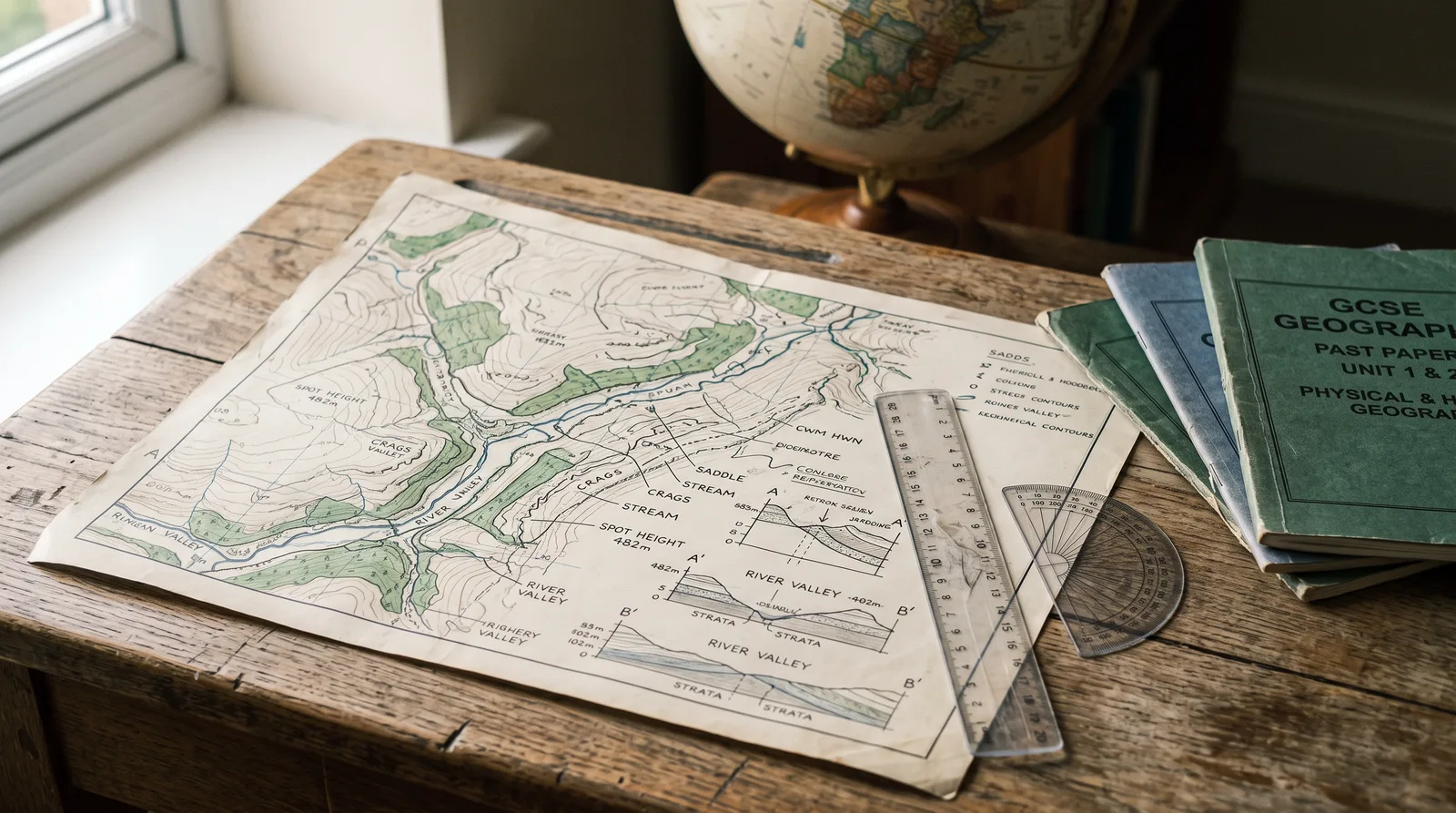
- Interpret topographic maps, cross-sections, graphs, and geographical data using the skills tested directly in Paper 1 and Paper 2
- Structure high-scoring extended-response answers that follow the Cambridge marking scheme's command-word hierarchy (describe, explain, suggest, evaluate)
- Apply located, specific case studies — at local, national, and global scales — to support every argument as required by the syllabus
- Diagnose personal topic weaknesses using past-paper practice and targeted revision strategies to maximise marks before exam day
How it works
A school that adapts to you
This isn't a set of static videos. Every lesson is generated live and tuned to where you actually are.
We learn your level
A quick placement check tailors your starting point so you're never bored or lost.
Lessons adapt as you go
Each lesson is written for your pace and your goal, adjusting as your skills grow.
Your AI coach keeps you moving
Checkpoints, feedback, and gentle nudges turn progress into a real result.
The curriculum
What's inside your school
25 modules · 111 lessons

Physical Geography — Hydrology & Rivers
Covers the water cycle, river processes, landforms, flooding, and water management with real-world case studies.
- 1.1The Water Cycle & River BasinsIncluded
- 1.2River Processes & Erosional LandformsIncluded
- 1.3Depositional Landforms & FloodplainsIncluded
- 1.4Flooding — Causes, Impacts & ResponsesIncluded
- 1.5Water Supply, Demand & ManagementIncluded
Physical Geography — Coasts, Weather & Tectonics
Explores coastal processes and landforms, weather systems, climate, and tectonic hazards with Cambridge case-study evidence.
- 2.1Coastal Processes & Erosional LandformsIncluded
- 2.2Coastal Deposition & ManagementIncluded
- 2.3Weather, Climate & the AtmosphereIncluded
- 2.4Tropical Storms & DroughtIncluded
- 2.5Tectonic Hazards — Earthquakes & VolcanoesIncluded
Human Geography — Population & Settlement
Examines global population change, migration, settlement patterns, urbanisation, and the challenges of rapid city growth.
- 3.1Population Growth, Structure & DistributionIncluded
- 3.2Population Policies & Resource PressureIncluded
- 3.3Migration — Causes, Flows & ImpactsIncluded
- 3.4Settlement Patterns & Urban Land UseIncluded
- 3.5Urbanisation, Squatter Settlements & Urban PlanningIncluded
Human Geography — Economic Development & the Environment
Covers the global development gap, agriculture, industry, tourism, energy, and the environmental impacts of economic activity.
- 4.1Development — Measuring & Explaining the GapIncluded
- 4.2Agriculture — Systems, Change & ChallengesIncluded
- 4.3Industry — Location Factors & Global ShiftsIncluded
- 4.4Tourism — Growth, Benefits & ImpactsIncluded
- 4.5Energy — Supply, Demand & SustainabilityIncluded
Geographical Skills — Maps, Data & Fieldwork
Builds all Paper 1 and Paper 2 skills: topographic map reading, statistical techniques, graph interpretation, and cross-sections.
- 5.1Topographic Map Reading & Grid ReferencesIncluded
- 5.2Contours, Relief & Cross-SectionsIncluded
- 5.3Graphs, Charts & Statistical TechniquesIncluded
- 5.4Photograph & Satellite Image InterpretationIncluded
- 5.5Fieldwork Methods & Data PresentationIncluded
Exam Technique, Case Studies & Revision Strategy
Equips students to decode command words, write high-scoring responses, apply case studies under timed conditions, and target personal weaknesses.
- 6.1Decoding Command Words & Mark AllocationsIncluded
- 6.2Structuring Extended-Response AnswersIncluded
- 6.3Case Study Mastery — Selecting & Applying EvidenceIncluded
- 6.4Past-Paper Practice & Mark-Scheme AnalysisIncluded
- 6.5Diagnosing Weaknesses & Building a Revision PlanIncluded
Population dynamics
- 7.1Describe and give reasons for the rapid increase in the world’s populationIncluded
- 7.2Show an understanding of over-population and under-populationIncluded
- 7.3Understand the main causes of a change in population sizeIncluded
- 7.4Give reasons for contrasting rates of natural population changeIncluded
- 7.5Describe and evaluate population policiesIncluded
- 7.6A country which is over-populatedIncluded
- 7.7A country which is under-populatedIncluded
- 7.8A country with a high rate of natural population growthIncluded
- 7.9A country with a low rate of population growth (or population decline)Included
Migration
- 8.1Explain and give reasons for population migrationIncluded
- 8.2Demonstrate an understanding of the impacts of migrationIncluded
- 8.3An international migrationIncluded
Population structure
- 9.1Identify and give reasons for and implications of different types of population structureIncluded
- 9.2A country with a high dependent populationIncluded
Population density and distribution
- 10.1Describe the factors influencing the density and distribution of populationIncluded
- 10.2A densely populated country or area (at any scale from local to regional)Included
- 10.3A sparsely populated country or area (at any scale from local to regional)Included
Settlements (rural and urban) and service provision
- 11.1Explain the patterns of settlementIncluded
- 11.2Describe and explain the factors which may influence the sites, growth and functions of settlementsIncluded
- 11.3Give reasons for the hierarchy of settlements and servicesIncluded
- 11.4Settlement and service provision in an areaIncluded
Urban settlements
- 12.1Describe and give reasons for the characteristics of, and changes in, land use in urban areasIncluded
- 12.2Explain the problems of urban areas, their causes and possible solutionsIncluded
- 12.3An urban area or urban areasIncluded
Urbanisation
- 13.1Identify and suggest reasons for rapid urban growthIncluded
- 13.2Describe the impacts of urban growth on both rural and urban areas, along with possible solutions to reduce the negative impactsIncluded
- 13.3A rapidly growing urban area in a developing country and migration to itIncluded
Earthquakes and volcanoes
- 14.1Describe the main types and features of volcanoes and earthquakesIncluded
- 14.2Describe and explain the distribution of earthquakes and volcanoesIncluded
- 14.3Describe the causes of earthquakes and volcanic eruptions and their effects on people and the environmentIncluded
- 14.4Demonstrate an understanding that volcanoes present hazards and offer opportunities for peopleIncluded
- 14.5Explain what can be done to reduce the impacts of earthquakes and volcanoesIncluded
- 14.6An earthquake.Included
- 14.7A volcano.Included
Rivers
- 15.1Explain the main hydrological characteristics and processes which operate in rivers and drainage basinsIncluded
- 15.2Demonstrate an understanding of the work of a river in eroding, transporting and depositingIncluded
- 15.3Describe and explain the formation of the landforms associated with these processesIncluded
- 15.4Demonstrate an understanding that rivers present hazards and offer opportunities for peopleIncluded
- 15.5Explain what can be done to manage the impacts of river floodingIncluded
- 15.6The opportunities presented by a river or rivers, the associated hazards and their managementIncluded
Coasts
- 16.1Demonstrate an understanding of the work of the sea and wind in eroding, transporting and depositingIncluded
- 16.2Describe and explain the formation of the landforms associated with these processesIncluded
- 16.3Describe coral reefs and mangrove swamps and the conditions required for their developmentIncluded
- 16.4Demonstrate an understanding that coasts present hazards and offer opportunities for peopleIncluded
- 16.5Explain what can be done to manage the impacts of coastal erosionIncluded
- 16.6The opportunities presented by an area or areas of coastline, the associated hazards and their managementIncluded
Weather
- 17.1Describe how weather data are collectedIncluded
- 17.2Make calculations using information from weather instrumentsIncluded
- 17.3Use and interpret graphs and other diagrams showing weather and climate dataIncluded
Climate and natural vegetation
- 18.1Describe and explain the characteristics of two climates: equatorial and hot desertIncluded
- 18.2Describe and explain the characteristics of tropical rainforest and hot desert ecosystemsIncluded
- 18.3Describe the causes and effects of deforestation of tropical rainforestIncluded
- 18.4An area of tropical rainforestIncluded
- 18.5An area of hot desertIncluded
Development
- 19.1Use a variety of indicators to assess the level of development of a countryIncluded
- 19.2Identify and explain inequalities between and within countriesIncluded
- 19.3Classify production into different sectors and give illustrations of eachIncluded
- 19.4Describe and explain how the proportions employed in each sector vary according to the level of developmentIncluded
- 19.5Describe and explain the process of globalisation, and consider its impactsIncluded
- 19.6A transnational corporation and its global linksIncluded
Food production
- 20.1Describe and explain the main features of an agricultural system: inputs, processes and outputsIncluded
- 20.2Recognise the causes and effects of food shortages and describe possible solutions to this problemIncluded
- 20.3A farm or agricultural systemIncluded
- 20.4A country or region suffering from food shortagesIncluded
Industry
- 21.1Demonstrate an understanding of an industrial system: inputs, processes and outputs (products and waste)Included
- 21.2Describe and explain the factors influencing the distribution and location of factories and industrial zonesIncluded
- 21.3An industrial zone or factoryIncluded
Tourism
- 22.1Describe and explain the growth of tourism in relation to the main attractions of the physical and human landscapeIncluded
- 22.2Evaluate the benefits and disadvantages of tourism to receiving areasIncluded
- 22.3Demonstrate an understanding that careful management of tourism is required in order for it to be sustainableIncluded
- 22.4An area where tourism is important.Included
Energy
- 23.1Describe the importance of non-renewable fossil fuels, renewable energy supplies, nuclear power and fuelwood; globally and in different countries at different levels of developmentIncluded
- 23.2Evaluate the benefits and disadvantages of nuclear power and renewable energy sourcesIncluded
- 23.3Energy supply in a country or areaIncluded
Water
- 24.1Describe methods of water supply and the proportions of water used for agriculture, domestic and industrial purposes in countries at different levels of economic developmentIncluded
- 24.2Explain why there are water shortages in some areas and demonstrate that careful management is required to ensure future suppliesIncluded
- 24.3Water supply in a country or area.Included
Environmental risks of economic development
- 25.1Describe how economic activities may pose threats to the natural environment and people, locally and globallyIncluded
- 25.2Demonstrate the need for sustainable development and managementIncluded
- 25.3Understand the importance of resource conservationIncluded
- 25.4An area where economic development is taking place and causing the environment to be at riskIncluded
Who it's for
Is this you?

The Self-Studier
Studying without a classroom teacher, they need a complete, structured guide through every syllabus topic with exam technique built in.

The Homeschooler
Their parent manages their education and needs a rigorous, fully syllabus-aligned curriculum that doesn't require external teaching support.

The School Supplementer
Attending school lessons but finding the pace too fast or the explanations too shallow — they want clear, exam-focused reinforcement at home.

The Case-Study Worrier
They know their content but panic when asked to apply specific, located evidence — this course embeds case-study practice into every single topic.

The Exam Technique Struggler
They lose marks on extended responses not from lack of knowledge but from not knowing how to structure answers around Cambridge command words.

The Last-Lap Reviser
Exams are approaching and they need to diagnose weak topics fast, sharpen their skills-paper technique, and maximise marks before the big day.
Questions
Frequently asked
Your teacher
A note from your teacher
Renstay College
If you've ever stared at a Geography exam paper and felt like you understood the topic but just couldn't figure out what the question actually wanted — I know exactly how that feels. And if you're a parent watching your child revise geography for hours without seeing their confidence grow, I understand that frustration too.
The Cambridge O Level Geography exam is genuinely rewarding to prepare for, but only when you learn to see it the way the examiner sees it. Most students lose marks not because they don't know the content, but because they describe when the question says explain, or give a general example when the mark scheme is looking for a located, specific one. That gap between knowing geography and performing in Cambridge Geography is exactly what I built this school to close.
In Cambridge Geo Mastery, we work through the entire syllabus 2217 together — every river process, every coastal landform, every population policy, every development indicator. I break complex case studies into clear, logical steps so they stick, and I connect every concept back to the mark scheme language so you always know what you're aiming for. The geographical skills section is taught the way Cambridge actually tests it: reading contours and cross-sections, interpreting graphs and photographs, applying fieldwork methods — all in exam context, not in the abstract.
The exam technique and revision strategy section is where everything clicks into place. We go command word by command word — describe, explain, suggest, evaluate — and I show you what a high-scoring response to each one looks like and why it scores. You'll practise with real past-paper questions, learn to read a mark scheme like a student who wrote the answers, and build a targeted revision plan based on your actual weak spots, not a generic checklist.
You don't need to be a geography genius to do well in this exam. You need clarity, the right vocabulary, strong case-study evidence, and a reliable way to structure your answers. That's what this school gives you. I'd love to help you walk into that exam room knowing you're ready.
— Renstay College
Start your journey today
Get instant access — learn at your own pace with an AI coach in your corner.
$10/mo
Recurring billing · cancel anytime
Enrolling a child? Sign up as a parent — you'll add your student right here after.
Secure checkout · Instant access
- 25 modules, 111 lessons
- AI-adaptive lessons tuned to your level
- Quizzes & checkpoints to lock in progress
- Your own AI learning coach
- Learn on any device, at your pace
- Full access for as long as you're subscribed