Build the file that protects your recovery
After an accident, the insurance company, your employer, and the claims system are already collecting information — this school teaches you to do the same, step by step, so your records tell the truth about what really happened to you.

"The people who protect their recovery aren't the ones who fight the hardest — they're the ones who wrote everything down from the start."— Heather Johnson
What you'll learn
What you'll be able to do
- Build a day-one injury documentation system that captures symptoms, treatments, and conversations before memory fades
- Understand how insurance adjusters, workers' compensation systems, and no-fault laws actually work — and where injured people commonly lose ground
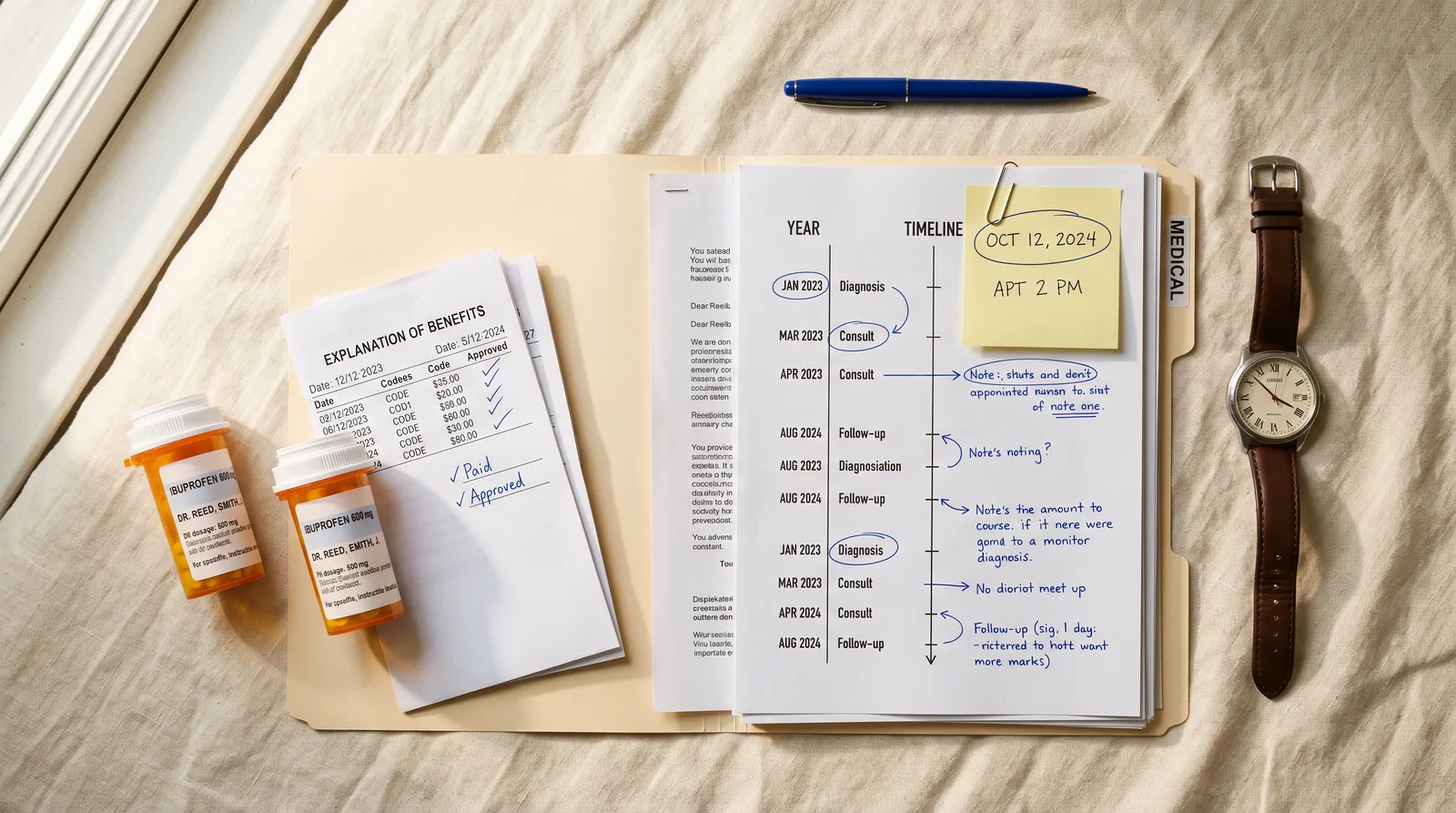
- Create a master chronological timeline that connects medical records, bills, communications, and evidence into one clear picture
- Recognize the tactics insurers and employers use to minimize or deny claims, and know exactly how to respond
- Communicate more effectively with doctors, attorneys, and adjusters using organized, verifiable records rather than memory alone
- Protect your legal rights and financial recovery by knowing what to document, what to preserve, and what deadlines you cannot afford to miss
How it works
A school that adapts to you
This isn't a set of static videos. Every lesson is generated live and tuned to where you actually are.
We learn your level
A quick placement check tailors your starting point so you're never bored or lost.
Lessons adapt as you go
Each lesson is written for your pace and your goal, adjusting as your skills grow.
Your AI coach keeps you moving
Checkpoints, feedback, and gentle nudges turn progress into a real result.
The curriculum
What's inside your school
8 modules · 35 lessons

Why Documentation Changes Everything
Establishes the mindset shift injured people need — understanding why a personal record is as critical as medical treatment itself.
- 1.1The Moment Everything ChangesIncluded
- 1.2How Memory Fails Under Trauma and PainIncluded
- 1.3Who Is Already Building a File on YouIncluded
- 1.4Your Record Is Your ProtectionIncluded
- 1.5Introducing Your Documentation SystemIncluded
Building Your Day-One Documentation System
Gives injured people a practical, immediate framework for capturing symptoms, treatments, and communications before critical details are lost.
- 2.1What to Document in the First 24–72 HoursIncluded
- 2.2Tracking Symptoms Daily — Pain, Function, and MoodIncluded
- 2.3Documenting Every Medical AppointmentIncluded
- 2.4Preserving Conversations and CommunicationsIncluded
- 2.5Organizing Bills, Records, and Physical EvidenceIncluded
How Insurance Really Works — And Where You Lose Ground
Demystifies the insurance system, explaining how auto liability, no-fault, and workers' compensation coverage actually operates from the insurer's perspective.
- 3.1The History of Workers' Compensation — Why It Exists and How It EvolvedIncluded
- 3.2No-Fault Insurance Explained — What It Covers and What It Doesn'tIncluded
- 3.3How Insurance Adjusters Think and WorkIncluded
- 3.4Why Claims Get Delayed, Reduced, or DeniedIncluded
- 3.5Your Rights Inside the Claims ProcessIncluded
Recognizing and Responding to Tactics That Minimize Your Claim
Teaches injured people to identify insurer and employer strategies designed to reduce payouts — and exactly how solid documentation neutralizes them.
- 4.1Common Tactics Insurers and Employers UseIncluded
- 4.2What Not to Say — and What You Must Put in WritingIncluded
- 4.3When Treatment Is Delayed or Denied — What to DoIncluded
- 4.4How Your Own Records Counter Their NarrativeIncluded
Building Your Master Timeline
Guides students through assembling all collected records, evidence, and communications into one authoritative chronological case file.
- 5.1What a Master Timeline Is and Why It MattersIncluded
- 5.2Connecting Medical Records, Bills, and Treatment NotesIncluded
- 5.3Adding Communications, Decisions, and Key DatesIncluded
- 5.4Documenting How Your Injury Has Affected Daily LifeIncluded
- 5.5Reviewing, Updating, and Maintaining Your File Over TimeIncluded
- 5.6New lessonIncluded
Communicating With Doctors, Attorneys, and Adjusters
Builds the practical communication skills needed to advocate effectively using organized records rather than memory alone.
- 6.1How to Talk to Your Doctors About What Matters MostIncluded
- 6.2Getting More From Every Medical AppointmentIncluded
- 6.3Working With an Attorney — What to Bring and What to ExpectIncluded
- 6.4Communicating With Adjusters Safely and StrategicallyIncluded
- 6.5Protecting Your Rights and Your Future — What Comes NextIncluded
New module
- 7.1New lessonIncluded
Insurance Layers, Medicare, Medicaid, Social Security Disability, and Subrogation — Who Pays, Who Gets Paid Back, and Why It Matters to You
When you're injured, the money rarely flows in a straight line — multiple insurance policies, government programs, and repayment rights stack on top of each other in ways that can quietly shrink your recovery if you don't see them coming. This module walks you through exactly how primary and secondary coverage work, what Medicare's role is before and after a settlement, and what subrogation means for the money you eventually receive.
- 8.1Primary and Secondary Insurance — Understanding Who Pays FirstIncluded
- 8.2Medicare as a Primary and Secondary Payer — The Rules That Catch People Off GuardIncluded
- 8.3Medicare Set-Asides and Conditional Payments — Protecting Your Benefits Through SettlementIncluded
- 8.4Subrogation — What It Is, Who Can Use It, and How It Affects Your RecoveryIncluded
Who it's for
Is this you?

Car accident survivors
They're dealing with whiplash, medical appointments, and an adjuster's calls — and they need to know how to protect their account of events before it's too late.

Injured workers
Navigating workers' comp for the first time, they need to understand the system, document their injury properly, and know what their employer's insurer isn't telling them.

Family caregivers
Supporting a loved one who is too injured or overwhelmed to manage their own records, they're the ones keeping track — and this school gives them exactly the framework to do it right.

Denied or delayed claimants
Their claim was reduced, stalled, or denied, and they need to understand why — and how their own organized documentation can help them push back effectively.

Medical emergency patients
After a sudden hospitalization or procedure, they're facing unexpected bills and insurance complexity and need to know how to document and organize everything from here forward.

First-time attorney clients
They've decided to work with a lawyer but want to arrive prepared — with a clear timeline, organized records, and an understanding of what to expect from the process.
Questions
Frequently asked
Your teacher
A note from your teacher
Heather Johnson
If you're reading this, something happened to you — or to someone you love. And on top of the pain, the uncertainty, and the disruption to your entire life, you're now supposed to navigate an insurance claim, a workers' comp system, or a stack of medical bills you don't fully understand yet. That's an enormous amount to carry.
I want you to know something first: the confusion you feel right now is not a personal failing. These systems are genuinely complicated, and they were not built to be easy for injured people to understand. What I've seen, over and over, is that the people who fare best are not necessarily the ones with the most serious injuries or the most aggressive attorneys. They're the ones who documented everything — carefully, consistently, and starting as early as possible.
That's what this school is built around. Not legal strategy. Not courtroom tactics. Just the practical, methodical work of building a record that tells the true story of what happened to you and how it has affected your life. When I teach you how to track symptoms daily, document every medical appointment, preserve every conversation, and build a master timeline that connects all of it — I'm handing you a tool that works in every direction. It helps your doctors understand your full picture. It helps an attorney hit the ground running. And it counters the narrative that sometimes gets built without your input.
I also want to be honest with you about something: the claims process is not neutral. Adjusters have a job to do, and part of that job is managing costs. Employers have interests. Systems have deadlines that no one will remind you of. I'm not telling you this to make you afraid or adversarial — I'm telling you because understanding how the process actually works is what allows you to move through it with your eyes open and your rights intact.
This school will not tell you what to do with your specific case — that's what attorneys are for, and I'll help you understand how to work with one effectively. What I will do is make sure you arrive at every conversation — with your doctor, your adjuster, your lawyer, or your employer — with organized, verifiable records instead of just memory and stress. That shift changes everything.
You deserve to be taken seriously. Your injury matters. Your recovery matters. And the record you build starting today is the foundation of all of it. I'm glad you're here — let's get to work.
— Heather Johnson
Start your journey today
Join get instant access — learn at your own pace with an AI coach in your corner.
$39/mo
Recurring billing · cancel anytime
Secure checkout · Instant access
- 8 modules, 35 lessons
- AI-adaptive lessons tuned to your level
- Quizzes & checkpoints to lock in progress
- Your own AI learning coach
- Learn on any device, at your pace
- Full access for as long as you're subscribed