Teach cell biology with total confidence
A practical toolkit built for science teachers — sharpen your content knowledge and walk away with ready-to-use lessons, labs, visuals, and formative assessments that make cell biology click for every student, every unit.
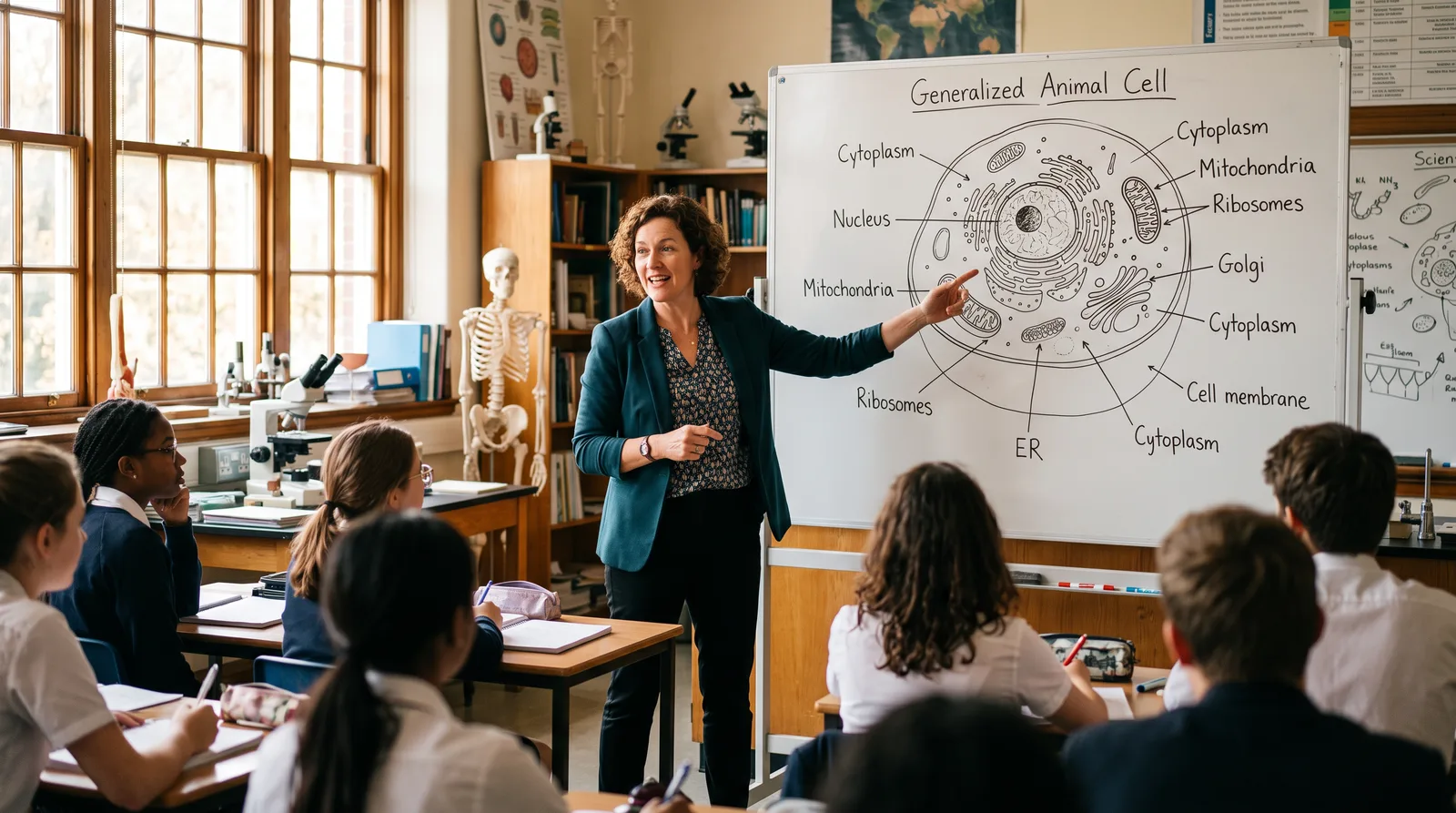
I built this course so that deeper content knowledge and Monday-morning classroom readiness always arrive at the same time.
— biologyteachermae
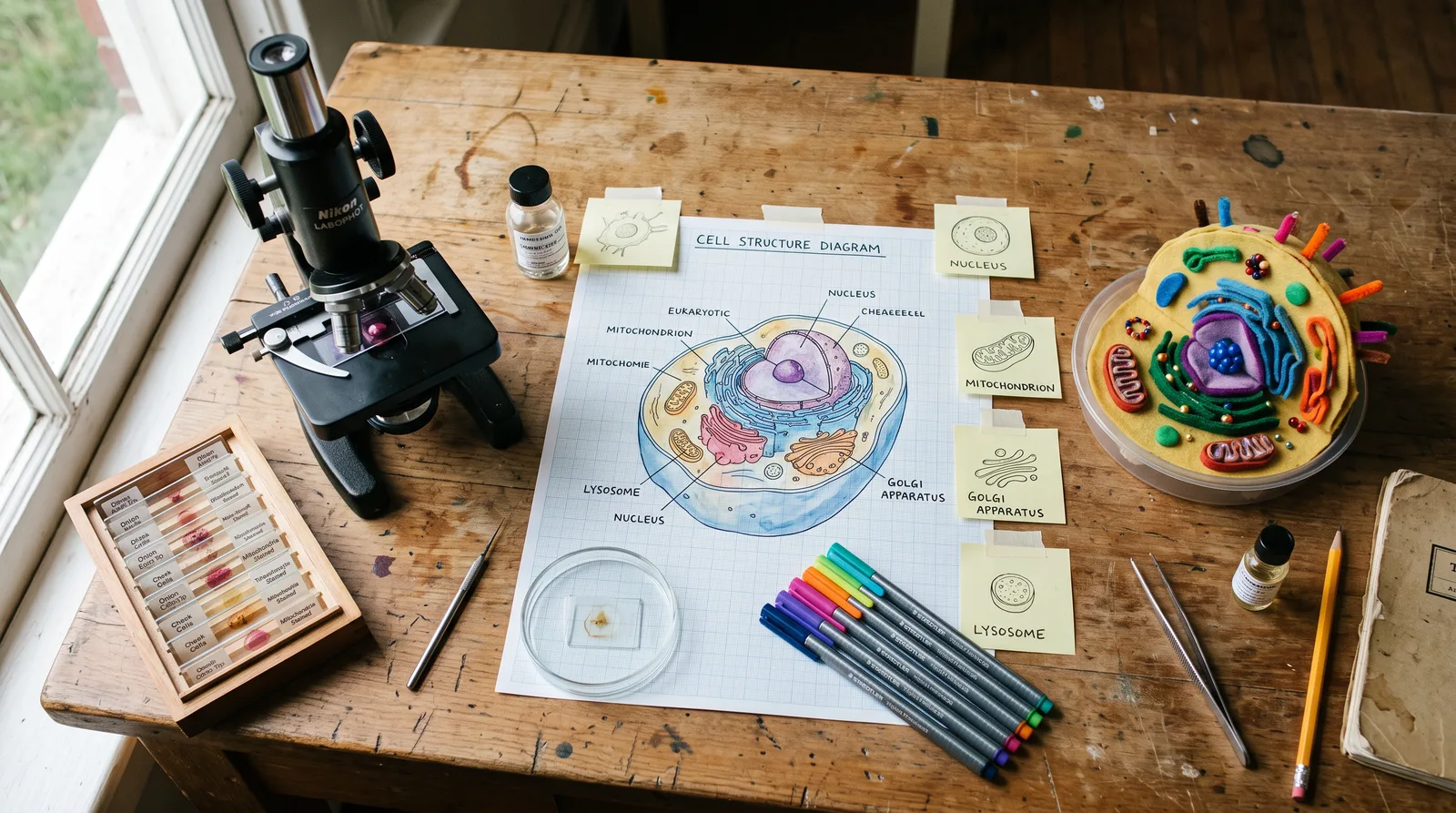
What you'll learn
What you'll be able to do
- Explain the structure and function of all major organelles using multiple representations — diagrams, analogies, and physical models.
- Design inquiry-based lab activities around cell biology concepts that work with standard school equipment and tight budgets.
- Anticipate and address the most common student misconceptions about cells, membranes, and cell division.
- Translate complex processes — mitosis, meiosis, and cellular respiration — into clear, staged visual narratives students can follow independently.
- Build a personal toolkit of formative assessments and exit tickets specifically calibrated to cell biology learning objectives.
- Confidently connect cell biology content to real-world contexts — disease, nutrition, biotechnology — to sustain student curiosity and relevance.
How it works
A school that adapts to you
This isn't a set of static videos. Every lesson is generated live and tuned to where you actually are.
We learn your level
A quick placement check tailors your starting point so you're never bored or lost.
Lessons adapt as you go
Each lesson is written for your pace and your goal, adjusting as your skills grow.
Your AI coach keeps you moving
Checkpoints, feedback, and gentle nudges turn progress into a real result.
The curriculum
What's inside your school
6 modules · 26 lessons

Organelle Structure & Function Mastery
Builds deep, flexible understanding of every major organelle using diagrams, analogies, and physical models teachers can immediately replicate in class.
- 1.1Mapping the Cell: A Visual Tour of OrganellesIncluded
- 1.2Analogy Toolbox: Making Organelles StickIncluded
- 1.33D Model Lab: Building Cells on a BudgetIncluded
- 1.4Prokaryotes vs. Eukaryotes: Teaching the Distinction ClearlyIncluded
Membranes, Transport & Common Misconceptions
Equips teachers to explain membrane structure and transport processes accurately while proactively addressing the misconceptions students bring most often.
- 2.1Fluid Mosaic Model: Beyond the Textbook DiagramIncluded
- 2.2Diffusion, Osmosis & Active Transport: Clearing Up the ConfusionIncluded
- 2.3Hands-On Transport: Inquiry Activities with Basic Lab SuppliesIncluded
- 2.4Formative Checks for Membrane ConceptsIncluded
Cell Division: Mitosis & Meiosis as Visual Narratives
Translates mitosis and meiosis into clear, staged visual storylines and inquiry activities that students can follow and reconstruct independently.
- 3.1Storyboarding Mitosis: A Staged Visual ApproachIncluded
- 3.2Meiosis: Spotlighting What Makes It DifferentIncluded
- 3.3Inquiry Lab: Modeling Chromosome BehaviorIncluded
- 3.4Connecting Cell Division to Genetics & DiseaseIncluded
- 3.5Assessing Cell Division: Checks That Reveal Depth of UnderstandingIncluded
Cellular Respiration & Photosynthesis: Complex Processes Made Clear
Breaks down cellular respiration and photosynthesis into staged visual narratives and accessible lab experiences that demystify energy flow for students.
- 4.1Energy Currency: Teaching ATP Without Losing StudentsIncluded
- 4.2Mapping Cellular Respiration: Glycolysis Through the ETCIncluded
- 4.3Photosynthesis as a Two-Act StoryIncluded
- 4.4Low-Cost Respiration & Photosynthesis LabsIncluded
- 4.5Formative Checks for Energy ProcessesIncluded
Real-World Connections: Disease, Nutrition & Biotechnology
Anchors cell biology content in relevant real-world contexts — from cancer biology to CRISPR — to sustain student curiosity and show the stakes of the science.
- 5.1Cells Gone Wrong: Teaching Cancer Biology AccessiblyIncluded
- 5.2Nutrition at the Cellular LevelIncluded
- 5.3Biotechnology in the Classroom: CRISPR, Vaccines & BeyondIncluded
- 5.4Current Events as Cell Biology HooksIncluded
Assessment Toolkit & Confident Instruction
Consolidates a personal, reusable bank of formative assessments, exit tickets, and instructional strategies calibrated to all major cell biology objectives.
- 6.1Formative Assessment Design Principles for Cell BiologyIncluded
- 6.2Exit Ticket Library: Ready-to-Use Checks for Every Major ConceptIncluded
- 6.3Anticipating Misconceptions: A Teacher's Diagnostic PlaybookIncluded
- 6.4Building Your Personal Cell Biology ToolkitIncluded
Who it's for
Is this you?

The bio teacher rebuilding confidence
Trained in another science discipline and now teaching biology, she needs to solidify her cell biology content knowledge before she can teach it with authority.

The veteran looking for fresh strategies
He's taught cell biology for years but wants updated instructional approaches — better visual narratives, stronger formative checks, and real-world hooks that resonate with today's students.

The first-year biology teacher
She's facing her first full cell biology unit and needs both the content grounding and the ready-to-use materials to get through it without starting from zero.

The resource-constrained science teacher
Teaching in an underfunded school, he needs inquiry labs and hands-on activities that work with basic supplies — not expensive equipment his department doesn't have.

The middle school science generalist
She covers life, earth, and physical science and needs a reliable cell biology toolkit that lets her teach the unit confidently without being a specialist.

The teacher chasing student engagement
He knows his students switch off during abstract cell processes and wants the real-world disease, nutrition, and biotech hooks that make the content feel immediately relevant.
Questions
Frequently asked
Your teacher
A note from your teacher
biologyteachermae
If you've ever spent a Sunday night rebuilding your cell biology slides from scratch because last year's version just didn't land — or stood at the board watching students nod along during mitosis only to discover on the exit ticket that almost no one actually followed the chromosome story — then you already know what this course is for.
Cell biology is genuinely hard to teach well. Not because the content is impossible, but because it asks students to visualize things they can't see, track processes that happen across scales and stages, and connect molecular machinery to lived consequences like disease and metabolism. That's a tall order. And most of us learned the content in a lecture hall, not in a room where we were also expected to make it click for thirty-two twelve-year-olds before the bell rings.
The Cell Biology Toolkit is what I wish I'd had earlier in my career: a course that treats your content knowledge and your instructional practice as equally worth developing. We work through the full scope of secondary cell biology — organelle structure and function, membrane dynamics and transport, mitosis and meiosis, cellular respiration and photosynthesis, and real-world applications in disease, nutrition, and biotechnology — with precise scientific language and without talking down to you. And at every step, we ask the practical question: how do you actually teach this on Monday?
That means analogy frameworks that make organelles memorable, not just named. It means visual narratives that let students follow mitosis and meiosis stage by stage without losing the thread. It means inquiry labs designed around what you actually have in your supply closet, not what a well-funded research institution stocks. And it means a full assessment toolkit — exit tickets, formative checks, and a diagnostic misconception playbook — so you can find out what your students really understood, not just what they wrote down.
My goal is straightforward: by the time you finish this course, you should feel genuinely confident walking into any cell biology lesson, and you should have a personal toolkit of materials you can reach for, adapt, and reuse for as long as you're in the classroom. The content deepening and the classroom-ready tools are inseparable here — that's the point.
If that sounds like what you need, I'd love to have you in the course. Let's build something durable together.
— biologyteachermae
Start your journey today
Get instant access — learn at your own pace with an AI coach in your corner.
$39/mo
Recurring billing · cancel anytime
Secure checkout · Instant access
- 6 modules, 26 lessons
- AI-adaptive lessons tuned to your level
- Quizzes & checkpoints to lock in progress
- Your own AI learning coach
- Learn on any device, at your pace
- Full access for as long as you're subscribed