Understand every living thing from the inside out
A rigorous, US curriculum-aligned cell biology program — built for AP Biology students, pre-med undergraduates, and community college learners who want to genuinely master the molecular machinery of life, not just memorize it for the test.
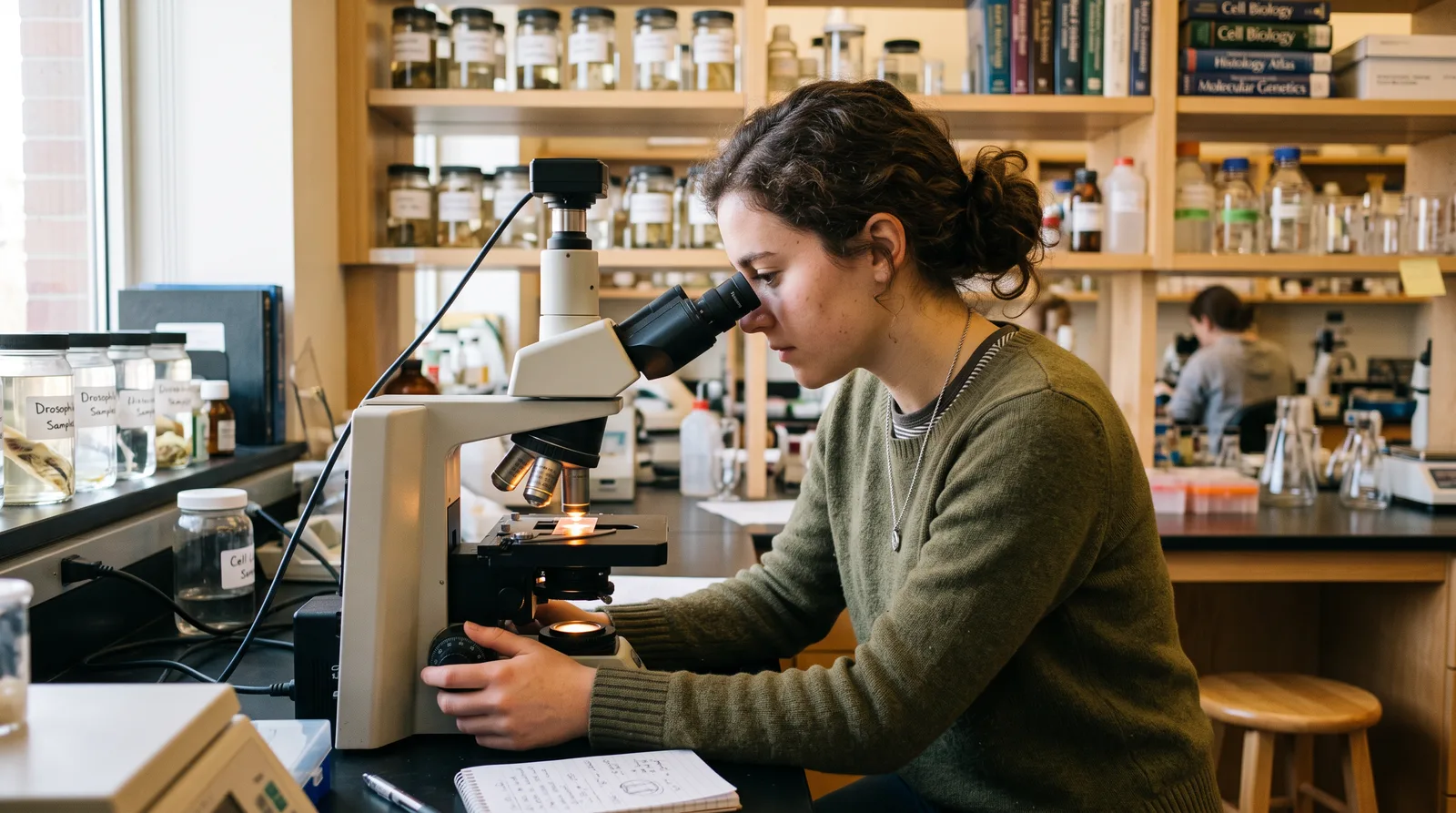
My job isn't to hand you facts to memorize — it's to show you the logic so clearly that you could reason your way to the answer even if you'd never seen the question before.
— biologyteachermae
What you'll learn
What you'll be able to do
- Describe the structure and function of all major eukaryotic and prokaryotic cell organelles with precision
- Explain membrane transport mechanisms — including passive diffusion, active transport, and vesicle trafficking — and predict outcomes in osmotic scenarios
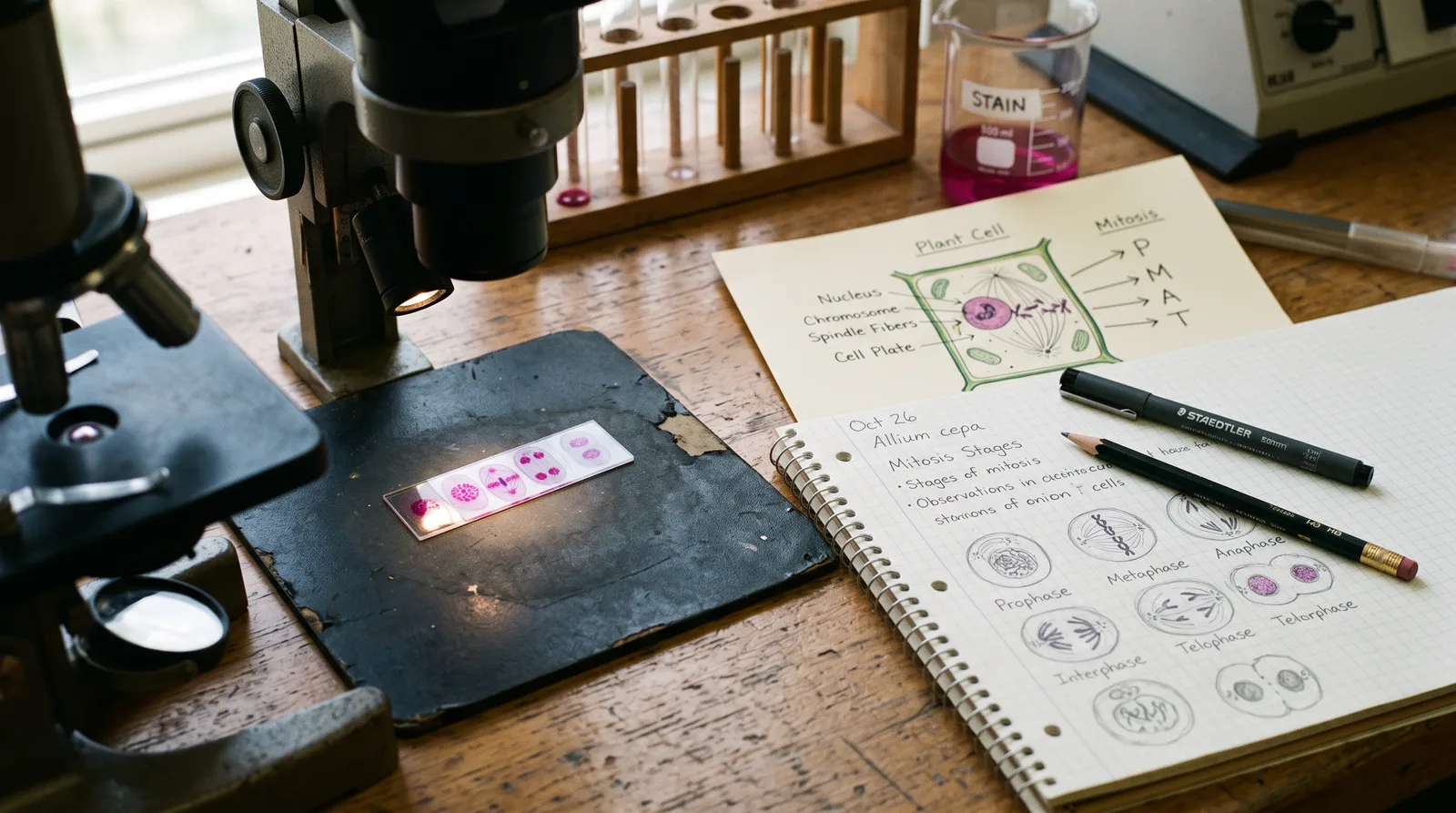
- Trace the complete cell cycle, including mitosis and meiosis, and identify how checkpoints prevent uncontrolled division
- Analyze gene expression from DNA transcription through post-translational protein modification in both prokaryotes and eukaryotes
- Interpret real experimental data — microscopy images, gel electrophoresis results, and cell assay graphs — as required in AP and college lab practicals
- Apply cell biology concepts to human disease contexts such as cancer, genetic disorders, and viral infection, aligned to US NGSS and AP Biology standards
How it works
A school that adapts to you
This isn't a set of static videos. Every lesson is generated live and tuned to where you actually are.
We learn your level
A quick placement check tailors your starting point so you're never bored or lost.
Lessons adapt as you go
Each lesson is written for your pace and your goal, adjusting as your skills grow.
Your AI coach keeps you moving
Checkpoints, feedback, and gentle nudges turn progress into a real result.
The curriculum
What's inside your school
6 modules · 28 lessons

Foundations of Cell Biology
Establishes the conceptual and historical framework of cell theory, cell types, and the tools scientists use to study cells.
- 1.1Cell Theory and the History of Cell BiologyIncluded
- 1.2Prokaryotic vs. Eukaryotic CellsIncluded
- 1.3Tools of Cell Biology: Microscopy and ImagingIncluded
- 1.4Biological Molecules and Their Roles in the CellIncluded
Cell Structure and Organelle Function
Provides a precise tour of every major eukaryotic organelle and the prokaryotic cell, linking structure to function throughout.
- 2.1The Plasma Membrane: Structure and the Fluid-Mosaic ModelIncluded
- 2.2The Nucleus and Genetic Control CenterIncluded
- 2.3The Endomembrane System: ER, Golgi, and VesiclesIncluded
- 2.4Energy Organelles: Mitochondria and ChloroplastsIncluded
- 2.5Cytoskeleton, Cell Wall, and Extracellular StructuresIncluded
Membrane Transport and Cell Communication
Explains how substances move across membranes and how cells send and receive signals, with emphasis on predicting osmotic outcomes.
- 3.1Passive Transport: Diffusion and OsmosisIncluded
- 3.2Active Transport and Membrane PumpsIncluded
- 3.3Vesicle-Mediated Transport: Endocytosis and ExocytosisIncluded
- 3.4Cell Signaling: Receptors, Transduction, and ResponseIncluded
Cell Division: Mitosis, Meiosis, and the Cell Cycle
Provides a complete account of the cell cycle, its checkpoints, and the mechanisms of both mitotic and meiotic division.
- 4.1The Cell Cycle: Interphase and Preparation for DivisionIncluded
- 4.2Mitosis: Stages, Spindle Mechanics, and CytokinesisIncluded
- 4.3Cell Cycle Checkpoints and CancerIncluded
- 4.4Meiosis: Genetic Diversity and Sexual ReproductionIncluded
- 4.5Errors in Cell Division: Nondisjunction and Chromosomal DisordersIncluded
Gene Expression: From DNA to Protein
Traces the complete flow of genetic information from DNA transcription through translation and post-translational modification in both prokaryotes and eukaryotes.
- 5.1DNA Structure, Replication, and ProofreadingIncluded
- 5.2Transcription: Making RNA from DNAIncluded
- 5.3RNA Processing and the Journey to the RibosomeIncluded
- 5.4Translation: Decoding mRNA into ProteinIncluded
- 5.5Gene Regulation and Post-Translational Protein ModificationIncluded
Cell Biology in Disease, Lab Practice, and the Real World
Applies core concepts to human disease, experimental data interpretation, and AP/college lab practicals aligned to US NGSS and AP Biology standards.
- 6.1Viral Infection and the Cell: Entry, Replication, and Immune EvasionIncluded
- 6.2Cancer Biology: Oncogenes, Tumor Suppressors, and MetastasisIncluded
- 6.3Genetic Disorders and Cellular DysfunctionIncluded
- 6.4Interpreting Experimental Data: Gel Electrophoresis and Cell AssaysIncluded
- 6.5AP Biology and College Lab Practicals: Exam-Ready SkillsIncluded
Who it's for
Is this you?

AP Biology student
Preparing for the AP Biology exam and needs conceptual depth and data-interpretation skills that go beyond what classroom notes provide.

Pre-med undergraduate
Wants an iron-clad cell biology foundation before tackling university coursework, MCAT prep, and the rigors of a biomedical degree.

Community college learner
Following a US introductory biology curriculum and looking for precise, engaging instruction to fill the gaps that lectures and textbooks leave behind.

Self-directed science enthusiast
Driven by genuine curiosity about how living systems work and wants to engage with real mechanisms — not watered-down summaries.

Career-changer entering healthcare
Returning to formal science study as part of a nursing, PA, or allied health pathway and needs to build rigorous cellular biology knowledge from the ground up.

High school biology teacher
Looking to deepen their own conceptual mastery — especially in gene expression, cell signaling, and disease applications — to bring sharper explanations to their own classroom.
Questions
Frequently asked
Your teacher
A note from your teacher
biologyteachermae
If you're here, I'm guessing you already know the feeling: you can recite the steps of mitosis, you can label an organelle diagram, but when someone asks you to explain — really explain — why a cell going through unchecked division is dangerous, or what actually happens at the ribosome when a protein is being built, the answer feels shakier than it should. That gap between memorization and genuine understanding is exactly what this course was designed to close.
I built Cell Biology Lab because I believe cell biology is one of the most intellectually beautiful subjects in all of science — and one of the most routinely taught in a way that drains that beauty right out of it. Lists of organelle names. Diagrams to trace without context. Vocabulary terms to define without ever seeing the mechanism those words describe. You deserve better than that, and more importantly, your future — whether it's an AP exam, a university lab course, or a career in medicine or research — requires better than that.
Here's what I want you to experience in this program: the moment a mechanism clicks. When you finally see that the endomembrane system isn't a collection of separate structures to memorize, but a continuous, logical protein-trafficking highway. When the cell cycle stops being a circular diagram and becomes a tightly regulated decision-making sequence that your own body runs trillions of times. When gene expression stops being "DNA makes RNA makes protein" and becomes a rich, regulated process that explains how a liver cell and a neuron can contain identical DNA and behave nothing alike. Those moments of clarity are what rigorous, patient teaching produces — and they're what I'm here to give you.
Every unit in this course is sequenced so that each concept earns the next. We start with the tools and history that give context to everything that follows, build through structure and transport and division and expression, and finish with the real-world applications — cancer, viral infection, genetic disorders — that show you why every mechanism we've studied actually matters. The final unit puts you in front of real experimental data: gel electrophoresis results, microscopy images, cell assay graphs. Because understanding the biology is one thing; being able to read the evidence is what makes you a scientist.
Whether you're a high school student aiming for a 5 on the AP Biology exam, a pre-med undergraduate who wants to walk into Cell Bio with unshakeable foundations, or a community college learner who just wants to genuinely get this material — I'm glad you're here. Let's build something real. Come learn how the cell works.
— biologyteachermae
Start your journey today
Get instant access — learn at your own pace with an AI coach in your corner.
$39/mo
Recurring billing · cancel anytime
Secure checkout · Instant access
- 6 modules, 28 lessons
- AI-adaptive lessons tuned to your level
- Quizzes & checkpoints to lock in progress
- Your own AI learning coach
- Learn on any device, at your pace
- Full access for as long as you're subscribed