Read the oldest stories in the Western imagination — and find yourself in them
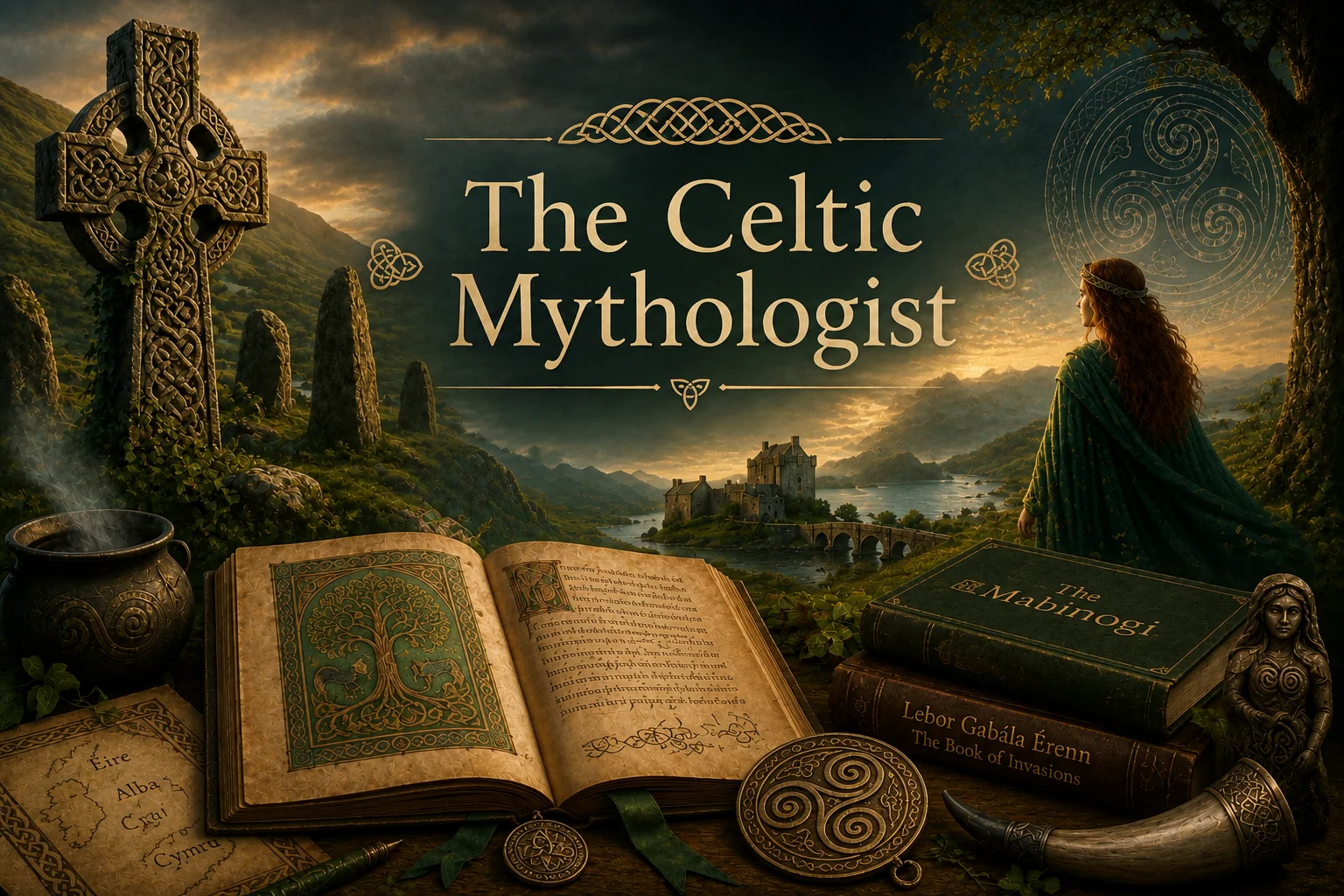
Dive deep into the living myths of Ireland, Wales, and Scotland — from the Tuatha Dé Danann to the Mabinogi — and learn to read their symbols, archetypes, and stories with scholarly grounding and creative purpose.
"I built this course because these myths deserve to be read with both scholarly care and a fully open imagination — and you deserve to do both at once."
— Carla Paton
What you'll learn
What you'll be able to do
- Trace the historical development of Celtic mythology across Ireland, Wales, and Scotland — distinguishing myth, legend, folklore, and medieval literary tradition with confidence
- Navigate the major mythological cycles, recognizing the principal deities, heroes, queens, and supernatural beings from Cú Chulainn and the Tuatha Dé Danann to Rhiannon and Taliesin
- Interpret recurring Celtic symbols, sacred animals, landscape features, and archetypes — understanding what ravens, salmon, cauldrons, and fairy mounds meant to the people who created these stories
- Explain how Christian monks preserved and reshaped pagan traditions, and how Celtic Christianity developed in dialogue with native mythic worldviews
- Analyze the Otherworld as a coherent mythic framework — fairy mounds, enchanted islands, shapeshifting, sacred wells — and its influence on Western literature and imagination from Arthurian legend to modern fantasy
- Apply Celtic mythology to your own creative writing, symbolic practice, dream work, or personal reflection using the archetypes, motifs, and story structures explored throughout the course
How it works
A school that adapts to you
This isn't a set of static videos. Every lesson is generated live and tuned to where you actually are.
We learn your level
A quick placement check tailors your starting point so you're never bored or lost.
Lessons adapt as you go
Each lesson is written for your pace and your goal, adjusting as your skills grow.
Your AI coach keeps you moving
Checkpoints, feedback, and gentle nudges turn progress into a real result.
The curriculum
What's inside your school
6 modules · 24 lessons
Who Were the Celts?
Establish the essential historical, linguistic, and cultural foundations before any mythology is introduced. Students learn who the Celtic peoples actually were, where they lived, how they spoke, and why reconstructing their beliefs is genuinely difficult — setting honest expectations for everything that follows.
- 1.1The Celtic World: Peoples, Languages, and MigrationsIncluded
- 1.2What Is Celtic Mythology? Defining the TraditionIncluded
- 1.3The Problem of Evidence: What We Know and How We Know ItIncluded
Sources of Celtic Myth
Before engaging with the myths themselves, students must know where the stories come from and how to read them. This module surveys the manuscript tradition, oral heritage, and archaeological record that together constitute our evidence for Celtic mythology — giving students the source literacy they need to engage critically and confidently with all subsequent material.
- 2.1The Medieval Manuscripts: Ireland's Great BooksIncluded
- 2.2Welsh Sources: The Mabinogion and the Red Book of HergestIncluded
- 2.3Oral Tradition, Folklore, and Living MemoryIncluded
Ireland's Mythological and Heroic Cycles
Immerse students in Ireland's four great mythological cycles — the Mythological Cycle, the Ulster Cycle, the Fenian Cycle, and the Cycle of the Kings — in their proper narrative and cultural sequence. This is the largest module because the Irish material is the most extensive surviving body of Celtic mythology, and it deserves full treatment of both its gods and its heroes before comparisons are drawn with Wales.
- 3.1The Invasions of Ireland: Lebor Gabála ÉrennIncluded
- 3.2The Tuatha Dé Danann: Gods, Skills, and the Four TreasuresIncluded
- 3.3Cú Chulainn and the Ulster CycleIncluded
- 3.4Fionn mac Cumhaill, the Fianna, and the Fenian CycleIncluded
- 3.5Sovereignty, Kingship, and Sacred MarriageIncluded
Welsh Mythology, the Mabinogi, and the Arthurian World
Move fully into the Welsh mythological tradition, reading the Four Branches of the Mabinogi closely before following the mythological thread into the Arthurian world. Students discover both the profound parallels with Irish material (the Otherworld, the sovereignty goddess, the wounded king) and the distinctly Welsh literary sensibility — more courtly, more psychologically nuanced, and more deeply entangled with the Christian literary tradition.
- 4.1The Four Branches of the MabinogiIncluded
- 4.2Taliesin, Cerridwen, and the Bardic TraditionIncluded
- 4.3Arthur, Merlin, and the Celtic Roots of the LegendIncluded
- 4.4The Grail: Cauldron, Cup, and the Quest MotifIncluded
Goddesses, the Otherworld, and the Sacred Symbolic World
Having encountered the major mythological figures and narratives in their proper sequence, students now step back to examine the deep symbolic architecture that underlies all Celtic mythology: the nature and power of the divine feminine, the structure and meaning of the Otherworld, the language of sacred animals and landscape, the role of those who mediate between worlds, and the calendar that marked sacred time. This module moves from narrative into symbolism and cultural practice.
- 5.1Goddesses and the Divine Feminine: Brigid, The Morrígan, and BeyondIncluded
- 5.2The Otherworld: Tír na nÓg, Annwfn, and the Fairy MoundsIncluded
- 5.3Sacred Animals and the Symbolic LandscapeIncluded
- 5.4Druids, Bards, Poets, and Keepers of MemoryIncluded
- 5.5Seasons, Festivals, and the Celtic CalendarIncluded
Christianity, Continuity, and Celtic Mythology Today
Bring together the course's historical and interpretive threads to examine how Celtic mythology survived, transformed, and continues to live in Christian tradition, modern literature, psychology, and creative practice. Students move from historical analysis into personal application — using the archetypes, symbols, and story structures of Celtic mythology as tools for their own creative and reflective lives.
- 6.1Christianity and the Celtic Tradition: Preservation, Transformation, and TensionIncluded
- 6.2Celtic Mythology in Literature, Art, and the Modern ImaginationIncluded
- 6.3Celtic Mythology and Psychology: Archetypes, Shadow, and the Inner WorldIncluded
- 6.4Applying Celtic Mythology: Creative Writing, Symbolism, and Personal PracticeIncluded
Who it's for
Is this you?

Fiction writers
You want to draw on Celtic mythology in your novels or stories with authentic depth — understanding the actual logic of the Otherworld, sovereignty myths, and bardic tradition so your work rings true.
Tarot & symbolic practitioners
You work with archetypes and symbols daily and want the rigorous mythological grounding that will sharpen and enrich your symbolic vocabulary far beyond surface-level associations.

Spiritual seekers
You feel genuinely called to the Celtic tradition and want to engage it with both intellectual honesty and personal depth — knowing what the sources actually say and what you are truly working with.

Folklore enthusiasts
You love folk tradition, fairy lore, and the living edges of myth, and you want the scholarly framework to understand how oral tradition, medieval literature, and mythology weave together.
Visual artists & illustrators
You are drawn to Celtic iconography — the animals, the cauldrons, the goddesses — and want to understand their original symbolic grammar so your imagery carries genuine weight and meaning.

Lifelong learners
You are a curious, serious adult reader who wants one comprehensive, intellectually trustworthy course to finally give you confident command of the Celtic mythological world.
Questions
Frequently asked
Your teacher
A note from your teacher
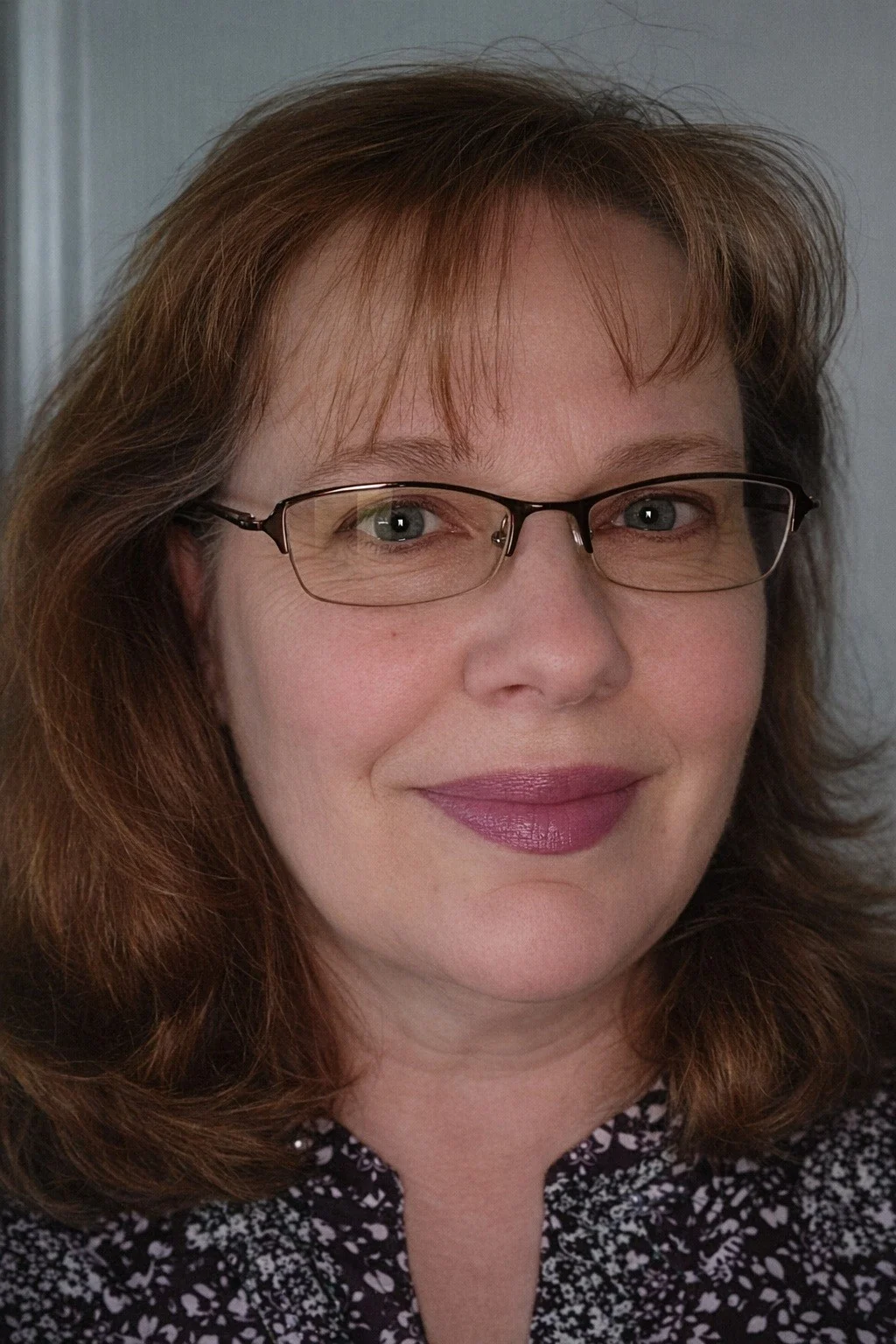
Carla Paton
Perhaps you have been drawn to these stories for a long time — a name half-remembered, a symbol that keeps returning, a feeling that the myths of the Celtic world hold something you have not yet been able to fully reach. Or perhaps you are newer to this territory, and you have simply sensed that beneath the popular surface — the triquetra on the gift shop card, the vague talk of druids — there is something far older, stranger, and more demanding of your attention.
I understand that pull completely. It is what has driven my own long relationship with these traditions. And I also know the frustration that can follow it: the books that are all romantic atmosphere and no substance, the courses that promise ancient wisdom without teaching you to actually read the sources, the gap between genuine curiosity and the rigorous grounding that would let you trust your own engagement with the material. That gap is exactly what this course is built to close.
What we do here is work from the actual evidence — the medieval Irish manuscripts, the Welsh Mabinogion, the Red Book of Hergest, the threads of oral tradition that survived into living memory — and we learn to read it with care. We ask the scholar's questions: what do we actually know, how do we know it, and where does interpretation begin? That is not a way of diminishing the myths. It is, I would argue, the only way to take them seriously. A Morrígan who emerges from the genuine complexity of the Ulster Cycle is far more powerful, and far more useful, than one assembled from secondhand summaries.
But rigorous does not mean cold, and scholarly does not mean distant. These stories were never meant to be studied from behind glass. The Celtic mythological tradition is profoundly concerned with transformation, with sovereignty and its loss, with the Otherworld pressing against this one, with what it costs to be a poet, a king, a warrior, a woman of power. These are not antiquarian curiosities. They are mirrors. The practical work in this course — applying mythology to your writing, your symbolic life, your inner landscape — is as integral to the curriculum as the historical and textual foundations, because that is how these traditions have always worked. You learn the story. Then you let the story learn you.
I built this course for the writers who want to write from the myth rather than about it, the artists who want to understand what a raven or a cauldron actually means in its original symbolic grammar, the tarot practitioners and spiritual seekers who want to deepen their symbolic vocabulary without losing their footing in reality, and the lifelong learners who simply want to know — genuinely know — what these extraordinary traditions contain. You are welcome here, wherever you are starting from. Pull up a chair. The fire is lit.
— Carla Paton
Start your journey today
Get instant access — learn at your own pace with an AI coach in your corner.
$19/mo
Recurring billing · cancel anytime
Secure checkout · Instant access
- 6 modules, 24 lessons
- AI-adaptive lessons tuned to your level
- Quizzes & checkpoints to lock in progress
- Your own AI learning coach
- Learn on any device, at your pace
- Full access for as long as you're subscribed