Learn to feel, read, and balance your own energy
Discover the seven chakras, what they govern in your body and mind, and practical techniques to sense, balance, and activate each energy center for everyday wellbeing.
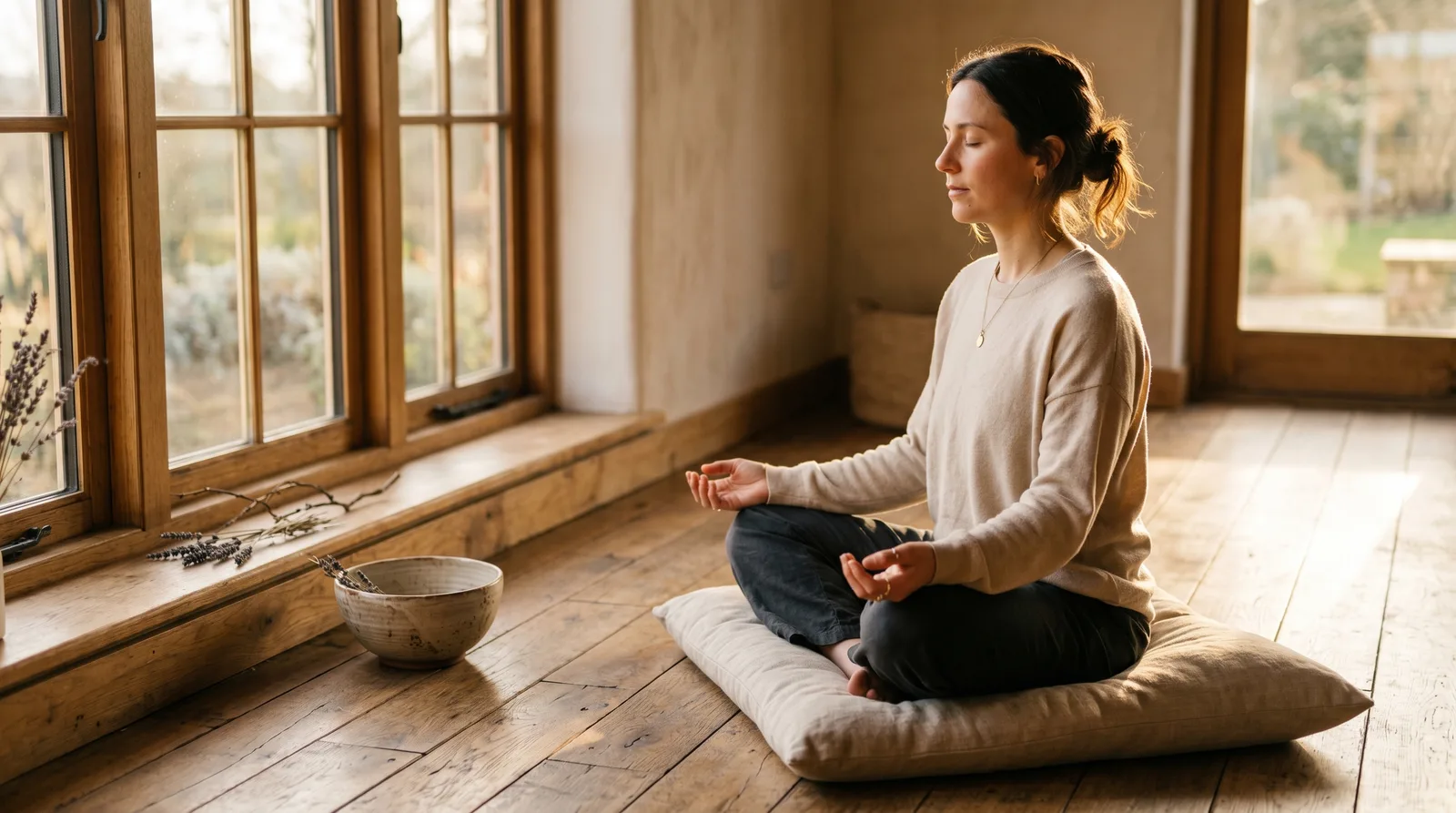
"I don't teach chakras as a belief system — I teach them as a listening practice, because your body already knows more than you've been given language for."— Loren LaRae

What you'll learn
What you'll be able to do
- Identify and locate each of the seven main chakras and describe what physical, emotional, and energetic qualities each one governs.
- Use breathwork, visualization, and simple meditation to tune into and sense subtle energy shifts in your own body.
- Recognize common signs that a specific chakra may be overactive, underactive, or blocked — in yourself and daily life patterns.
- Apply at least three practical balancing tools — including sound, color, movement, and affirmation — tailored to each chakra.
- Build a personal 10-minute daily chakra check-in ritual you can sustain independently.
- Integrate chakra awareness into existing yoga, journaling, or mindfulness practices to deepen their effect.
How it works
A school that adapts to you
This isn't a set of static videos. Every lesson is generated live and tuned to where you actually are.
We learn your level
A quick placement check tailors your starting point so you're never bored or lost.
Lessons adapt as you go
Each lesson is written for your pace and your goal, adjusting as your skills grow.
Your AI coach keeps you moving
Checkpoints, feedback, and gentle nudges turn progress into a real result.
The curriculum
What's inside your school
6 modules · 19 lessons

The Chakra Map — Your Body's Energy Architecture
Establishes the essential conceptual and perceptual foundation for everything that follows. Students learn what chakras are (and aren't), gain a precise working map of all seven, and begin developing the felt-sense awareness they'll need to do real inner work throughout the course. This module is deliberately placed first because all later recognition, diagnosis, and balancing work depends on these prereqs being solid.
- 1.1What Is a Chakra, Really?Included
- 1.2Mapping All Seven — Location, Layer, and LanguageIncluded
- 1.3Sensing Energy — Developing Your Inner Felt SenseIncluded
Root to Heart — The Lower and Middle Chakras
Takes students on a deep, sequential dive through the first four chakras — Muladhara, Svadhisthana, Manipura, and Anahata. Each lesson combines precise knowledge of that chakra's qualities with immediate felt-sense exploration, so students build both a clear cognitive map and a growing personal library of somatic reference points. The module closes with a structured self-assessment that synthesizes learning across all four chakras and seeds Module 4's personal-profile work.
- 2.1Muladhara & Svadhisthana — Grounding and FlowIncluded
- 2.2Manipura — Power, Will, and Digestive FireIncluded
- 2.3Anahata — The Heart as BridgeIncluded
- 2.4Lower-Chakra Personal AssessmentIncluded
Throat to Crown — The Upper Chakras
Guides students through the three upper chakras — Vishuddha, Ajna, and Sahasrara — whose qualities (expression, intuition, and transcendent awareness) are more subtle and less tangible than the lower centers. The module is carefully sequenced after the lower-chakra work because upper-chakra access is greatly deepened when the lower centers have been explored first. Each lesson combines conceptual grounding with experiential practices calibrated to the subtler frequency of these energy centers.
- 3.1Vishuddha — Speaking, Listening, and Authentic ExpressionIncluded
- 3.2Ajna — Intuition, Clarity, and Inner VisionIncluded
- 3.3Sahasrara — Connection, Meaning, and Open AwarenessIncluded
Reading Your Own Energy — Imbalance, Patterns, and Self-Diagnosis
Builds the diagnostic literacy students need to recognize what's actually happening in their own energy system — without catastrophizing or over-labeling. Teaches a clear, nuanced framework for identifying overactive, underactive, and blocked states across all seven chakras, then guides each student to synthesize their observations from Modules 2 and 3 into a coherent, personalized chakra profile. This module is carefully placed after all seven chakras have been explored experientially so that self-assessment is grounded in real felt-sense data rather than guesswork.
- 4.1The Language of Imbalance — Overactive, Underactive, and BlockedIncluded
- 4.2Your Personal Chakra ProfileIncluded
Practical Balancing Tools — Sound, Color, Movement, and Affirmation
Equips students with a full, cross-modal toolkit of evidence-informed and tradition-rooted balancing practices — one tool category per lesson — and explicitly teaches how to select, adapt, and apply each tool to their specific chakras of focus identified in Module 4. Placed after the diagnostic module so that tool selection is always personalized and purposeful rather than generic. Each lesson combines conceptual grounding with substantial hands-on practice.
- 5.1Sound and Mantra — Vibration as MedicineIncluded
- 5.2Color, Visualization, and Light WorkIncluded
- 5.3Movement and Yoga Postures for Each ChakraIncluded
- 5.4Affirmations That Actually WorkIncluded
Building Your Daily Chakra Practice
The course's capstone module, where all prior learning converges into a sustainable, personalized daily practice. Students design, test, and refine their own 10-minute chakra check-in ritual; learn to weave chakra awareness into existing yoga, journaling, and mindfulness habits; and develop the meta-skills needed to keep their practice alive through seasons of change. Emphasis throughout is on self-trust, adaptability, and intrinsic motivation — not rigid compliance.
- 6.1Designing Your 10-Minute Daily Check-In RitualIncluded
- 6.2Integrating Chakra Awareness Into Yoga, Journaling, and MindfulnessIncluded
- 6.3Sustaining the Practice — Adaptation, Plateaus, and GrowthIncluded
Who it's for
Is this you?

Yoga beginners
You've started showing up to class but want to understand the energy language your teacher keeps using — grounded in your actual body, not just theory.

Meditation newcomers
You're building a sitting practice and want a structured framework for understanding what you're noticing — and what to do when something feels off.

Holistic health seekers
You take a whole-body approach to wellbeing and want practical tools — sound, movement, visualization — that complement the physical care you already invest in.

Journaling enthusiasts
You process life through writing and want to deepen your self-inquiry by mapping emotional and energetic patterns onto a clear, actionable framework.

Burnout recoverers
You're rebuilding after a period of depletion and want a gentle, body-centered way to reconnect with your own sense of groundedness, power, and heart.
Curious skeptics
You're drawn to the idea but wary of spiritual fluff — this school's felt-first, no-dogma approach gives you permission to explore without leaving your critical mind at the door.
Questions
Frequently asked
Your teacher
A note from your teacher

Loren LaRae
If you've ever sat in a yoga class and heard the word chakra float past — and nodded along while quietly thinking, I have no idea what that means — I want you to know that's exactly where most of my students start. And there's nothing wrong with that. The chakra system is ancient and layered, and it hasn't always been taught in a way that makes it easy to actually land in your body.
What I kept noticing, both in my own practice and in the people I work with, is that the hunger is real. People genuinely want to understand their own energy — why they feel scattered some weeks and steady others, why certain emotions seem to live in specific places in the body, why some practices leave them feeling clear and open while others leave them flat. The chakra map is one of the most elegant frameworks I know for beginning to answer those questions. But only if it's taught in a way you can feel, not just memorize.
So that's what I built Chakra Foundations around: felt experience first, concept second. We don't just name the seven chakras — we visit each one slowly, with breathwork, visualization, and simple movement, so you have a chance to develop your own inner sense of what's happening. We look honestly at imbalance — the overactive patterns, the underactive ones, the places we go numb — because recognizing those patterns in yourself is genuinely useful, not scary. And then we build the toolkit: sound, color, movement, affirmation — practical things you can actually reach for on a Tuesday morning when something feels off.
I also want to be honest about what this school isn't. It isn't a fast track to enlightenment. It isn't going to ask you to believe anything specific. It's a structured, unhurried introduction that meets you wherever you are and gives you enough grounding that you can keep exploring on your own terms, for years to come.
If you're ready to stop nodding along and start actually feeling — I'd love to guide you through it. Come in curious. Come in skeptical if you need to. Just come as you are.
— Loren LaRae
Start your journey today
Join get instant access — learn at your own pace with an AI coach in your corner.
$29/mo
Recurring billing · cancel anytime
Secure checkout · Instant access
- 6 modules, 19 lessons
- AI-adaptive lessons tuned to your level
- Quizzes & checkpoints to lock in progress
- Your own AI learning coach
- Learn on any device, at your pace
- Full access for as long as you're subscribed