Teach chemistry that actually sticks
Ready-to-use, NGSS- and Common Core-aligned labs, lessons, and assessments built for real K–12 classrooms — so you walk in Monday morning with tools that work, not just theory to figure out on your own.
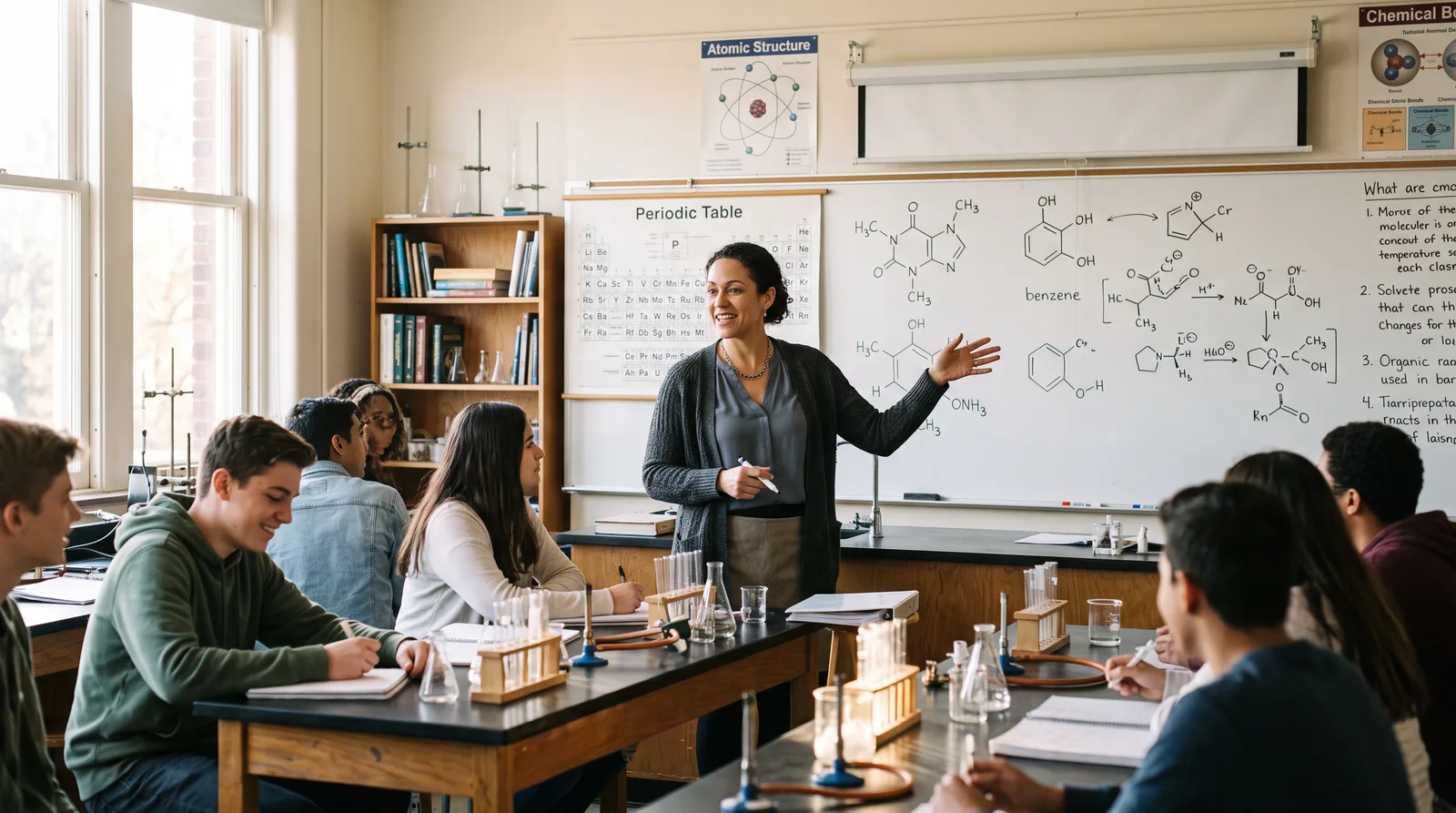
Every strategy in here has survived contact with actual students — I don't teach anything I haven't run in a real classroom first.
— biologyteachermae
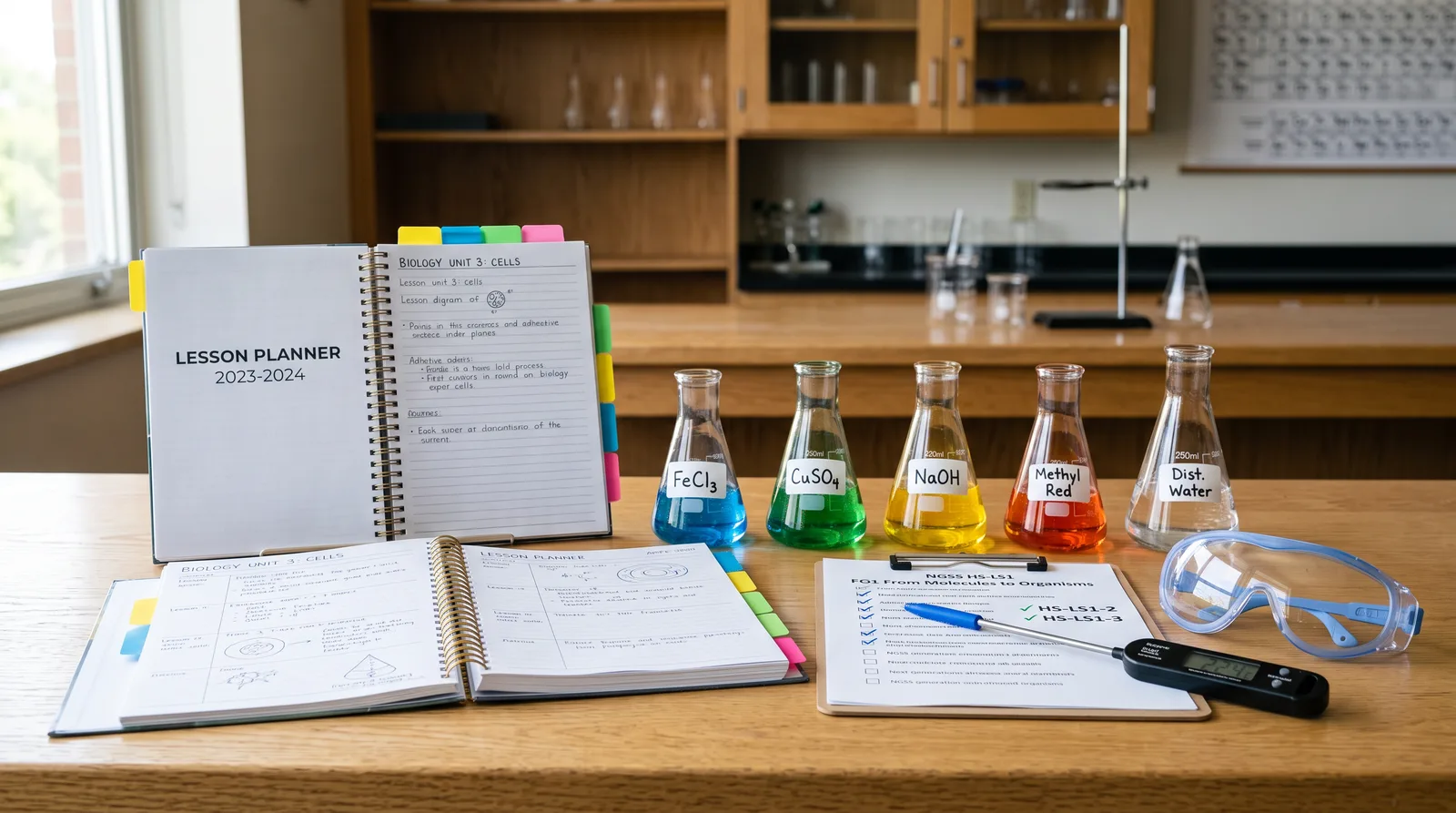
What you'll learn
What you'll be able to do
- Design and deliver NGSS-aligned chemistry lessons with clearly mapped Science and Engineering Practices, Disciplinary Core Ideas, and Crosscutting Concepts.
- Build a library of low-cost, high-impact lab activities and demonstrations that work safely in real K–12 classroom conditions.
- Differentiate chemistry instruction so that struggling learners and advanced students are both meaningfully challenged within the same lesson.
- Write rigorous formative and summative assessments — including performance tasks and data-analysis questions — that reflect AP, SAT, and state chemistry standards.
- Integrate real-world chemistry applications (environmental science, medicine, materials) that connect abstract concepts to students' lived experiences.
- Manage a safe, organized chemistry classroom: handle chemical storage, safety protocols, and lab cleanup efficiently and in compliance with US regulations.
How it works
A school that adapts to you
This isn't a set of static videos. Every lesson is generated live and tuned to where you actually are.
We learn your level
A quick placement check tailors your starting point so you're never bored or lost.
Lessons adapt as you go
Each lesson is written for your pace and your goal, adjusting as your skills grow.
Your AI coach keeps you moving
Checkpoints, feedback, and gentle nudges turn progress into a real result.
The curriculum
What's inside your school
6 modules · 29 lessons

NGSS-Aligned Chemistry Lesson Design
Build chemistry lessons that explicitly map the three dimensions of NGSS — Science and Engineering Practices, Disciplinary Core Ideas, and Crosscutting Concepts.
- 1.1Understanding the NGSS Three-Dimensional FrameworkIncluded
- 1.2Mapping Common Core Literacy Standards to Chemistry ContentIncluded
- 1.3Writing Student-Facing Learning Objectives That Align to StandardsIncluded
- 1.4Building a Lesson Framework: The 5E Instructional ModelIncluded
- 1.5Reviewing and Refining Your Lesson for Standards AlignmentIncluded
Low-Cost Labs and High-Impact Demonstrations
Build a ready-to-use library of affordable, classroom-tested labs and demos that make chemistry concepts visible and memorable.
- 2.1Selecting and Sourcing Low-Cost Lab MaterialsIncluded
- 2.2Designing Inquiry-Based Labs for Core Chemistry TopicsIncluded
- 2.3Teacher Demonstrations That Spark CuriosityIncluded
- 2.4Adapting Labs for Virtual and Hybrid ClassroomsIncluded
- 2.5Documenting and Sharing Your Lab LibraryIncluded
Classroom Safety and Chemical Management
Establish a safe, organized, and legally compliant chemistry classroom by mastering US safety regulations, chemical storage, and lab protocols.
- 3.1US Safety Regulations Every Chemistry Teacher Must KnowIncluded
- 3.2Reading and Using Safety Data Sheets (SDS)Included
- 3.3Chemical Storage, Labeling, and Inventory ManagementIncluded
- 3.4Lab Safety Protocols and Student Safety TrainingIncluded
- 3.5Emergency Procedures and Spill ResponseIncluded
Differentiated Instruction in Chemistry
Design a single lesson that meaningfully challenges both struggling learners and advanced students without creating two separate courses.
- 4.1Diagnosing Prior Knowledge and Identifying Learning GapsIncluded
- 4.2Scaffolding Strategies for Struggling Chemistry LearnersIncluded
- 4.3Extension and Enrichment for Advanced StudentsIncluded
- 4.4Flexible Grouping and Collaborative Lab StructuresIncluded
Rigorous Chemistry Assessment Design
Write and use formative and summative assessments — including performance tasks and data-analysis questions — aligned to AP, SAT, and state chemistry standards.
- 5.1Formative Assessment Techniques for the Chemistry ClassroomIncluded
- 5.2Designing Data-Analysis Questions Aligned to AP and SAT StandardsIncluded
- 5.3Building Performance Tasks Around Real Lab DataIncluded
- 5.4Writing and Scoring Rubrics That Communicate Expectations ClearlyIncluded
- 5.5Using Assessment Data to Adjust InstructionIncluded
Real-World Chemistry Connections
Integrate environmental science, medicine, and materials applications that anchor abstract chemistry concepts in students' lived experiences.
- 6.1Environmental Chemistry: Air, Water, and Soil ConnectionsIncluded
- 6.2Chemistry in Medicine and the Human BodyIncluded
- 6.3Materials Science: Polymers, Nanomaterials, and Everyday ProductsIncluded
- 6.4Connecting Chemistry to Students' Cultural and Community ContextsIncluded
- 6.5Designing a Real-World Chemistry Unit from Concept to ClassroomIncluded
Who it's for
Is this you?

First-year chemistry teachers
She needs a reliable lesson and safety infrastructure to build on — fast — before the school year runs away from her.

Veteran teachers refreshing for NGSS
He's been teaching chemistry for years but wants to properly map his existing units to the Three-Dimensional Framework without starting from scratch.

Integrated science teachers
She teaches a broad science course and needs chemistry content and labs that fit a mixed-standards environment without overwhelming her prep time.

Under-resourced school educators
He's working with a tight budget and needs labs and demos that are genuinely low-cost and proven to work without a fully stocked prep room.

AP & honors chemistry instructors
She wants rigorous assessment design — data-analysis questions, performance tasks, and rubrics — that genuinely prepares students for AP and SAT expectations.

Department heads & instructional coaches
He needs a shared, standards-aligned framework he can introduce to his whole science team to bring consistency and rigor across the department.
Questions
Frequently asked
Your teacher
A note from your teacher
biologyteachermae
If you've ever stayed until 7 pm on a Sunday rebuilding a lesson plan because the one you found online didn't quite fit your standards, your students, or your supply closet — I built this for you.
I know exactly what it feels like to teach chemistry in the real world. The student who arrives in October still fuzzy on what an atom is, sitting next to the one who asks whether you've read the latest JACS paper. The administrator who wants to see every practice, idea, and concept color-coded on your lesson plan by Tuesday. The lab that sounds great in a textbook but produces nothing useful because the reagents cost more than your monthly supply budget. I've been there. I've also figured out what actually works, and that's what this school is made of.
The Chemistry Toolkit is the professional development I always wished I'd had — not a conference keynote about frameworks you then have to puzzle through alone, but a structured, specific, classroom-tested resource you can open on a Sunday night and walk into school with on Monday. Every lesson framework, lab template, assessment tool, and safety checklist has been stress-tested in real K–12 conditions. The NGSS alignment work isn't theoretical — I'll show you exactly how I map Science and Engineering Practices, Disciplinary Core Ideas, and Crosscutting Concepts in a way that's honest to what the standards ask and actually teachable in a 50-minute period.
I also take seriously the things most PD programs politely skip. Differentiation that goes beyond "give struggling students fewer problems." Assessment design that prepares students for AP and SAT rigor without becoming a test-prep factory. Safety compliance that protects you, your students, and your career — not just a laminated poster on the wall. And real-world connections that make students feel like chemistry belongs to them, not just to future chemists.
You became a science teacher because you love this subject and you believe students deserve to experience that same excitement. This school is here to make sure you have every tool you need to deliver on that promise — reliably, sustainably, and starting this week. I'm glad you're here. Let's get to work.
— biologyteachermae
Start your journey today
Get instant access — learn at your own pace with an AI coach in your corner.
$39/mo
Recurring billing · cancel anytime
Secure checkout · Instant access
- 6 modules, 29 lessons
- AI-adaptive lessons tuned to your level
- Quizzes & checkpoints to lock in progress
- Your own AI learning coach
- Learn on any device, at your pace
- Full access for as long as you're subscribed