
Decode Beijing's Economic Statecraft — and Act on It
A graduate-level seminar that moves from strategic logic to operational response — mapping China's full industrial policy and economic coercion architecture so professionals can build frameworks that hold up under real pressure, not just in theory.

"My job isn't to give you conclusions about China — it's to give you the analytical architecture to produce better ones than anyone else in the room."
— Val (Valdas) Samonis
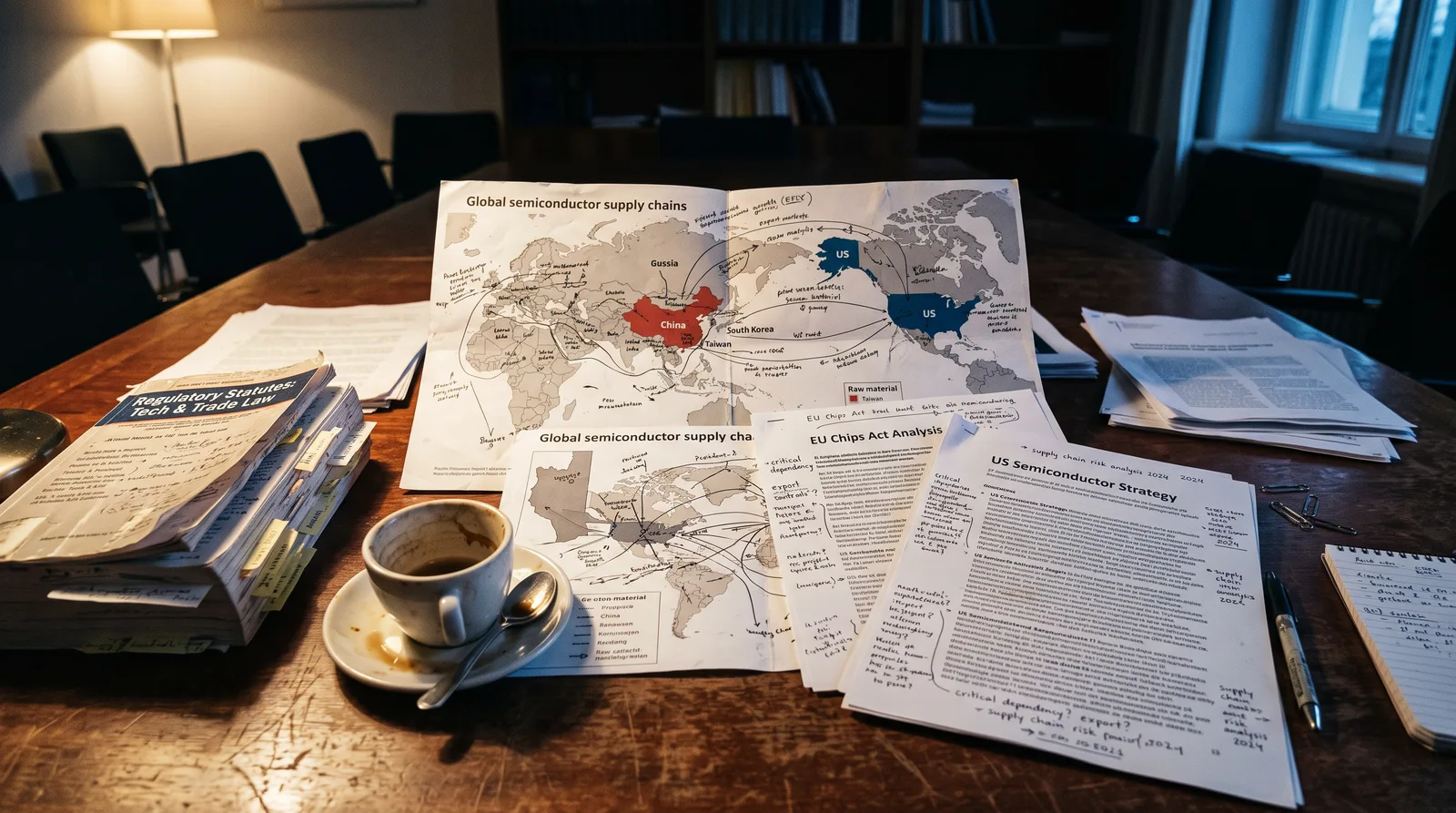
What you'll learn
What you'll be able to do
- Decode the strategic logic behind China's industrial policy and self-reliant modernization agenda under the CCP
- Map the full architecture of China's economic security toolbox — from indigenous innovation promotion to export controls, entity lists, and economic coercion instruments
- Analyze how Beijing's 2026 regulatory shift expands the scope of sanction-proofing and technology outflow prevention
- Evaluate China's leverage over foreign dependencies and assess the credibility of specific coercive threats against firms and governments
- Develop a structured framework for corporate or governmental derisking that balances exposure, retaliation risk, and long-term strategic vulnerability
- Formulate evidence-based policy or business responses to China's hybrid economic statecraft, including deterrence postures and coalition-building with partners
How it works
A school that adapts to you
This isn't a set of static videos. Every lesson is generated live and tuned to where you actually are.
We learn your level
A quick placement check tailors your starting point so you're never bored or lost.
Lessons adapt as you go
Each lesson is written for your pace and your goal, adjusting as your skills grow.
Your AI coach keeps you moving
Checkpoints, feedback, and gentle nudges turn progress into a real result.
The curriculum
What's inside your school
6 modules · 27 lessons

Strategic Logic: CCP Vision, Self-Reliance, and the Security–Economy Nexus
Establishes the ideological and strategic foundations driving China's fusion of economic policy, industrial control, and national security under Xi Jinping.
- 1.1The CCP's Modernization Doctrine: From Reform-Era Growth to Self-Reliant PowerIncluded
- 1.2Industry, Value Chains, and National Security: Why Beijing Equates Control with SurvivalIncluded
- 1.3The Party-State as Economic Actor: Institutions, Incentives, and Coordination MechanismsIncluded
- 1.4Reading Beijing's Signals: Official Doctrine vs. Operational RealityIncluded
The Industrial Policy and Innovation Control Architecture
Examines China's layered system for building indigenous technological capability, shielding domestic industries, and controlling the flow of strategic know-how.
- 2.1Made in China 2025 to Dual Circulation: The Evolution of Strategic Industrial PolicyIncluded
- 2.2Financing the Rise: State Capital, Policy Banks, and Subsidized Innovation EcosystemsIncluded
- 2.3Protecting the Home Market: Regulatory Barriers, Standards Weaponization, and Market Access AsymmetryIncluded
- 2.4Technology Acquisition Abroad: Talent Programs, M&A, Joint Ventures, and Forced TransferIncluded
- 2.5Preventing Outflows: Export Controls, Data Localization, and the 2026 Regulatory ShiftIncluded
The Economic Security Toolbox: Instruments, Institutions, and Escalation Logic
Provides a comprehensive map of China's offensive and defensive economic statecraft instruments, from entity lists to hybrid extralegal measures.
- 3.1Architecture of Control: Unreliable Entity List, Export Licensing, and Blocking StatutesIncluded
- 3.2From Ad-Hoc Retaliation to Routinized Enforcement: Building Institutional CapacityIncluded
- 3.3Extralegal and Hybrid Measures: Consumer Boycotts, Regulatory Harassment, and Informal PressureIncluded
- 3.4Sanction-Proofing the Economy: Supply Chain Diversification, Stockpiling, and Financial De-dollarizationIncluded
- 3.5Escalation Ladders: How Beijing Calibrates, Sequences, and Signals Coercive ResponsesIncluded
Economic Coercion in Practice: Leverage, Dependencies, and Credibility Assessment
Develops the analytical tools to evaluate China's leverage over specific actors and assess the real-world credibility of its coercive threats.
- 4.1Mapping Dependencies: Critical Minerals, Intermediate Goods, and Market ConcentrationIncluded
- 4.2Case Studies in Coercion: Australia, Lithuania, South Korea, and the European UnionIncluded
- 4.3Threat Credibility Analysis: When Does Beijing Actually Pull the Trigger?Included
- 4.4Corporate Exposure Diagnostics: Sector-Level Vulnerability Mapping for Business LeadersIncluded
China's Global Economic Footprint: Partnerships, Overcapacity, and Market Distortion
Examines how China's domestic industrial model exports instability through overcapacity, third-market competition, and strategically limited partnerships.
- 5.1Limited Partnership by Design: What Beijing Wants — and Does Not Want — from Economic OpennessIncluded
- 5.2The Overcapacity Problem: How Subsidized Chinese Production Distorts Global MarketsIncluded
- 5.3Competing in Third Markets: China's Displacement of Western Firms in the Global SouthIncluded
- 5.4Belt and Road, Digital Silk Road, and the Infrastructure of InfluenceIncluded
Derisking, Deterrence, and Strategic Response: Frameworks for Governments and Firms
Equips participants to design and operationalize evidence-based responses to China's economic statecraft across corporate, national, and coalition levels.
- 6.1The European Derisking Agenda: Political Will, Minimum Protection Floors, and Beijing's Counter-MovesIncluded
- 6.2Corporate Derisking Frameworks: Balancing Exposure, Retaliation Risk, and Long-Term VulnerabilityIncluded
- 6.3Building Credible Deterrence: Legal Instruments, Coalition Leverage, and Communication StrategyIncluded
- 6.4Coalition-Building and Partner Coordination: Working with Allies Without Triggering FragmentationIncluded
- 6.5Negotiating a Stable Corridor: Red Lines, Off-Ramps, and Managed Competition with BeijingIncluded
Who it's for
Is this you?

Government Policy Analysts
Needs a rigorous, institutionally grounded framework for translating China's economic moves into policy recommendations that hold up under interagency scrutiny.

Corporate Strategy Leaders
Responsible for China exposure decisions at the board level and needs sector-level vulnerability diagnostics and a derisking framework that goes beyond generic supply chain advice.

Trade and Sanctions Lawyers
Advises clients on export controls, entity lists, and blocking statutes and needs to understand the strategic logic and escalation architecture behind China's legal instruments — not just the rules.

Geopolitical Risk Professionals
Produces country and sector risk assessments and needs a structured threat credibility methodology to replace ad hoc judgments about when Beijing actually pulls the trigger.

Think-Tank Researchers
Publishes on China economic security and needs a more systematic mapping of Beijing's toolbox — from industrial subsidies to extralegal coercion — to sharpen analytical output.

Senior Business Leaders in Exposed Sectors
Operates in critical minerals, semiconductors, advanced manufacturing, or other sectors at the center of US-China competition and needs to assess long-term strategic vulnerability with precision.
Questions
Frequently asked
Your teacher
A note from your teacher

Val (Valdas) Samonis
If you work at the intersection of China policy, economic security, and strategic decision-making, you already know the frustration. The volume of analysis on China is enormous — and most of it is either too shallow to act on, too ideologically freighted to trust, or too disconnected from institutional mechanics to explain what Beijing will actually do next.
You can read every major think-tank report published this year and still walk out of a principals meeting unable to answer the question that actually matters: Given what we know about how China's system works, what is the credible range of responses to this move, and what should we do about it?
That gap — between descriptive analysis and actionable strategic framework — is what this seminar exists to close.
I built this curriculum because the professionals I most respect kept running into the same wall. They understood the headlines. They had exposure to the bilateral relationship. What they lacked was a structured analytical architecture: a way to map China's economic security toolbox systematically, assess threat credibility with defensible methodology, and design derisking or deterrence responses that account for the full complexity of the exposure.
So we start with the strategic logic — not as background, but as foundation. Understanding why Beijing equates industrial control with national survival, how the Party-state coordinates economic actors, and where official doctrine diverges from operational reality is not preliminary material. It is the interpretive key to everything that follows. From there, we move through the full architecture of China's instruments — industrial policy, innovation control, coercion mechanisms, sanction-proofing, escalation ladders — and into applied analysis: case studies, exposure diagnostics, derisking frameworks, and the hard questions around red lines and managed competition.
This seminar will not tell you what to think about China. It will give you the tools to think about it more precisely, more completely, and more usefully than you could before. If that is the standard you hold your professional analysis to, I think you will find this worth your time. I hope to see you in the seminar room.
— Val (Valdas) Samonis
Start your journey today
Get instant access — learn at your own pace with an AI coach in your corner.
$60/mo
Recurring billing · cancel anytime
Secure checkout · Instant access
- 6 modules, 27 lessons
- AI-adaptive lessons tuned to your level
- Quizzes & checkpoints to lock in progress
- Your own AI learning coach
- Learn on any device, at your pace
- Full access for as long as you're subscribed