Understand death, grief, and eternal hope through the Christian tradition
A serious, soul-deep course in Christian theological thanatology — exploring what Scripture, theology, and the Church have always taught about death, dying, grief, and the life to come.
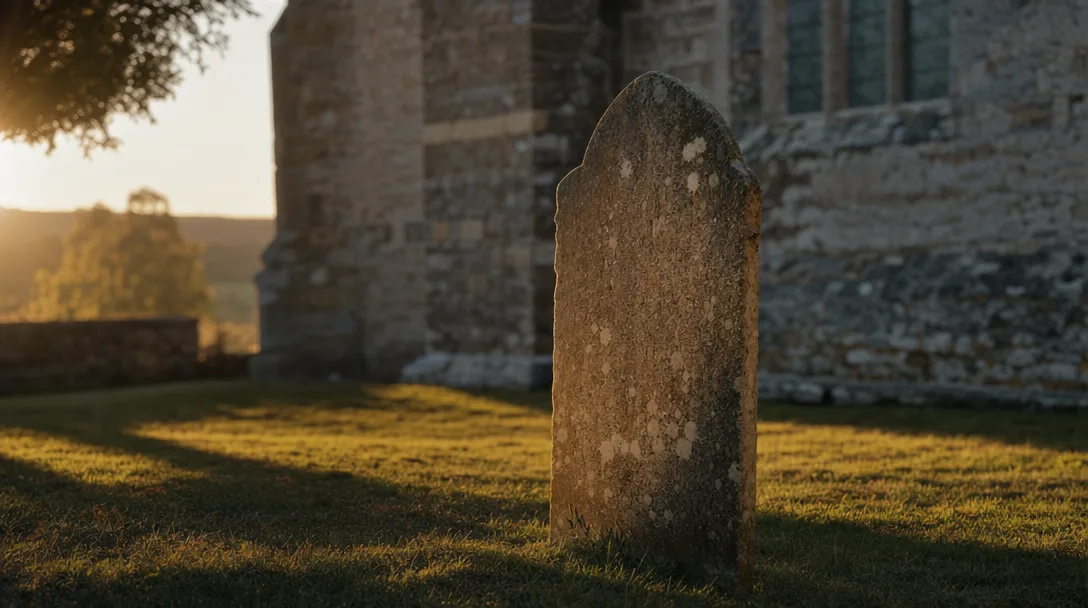
"The Christian tradition has always known that learning to die well is inseparable from learning to live faithfully — I built this school to pass that knowledge on."— jgoodson824

What you'll learn
What you'll be able to do
- Articulate a biblically grounded theology of death — its origin, nature, and meaning within the Christian story
- Explain classic Christian doctrines of the soul, the intermediate state, resurrection, and final judgment with confidence and nuance
- Distinguish major theological traditions (Catholic, Orthodox, Reformed, Lutheran) in their approaches to death and afterlife
- Minister pastorally to the dying and bereaved with theological depth and emotional honesty
- Interpret Christian grief — lamentation, hope, and embodied mourning — through Scripture and historic liturgical practice
- Preach, teach, or write about death and resurrection in ways that are both intellectually credible and pastorally alive
How it works
A school that adapts to you
This isn't a set of static videos. Every lesson is generated live and tuned to where you actually are.
We learn your level
A quick placement check tailors your starting point so you're never bored or lost.
Lessons adapt as you go
Each lesson is written for your pace and your goal, adjusting as your skills grow.
Your AI coach keeps you moving
Checkpoints, feedback, and gentle nudges turn progress into a real result.
The curriculum
What's inside your school
6 modules · 17 lessons

Death in the Christian Story: Origins, Nature, and Meaning
Establish the biblical-theological foundation for everything that follows. Students examine death not as a brute biological fact but as a theological datum — tracing its origin in the Fall, its nature as both physical and spiritual rupture, and its paradoxical meaning within the redemptive arc of Scripture. This module ensures every subsequent doctrinal and pastoral discussion rests on exegetically honest ground.
- 1.1What Is Death? A Biblical AnatomyIncluded
- 1.2The Fall and the Entrance of DeathIncluded
- 1.3Death Defeated: The Cross, Resurrection, and the Reversal of the CurseIncluded
The Doctrine of the Soul and the Intermediate State
Christian hope for the dead depends on a coherent account of what the person is and what happens between death and resurrection. This module navigates the most contested terrain in Christian eschatology — the nature of the soul, the reality of an intermediate state, and the sharply divergent positions of major theological traditions — equipping students to teach and minister with both intellectual honesty and confessional clarity.
- 2.1What Is the Human Person? Body, Soul, and SpiritIncluded
- 2.2Between Death and Resurrection: Mapping the Intermediate StateIncluded
- 2.3Purgatory, Paradise, and Prayers for the Dead: Ecumenical Tensions and Pastoral ImplicationsIncluded
Resurrection, Judgment, and the End of All Things
Move from the intermediate state to the final horizon: bodily resurrection, the last judgment, heaven, hell, and the new creation. Students engage the most demanding doctrinal terrain in Christian eschatology, learning to distinguish speculative theology from confessional consensus and to communicate final things with both intellectual rigor and pastoral warmth.
- 3.1The Resurrection of the Body: What Christians Actually BelieveIncluded
- 3.2The Last Judgment: Justice, Mercy, and the Character of GodIncluded
- 3.3Heaven, Hell, and the New Creation: Christian Hope for the CosmosIncluded
Traditions in Dialogue: Catholic, Orthodox, Reformed, and Lutheran Approaches
Develop genuine ecumenical literacy. Students move beyond caricature to understand how each major tradition's distinctive theology of death, afterlife, and resurrection shapes its liturgy, pastoral practice, and preaching. This comparative depth equips students to minister across confessional lines and to articulate their own tradition's choices with greater self-awareness.
- 4.1Catholic and Orthodox Theologies of Death and AfterlifeIncluded
- 4.2Reformed and Lutheran Theologies of Death, Dying, and ResurrectionIncluded
The Theology and Practice of Christian Grief
Bring systematic theology into direct contact with the raw experience of loss. This module treats grief not as theology's embarrassing emotional underside but as a theological act — examining lamentation in Scripture, the history of Christian mourning practices, the relationship between grief and hope, and the pastoral failure of cheap comfort. Students leave equipped to accompany the bereaved with both theological substance and human honesty.
- 5.1Lamentation as Theology: The Psalms, Job, and the Grammar of Christian GriefIncluded
- 5.2Hope and Grief Together: Sorrowing as Those Who Have HopeIncluded
- 5.3Historic Christian Mourning Practices: Liturgy, Burial, and the BodyIncluded
Ministry at the Threshold: Pastoral and Homiletical Practice
Translate everything learned into the concrete skills of ministry — sitting with the dying, preaching at funerals, caring for the bereaved, and communicating resurrection hope in ways that are both theologically rigorous and pastorally alive. This capstone module is deliberately integrative and practice-heavy, requiring students to synthesize doctrine, tradition, and human empathy in real ministry scenarios.
- 6.1Accompanying the Dying: Presence, Prayer, and Last RitesIncluded
- 6.2Preaching Death and Resurrection: The Funeral Homily as Theological ActIncluded
- 6.3Caring for the Bereaved: Long-Term Pastoral Theology of GriefIncluded
Who it's for
Is this you?

The Parish Pastor
Regularly called to conduct funerals and sit with dying congregants, and hungry for the theological depth to do it with confidence and grace.

The Hospice Chaplain
Works daily at the boundary of life and death and wants a richer doctrinal framework to undergird the presence and words they offer patients and families.

The Grieving Believer
Processing the loss of someone close and seeking a theological language for grief that neither suppresses sorrow nor abandons hope.

The Seminary Student
Studying theology formally but finding that eschatology courses skip the personal, pastoral, and embodied dimensions this school addresses head-on.

The Serious Lay Reader
A committed Christian who reads widely and wants to engage death as a theological subject with the same rigor they bring to Scripture and doctrine.

The End-of-Life Caregiver
A nurse, social worker, or family caregiver who holds Christian faith and wants it to speak coherently into the clinical and relational realities they face every day.
Questions
Frequently asked
Your teacher
A note from your teacher
jgoodson824
If you've ever stood at a graveside and felt the gap between what you believe and what you could actually say — you know exactly why I built this school.
I have spent years studying the intersection of Christian theology and the reality of human death, not as an abstraction but as a pastoral necessity. I've sat in hospital rooms with families who had profound faith and profound silence in equal measure. I've watched gifted preachers fumble at funerals because nobody had ever given them a theological vocabulary for the moment. I've been that person myself. That silence, and what to do with it, is what drove me into this material.
The Christian tradition is not short on resources here. From Chrysostom's sermons on death to Calvin's pastoral letters, from the funeral rites of the early Church to the great Reformed confessions on the resurrection of the body — the faith has always known that death is not a subject to be minimized or spiritually bypassed. It is a subject to be inhabited, with open eyes and enormous hope.
What I've tried to do in this school is gather that tradition and make it teachable. Not dumbed down — you will read hard texts and wrestle with genuine disagreements between serious theologians. But accessible. Oriented toward the questions real people actually bring to this subject: What happens when I die? What do I say to someone who is dying? Is my grief a failure of faith or an expression of it? What does resurrection actually mean for this body?
These are not peripheral questions. They are among the most important questions a Christian can ask. And the tradition has far better answers than most of us have ever been given.
I'd love to walk through them with you. Come as you are — with your doubts, your losses, your questions, your hope. This school is built for exactly that.
— jgoodson824
Start your journey today
Join get instant access — learn at your own pace with an AI coach in your corner.
- 6 modules, 17 lessons
- AI-adaptive lessons tuned to your level
- Quizzes & checkpoints to lock in progress
- Your own AI learning coach
- Learn on any device, at your pace
- Full access for as long as you're subscribed