Understand how Christianity made America — and how America made Christianity
A scholar's survey of five centuries of American religious history — from Spanish missions and Puritan covenants to megachurches and the culture wars — that gives serious learners the depth, vocabulary, and interpretive tools the subject demands.
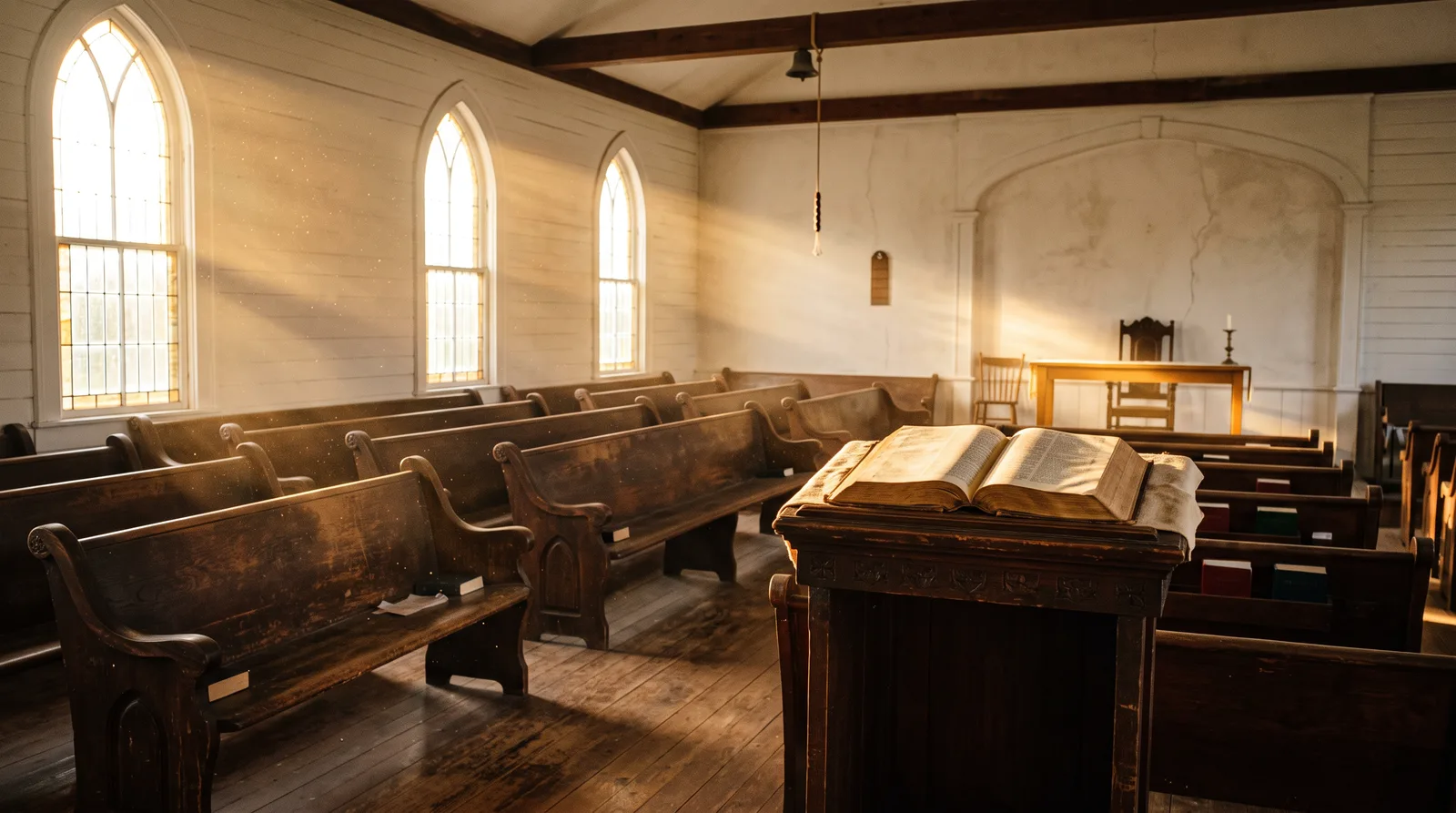
"Real history is messier than either the secular or the devotional version of it — and that messiness is exactly where the most important understanding lives."
— Theoria
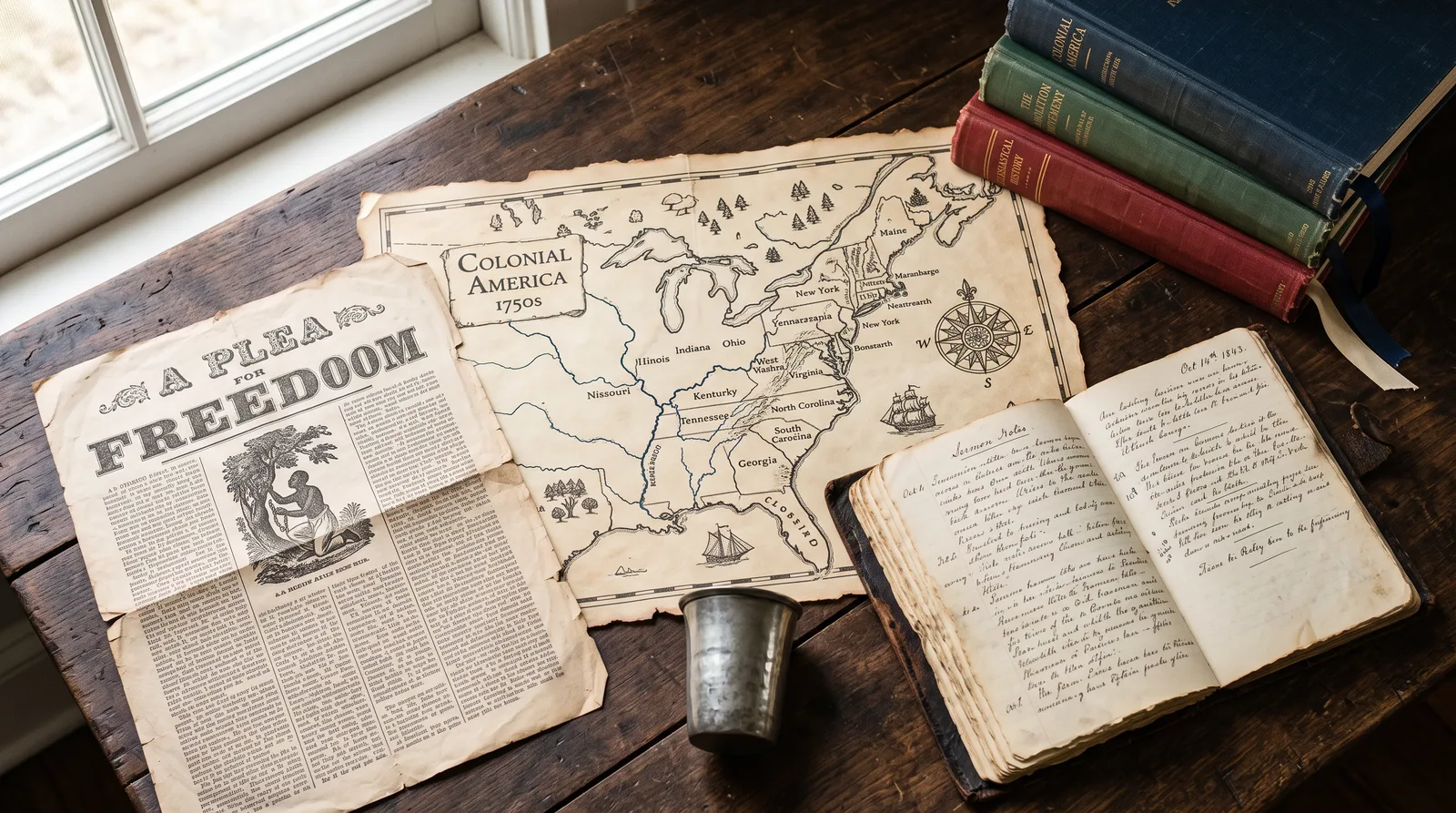
What you'll learn
What you'll be able to do
- Trace the development of Christianity in America from Spanish and English colonization through the twenty-first century, placing key figures and movements in their proper historical contexts.
- Identify and distinguish the major Protestant denominations, Catholic traditions, and renewal movements — including Puritan, Methodist, Baptist, Pentecostal, and non-denominational streams — and explain their theological distinctives.
- Analyze the First and Second Great Awakenings and assess how revival preaching, voluntary societies, and missionary movements reshaped American Protestantism and public life.
- Evaluate the complex relationship between Christianity and American social history, including slavery, the Civil War, civil rights, immigration, industrialization, and evolving cultural values.
- Interpret primary historical documents and modern scholarship together, assessing competing narratives about the achievements and failures of the American Church with fairness and historical awareness.
- Articulate how Christianity has influenced — and continues to shape — American politics, education, religious liberty debates, global missions, and the nation's role in world Christianity.
How it works
A school that adapts to you
This isn't a set of static videos. Every lesson is generated live and tuned to where you actually are.
We learn your level
A quick placement check tailors your starting point so you're never bored or lost.
Lessons adapt as you go
Each lesson is written for your pace and your goal, adjusting as your skills grow.
Your AI coach keeps you moving
Checkpoints, feedback, and gentle nudges turn progress into a real result.
The curriculum
What's inside your school
6 modules · 30 lessons

Christianity Comes to the New World
Surveys the arrival and early establishment of Christianity across the European colonial settlements of North America.
- 1.1Spanish Missions and Catholic BeginningsIncluded
- 1.2French and Dutch Religious SettlementsIncluded
- 1.3Puritan New England and the Bible CommonwealthIncluded
- 1.4Anglican Virginia, Quaker Pennsylvania, and Catholic MarylandIncluded
- 1.5Religious Diversity in the Colonial WorldIncluded
Revivals, Awakenings, and the Reshaping of American Protestantism
Traces the First and Second Great Awakenings, their leading figures, and the lasting institutional and theological changes they produced.
- 2.1The First Great Awakening: Edwards, Whitefield, and the New BirthIncluded
- 2.2Christianity and the American RevolutionIncluded
- 2.3The Second Great Awakening and the Frontier RevivalIncluded
- 2.4Voluntary Societies, Missions, and Reform MovementsIncluded
- 2.5Christian Higher Education and the PressIncluded
Denominations, Diversity, and Theological Identity
Maps the growth and theological distinctives of America's major Protestant families, Catholic traditions, and restoration movements.
- 3.1Baptist and Methodist ExpansionIncluded
- 3.2Presbyterian, Lutheran, Episcopal, and Congregational TraditionsIncluded
- 3.3Catholic America: Immigration, Parishes, and Parochial SchoolsIncluded
- 3.4Restoration Movements and American-Born ChurchesIncluded
- 3.5Reading Primary Sources: Confessions, Constitutions, and SermonsIncluded
Christianity, Race, and the Crisis of the Nation
Examines how American Christians engaged — and often divided over — slavery, the Civil War, emancipation, and the long struggle for racial justice.
- 4.1Christianity and Slavery: Complicity, Resistance, and AbolitionIncluded
- 4.2The Emergence of African American ChristianityIncluded
- 4.3Denominational Splits and the Civil WarIncluded
- 4.4Reconstruction, the Black Church, and the Long Road to Civil RightsIncluded
- 4.5Westward Expansion, Native Peoples, and the Missionary EncounterIncluded
Modernism, Fundamentalism, and Twentieth-Century Pluralism
Covers the theological battles of the modern era — from liberal Protestantism and fundamentalism to Pentecostalism, evangelicalism, and secularization.
- 5.1Industrialization, Immigration, and the Social GospelIncluded
- 5.2The Fundamentalist-Modernist ControversyIncluded
- 5.3The Rise of Pentecostalism and the Holiness MovementIncluded
- 5.4Neo-Evangelicalism, Billy Graham, and Postwar ReligionIncluded
- 5.5Vatican II, American Catholicism, and Ecumenical DialogueIncluded
American Christianity in the Contemporary World
Brings the story into the present by examining the culture wars, non-denominational growth, global missions, and Christianity's future in a pluralist America.
- 6.1The Religious Right, Politics, and the Culture WarsIncluded
- 6.2The Rise of Non-Denominational and Megachurch ChristianityIncluded
- 6.3Women, Lay Leaders, and Expanding VoicesIncluded
- 6.4American Christianity and Global MissionsIncluded
- 6.5Religious Liberty, Pluralism, and the Church in the Twenty-First CenturyIncluded
Who it's for
Is this you?

History enthusiasts
He's read the political histories and wants to finally understand the religious currents running underneath American life from colonization to the present.

Seminary students
He needs a rigorous survey of American church history that engages primary sources and theological vocabulary at the level his studies demand.

Thoughtful believers
She wants to understand how her own tradition — Baptist, Catholic, Methodist, or evangelical — fits into the longer arc of American Christianity.

Scholars of race & religion
He wants honest, evidence-grounded treatment of the Black Church, slavery, civil rights, and Christianity's role in America's racial history.

Lifelong learners
She is a serious independent reader who wants the depth of a college survey course without the tuition bill or the undergraduate prerequisites.

Curious skeptics
She doesn't share the faith but wants a fair, scholarly framework for understanding why Christianity has shaped American culture, politics, and identity so profoundly.
Questions
Frequently asked
Your teacher
A note from your teacher

Theoria
If you have ever found yourself sensing that American history and American Christianity are inseparable — that you cannot really understand one without the other — then you already have the instinct that drives everything I teach.
The difficulty is that most of us received these two stories in separate containers. History class gave us wars and politics and economics. Sunday school, if we had it, gave us heroes and villains selected for their inspirational value. Neither prepared us to sit with the genuine complexity: the Puritan settlers who built extraordinary intellectual institutions and also hanged Quakers on Boston Common; the revivalists who electrified the frontier and whose emotional methods still shape worship two hundred years later; the denominations that split over slavery and spent the next century and a half slowly, painfully reckoning with what that split revealed. Real history is messier than either the secular or the devotional version of it. I think that messiness is where the most important understanding lives.
What I have tried to build here is a course that respects both the subject and the student. That means using precise theological vocabulary — you will know what distinguishes a Calvinist soteriology from an Arminian one, what the Holiness movement meant by entire sanctification, why Vatican II's aggiornamento was so disorienting to American Catholics — because vague language produces vague thinking. It also means engaging contested territory honestly. The school does not paper over the Church's entanglement with slavery, its ambivalent record toward Native peoples, or the ways religious language has been wielded in the service of political power. But it also does not reduce American Christianity to its failures. The tradition produced Frederick Douglass's prophetic Christianity, the institutional infrastructure of the civil rights movement, and a global missionary movement whose consequences for world Christianity are still unfolding. All of that belongs in the story.
My approach throughout is the approach of the historian: to understand actors in their own contexts before passing judgment, to follow the evidence wherever it leads, and to remain genuinely curious about why people believed what they believed and how those beliefs shaped the world they lived in. I think that curiosity is the most important thing I can model for you — more important than any particular set of facts. The facts will settle in once the framework is in place.
Whether you are a seminary student building your foundational knowledge, a history enthusiast who has always wanted to go deeper, a believer trying to locate your own tradition in a longer story, or a thoughtful skeptic trying to understand a phenomenon you find puzzling — you belong in this school. Come in with your questions. The material can hold them.
— Theoria
Start your journey today
Get instant access — learn at your own pace with an AI coach in your corner.
$39/mo
Recurring billing · cancel anytime
Secure checkout · Instant access
- 6 modules, 30 lessons
- AI-adaptive lessons tuned to your level
- Quizzes & checkpoints to lock in progress
- Your own AI learning coach
- Learn on any device, at your pace
- Full access for as long as you're subscribed