Speak Spanish at the bedside — starting now
Clinical Spanish Pro gives English-speaking healthcare professionals the exact phrases, pronunciation, and cultural fluency to conduct patient interviews, explain diagnoses, and give discharge instructions in Spanish — no interpreter required.
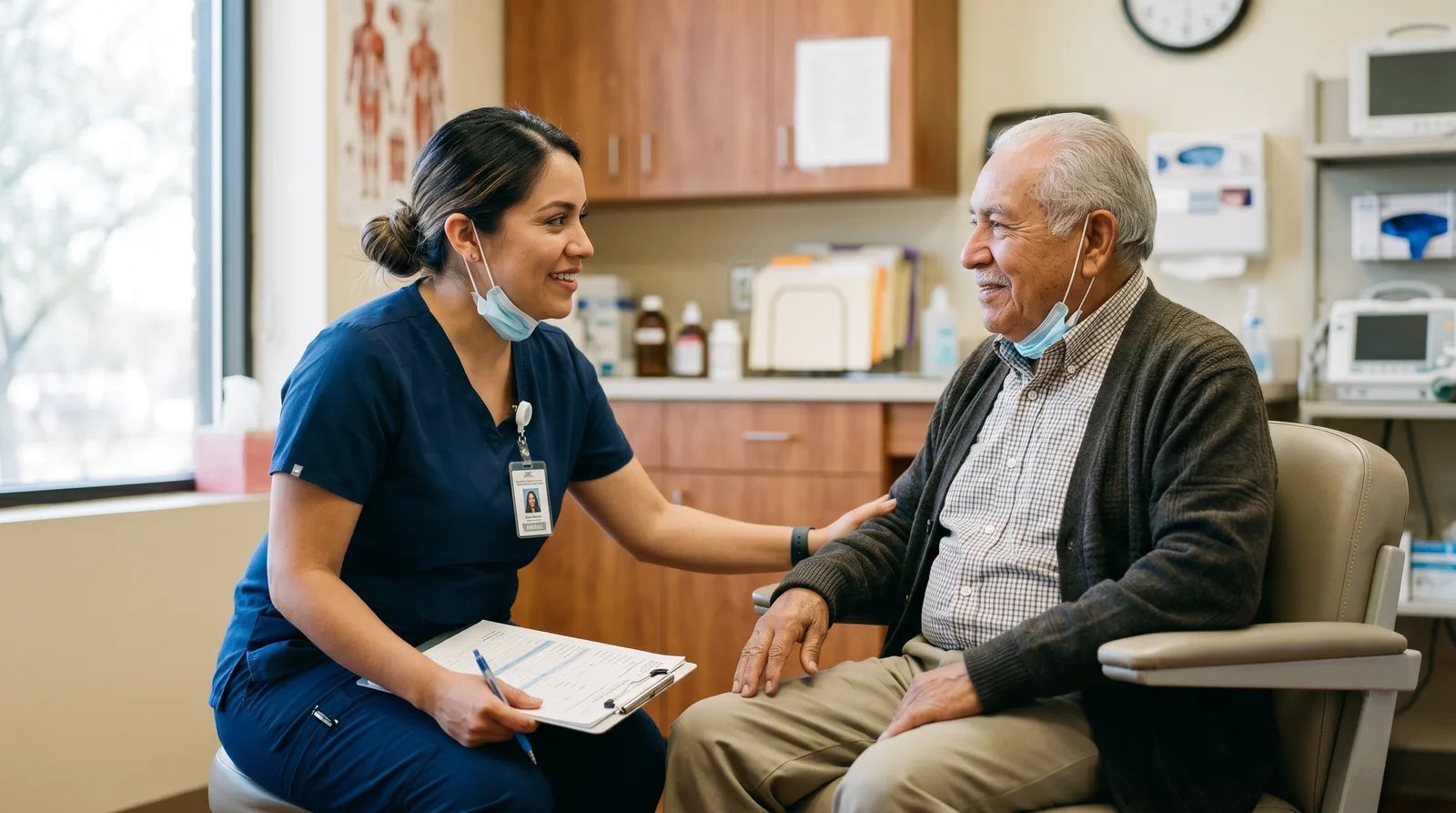
I treat Spanish as a clinical skill — because your patients deserve a clinician who can ask the right question, not just reach for the phone.— Lynn Wolf
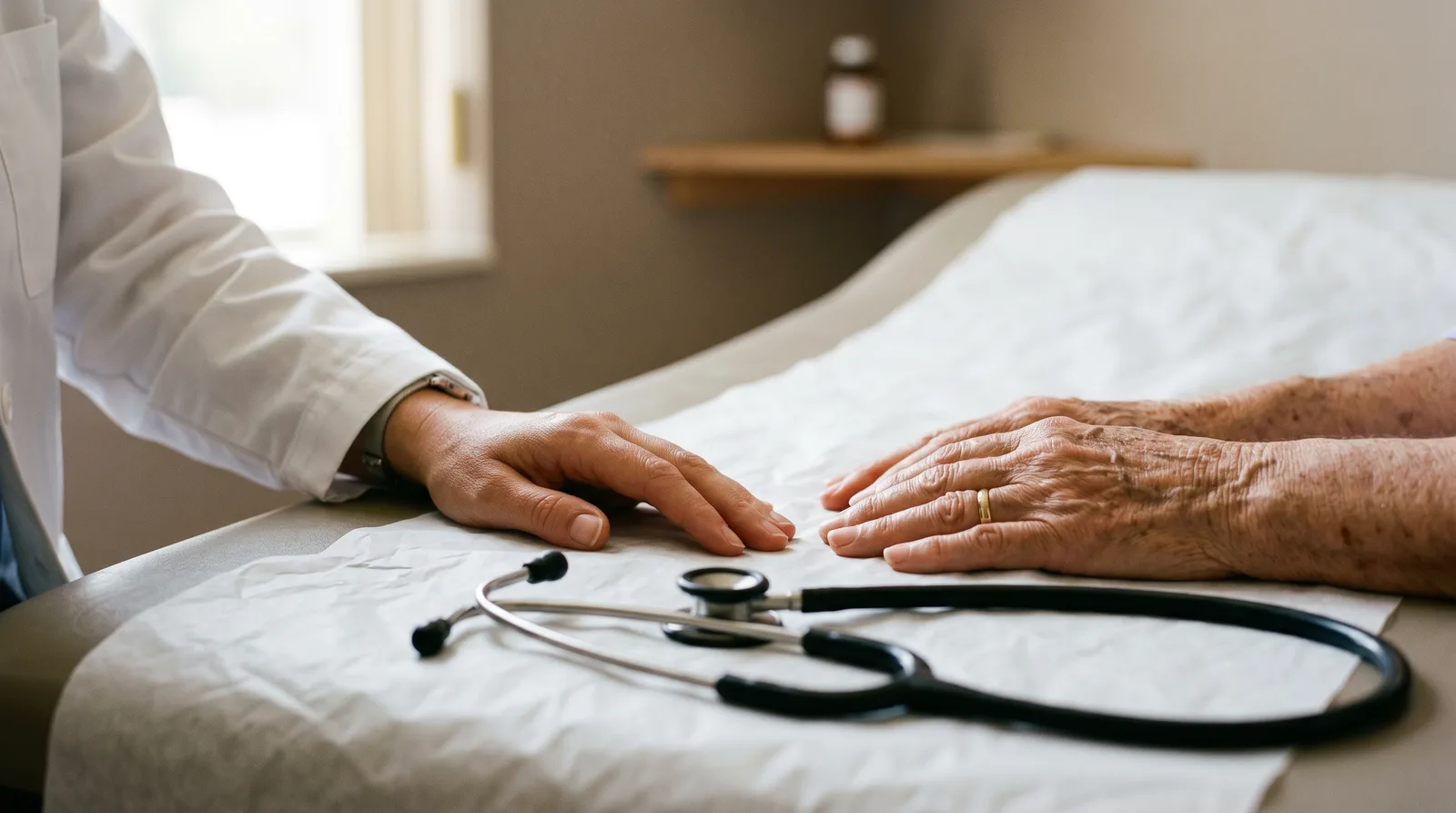
What you'll learn
What you'll be able to do
- Conduct a complete patient intake interview — chief complaint, medical history, allergies, and medications — entirely in Spanish
- Accurately describe and ask about pain location, severity, and character using anatomical vocabulary and the standard pain scale in Spanish
- Explain common diagnoses, procedures, and treatment plans to patients in clear, jargon-free Spanish
- Give precise discharge instructions — dosage, follow-up timing, warning signs — that patients can understand and act on
- Navigate sensitive conversations around mental health, substance use, reproductive health, and end-of-life care with culturally competent Spanish phrasing
- Triage and respond to emergency situations by rapidly communicating critical questions and instructions in Spanish under pressure
How it works
A school that adapts to you
This isn't a set of static videos. Every lesson is generated live and tuned to where you actually are.
We learn your level
A quick placement check tailors your starting point so you're never bored or lost.
Lessons adapt as you go
Each lesson is written for your pace and your goal, adjusting as your skills grow.
Your AI coach keeps you moving
Checkpoints, feedback, and gentle nudges turn progress into a real result.
The curriculum
What's inside your school
6 modules · 26 lessons

Clinical Spanish Foundations
Builds the essential pronunciation, grammar patterns, and professional register that underpin every patient interaction in Spanish.
- 1.1Sounds, Stress, and Medical PronunciationIncluded
- 1.2Essential Grammar for Clinical CommunicationIncluded
- 1.3Professional Register and Respectful AddressIncluded
- 1.4Numbers, Time, and Measurement in Clinical ContextIncluded
Patient Intake and Medical History
Equips clinicians to conduct a full intake interview — from greeting to complete history — entirely in Spanish.
- 2.1Greeting, Consent, and Establishing RapportIncluded
- 2.2Chief Complaint and Presenting SymptomsIncluded
- 2.3Past Medical History and Family HistoryIncluded
- 2.4Allergies and Current MedicationsIncluded
- 2.5Social History and Lifestyle FactorsIncluded
Pain Assessment and Body Systems
Gives clinicians the anatomical vocabulary and structured tools to assess pain and review body systems with precision.
- 3.1Anatomical Vocabulary and Body RegionsIncluded
- 3.2Pain Scale, Quality, and CharacterIncluded
- 3.3Pain Location, Radiation, and TimingIncluded
- 3.4Head-to-Toe Systems ReviewIncluded
Diagnoses, Procedures, and Treatment Plans
Prepares clinicians to explain findings, common conditions, and planned procedures in plain, accessible Spanish.
- 4.1Explaining Common Diagnoses ClearlyIncluded
- 4.2Describing Diagnostic Tests and ProceduresIncluded
- 4.3Presenting Treatment Options and Care PlansIncluded
- 4.4Confirming Understanding with Teach-Back in SpanishIncluded
Discharge Instructions and Medication Counseling
Trains clinicians to deliver clear, actionable discharge guidance — dosing, follow-up, and warning signs — entirely in Spanish.
- 5.1Medication Instructions and DosageIncluded
- 5.2Follow-Up Appointments and ReferralsIncluded
- 5.3Warning Signs and When to ReturnIncluded
- 5.4Activity, Diet, and Home Care InstructionsIncluded
Sensitive Conversations and Emergency Spanish
Builds the culturally competent phrasing and rapid-response language needed for high-stakes and sensitive clinical situations.
- 6.1Mental Health and Substance Use ConversationsIncluded
- 6.2Reproductive Health and Obstetric CareIncluded
- 6.3End-of-Life, Goals of Care, and Advance DirectivesIncluded
- 6.4Triage and Emergency Communication Under PressureIncluded
- 6.5Cultural Humility and Navigating Health BeliefsIncluded
Who it's for
Is this you?

Bedside nurses
You're the primary voice of the care team and need to conduct assessments, explain procedures, and give discharge instructions in Spanish — without waiting on a phone interpreter every time.

Emergency physicians
In the ED, seconds count — this course drills you in the rapid triage questions and emergency instructions you need to communicate directly with Spanish-speaking patients under pressure.

Physician assistants
You see a full panel of patients independently and need the Spanish fluency to take histories, present diagnoses, and counsel on treatment plans without relying on a third party.

EMTs and paramedics
Pre-hospital care leaves no room for language barriers — you'll train the exact phrases for rapid scene assessment, symptom questioning, and calming a frightened patient in the field.

Medical assistants
As the first clinical face a patient meets, you'll learn the intake, history, and medication questions that set the entire visit on the right track — delivered confidently in Spanish.

Allied health professionals
Whether you're in pharmacy, respiratory therapy, social work, or another allied role, this course gives you the clinical Spanish vocabulary and cultural fluency your specific patient interactions demand.
Questions
Frequently asked
Your teacher
A note from your teacher

Lynn Wolf
If you're reading this, you've probably been in that moment — a Spanish-speaking patient in front of you, a language barrier between you, and a phone interpreter on hold. You're a skilled clinician. You know exactly what questions need to be asked and what information needs to be given. The only thing standing in the way is the language. That gap isn't a personal failure. It's a training gap. And it's one we can close together.
I built Clinical Spanish Pro because healthcare professionals deserve a Spanish course that respects their clinical expertise. You already understand anatomy, pharmacology, and patient communication. You don't need to learn what a symptom is — you need to learn how to ask about it in Spanish, clearly and correctly, in the middle of a busy shift. That's the only problem this school is trying to solve.
Here's what I want you to know about how this works: we treat Spanish as a clinical skill, not a cultural hobby. That means drills, repetition, real scenarios, and immediate application — the same way you learned to start an IV or read an ECG. We start with the sounds and structures that matter clinically, move into every phase of the patient encounter, and build toward the conversations that most courses never touch: mental health, obstetrics, end-of-life, and emergency triage under pressure.
I know you're not learning Spanish for a vacation. You're learning it because your patients deserve to be heard in their own language, and because the quality of care you can deliver improves dramatically when you can ask the right question, explain the right instruction, and confirm that the patient truly understands what comes next. That's the transformation this school is built around.
If you've ever watched a patient nod politely and then leave with discharge instructions they didn't fully understand — this is how we fix that. Come in ready to drill, ready to practice, and ready to use what you learn the next time you walk into a patient room. I'll be with you every step of the way.
— Lynn Wolf
Start your journey today
Join get instant access — learn at your own pace with an AI coach in your corner.
$59/mo
Recurring billing · cancel anytime
Secure checkout · Instant access
- 6 modules, 26 lessons
- AI-adaptive lessons tuned to your level
- Quizzes & checkpoints to lock in progress
- Your own AI learning coach
- Learn on any device, at your pace
- Full access for as long as you're subscribed