Master the full clinical workflow for cognitive care
The definitive platform-based training for BCCS, psychologists, diagnosticians, and autism specialists—covering compliant intake through auditable records, evidence-based assessment to defensible reporting, and individualized planning to care ecosystem engagement. Peer-to-peer. Protocol-level. Practice-ready.

"I built this for clinicians who will push back on a weak rationale—so every protocol here is designed to hold up under exactly that scrutiny."— Pauline Smith EdD
What you'll learn
What you'll be able to do
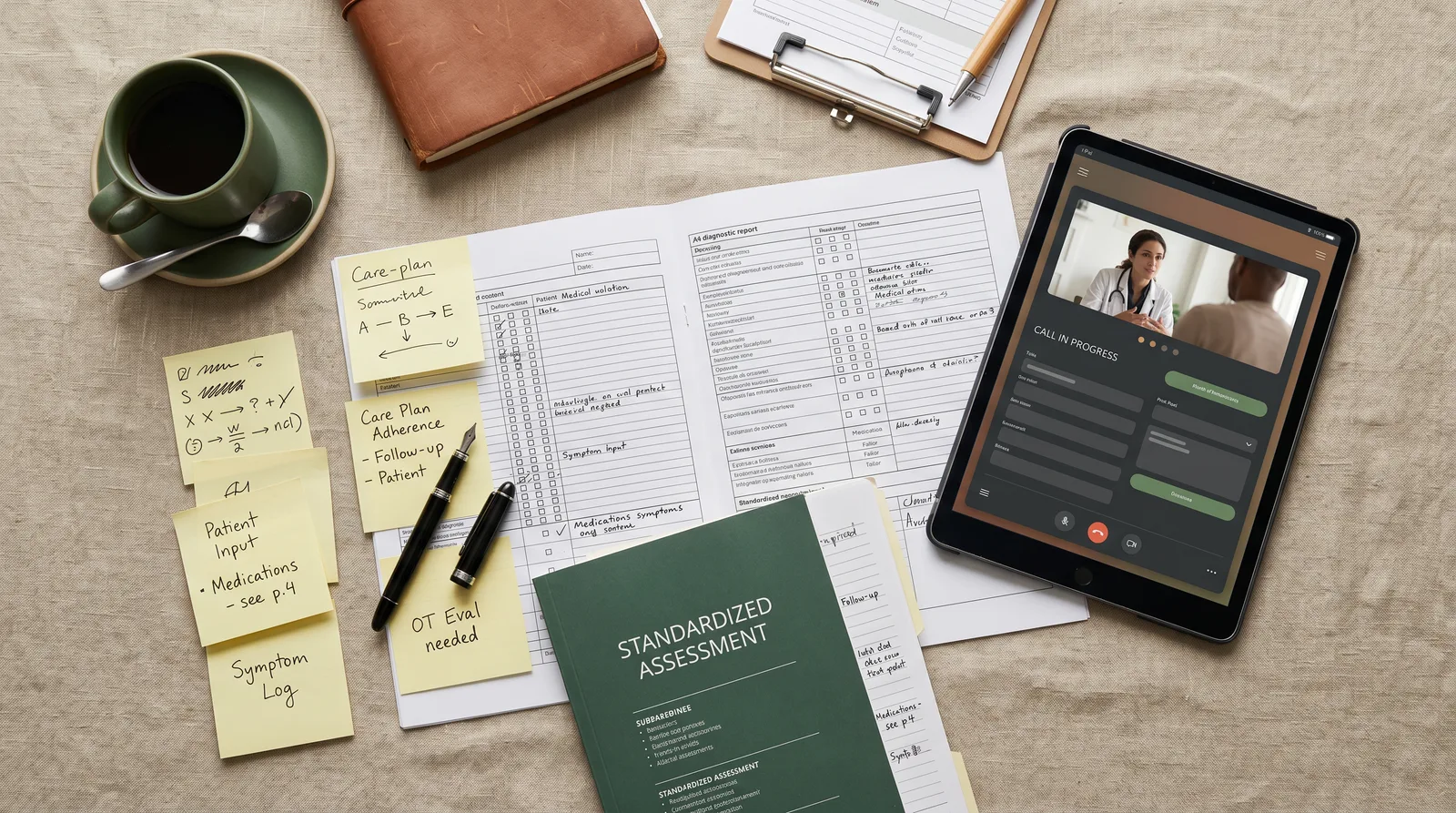
- Design and execute HIPAA- and FERPA-compliant intake, consent, and records workflows across telehealth and in-person care settings.
- Select, administer, and interpret evidence-based cognitive screening and diagnostic assessment tools appropriate to each client's profile and your scope of practice.
- Produce clear, defensible diagnostic impression reports and findings documents that meet multidisciplinary team and regulatory standards.
- Build individualized treatment and service plans with measurable goals, aligned to clinical evidence and coordinated across care teams, families, and school systems.
- Implement structured progress monitoring systems and maintain auditable referral and intervention records within a compliant cloud-based platform.
- Curate and deploy client-, family-, and school-facing resource libraries that support intervention continuity and informed participation across the full care ecosystem.
How it works
A school that adapts to you
This isn't a set of static videos. Every lesson is generated live and tuned to where you actually are.
We learn your level
A quick placement check tailors your starting point so you're never bored or lost.
Lessons adapt as you go
Each lesson is written for your pace and your goal, adjusting as your skills grow.
Your AI coach keeps you moving
Checkpoints, feedback, and gentle nudges turn progress into a real result.
The curriculum
What's inside your school
7 modules · 24 lessons

Compliance Foundations: HIPAA, FERPA, and Ethical Practice
Establishes the legal, ethical, and procedural bedrock required before any clinical work begins. Learners master HIPAA and FERPA obligations in cognitive care contexts, navigate scope-of-practice boundaries, and build compliant intake and records workflows in the cloud platform — ensuring every subsequent module operates on a defensible compliance foundation.
- 1.1HIPAA Privacy and Security Rules in Cognitive CareIncluded
- 1.2FERPA in School-Based Cognitive PracticeIncluded
- 1.3Ethical Scope of Practice and Informed Consent Across SettingsIncluded
- 1.4Compliant Intake and Records Workflows in a Cloud-Based PlatformIncluded
Cognitive Development, Neurodiversity, and Clinical Foundations
Bridges compliance knowledge to clinical practice by ensuring all learners — regardless of their entry credential — share a rigorous, common understanding of cognitive development across the lifespan, neurodevelopmental and cognitive disability profiles, and the diagnostic classification systems they will use throughout the platform. This foundational module prevents misapplication of tools in Module 3 and is deliberately sequenced before assessment selection.
- 2.1Cognitive Development Across the LifespanIncluded
- 2.2Neurodevelopmental and Cognitive Disability ProfilesIncluded
- 2.3Diagnostic Classification Systems and Their Clinical ApplicationIncluded
Evidence-Based Cognitive Screening and Diagnostic Assessment
Equips learners to select, administer, score, and clinically interpret the full range of evidence-based cognitive screening and diagnostic tools appropriate to cognitive disability practice. Moves systematically from selection logic through administration fidelity, psychometric interpretation, and autism- and neurodevelopment-specific protocols — building toward the report-writing module that immediately follows.
- 3.1Assessment Frameworks and Tool Selection by Client ProfileIncluded
- 3.2Standardized Administration and Valid Testing ConditionsIncluded
- 3.3Scoring, Psychometric Interpretation, and Clinical ReasoningIncluded
- 3.4Autism-Specific and Neurodevelopmental Diagnostic ProtocolsIncluded
Diagnostic Impression Reports and Findings Documentation
Translates assessment data into professionally defensible, regulatory-compliant, and audience-appropriate diagnostic reports and findings documents. Moves from report architecture through writing quality, multidisciplinary usability, and client/family-facing communication — producing the complete documentation set that feeds directly into service planning in the following module.
- 4.1Report Architecture: Structure, Standards, and Regulatory RequirementsIncluded
- 4.2Writing Defensible, Multidisciplinary-Ready FindingsIncluded
- 4.3Client- and Family-Facing Feedback and Report DisseminationIncluded
Individualized Treatment and Service Planning
Converts diagnostic findings into actionable, measurable, and cross-system service plans. Learners move from assessment data to goal construction, build IEP-aligned and clinical treatment plans, and design coordination structures that keep clinical, school, and family stakeholders working from a single coherent plan — operationalizing the care ecosystem that progress monitoring in the next module will track.
- 5.1From Assessment Data to Individualized GoalsIncluded
- 5.2Building Compliant IEP Service Recommendations and School-Based PlansIncluded
- 5.3Coordinated Care Planning Across Clinical, Family, and School SystemsIncluded
Progress Monitoring, Intervention Delivery, and Auditable Records
Establishes the ongoing measurement, delivery, and documentation systems that keep care plans alive and defensible over time. Learners design structured progress monitoring systems, execute compliant telehealth and in-person intervention workflows, and maintain the auditable referral and clinical records that regulatory and accreditation standards require.
- 6.1Designing Structured Progress Monitoring SystemsIncluded
- 6.2Compliant Telehealth and In-Person Intervention WorkflowsIncluded
- 6.3Referral Management and Auditable Clinical RecordsIncluded
Resource Libraries, Care Ecosystem Engagement, and Continuous Improvement
Completes the curriculum by turning the platform's resource library into a living, deployed ecosystem tool and embedding the habits of professional sustainability — ongoing supervision, evidence currency, and quality improvement — that ensure the platform and its practitioners remain effective and compliant long after initial training ends.
- 7.1Curating and Deploying Clinical Resource LibrariesIncluded
- 7.2Engaging Families and Schools as Active Care PartnersIncluded
- 7.3Telehealth Crisis Response and Safety Planning in Cognitive CareIncluded
- 7.4Continuous Improvement, Supervision, and Staying Current in Cognitive CareIncluded
Who it's for
Is this you?

Board Certified Cognitive Specialists
Systematize your end-to-end clinical workflows—from compliant intake to auditable records—so your BCCS credential is backed by practice infrastructure as rigorous as your training.

Licensed Psychologists
Sharpen your assessment selection logic, diagnostic report architecture, and coordinated care planning to meet the documentation standards multidisciplinary teams and regulators actually require.

Certified Autism Specialists
Deepen your neurodevelopmental diagnostic protocols and build the family- and school-facing engagement systems that extend your autism-specific work across the full care ecosystem.
School-Based Diagnosticians
Navigate the FERPA/HIPAA intersection with confidence and produce IEP-ready, multidisciplinary-compliant findings documents that move smoothly across clinical and educational systems.

Telehealth Cognitive Clinicians
Build compliant, platform-integrated telehealth workflows—including crisis response and safety planning protocols—tailored to cognitive care delivered outside the traditional clinical office.

Psychiatrists in Cognitive Care
Integrate evidence-based cognitive assessment interpretation and coordinated service planning into your psychiatric practice for clients with neurodevelopmental and cognitive disability profiles.
Questions
Frequently asked
Your teacher
A note from your teacher

Pauline Smith EdD
If you're reading this, you already carry the credential, the caseload, and the clinical judgment. You don't need someone to explain what a psychometric battery is, or why informed consent matters, or what HIPAA requires in the abstract. What you may be looking for—what most of us in this field are looking for at some point—is a coherent, defensible, end-to-end system that holds together across every dimension of high-complexity cognitive care practice.
That gap between clinical knowledge and systematic, audit-ready, multidisciplinary-integrated practice is exactly what Cognitive Specialist Pro is designed to close. Not through introductory content, but through applied protocol: the intake and consent workflows that work in both telehealth and in-person settings, the assessment selection logic mapped to specific client profiles and scope, the report architecture that satisfies a school team on Monday and a clinical review board on Friday, and the coordinated service plan that actually travels across clinical, family, and educational systems without fragmenting along the way.
Every module in this curriculum was built around the questions that credentialed practitioners actually face in the field—questions about which tool is most defensible for this profile, how to structure a findings document that a parent and a special education team can both act on, how to design a progress monitoring system that generates auditable records without doubling your administrative burden. These are not hypothetical scenarios. They are the friction points in serious cognitive care practice, and this training addresses them at the level of applied workflow, not general principle.
I designed this training for peers—for professionals who will push back on a weak rationale, who want the evidence base cited, who need protocols that hold up under scrutiny. The curriculum engages DSM and ICD classification frameworks where they're clinically operative, addresses telehealth crisis response and safety planning as core competencies rather than edge cases, and builds the resource and family engagement infrastructure that turns a good assessment into a sustainable care plan.
If you're ready to systematize your practice—to move from expert clinician to expert clinical operator—I'd be glad to have you here. This is work worth doing rigorously.
— Pauline Smith EdD
Start your journey today
Join get instant access — learn at your own pace with an AI coach in your corner.
$150/mo
Recurring billing · cancel anytime
Secure checkout · Instant access
- 7 modules, 24 lessons
- AI-adaptive lessons tuned to your level
- Quizzes & checkpoints to lock in progress
- Your own AI learning coach
- Learn on any device, at your pace
- Full access for as long as you're subscribed