Champion Contraception Access — and Change the World
Master the evidence, dismantle the barriers, and build real programmes — so every woman and girl, everywhere, can choose her own future.

Every lesson in this school begins and ends with the same truth: when a woman controls her own reproductive choices, the whole world benefits — and our job is to make sure nothing stands in the way of that.— David Clilverd

What you'll learn
What you'll be able to do
- Explain the evidence-based links between voluntary family planning, gender equity, and reduced environmental pressure.
- Identify the key practical, cultural, and logistical barriers that prevent girls and women from accessing contraception globally, and strategies to overcome them.
- Describe a range of modern contraceptive methods, their safety profiles, and how to communicate about them clearly and without stigma.
- Outline how international funding bodies such as the IMF, World Bank, and UN agencies can be engaged to support free contraception distribution programmes.
- Design a community-level outreach plan that provides confidential, no-barrier contraception access to women and girls in diverse cultural contexts.
- Articulate a compelling, evidence-backed public advocacy message that connects reproductive choice to planetary health, biodiversity, and long-term human flourishing.
How it works
A school that adapts to you
This isn't a set of static videos. Every lesson is generated live and tuned to where you actually are.
We learn your level
A quick placement check tailors your starting point so you're never bored or lost.
Lessons adapt as you go
Each lesson is written for your pace and your goal, adjusting as your skills grow.
Your AI coach keeps you moving
Checkpoints, feedback, and gentle nudges turn progress into a real result.
The curriculum
What's inside your school
6 modules · 23 lessons

Population, Planet, and Reproductive Choice: Understanding the Big Picture
This foundational module establishes the evidence-based connections between human population dynamics, environmental pressure, gender equity, and voluntary reproductive choice. It builds the conceptual framework that underpins everything that follows, ensuring learners understand why reproductive freedom is simultaneously a human rights, social justice, and planetary sustainability issue — before moving into methods, barriers, or programme design.
- 1.1Our Crowded Pond: Population Growth and Planetary LimitsIncluded
- 1.2Voluntary Family Planning as an Environmental and Social SolutionIncluded
- 1.3Gender Equity as the Engine of ChangeIncluded
Contraceptive Methods: Knowledge, Safety, and Stigma-Free Communication
Before designing any distribution or outreach programme, practitioners must have accurate, confident, and non-judgmental knowledge of the full contraceptive landscape. This module covers every major method category, safety and efficacy profiles, special considerations for adolescents, and the communication skills needed to discuss contraception clearly across cultural and linguistic contexts — without medical gatekeeping becoming a barrier. A new prerequisite lesson on health literacy and informed consent has been added to ensure learners can ethically support user decision-making.
- 2.1Informed Consent and Health Literacy: The Ethical FoundationIncluded
- 2.2The Contraceptive Landscape: Methods, Mechanisms, and Safety ProfilesIncluded
- 2.3Communicating Without Stigma: Language, Trust, and Cultural SensitivityIncluded
- 2.4Adolescent Girls: Specific Needs, Rights, and ApproachesIncluded
Barriers to Access: Identifying, Understanding, and Dismantling Them
Understanding what prevents girls and women from accessing contraception is as important as knowing what to provide. This module systematically maps the full barrier landscape — cultural, social, religious, legal, logistical, and safety-related — and equips learners with evidence-based strategies to address each type. A new lesson on digital and innovation-based barrier-reduction strategies has been added to reflect the growing importance of technology in reaching underserved populations.
- 3.1Mapping the Barrier Landscape: Cultural, Social, and Religious ObstaclesIncluded
- 3.2Logistical and Systemic Barriers: Distance, Cost, Consent Laws, and Supply ChainsIncluded
- 3.3Confidentiality, Safety, and Reaching Hidden PopulationsIncluded
- 3.4Digital Tools and Innovation for Barrier ReductionIncluded
Funding the Vision: Engaging International Bodies and Building Sustainable Finance
Good programme design fails without sustained funding. This module equips learners with a working understanding of the international development finance landscape — including the IMF, World Bank, UN agencies, bilateral donors, and private philanthropy — and the skills to make compelling environmental, economic, and humanitarian cases for contraceptive access investment. A new lesson on domestic resource mobilisation and long-term financial sustainability has been added, since over-reliance on international donors is a well-documented fragility in global health programmes.
- 4.1How International Funding Works: IMF, World Bank, UN Agencies, and Bilateral DonorsIncluded
- 4.2Making the Economic and Environmental Case for FundersIncluded
- 4.3Writing and Pitching Funding Proposals for Contraception ProgrammesIncluded
- 4.4Domestic Resource Mobilisation and Long-Term Financial SustainabilityIncluded
Designing Community-Level Outreach and Distribution Programmes
This is the applied design module where learners bring together all prior knowledge — methods, barriers, ethics, funding — to design real, contextually appropriate, community-level contraceptive outreach and distribution programmes. The draft's four lessons are well-sequenced and complete; this revision strengthens each with richer activity design and adds explicit links to prior modules. A reinforced lesson on safeguarding and ethical programme governance has been woven into the distributor training lesson.
- 5.1Community Needs Assessment and Context MappingIncluded
- 5.2Designing No-Barrier, Confidential Access ModelsIncluded
- 5.3Training and Supporting Community-Level DistributorsIncluded
- 5.4Monitoring, Evaluating, and Adapting Your ProgrammeIncluded
Advocacy, Narrative, and the Case for Planetary Reproductive Justice
The culminating module equips learners to become confident, evidence-grounded public advocates for voluntary contraceptive access as a planetary health and human rights imperative. The draft's three lessons are well-conceived and well-sequenced; this revision deepens the ethics lesson significantly — particularly around the critical boundaries between voluntary family planning advocacy and coercive population control rhetoric — and adds a new lesson on coalition-building and sustained advocacy campaigning, which is essential for translating individual advocacy skills into systemic change.
- 6.1Building Your Evidence-Backed Advocacy NarrativeIncluded
- 6.2Engaging Media, Policymakers, and the PublicIncluded
- 6.3Ethics, Rights, and the Boundaries of Population AdvocacyIncluded
- 6.4Coalition Building and Sustained Advocacy CampaigningIncluded
Who it's for
Is this you?

NGO Field Workers
You're delivering programmes on the ground and need structured knowledge in contraceptive methods, barrier dismantling, and community outreach design to make your work more effective and sustainable.

Public Health Educators
You communicate health information to communities and want stigma-free, culturally sensitive language and evidence-backed frameworks to talk about contraception with clarity and confidence.

Policy Researchers
You're building the evidence base for reproductive health policy and need to fluently connect voluntary family planning data to gender equity, environmental sustainability, and funding arguments.

Reproductive Rights Advocates
You're passionate about reproductive justice and want an evidence-grounded narrative that links contraception access to planetary health — and the advocacy skills to take it to media and policymakers.

International Development Funders
You evaluate or advise on global health funding and want a deeper understanding of the economic, environmental, and human rights case for free contraception distribution programmes.

Socially Conscious Individuals
You care deeply about gender equity and the planet's future and want rigorous, accessible knowledge to become a more informed, effective voice for reproductive rights in your community.
Questions
Frequently asked
Your teacher
A note from your teacher
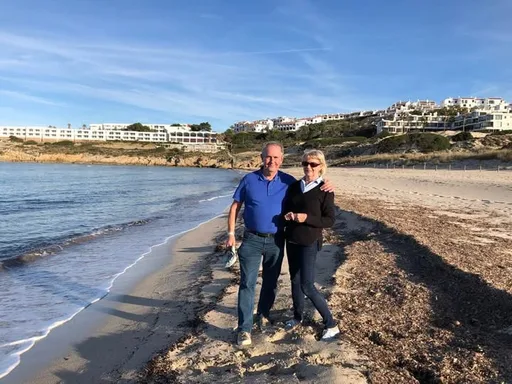
David Clilverd
If you're reading this, I suspect you already feel the weight of the problem — and the pull of the solution.
You know that hundreds of millions of women and girls still lack reliable access to contraception. You've seen the connections between that gap and poverty, gender inequality, maternal mortality, and environmental pressure. Maybe you work in the field and feel under-equipped to tackle the systemic parts — the funding, the policy, the advocacy narrative. Or maybe you're earlier in your journey: passionate, clear on your values, but looking for a structured, evidence-grounded way to translate that passion into action. Either way, I built this school for you.
What you'll find here isn't a polemic or a campaign. It's a curriculum — compassionate, rigorous, and practical — that takes you from the planetary big picture all the way down to designing a distribution programme in a specific community context. We cover the contraceptive methods themselves, how to talk about them without stigma, and how to reach adolescent girls and other hidden populations safely and confidentially. We work through the real barriers — cultural, logistical, legal, financial — and we don't pretend they're simple. And we look honestly at the ethics of this work, because reproductive rights advocacy done badly can cause real harm, and you deserve to know where the lines are.
The funding module is one I'm especially proud of. For too many passionate advocates, the wall they hit is financial — they understand the need but can't speak the language of the IMF, World Bank, or UN agencies. This school changes that. You'll learn how international funding mechanisms actually work, how to frame the economic and environmental case in ways that resonate with funders, and how to write a proposal that gets taken seriously.
By the time you reach the final module on advocacy and coalition building, you'll have something most advocates lack: a complete, layered understanding that connects the individual woman's right to choose to the health of the planet she lives on — and the communication tools to make other people feel that connection too. This is a school grounded in hope, because the evidence for hope is real. Come and learn it with me.
— David Clilverd
Start your journey today
Join get instant access — learn at your own pace with an AI coach in your corner.
$29/mo
Recurring billing · cancel anytime
Secure checkout · Instant access
- 6 modules, 23 lessons
- AI-adaptive lessons tuned to your level
- Quizzes & checkpoints to lock in progress
- Your own AI learning coach
- Learn on any device, at your pace
- Full access for as long as you're subscribed