Learn to escape a crashed car — before you need to
Modern cars are engineered to survive a crash — but not to let you out of one. This school teaches drivers, parents, and first responders the real post-crash survival skills, tools, and advocacy knowledge that automakers haven't built in.
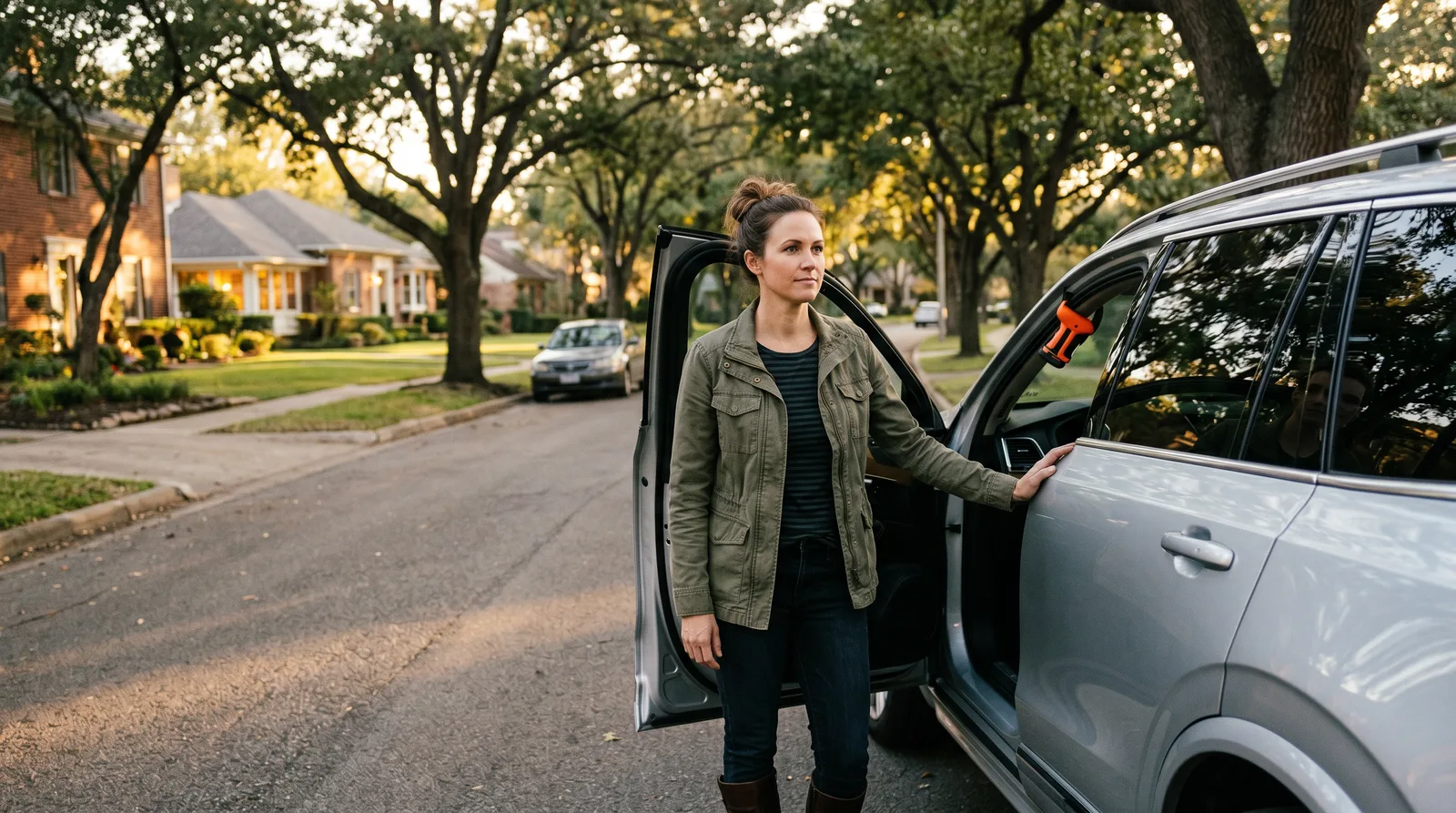
"Modern cars are brilliant at surviving a crash — I'm here to make sure you can survive getting out of one."— David Clilverd
What you'll learn
What you'll be able to do
- Identify exactly which vehicle systems fail after a crash and why doors, windows, and seatbelts lock you in
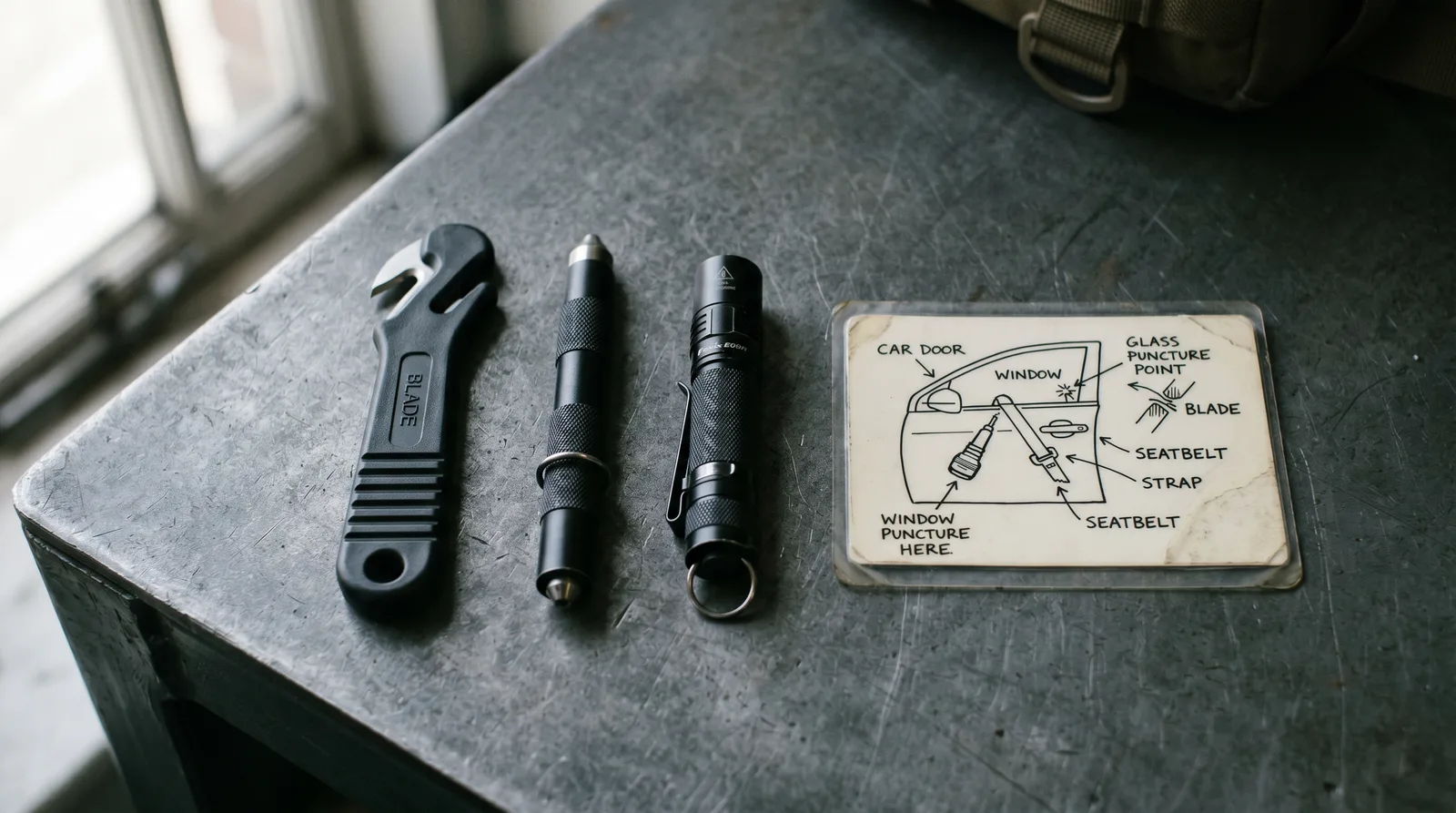
- Choose, carry, and correctly use a seatbelt cutter and window breaker to escape a sealed vehicle in under 60 seconds
- Release a child from a 5-point harness child seat rapidly and safely under post-crash stress
- Execute a calm, sequenced self-rescue and passenger-rescue protocol when all electrical systems have failed
- Evaluate and advocate for post-crash egress standards when buying a new vehicle or lobbying manufacturers and regulators
- Build a household and vehicle emergency kit — including the right tools, their placement, and a practiced family escape drill
How it works
A school that adapts to you
This isn't a set of static videos. Every lesson is generated live and tuned to where you actually are.
We learn your level
A quick placement check tailors your starting point so you're never bored or lost.
Lessons adapt as you go
Each lesson is written for your pace and your goal, adjusting as your skills grow.
Your AI coach keeps you moving
Checkpoints, feedback, and gentle nudges turn progress into a real result.
The curriculum
What's inside your school
6 modules · 20 lessons

Why Modern Cars Trap You: The Post-Crash Systems Failure
Establishes the foundational paradox of modern crash safety design: systems engineered to protect occupants during impact systematically prevent self-rescue immediately afterward. Students leave this module able to name every vehicle system that can fail or lock against them — and understand precisely why each one does so. This 'why' is the motivational and cognitive foundation for every skill that follows.
- 1.1The Crash Safety ParadoxIncluded
- 1.2Electrical Failure: When the Car Goes DarkIncluded
- 1.3Seatbelt Pretensioners and Door Lock LogicIncluded
- 1.4Glass That Won't Break — and Windows That Won't OpenIncluded
The Right Tools, Carried Right
Translates knowledge of failure modes into tangible, practiced tool competency. Students select quality tools, learn the exact mechanics of each, and — critically — understand that an undrilled tool is nearly useless under crash stress. The module ends with each student having established a personal placement plan and begun building the muscle memory that makes sub-60-second egress achievable.
- 2.1Seatbelt Cutters — Choosing, Testing, TrustingIncluded
- 2.2Window Breakers — Mechanism, Placement, and the One-Second StrikeIncluded
- 2.3Placement, Muscle Memory, and the Stress PenaltyIncluded
Freeing Children: The 5-Point Harness Under Pressure
Addresses one of the highest-stakes and most under-trained components of post-crash survival: releasing infants and children from child restraint systems when the buckle may be jammed, the caregiver is injured or disoriented, and seconds matter. Students gain both the mechanical knowledge of how 5-point harness systems work and fail, and the drilled physical competency to release a child rapidly under realistic stress conditions — including when cutting becomes necessary.
- 3.1Anatomy of the 5-Point Harness — and Its Post-Crash Failure ModesIncluded
- 3.2Rapid Release Under Stress — Drills for Parents and CaregiversIncluded
- 3.3When the Buckle Won't Release — Cutting the HarnessIncluded
The Self-Rescue Protocol: Escaping When Everything Has Failed
Integrates all prior knowledge and tool skills into a sequenced, practiced, full-scenario escape protocol — from initial post-crash orientation through self-extrication, passenger rescue, and extreme scenarios. Students leave this module having physically drilled the complete protocol multiple times under increasing difficulty, able to execute it reliably under the cognitive load and motor degradation of genuine emergency stress.
- 4.1The ESCAPE Decision FrameworkIncluded
- 4.2Full Electrical Failure Escape Drill — In the DarkIncluded
- 4.3Submerged and Smoke — Extreme Scenario ProtocolsIncluded
- 4.4Rescuing Other Passengers When You Are the First One OutIncluded
Building Your Household Crash Escape System
Translates individual skills into a complete, maintained, household-wide system — because a single trained adult in a family of five is not a safety solution. Students design, equip, install, and drill a household crash escape system that accounts for every vehicle the family uses, every household member including children, and the reality that the most skilled adult may be the most seriously injured person in a crash.
- 5.1Designing Your Vehicle Emergency KitIncluded
- 5.2Training Every Member of Your HouseholdIncluded
- 5.3The Family Crash Escape DrillIncluded
Holding the Industry Accountable: Advocacy and Standards Change
Empowers students to move beyond personal and household preparedness to systemic change — understanding who in the regulatory and manufacturing chain is responsible for the post-crash egress gap, how to evaluate vehicles for egress safety before purchase, and how to effectively engage with manufacturers, standards bodies, and political representatives to drive the redesign that the original problem statement demands. This module ensures the curriculum delivers its full advocacy outcome.
- 6.1The Regulatory Landscape — Who Is Responsible and Why They Haven't Fixed ThisIncluded
- 6.2Evaluating Vehicles for Post-Crash Egress Before You BuyIncluded
- 6.3Taking Action — Petitions, Submissions, and Industry EngagementIncluded
Who it's for
Is this you?

Parents of young children
They need to know they can rapidly release or cut their child from a 5-point harness under real post-crash stress — not just in a calm parking lot.

Daily commuters
They're in their vehicle alone, often in the dark or on high-speed roads, and want a practiced protocol they can execute without thinking.

Fleet managers
They're responsible for the safety of drivers across an entire fleet and need evidence-based kit standards, drills, and advocacy knowledge to build into policy.

First responders
They arrive after the crash and need to understand exactly how post-crash systems fail so they can anticipate what trapped occupants are facing.

Road-safety advocates
They want the regulatory landscape, vehicle-evaluation criteria, and concrete advocacy tools to push manufacturers and regulators toward real egress standards.

Preparedness-minded drivers
They already think about emergency kits and family drills, and want to close the one survival gap their household plan hasn't addressed yet.
Questions
Frequently asked
Your teacher
A note from your teacher

David Clilverd
If you've never thought about how you'd get out of your car after a serious crash, I understand. Most people haven't. The industry counts on that.
Here's what nobody told you at the dealership: the same engineering that keeps you alive in a crash can lock you inside it. Seatbelt pretensioners seize. Door lock logic engages automatically. Windows that run on electricity stop working when the car's electrical system dies — which it does, often, in a significant collision. And that laminated safety glass that's so good at keeping the roof from collapsing on you? It is nearly impossible to break with your bare hands or a random blunt object. You are, in the most literal sense, sealed in.
I built Crash Escape Academy because this gap — between surviving the impact and getting out alive — is real, it is documented, and it is entirely solvable with the right knowledge and about sixty seconds of practiced skill. The curriculum doesn't ask you to become a paramedic or a stunt driver. It asks you to understand what actually happens to a car's systems after a crash, carry two small tools in the right place, know a simple sequenced protocol, and practice it with your family once. That's it. That is the distance between trapped and out.
The hardest part of teaching this material is the anger underneath it. Post-crash egress standards exist for fire and structural integrity. They don't exist — not meaningfully — for your ability to open a door or break a window from the inside after an electrical failure. I'll show you the regulatory landscape exactly as it is, not as it should be. And then I'll show you what you can do about it, both in your own vehicle today and in the broader policy conversation.
Whether you're a parent who just wants to know you can get your kids out of their seats in an emergency, a commuter who drives alone in the dark every morning, a fleet manager responsible for other people's safety, or a first responder who wants to understand what civilian occupants are actually facing — this course was built for you. The knowledge is here. The drills are here. The tools guidance is here. You just have to decide you're done leaving this to chance.
— David Clilverd
Start your journey today
Join get instant access — learn at your own pace with an AI coach in your corner.
$39/mo
Recurring billing · cancel anytime
Secure checkout · Instant access
- 6 modules, 20 lessons
- AI-adaptive lessons tuned to your level
- Quizzes & checkpoints to lock in progress
- Your own AI learning coach
- Learn on any device, at your pace
- Full access for as long as you're subscribed