
Master biochemistry the way your patients will demand it
MedBiochem Mastery rebuilds biochemistry from the ground up — connecting every pathway, enzyme, and mutation directly to the board vignettes and clinical scenarios you'll face on USMLE Step 1, Step 2, and PLAB. No more brute-force memorization; this is mechanistic, high-yield, and built for medical students who want to actually understand what's happening at the molecular level.

"Every molecular detail I teach you earns its place by explaining something that happens to a real patient — if it doesn't do that, it doesn't belong in your head."— Dr. J Raymond ABK

What you'll learn
What you'll be able to do
- Explain core metabolic pathways — glycolysis, the TCA cycle, oxidative phosphorylation, and fatty acid metabolism — and predict how enzyme defects cause specific inborn errors of metabolism.
- Decode the molecular basis of protein structure, enzyme kinetics, and allosteric regulation well enough to interpret inhibitor-drug mechanisms on board vignettes.
- Apply the biochemistry of DNA replication, transcription, translation, and repair to understand mutation-driven diseases and the pharmacology of antibiotics and chemotherapeutics.
- Interpret abnormal lab values (ammonia, lactate, ketones, lipid panels) by tracing them back to the disrupted biochemical pathway and the clinical condition responsible.
- Master the biochemistry of vitamins, cofactors, and nutritional deficiencies so you can diagnose deficiency syndromes and explain their molecular rationale with confidence.
- Build a board-ready command of hormonal signal transduction, receptor pharmacology, and second-messenger cascades that connects endocrine pathophysiology to drug targets.
How it works
A school that adapts to you
This isn't a set of static videos. Every lesson is generated live and tuned to where you actually are.
We learn your level
A quick placement check tailors your starting point so you're never bored or lost.
Lessons adapt as you go
Each lesson is written for your pace and your goal, adjusting as your skills grow.
Your AI coach keeps you moving
Checkpoints, feedback, and gentle nudges turn progress into a real result.
The curriculum
What's inside your school
6 modules · 30 lessons

Foundations: Molecules, Enzymes & Energy
Establishes the chemical and thermodynamic language of biochemistry, covering amino acids, protein structure, enzyme kinetics, and inhibition as the bedrock for all clinical applications ahead.
- 1.1Amino Acids & Protein StructureIncluded
- 1.2Enzyme Kinetics & the Michaelis-Menten ModelIncluded
- 1.3Enzyme Inhibition & Drug MechanismsIncluded
- 1.4Allosteric Regulation & CooperativityIncluded
- 1.5Bioenergetics: Free Energy, ATP & Coupled ReactionsIncluded
Core Metabolism: Carbohydrates & the Energy Hub
Walks through glucose metabolism from glycolysis to oxidative phosphorylation, linking each enzymatic step to clinical disorders, lab findings, and metabolic integration.
- 2.1Glycolysis: Steps, Regulation & Clinical CorrelatesIncluded
- 2.2Pyruvate Fate: Aerobic vs. Anaerobic BranchingIncluded
- 2.3TCA Cycle: Intermediates, Cofactors & RegulationIncluded
- 2.4Oxidative Phosphorylation, the ETC & ATP SynthesisIncluded
- 2.5Gluconeogenesis, Glycogen Metabolism & Glycogen Storage DiseasesIncluded
Lipid Metabolism, Ketogenesis & Lipoprotein Disorders
Covers fatty acid synthesis, beta-oxidation, ketone body metabolism, and lipoprotein biology, connecting each pathway to ketoacidosis, fatty liver, and dyslipidemia.
- 3.1Fatty Acid Synthesis & RegulationIncluded
- 3.2Beta-Oxidation & Fatty Acid Oxidation DisordersIncluded
- 3.3Ketogenesis, Ketolysis & Diabetic KetoacidosisIncluded
- 3.4Cholesterol Synthesis, Regulation & Statin PharmacologyIncluded
- 3.5Lipoproteins, Apolipoproteins & DyslipidemiasIncluded
Nitrogen Metabolism, Amino Acid Disorders & Vitamins
Integrates protein catabolism, the urea cycle, amino acid-derived neurotransmitters, and vitamin/cofactor biochemistry with their associated deficiency syndromes.
- 4.1Protein Catabolism, Transamination & the Urea CycleIncluded
- 4.2Clinically High-Yield Amino Acid DisordersIncluded
- 4.3Purines, Pyrimidines & Nucleotide DisordersIncluded
- 4.4Water-Soluble Vitamins & Cofactors: B-Complex & Vitamin CIncluded
- 4.5Fat-Soluble Vitamins: A, D, E & K — Mechanisms & ToxicityIncluded
Molecular Biology: DNA, RNA & the Pharmacology of Gene Expression
Covers DNA replication, repair, transcription, and translation at mechanistic depth, directly connecting each process to mutation-driven diseases and the drugs that exploit them.
- 5.1DNA Replication: Machinery, Fidelity & Repair PathwaysIncluded
- 5.2Transcription, RNA Processing & Gene RegulationIncluded
- 5.3Translation, the Genetic Code & Mutation ConsequencesIncluded
- 5.4Antibiotics Targeting DNA & Protein SynthesisIncluded
- 5.5Chemotherapeutics & Antimetabolites: Targeting ReplicationIncluded
Hormonal Signaling, Second Messengers & Endocrine Pharmacology
Builds a mechanistic framework for receptor classes, signal transduction cascades, and second-messenger systems, anchored throughout by endocrine disease and targeted drug therapy.
- 6.1Receptor Classes & Signal Transduction OverviewIncluded
- 6.2cAMP & PKA Pathway: Hormones, Toxins & DrugsIncluded
- 6.3Phospholipid Signaling: IP₃/DAG, PKC & CalciumIncluded
- 6.4Insulin, Glucagon & the Metabolic Hormone AxisIncluded
- 6.5Nuclear Receptors, Steroid Hormones & Transcriptional ControlIncluded
Who it's for
Is this you?

Step 1 preppers
Building the mechanistic biochemistry foundation that top board scores are made of — not flashcard facts, but integrated pathway reasoning.

First-year MD/DO students
Keeping pace with a punishing preclinical curriculum by learning biochemistry the clinical way from the very first week.

MBBS & PLAB candidates
Gaining the clinically grounded biochemistry command that international licensing exams test across metabolic, molecular, and endocrine domains.
Struggling second-years
Finally understanding the material that felt like noise the first time around — with clear mechanisms and clinical context that make it stick.

Lab-value confusers
Learning to read an ammonia, lactate, or ketone result as a story about a broken pathway, not just an abnormal number to flag.

Pharmacology integrators
Connecting drug mechanisms — statins, antibiotics, antimetabolites, receptor agonists — back to the exact molecular targets they act on.
Questions
Frequently asked
Your teacher
A note from your teacher
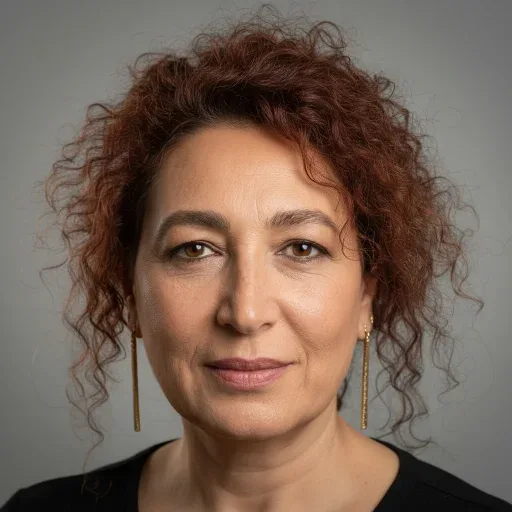
Dr. J Raymond ABK
If you're reading this, you've probably already sat through lectures where someone drew the entire TCA cycle on a whiteboard, listed every cofactor, and then moved on — leaving you with a page of notes that felt complete and yet somehow completely disconnected from medicine. You memorized it. You were tested on it. And a few weeks later, when a vignette described a patient with lactic acidosis and asked you to identify the defective enzyme, you blanked. That's not a memory problem. That's a teaching problem.
I built MedBiochem Mastery because I believe medical students are being systematically undertaught in the subject that underpins almost every mechanism in clinical medicine. Biochemistry is not a collection of facts to survive before clinical rotations. It is the molecular language of disease — and once you're fluent in it, everything downstream gets easier. Pathophysiology makes sense. Drug mechanisms stop being arbitrary. Lab values stop being numbers and start being data that tells you exactly which pathway is broken and why.
Every lesson in this school is structured the same way a good clinical teacher thinks: here is the mechanism, here is what happens when it fails, here is how that failure looks on labs and in a patient, and here is how it appears on your board exam. We move from amino acid structure to enzyme kinetics to metabolic pathways to molecular biology to hormonal signaling — not as a survey of topics, but as a single integrated system. By the time you finish the hormonal signaling unit, you'll find yourself tracing a patient's diabetic ketoacidosis from the insulin receptor all the way through fatty acid oxidation and ketone body synthesis, because you've built that scaffold one brick at a time.
I won't waste your time on minutiae that won't appear on boards or in clinical practice, and I won't insult your intelligence by oversimplifying the science. The vocabulary here is proper medical and biochemical vocabulary. The reasoning is tight. The clinical anchors are real. My commitment to you is that by the end of this school, you will not just know biochemistry — you will think with it. And that distinction is everything on your boards and at the bedside.
If you're ready to stop surviving biochemistry and start owning it, I'm glad you're here. Let's get to work.
— Dr. J Raymond ABK
Start your journey today
Join get instant access — learn at your own pace with an AI coach in your corner.
$9.99/mo
Recurring billing · cancel anytime
Secure checkout · Instant access
- 6 modules, 30 lessons
- AI-adaptive lessons tuned to your level
- Quizzes & checkpoints to lock in progress
- Your own AI learning coach
- Learn on any device, at your pace
- Full access for as long as you're subscribed