Master the machinery of life — at the molecular level
A rigorous, visual-first cell biology course that takes you from organelle architecture to gene expression, signaling cascades, and cancer biology — built for students who want to truly understand, not just memorize.
"I'd rather make one mechanism genuinely clear than cover ten mechanisms in ways that quietly mislead you."— Dr. J Raymond ABK
What you'll learn
What you'll be able to do
- Explain the structure and function of all major organelles and how they cooperate as an integrated system
- Trace the complete central dogma — DNA replication, transcription, and translation — with mechanistic detail
- Describe how cells regulate the cell cycle, trigger apoptosis, and how failures drive cancer
- Interpret real experimental data from techniques like Western blotting, PCR, FRET, and fluorescence microscopy
- Analyze cell signaling cascades (GPCR, RTK, and second-messenger pathways) and predict outcomes of pathway disruption
- Apply cell biology principles to explain disease mechanisms, drug targets, and modern therapeutic strategies
How it works
A school that adapts to you
This isn't a set of static videos. Every lesson is generated live and tuned to where you actually are.
We learn your level
A quick placement check tailors your starting point so you're never bored or lost.
Lessons adapt as you go
Each lesson is written for your pace and your goal, adjusting as your skills grow.
Your AI coach keeps you moving
Checkpoints, feedback, and gentle nudges turn progress into a real result.
The curriculum
What's inside your school
6 modules · 29 lessons

The Cell: Architecture and Organelle Systems
Establishes a rigorous foundation in cell structure, organelle function, and how organelles cooperate as an integrated system.
- 1.1Prokaryotes vs. Eukaryotes: A Structural Deep DiveIncluded
- 1.2The Endomembrane System: ER, Golgi, and Vesicle TraffickingIncluded
- 1.3Mitochondria and Chloroplasts: Energy OrganellesIncluded
- 1.4The Nucleus and Cytoskeleton: Structure Meets FunctionIncluded
- 1.5Organelle Cooperation: The Cell as an Integrated MachineIncluded
Membranes, Transport, and Cell Communication
Covers the fluid-mosaic membrane model, all modes of molecular transport, and how the cell surface mediates communication.
- 2.1Membrane Structure and the Fluid-Mosaic ModelIncluded
- 2.2Passive and Active Transport MechanismsIncluded
- 2.3Endocytosis, Exocytosis, and Membrane DynamicsIncluded
- 2.4Cell Junctions, Adhesion, and the Extracellular MatrixIncluded
The Central Dogma: Replication, Transcription, and Translation
Builds mechanistic, step-by-step mastery of DNA replication, RNA synthesis, and protein production.
- 3.1DNA Replication: Machinery, Fidelity, and RepairIncluded
- 3.2Transcription: From Gene to Pre-mRNAIncluded
- 3.3RNA Processing: Splicing, Capping, and PolyadenylationIncluded
- 3.4Translation: The Ribosome and the Genetic CodeIncluded
- 3.5Gene Regulation: Transcription Factors, Epigenetics, and Non-Coding RNAsIncluded
Cell Signaling Cascades and Pathway Analysis
Dissects major signaling systems — GPCR, RTK, and second-messenger pathways — and trains students to predict disruption outcomes.
- 4.1Principles of Cell Signaling: Ligands, Receptors, and Signal TransductionIncluded
- 4.2GPCR Pathways and Second-Messenger SystemsIncluded
- 4.3Receptor Tyrosine Kinases and the MAPK/PI3K NetworksIncluded
- 4.4Signal Integration, Crosstalk, and Feedback LoopsIncluded
- 4.5Pathway Disruption: Predicting Outcomes and Disease LinksIncluded
The Cell Cycle, Apoptosis, and Cancer Biology
Examines cell cycle control, programmed cell death, and how their failure produces cancer.
- 5.1Cell Cycle Phases and Cyclin-CDK ControlIncluded
- 5.2Checkpoints and DNA Damage ResponseIncluded
- 5.3Mitosis and Cytokinesis at the Molecular LevelIncluded
- 5.4Apoptosis: Intrinsic and Extrinsic PathwaysIncluded
- 5.5Cancer as a Cell Biology Disease: Oncogenes, Tumor Suppressors, and HallmarksIncluded
Experimental Techniques and Disease Applications
Trains students to interpret core cell biology techniques and apply mechanistic knowledge to disease and therapy.
- 6.1Microscopy Techniques: From Light to Super-Resolution and FRETIncluded
- 6.2Protein Analysis: Western Blotting, Co-IP, and Mass SpectrometryIncluded
- 6.3Nucleic Acid Techniques: PCR, qPCR, and SequencingIncluded
- 6.4Cell Biology of Disease: Mechanisms and Drug TargetsIncluded
- 6.5Modern Therapeutics: From Targeted Drugs to Gene EditingIncluded
Who it's for
Is this you?

Undergraduate biology majors
Build the deep mechanistic understanding that separates top students from the rest — and carry it confidently into upper-division courses.

Pre-med students
Command the cell biology content the MCAT actually tests, with the reasoning skills to work through questions you've never seen before.

Graduate school applicants
Walk into PhD interviews able to discuss signaling cascades, experimental design, and disease mechanisms with real fluency.

Self-taught science enthusiasts
Finally get the rigorous, diagram-driven treatment of cell biology you couldn't find in popular science books or scattered YouTube videos.

Biomedical research assistants
Understand the cellular logic behind the experiments you're running — Western blots, PCR, microscopy — so your bench work makes deeper sense.
Healthcare & pre-PA/pre-NP students
Ground your clinical knowledge in the cell biology of disease — from cancer hallmarks to drug targets — for stronger graduate applications and patient understanding.
Questions
Frequently asked
Your teacher
A note from your teacher
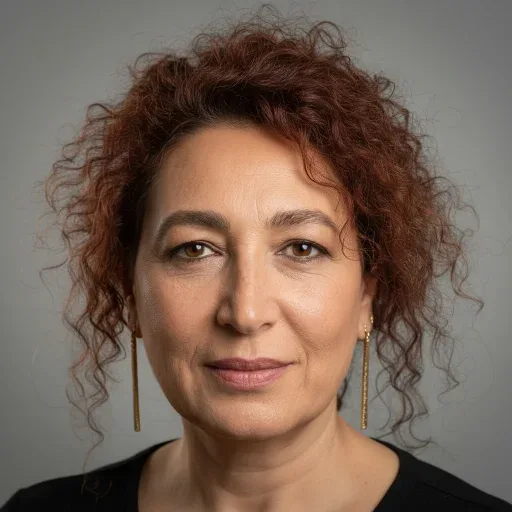
Dr. J Raymond ABK
If you're here, I suspect you've had this experience: you studied cell biology, you passed the exam, and then a few weeks later someone asked you to explain — really explain — how a signal at the cell surface translates into a change in gene expression inside the nucleus. And you realized the picture in your head had gaps.
That's not a failure of effort. It's a failure of how the material is usually taught. Most cell biology instruction optimizes for coverage: get through the organelles, get through the central dogma, name the pathways, move on. What it rarely does is build the conceptual architecture that lets you hold all of it together — to see the cell not as a list of parts but as an integrated, logic-driven system where every mechanism makes sense when you understand the problem it's solving.
That's precisely what this course is designed to do. I built it for students who are serious — undergraduates preparing for upper-division exams and the MCAT, pre-med and pre-PhD students who need more than surface fluency, and self-taught science thinkers who refuse to stop at "good enough." Every section is structured around mechanisms and their logic, not vocabulary and its definitions. We use diagrams the way they should be used: as the primary tool for building understanding, not as decoration after the fact. And we move through the curriculum in a sequence that mirrors how the cell actually works — architecture first, then communication, then information flow, then regulation, then the consequences when regulation fails.
I also want to be honest about what rigorous means here: it means I won't simplify a mechanism so much that it becomes wrong. It means when something is genuinely complex — like the crosstalk between the MAPK and PI3K pathways, or the logic of the spindle assembly checkpoint — we sit with that complexity until it becomes clear, rather than paper over it with a tidy diagram that misleads more than it teaches. I think you can handle the real version. This course is built on that assumption.
If you're ready to go from knowing cell biology to understanding it — to reach the point where you can pick up a paper in a cell biology journal and follow the experimental logic, or walk into a graduate interview and discuss signaling pathways without flinching — I'd be glad to work through it with you.
— Dr. J Raymond ABK
Start your journey today
Join get instant access — learn at your own pace with an AI coach in your corner.
$9.99/mo
Recurring billing · cancel anytime
Secure checkout · Instant access
- 6 modules, 29 lessons
- AI-adaptive lessons tuned to your level
- Quizzes & checkpoints to lock in progress
- Your own AI learning coach
- Learn on any device, at your pace
- Full access for as long as you're subscribed