
Command the blood — don't just memorize it
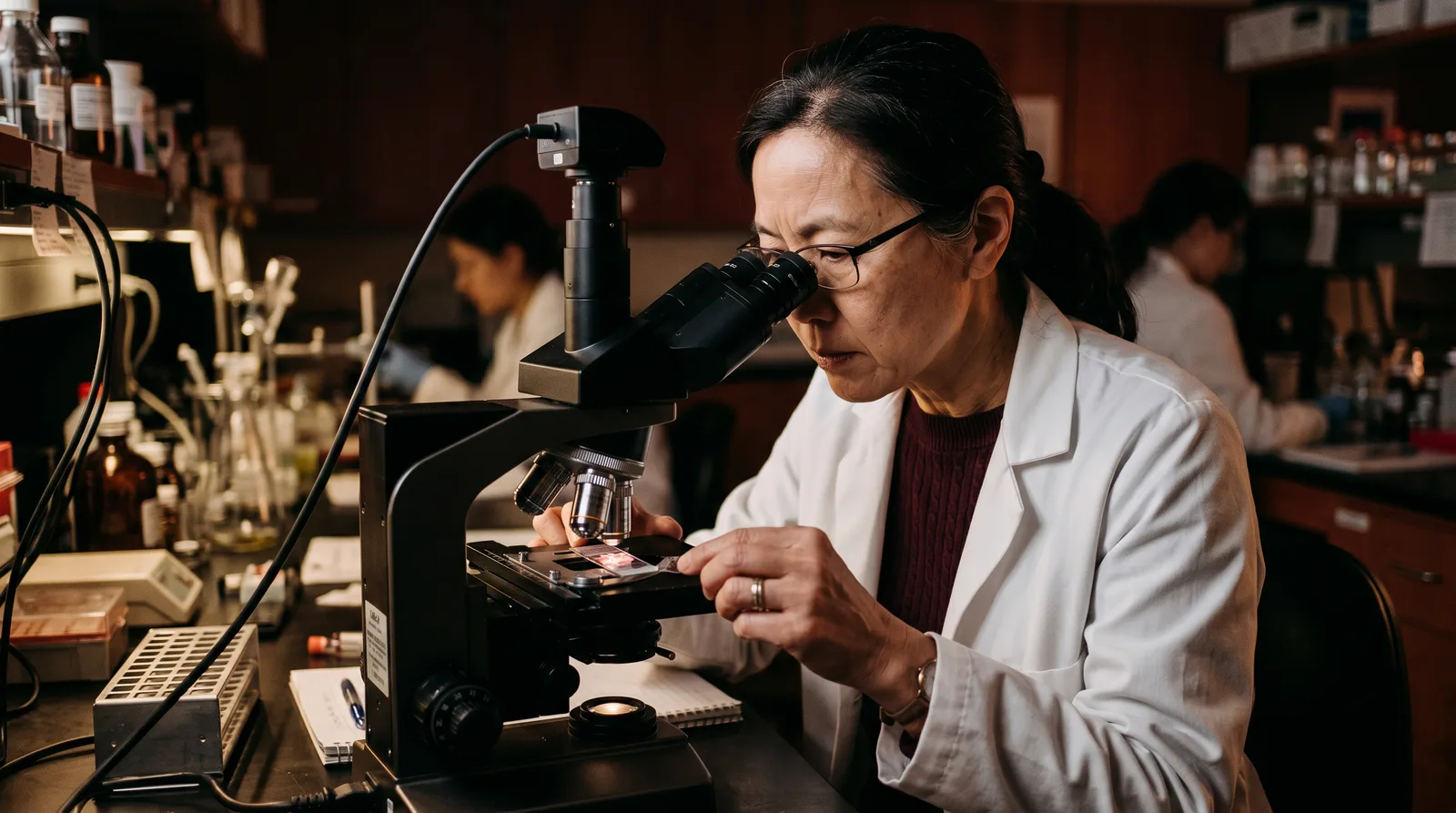
Hematology Mastery trains medical students, residents, and lab scientists to reason from first principles — from reading a peripheral smear with diagnostic precision to managing TTP at 2 a.m. — using the same evidence-based logic a seasoned hematologist uses on rounds.
Hematology taught from first principles doesn't just prepare you for the exam — it prepares you for the patient you haven't seen yet.— Dr. J Raymond ABK
What you'll learn
What you'll be able to do
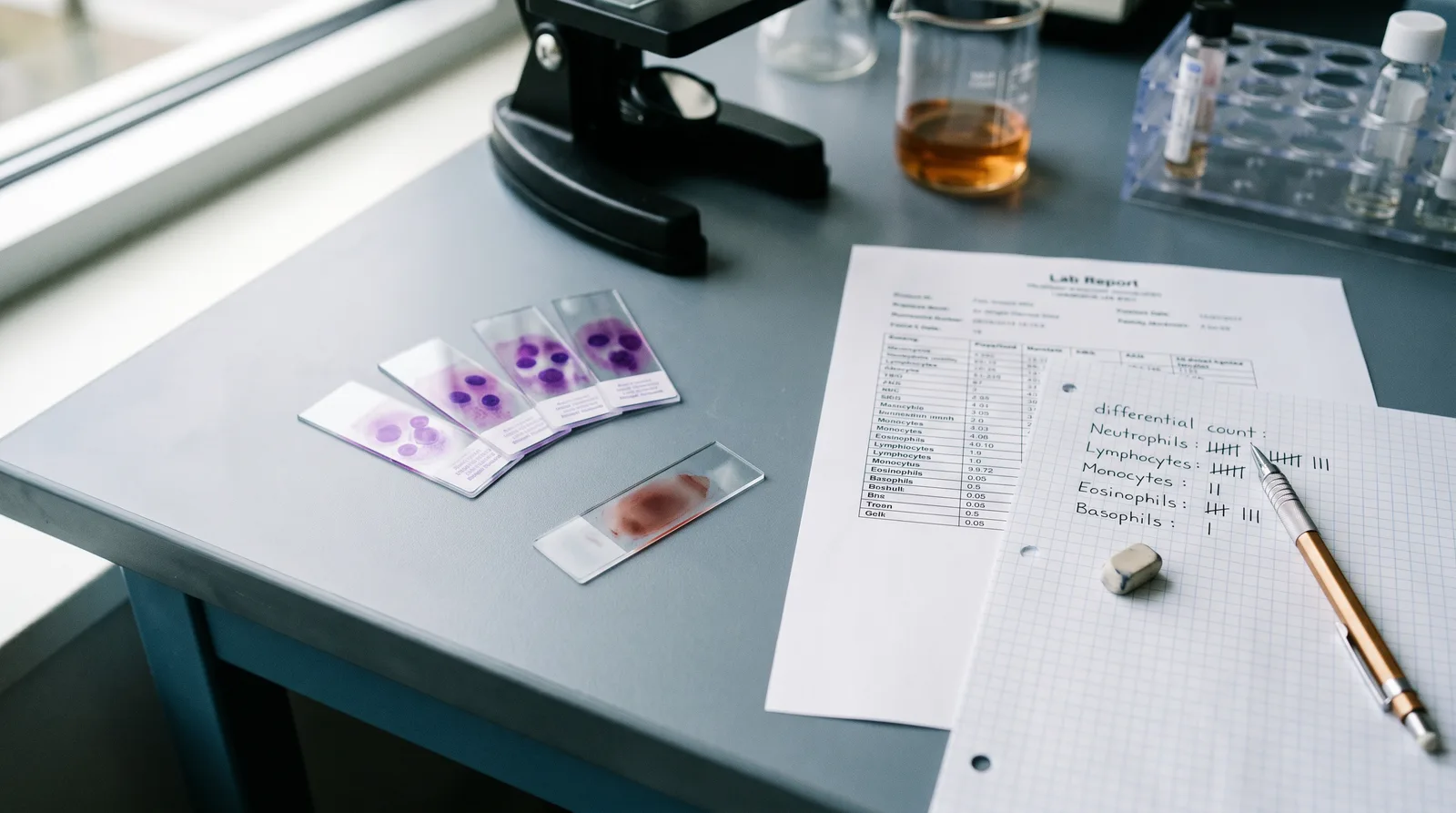
- Interpret a complete blood count and peripheral blood smear with diagnostic-level accuracy, identifying key morphologic abnormalities
- Construct a systematic differential diagnosis for anemias, cytopenias, and polycythemias using a pathophysiology-first framework
- Apply diagnostic criteria and classification systems (WHO, ICC) to leukemias, lymphomas, and myeloproliferative neoplasms
- Decode coagulation cascade disorders and translate abnormal PT/aPTT/mixing study results into a targeted workup
- Recognize and urgently manage hematologic emergencies including TTP, DIC, hyperleukocytosis, and tumor lysis syndrome
- Critically read landmark hematology trials and translate current evidence into rational transfusion and treatment decisions
How it works
A school that adapts to you
This isn't a set of static videos. Every lesson is generated live and tuned to where you actually are.
We learn your level
A quick placement check tailors your starting point so you're never bored or lost.
Lessons adapt as you go
Each lesson is written for your pace and your goal, adjusting as your skills grow.
Your AI coach keeps you moving
Checkpoints, feedback, and gentle nudges turn progress into a real result.
The curriculum
What's inside your school
6 modules · 29 lessons

Foundations of Blood: Cells, Counts, and Smears
Build the interpretive bedrock by mastering normal hematopoiesis, CBC parameters, and peripheral smear morphology before any pathology is introduced.
- 1.1Hematopoiesis and Cell Lineage EssentialsIncluded
- 1.2Mastering the Complete Blood CountIncluded
- 1.3The Peripheral Blood Smear: A Systematic ApproachIncluded
- 1.4Red Cell Morphology: From Poikilocytes to InclusionsIncluded
- 1.5White Cell and Platelet Morphology on the SmearIncluded
Anemia: Pathophysiology-First Diagnosis
Build a rigorous, mechanism-driven framework for classifying and diagnosing the full spectrum of anemias.
- 2.1A Pathophysiology-First Framework for AnemiaIncluded
- 2.2Microcytic Anemias: Iron Deficiency, Thalassemia, and BeyondIncluded
- 2.3Macrocytic and Megaloblastic AnemiasIncluded
- 2.4Normocytic Anemias and Anemia of Chronic DiseaseIncluded
- 2.5Hemolytic Anemias: Intrinsic vs. Extrinsic DestructionIncluded
Cytopenias, Bone Marrow Failure, and Polycythemia
Extend the CBC framework beyond anemia to diagnose thrombocytopenia, neutropenia, pancytopenia, and erythrocytosis.
- 3.1Thrombocytopenia: Building the Differential SystematicallyIncluded
- 3.2Immune Thrombocytopenia and Drug-Induced CausesIncluded
- 3.3Neutropenia and Aplastic AnemiaIncluded
- 3.4Polycythemia Vera and Secondary ErythrocytosisIncluded
Leukemias, Lymphomas, and Myeloid Neoplasms
Apply WHO and ICC classification systems to diagnose and risk-stratify the full spectrum of hematologic malignancies.
- 4.1Approach to the Hematologic Malignancy: Classification LogicIncluded
- 4.2Acute Leukemias: AML and ALLIncluded
- 4.3Chronic Leukemias: CML, CLL, and Their MimicsIncluded
- 4.4Lymphomas: Hodgkin, Diffuse Large B-Cell, and FollicularIncluded
- 4.5Myeloproliferative Neoplasms and Myelodysplastic SyndromesIncluded
Coagulation, Bleeding Disorders, and Thrombosis
Decode the coagulation cascade, translate PT/aPTT/mixing study patterns into targeted diagnoses, and manage thrombotic disease.
- 5.1The Coagulation Cascade Revisited: A Clinical MapIncluded
- 5.2Interpreting PT, aPTT, and Mixing StudiesIncluded
- 5.3Hemophilias, von Willebrand Disease, and Platelet Function DisordersIncluded
- 5.4Thrombophilia and Venous ThromboembolismIncluded
- 5.5Antiphospholipid Syndrome and Lupus AnticoagulantIncluded
Hematologic Emergencies, Transfusion Medicine, and Evidence-Based Practice
Recognize life-threatening hematologic crises, apply rational transfusion thresholds, and critically appraise the landmark trials that shape modern practice.
- 6.1TTP, HUS, and the Thrombotic MicroangiopathiesIncluded
- 6.2Disseminated Intravascular CoagulationIncluded
- 6.3Hyperleukocytosis, Tumor Lysis Syndrome, and Febrile NeutropeniaIncluded
- 6.4Transfusion Medicine: Thresholds, Products, and ReactionsIncluded
- 6.5Reading Landmark Hematology Trials CriticallyIncluded
Who it's for
Is this you?

Medical students
Building a rigorous hematology foundation before clerkships and Step exams — one that goes beyond mnemonics to real diagnostic reasoning.

Internal medicine residents
Bridging the gap between ward encounters and systematic mastery — from anemia differentials to managing DIC and TTP with confidence.

Pathology residents
Deepening morphology and classification expertise across hematologic malignancies, smear interpretation, and coagulation studies.

Hematology fellows
Sharpening subspecialty-level reasoning on coagulopathies, MPN/MDS classification, landmark trials, and hematologic emergencies.

Clinical laboratory scientists
Translating bench findings into clinical context — from peripheral smear morphology to coagulation assay interpretation and transfusion medicine.

Board exam candidates
Preparing for USMLE, ABIM, or hematology board exams with the kind of conceptual depth that turns difficult vignettes into solvable problems.
Questions
Frequently asked
Your teacher
A note from your teacher
Dr. J Raymond ABK
If you are reading this, you have probably already experienced the particular frustration of hematology: the feeling that no matter how many times you review the coagulation cascade or re-read the anemia algorithm, it does not quite stick the way you need it to when a real patient is in front of you.
I understand that frustration precisely because it is a signal — not that you are a poor learner, but that you have been learning hematology the wrong way. Hematology taught as a collection of facts to memorize is genuinely difficult to retain and nearly impossible to apply under pressure. Hematology taught as a system of interconnected mechanisms, diagnostic logic, and evidence-based reasoning is something entirely different. It becomes durable. It becomes clinical.
That is the premise of everything built in this school. We do not start with a disease list. We start with the blood itself — with hematopoiesis, with what a well-read CBC actually tells you, with the discipline of working through a peripheral smear systematically before jumping to a conclusion. From that foundation, every subsequent topic — the anemias, the cytopenias, the malignancies, the coagulopathies, the emergencies — is approached the same way: mechanism first, then differential, then diagnostic interpretation, then evidence-based management. The vocabulary throughout is clinical and precise because imprecise language produces imprecise thinking, and imprecise thinking costs patients.
I want to be direct with you about what this school is and is not. It is intellectually demanding. It will ask you to reason through mixing study patterns rather than look them up, to apply WHO classification logic rather than memorize a list, to evaluate a landmark trial rather than defer to a summary. That rigor is intentional — not because the material needs to be hard, but because the reasoning habits built through that rigor are exactly what you need in the clinic, the laboratory, and the exam room.
If you are ready to stop memorizing hematology and start commanding it, this is where that happens. I am glad you are here — now let's get to work.
— Dr. J Raymond ABK
Start your journey today
Join get instant access — learn at your own pace with an AI coach in your corner.
$9.99/mo
Recurring billing · cancel anytime
Secure checkout · Instant access
- 6 modules, 29 lessons
- AI-adaptive lessons tuned to your level
- Quizzes & checkpoints to lock in progress
- Your own AI learning coach
- Learn on any device, at your pace
- Full access for as long as you're subscribed