
Master the behavioural science that makes you a better clinician — and aces your boards
From biopsychosocial formulation to diagnostic debiasing, this school turns dense theory into bedside-ready clinical thinking — built around the exact concepts tested on USMLE, PLAB, AMC, and MCC.

"The goal isn't to help you memorise behavioural science — it's to help you think with it, at the bedside and under exam pressure."— Dr. J Raymond ABK

What you'll learn
What you'll be able to do
- Apply core psychological theories — classical conditioning, operant learning, and cognitive models — directly to patient behaviour change and adherence counselling.
- Analyse the biopsychosocial model to construct holistic formulations for complex patients across acute, chronic, and mental health settings.
- Recognise and counteract unconscious cognitive biases (anchoring, availability, framing) that lead to diagnostic error in clinical practice.
- Communicate effectively across health literacy levels, cultural backgrounds, and emotional states using motivational interviewing and shared decision-making frameworks.
- Interpret epidemiological and statistical concepts — incidence, prevalence, NNT, sensitivity/specificity — to critically evaluate clinical evidence.
- Perform confidently on behavioural science questions in major licensing exams (USMLE Step 1/2, PLAB, AMC) by mastering high-yield concepts and applying them to exam-style vignettes.
How it works
A school that adapts to you
This isn't a set of static videos. Every lesson is generated live and tuned to where you actually are.
We learn your level
A quick placement check tailors your starting point so you're never bored or lost.
Lessons adapt as you go
Each lesson is written for your pace and your goal, adjusting as your skills grow.
Your AI coach keeps you moving
Checkpoints, feedback, and gentle nudges turn progress into a real result.
The curriculum
What's inside your school
6 modules · 29 lessons

Psychological Foundations of Human Behaviour
Covers core learning theories, cognitive models, and developmental psychology as directly applied to patient behaviour and clinical contexts.
- 1.1Classical and Operant Conditioning in Clinical PracticeIncluded
- 1.2Cognitive Models and Health BeliefsIncluded
- 1.3Developmental Psychology Across the LifespanIncluded
- 1.4Stress, Coping, and Defence MechanismsIncluded
- 1.5Personality, Temperament, and Illness BehaviourIncluded
The Biopsychosocial Model in Clinical Formulation
Trains students to move beyond biomedical thinking and build holistic patient formulations across acute, chronic, and mental health settings.
- 2.1From Biomedical to Biopsychosocial ThinkingIncluded
- 2.2Constructing a Biopsychosocial FormulationIncluded
- 2.3Social Determinants of Health and InequityIncluded
- 2.4Applying the Model to Chronic and Complex PatientsIncluded
- 2.5Mental Health Formulations in Clinical SettingsIncluded
Clinical Communication and Patient-Centred Care
Builds practical skills in motivational interviewing, shared decision-making, and adapting communication to diverse patient needs.
- 3.1Foundations of Effective Clinical CommunicationIncluded
- 3.2Health Literacy and Plain-Language ConsultationIncluded
- 3.3Motivational Interviewing for Behaviour ChangeIncluded
- 3.4Shared Decision-Making and Informed ConsentIncluded
- 3.5Cross-Cultural Communication and HumilityIncluded
Cognitive Bias and Diagnostic Reasoning
Exposes the psychological mechanisms behind diagnostic error and equips clinicians with strategies to mitigate cognitive bias.
- 4.1How Clinicians Think: System 1 vs. System 2 ReasoningIncluded
- 4.2High-Yield Cognitive Biases in Clinical MedicineIncluded
- 4.3Diagnostic Error: Causes, Consequences, and CasesIncluded
- 4.4Debiasing Strategies and MetacognitionIncluded
Epidemiology, Biostatistics, and Evidence-Based Medicine
Builds competency in interpreting key epidemiological and statistical concepts needed to critically evaluate clinical research.
- 5.1Incidence, Prevalence, and Disease BurdenIncluded
- 5.2Screening Tests: Sensitivity, Specificity, and Predictive ValuesIncluded
- 5.3Risk, Odds, and Measures of AssociationIncluded
- 5.4Study Designs and Levels of EvidenceIncluded
- 5.5Bias, Confounding, and Critical AppraisalIncluded
Licensing Exam Mastery: High-Yield Behavioural Science
Consolidates all prior learning into targeted exam preparation through high-yield summaries and timed vignette practice for USMLE, PLAB, AMC, and MCC.
- 6.1Exam Blueprint: What Boards Actually TestIncluded
- 6.2High-Yield Ethics, Law, and ProfessionalismIncluded
- 6.3Psychiatry and Behavioural Science Rapid ReviewIncluded
- 6.4Vignette Workshop: Applying Concepts Under Exam ConditionsIncluded
- 6.5Test-Taking Strategy and Exam-Day ConfidenceIncluded
Who it's for
Is this you?

Pre-clinical medical students
Years 1–2 students who want to build genuine conceptual fluency in behavioural science before their first licensing exams — not just surface recall.
USMLE Step 1 & 2 candidates
Students targeting high-yield behavioural science, ethics, and biostatistics on Step 1 or Step 2 CK who want exam-ready understanding, not just flashcards.
PLAB & AMC candidates
International medical graduates preparing for UK or Australian licensing who need rigorous, exam-mapped coverage of behavioural and social science content.
Junior doctors & residents
Postgraduate clinicians who want to sharpen their diagnostic reasoning, reduce cognitive bias, and communicate more effectively with complex patients.

Allied health professionals
Nurses, physiotherapists, pharmacists, and OTs who want to deepen their patient-centred care skills and critically appraise clinical evidence.

Clinical educators & tutors
Healthcare educators who want a rigorous, vignette-grounded resource to supplement their teaching of behavioural and social science across health programs.
Questions
Frequently asked
Your teacher
A note from your teacher
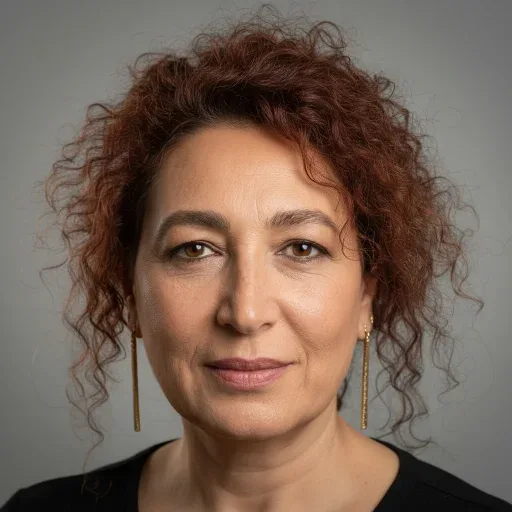
Dr. J Raymond ABK
If you've ever sat with a patient who intellectually understands their diagnosis but still won't take their medication — or stood in a ward round wondering how a senior clinician missed something that now seems obvious in hindsight — you already know that medicine is not purely a biological science. You've felt the gap between what you learned in the textbook and what actually happens in the consultation room. That gap is what this school is designed to close.
Behavioural science sits at the intersection of every clinical encounter. It explains why a well-constructed formulation changes your management plan, why a brief motivational interview can achieve what a prescription cannot, and why even the most experienced clinicians make predictable, systematic errors in reasoning. These are not peripheral concerns. They are the difference between a clinician who gets by and one who is genuinely excellent.
I built this curriculum because I was frustrated with how these topics are usually taught — as a list of definitions to memorise before exams, stripped of any clinical meaning. The biopsychosocial model reduced to a diagram. Cognitive bias presented as a curiosity rather than a daily clinical hazard. Statistical concepts taught in isolation from the clinical decisions they inform. The approach here is different: every concept is introduced in the context of a real clinical problem, explained with precision, and then applied. Not because I want to make it feel relevant — but because it is.
What you'll find in this school is the kind of teaching that used to only happen in good tutorials with a good supervisor. The psychological foundations that explain patient behaviour. The formulation skills that let you see a complex patient whole. The communication frameworks — motivational interviewing, shared decision-making, cross-cultural humility — that actually change outcomes. The debiasing strategies that make your diagnostic reasoning more reliable. And the epidemiological literacy to evaluate evidence rather than just consume it.
Whether you're preparing for USMLE, PLAB, AMC, or MCC — or simply want to develop the clinical thinking that licensing exams are trying to measure in the first place — you are in the right place. Bring your curiosity and your rigour. Let's get to work.
— Dr. J Raymond ABK
Start your journey today
Join get instant access — learn at your own pace with an AI coach in your corner.
$9.99/mo
Recurring billing · cancel anytime
Secure checkout · Instant access
- 6 modules, 29 lessons
- AI-adaptive lessons tuned to your level
- Quizzes & checkpoints to lock in progress
- Your own AI learning coach
- Learn on any device, at your pace
- Full access for as long as you're subscribed