
Master the nervous system — and command it at the bedside
A rigorous, case-driven curriculum that takes you from shaky neuroanatomy to confident lesion localization, emergency triage, and evidence-based management — built for clinicians who refuse to guess.
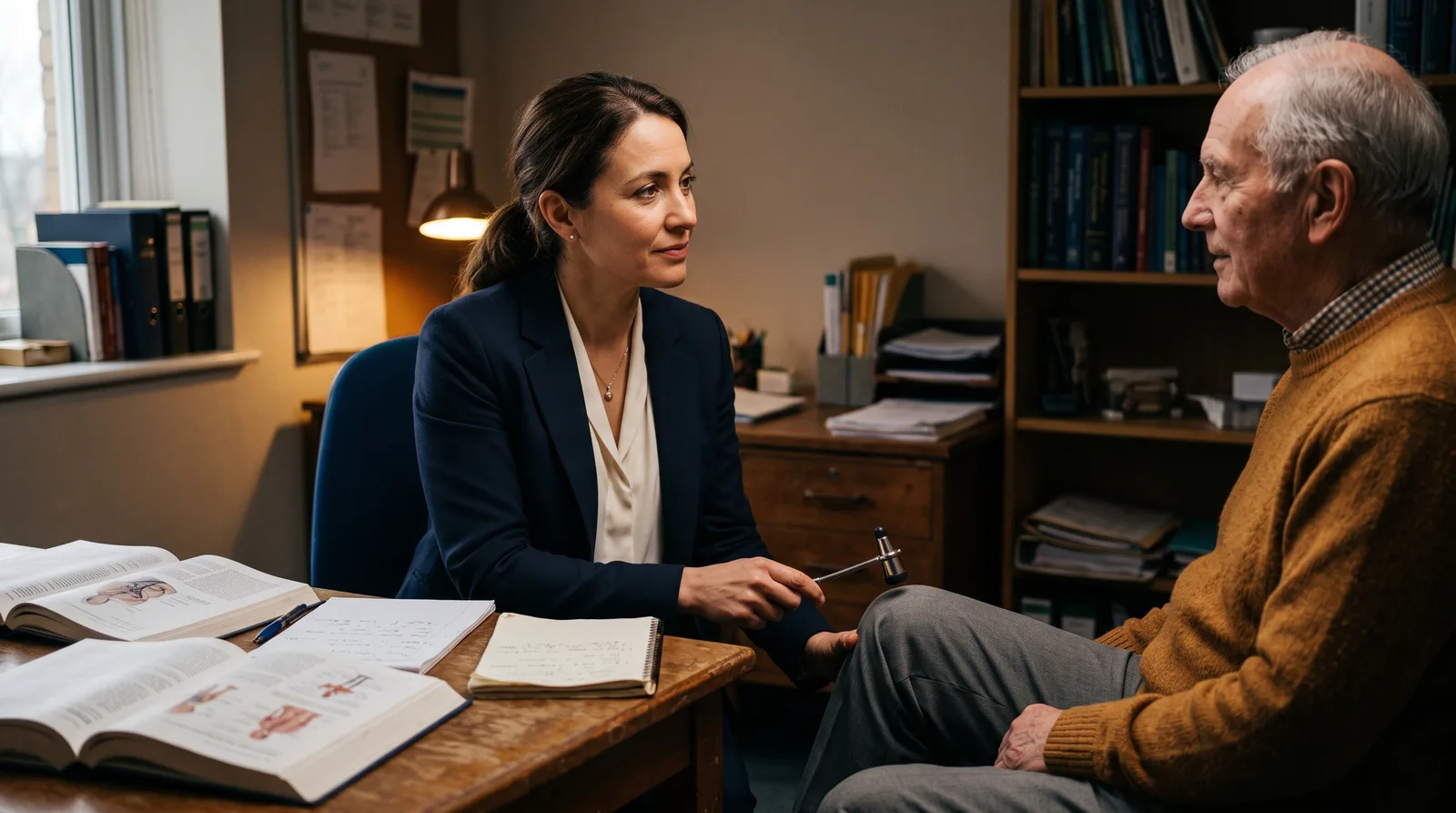
Neurology isn't harder than other specialties — it's just rarely taught in a way that makes the logic visible, and that's exactly what I'm here to change.— Dr. J Raymond ABK
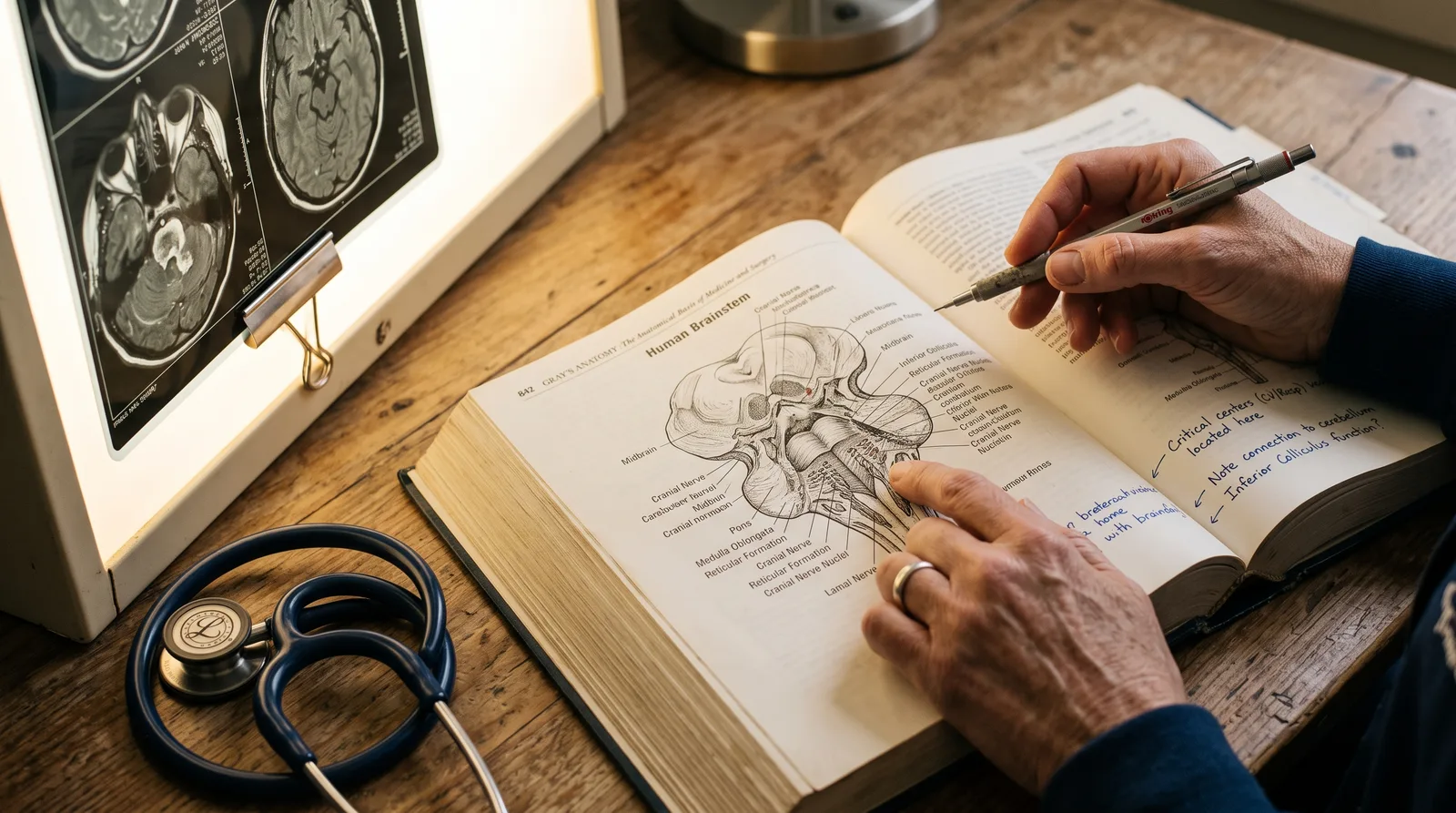
What you'll learn
What you'll be able to do
- Perform a systematic, thorough neurological examination and accurately localize lesions to the correct anatomical level
- Interpret CT, MRI, and EEG findings for common neurological emergencies including stroke, seizure, and CNS infection
- Build confident differential diagnoses for headache, weakness, numbness, altered consciousness, and movement disorders
- Apply evidence-based treatment protocols for stroke, epilepsy, multiple sclerosis, Parkinson's disease, and peripheral neuropathies
- Recognize and triage neurological emergencies—status epilepticus, herniation syndromes, Guillain-Barré—with decisive clinical reasoning
- Communicate complex neurological findings clearly to patients, families, and multidisciplinary teams using precise, empathetic language
How it works
A school that adapts to you
This isn't a set of static videos. Every lesson is generated live and tuned to where you actually are.
We learn your level
A quick placement check tailors your starting point so you're never bored or lost.
Lessons adapt as you go
Each lesson is written for your pace and your goal, adjusting as your skills grow.
Your AI coach keeps you moving
Checkpoints, feedback, and gentle nudges turn progress into a real result.
The curriculum
What's inside your school
6 modules · 30 lessons

Foundations of Neuroanatomy & Localization
Builds the anatomical mental map and lesion-localization logic that underpins every clinical decision in neurology.
- 1.1The Neurological Levels: Brain to Peripheral NerveIncluded
- 1.2Cortical & Subcortical LocalizationIncluded
- 1.3Brainstem & Cranial Nerve Anatomy in PracticeIncluded
- 1.4Spinal Cord Syndromes & Peripheral LocalizationIncluded
- 1.5The Art of Lesion Localization: Putting It All TogetherIncluded
Mastering the Neurological Examination
Develops a thorough, reproducible bedside examination technique with emphasis on clinical accuracy and efficiency.
- 2.1The Mental Status & Higher Cortical Function ExamIncluded
- 2.2Cranial Nerve Examination: Technique & PitfallsIncluded
- 2.3Motor System Examination: Tone, Power & ReflexesIncluded
- 2.4Sensory & Cerebellar ExaminationIncluded
- 2.5Gait Analysis & the Integrated Neurological ExamIncluded
Neurological Imaging & Investigations
Equips learners to select, interpret, and act on neuroimaging, EEG, EMG, and CSF results in clinical context.
- 3.1CT Brain: Reading for EmergenciesIncluded
- 3.2MRI Brain & Spine: Sequences, Patterns & PearlsIncluded
- 3.3EEG Interpretation for CliniciansIncluded
- 3.4Lumbar Puncture & CSF AnalysisIncluded
- 3.5EMG, Nerve Conduction Studies & Neurodiagnostic SynthesisIncluded
Neurological Emergencies & Critical Care
Trains rapid recognition, triage, and decisive management of the highest-stakes neurological presentations.
- 4.1Acute Ischemic Stroke: Recognition to ReperfusionIncluded
- 4.2Hemorrhagic Stroke & Subarachnoid HemorrhageIncluded
- 4.3Status Epilepticus: Escalating Treatment ProtocolsIncluded
- 4.4Herniation Syndromes & Raised Intracranial PressureIncluded
- 4.5Guillain-Barré, Myasthenic Crisis & Neuromuscular EmergenciesIncluded
Differential Diagnosis by Symptom Presentation
Builds confident, structured differential diagnoses for the most common and challenging neurological chief complaints.
- 5.1Headache: Primary Disorders & Red-Flag Secondary CausesIncluded
- 5.2Weakness: UMN vs. LMN vs. Neuromuscular JunctionIncluded
- 5.3Numbness & Sensory DisturbanceIncluded
- 5.4Altered Consciousness & EncephalopathyIncluded
- 5.5Movement Disorders: Tremor, Rigidity & Involuntary MovementsIncluded
Evidence-Based Management of Chronic Neurological Conditions
Applies current treatment guidelines and shared decision-making to the long-term management of major neurological diseases.
- 6.1Epilepsy: Anti-Seizure Medication Selection & MonitoringIncluded
- 6.2Multiple Sclerosis: Disease-Modifying Therapy & Relapse ManagementIncluded
- 6.3Parkinson's Disease: Dopaminergic Therapy & Non-Motor ManagementIncluded
- 6.4Peripheral Neuropathies: Diagnosis-Driven TreatmentIncluded
- 6.5Communicating Neurology: Patients, Families & the MDTIncluded
Who it's for
Is this you?

Clinical-Year Medical Students
Building a solid foundation in lesion localization and the neurological exam before — or during — their neurology rotation.

Neurology Residents
Sharpening their differential diagnosis and emergency triage skills to perform with authority on consults and night calls.

Internal Medicine Residents
Strengthening their ability to recognize, triage, and initiate management for the neurological emergencies they encounter on general wards.

Advanced Practice Providers
Nurse practitioners and physician assistants in neurology or acute care who need rigorous clinical knowledge to practice at the top of their scope.

USMLE / Licensing Exam Candidates
Using a clinically organized, case-informed curriculum to turn neurology from a weak subject into a reliable source of exam points.
Allied Health Professionals
Physiotherapists, clinical nurses, and paramedics who encounter neurological patients and want a systematic, evidence-based clinical framework.
Questions
Frequently asked
Your teacher
A note from your teacher

Dr. J Raymond ABK
If you have ever stood at a patient's bedside, watched them extend a trembling hand, and felt that familiar wave of uncertainty — where is the lesion? what do I do first? — I want you to know that feeling is not a sign you chose the wrong specialty. It is a sign you haven't yet been taught neurology in a way that makes the logic visible. That is exactly what this school is designed to fix.
Neurology is widely regarded as the most intimidating rotation in medical training. I understand why. The examination has dozens of components that seem disconnected. Imaging is interpreted with what looks like dark art. The differentials are long, the emergencies are time-critical, and the chronic disease management requires a precision that feels overwhelming without the right framework. Most curricula add to that overwhelm by teaching anatomy separately from examination, examination separately from imaging, and management separately from everything else. The result is knowledge that doesn't connect — and doesn't hold up under real clinical pressure.
This school is built differently. Every section is designed so that what you learn in one part reinforces and sharpens what comes next. Neuroanatomy is taught not as a memorization exercise but as the logical engine behind every clinical localization decision you will ever make. The examination is taught with technique, rationale, and the specific pitfalls that trip up even senior clinicians. Investigations are interpreted in the clinical context that gives them meaning. Emergencies are approached with the structured decisiveness they demand. And chronic management is grounded in the evidence so you can defend every prescription and explain every prognosis.
I also believe that clinical communication belongs at the center of neurology training, not at the margins. The final section of this curriculum is dedicated to translating complex neurological findings into language that serves your patients, their families, and your colleagues — because confident, precise communication is itself a form of clinical excellence.
Whether you are a medical student about to step onto the neurology ward for the first time, a resident preparing to take consult calls independently, or a healthcare professional who wants to stop deferring every neuro question and start answering it — this is the curriculum that will get you there. Not by making neurology simpler than it is, but by making its complexity conquerable. Welcome to Neurology Mastery. Let's get to work.
— Dr. J Raymond ABK
Start your journey today
Join get instant access — learn at your own pace with an AI coach in your corner.
$9.99/mo
Recurring billing · cancel anytime
Secure checkout · Instant access
- 6 modules, 30 lessons
- AI-adaptive lessons tuned to your level
- Quizzes & checkpoints to lock in progress
- Your own AI learning coach
- Learn on any device, at your pace
- Full access for as long as you're subscribed