Walk into custody court ready to fight for your child
This plain-English, step-by-step program walks you through every stage of family court — from filing your first pleading to presenting evidence on hearing day — so you show up prepared, composed, and advocating like you mean it.
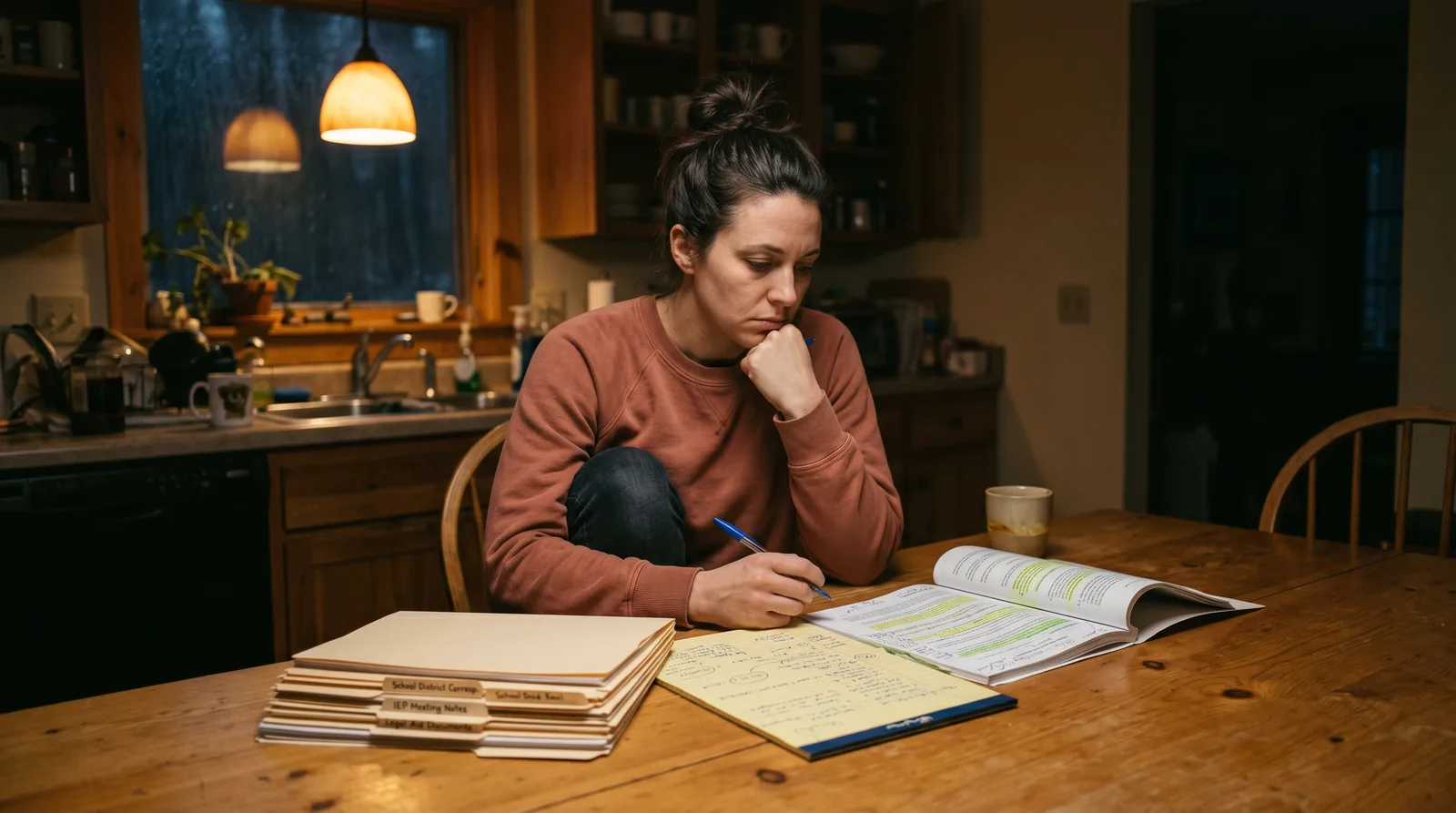
You already have the most important qualification for this course — you're a parent who refuses to walk in unprepared.— Tiyesha DeCosta
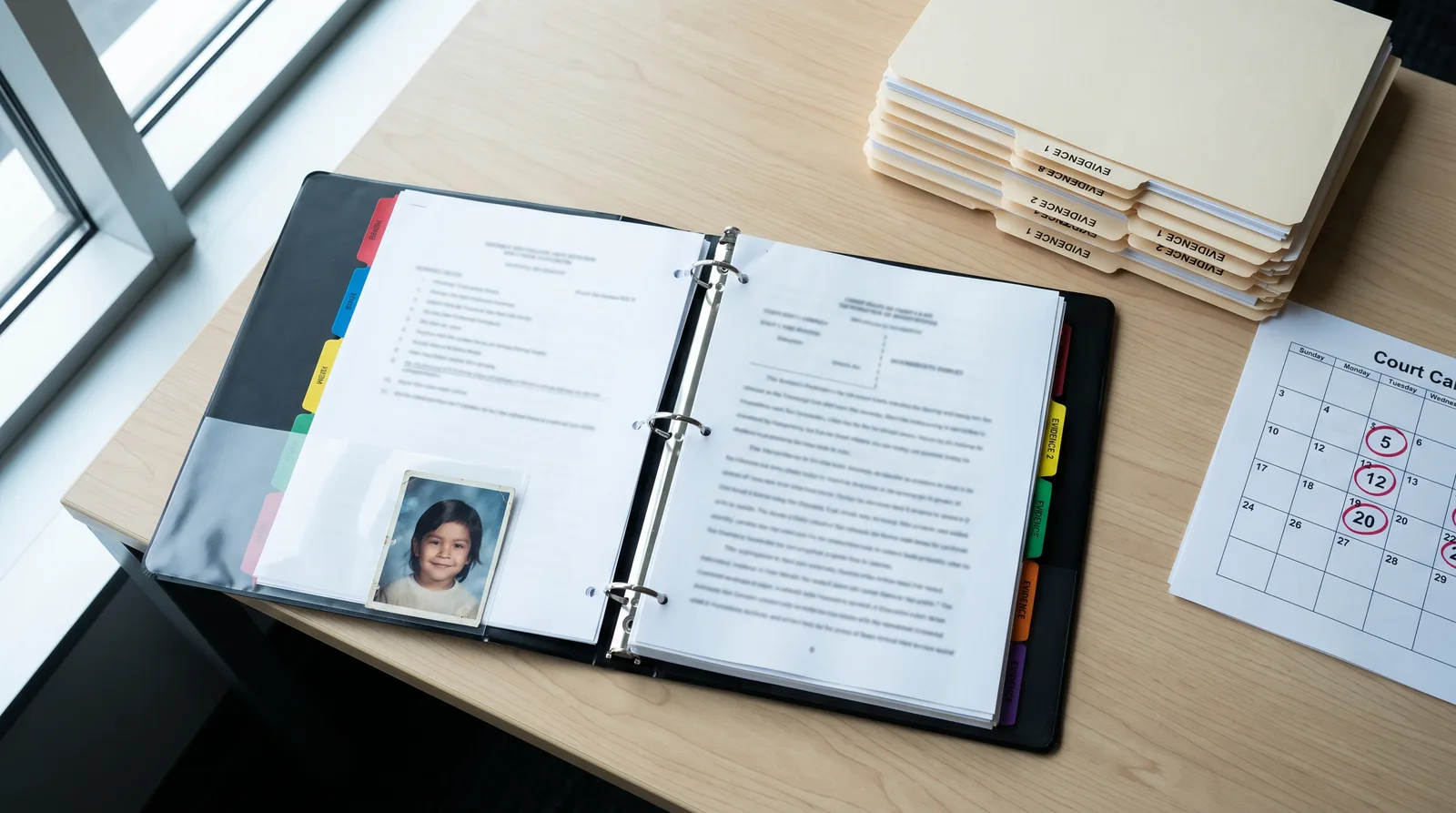
What you'll learn
What you'll be able to do
- Identify whether your state uses notice or fact pleading and draft a custody complaint or response that meets its specific legal standard.
- Gather, preserve, and organize admissible evidence — including texts, emails, photos, school records, and witness statements — before your first hearing.
- Understand courtroom procedure: how to make and respond to objections, present exhibits, and examine witnesses without a law degree.
- Build a parenting-plan proposal grounded in the 'best interest of the child' factors judges actually weigh in your jurisdiction.
- Recognize and appropriately respond to opposing tactics such as emergency motions, continuance requests, and discovery demands.
- Arrive at every hearing with a organized case binder, a clear narrative strategy, and the composure to advocate effectively for your child.
How it works
A school that adapts to you
This isn't a set of static videos. Every lesson is generated live and tuned to where you actually are.
We learn your level
A quick placement check tailors your starting point so you're never bored or lost.
Lessons adapt as you go
Each lesson is written for your pace and your goal, adjusting as your skills grow.
Your AI coach keeps you moving
Checkpoints, feedback, and gentle nudges turn progress into a real result.
The curriculum
What's inside your school
6 modules · 20 lessons

How Family Court Actually Works
Lays the essential foundation before any paperwork is filed. Parents learn how custody cases move through the court system, what standard judges apply when deciding outcomes, and how to navigate the process whether or not they can afford an attorney. Without this module, every downstream skill lacks context.
- 1.1The Anatomy of a Custody CaseIncluded
- 1.2The 'Best Interest of the Child' StandardIncluded
- 1.3Working With — and Without — an AttorneyIncluded
Notice Pleading vs. Fact Pleading — Filing Documents That Hold Up
Teaches parents the single most consequential filing skill: understanding which pleading standard their state uses and drafting documents that satisfy it. A complaint or response that fails the applicable standard can be dismissed before the case even begins. This module covers both standards, all core initial pleadings, and the emergency motions that arise early in nearly every contested custody case.
- 2.1Two Standards, One Critical DifferenceIncluded
- 2.2Drafting Your Custody Complaint or PetitionIncluded
- 2.3Drafting a Response and Raising Affirmative DefensesIncluded
- 2.4Motions That Move Your Case — Temporary Orders and Emergency ReliefIncluded
Evidence — What Counts, What Doesn't, and How to Use It
Builds parents' evidence literacy from the ground up. Covers foundational rules of admissibility, practical techniques for gathering and preserving every category of custody-relevant evidence, and the strategic decisions around witnesses — all before the courtroom procedure module so parents know what they are bringing into the room before they learn how to present it.
- 3.1The Rules of Evidence Without the Law School DegreeIncluded
- 3.2Gathering and Preserving Digital and Documentary EvidenceIncluded
- 3.3Witnesses — Choosing, Preparing, and Protecting ThemIncluded
- 3.4Building and Organizing Your Evidence BinderIncluded
Courtroom Procedure — How to Actually Try Your Case
Translates the prior modules' preparation into live courtroom performance. Parents learn the formal rules and informal norms of family court hearings, master the mechanics of examination and objection, and practice presenting their parenting plan — their affirmative case — directly to the judge. Comes after Evidence so parents know what they are presenting before they learn how to present it.
- 4.1Courtroom Protocol and How Hearings Are StructuredIncluded
- 4.2Direct Examination, Cross-Examination, and ObjectionsIncluded
- 4.3Presenting Your Parenting Plan to the JudgeIncluded
Opposing Tactics — Recognizing and Responding to What the Other Side Does
Shifts parents from offense to defense. After mastering their own case strategy, they must recognize and neutralize the procedural weapons the other side is likely to use. Covers the full discovery process, abusive motion practice, delay tactics, and the significant power imbalance when opposing counsel is involved. Placed after Courtroom Procedure so parents have the procedural vocabulary to understand what they are defending against.
- 5.1Discovery — Requests, Responses, and What to DemandIncluded
- 5.2Emergency Motions, Continuances, and Delay TacticsIncluded
- 5.3When the Other Parent Has an Attorney and You Don'tIncluded
Hearing Day and Beyond — Walking In Prepared, Walking Out with Your Best Result
The course capstone. Synthesizes every prior module into a complete, hearing-ready parent. Covers narrative strategy, the fully assembled case binder, a realistic full mock hearing, and — critically — what comes after the hearing: reviewing orders, appealing errors, modifying custody when circumstances change, and enforcing an order the other parent is violating. Ensures parents are not left stranded after their first court date.
- 6.1Building Your Case NarrativeIncluded
- 6.2Full Mock Hearing and Final Case BinderIncluded
- 6.3After the Order — Enforcement, Modification, and AppealsIncluded
Who it's for
Is this you?

The self-represented parent
Going it alone in court and needs a clear roadmap from filing through hearing day without a law degree to lean on.

The parent with an attorney
Has legal representation but wants to truly understand what's happening in their own case and show up as an informed, active participant.

The recently separated parent
Just entered the family court system and needs to understand the process from scratch before the first filing deadline hits.

The parent facing dirty tactics
Dealing with emergency motions, delay strategies, or an aggressive opposing attorney and needs to know how to respond without panicking.

The modification seeker
Returning to court to modify an existing order and needs to understand what's changed, what evidence matters, and how to present their case.

The out-of-state or relocating parent
Navigating a jurisdiction they're unfamiliar with and needs the foundational framework to adapt quickly to their specific state's rules.
Questions
Frequently asked
Your teacher
A note from your teacher
Tiyesha DeCosta
If you're reading this, there's a good chance you're in the middle of one of the hardest things you've ever had to do — fighting for time with your child in a system that feels like it wasn't built for you. You're juggling a job, your kids, your own emotions, and a stack of court documents that seem written in a completely different language. I see you, and I want you to know: what you're feeling is completely normal, and the overwhelm you're experiencing is not a sign that you can't do this.
It's a sign that nobody has explained it to you yet.
I created Custody Court Ready because I kept meeting parents — smart, devoted, deeply motivated parents — who were walking into hearings underprepared not because they didn't care, but because they simply didn't know what they didn't know. They'd filed documents that didn't meet their state's pleading standard. They'd collected evidence that couldn't be admitted. They'd shown up to courtrooms without a clear narrative, without an organized binder, and without any idea what to do when the other side made an objection. And it cost them. Not because the judge didn't care about their child — but because preparation is how the court reads credibility.
This program is everything I wish someone had handed those parents before their first hearing. We start at the very beginning — how family court is actually structured, what "best interest of the child" really means in practice — and we build from there. By the time you reach the mock hearing in the final module, you'll know how to draft a pleading that holds up, how to build an evidence binder a judge can follow, how to examine a witness and respond to an objection, and how to present a parenting plan that speaks directly to what the court is weighing. You'll also know what the other side is likely to do — the emergency motions, the continuance requests, the discovery demands — and exactly how to respond without losing your footing.
I want to be straight with you: this program does not replace an attorney, and I'll tell you throughout the course when getting legal counsel is genuinely important. What it does is make sure you are never passive in your own case. Whether you're self-represented or sitting next to a lawyer, you deserve to understand every document, every hearing, and every decision that affects your child. That's what this program gives you.
You already have the most important thing — the determination to show up for your child. Let me give you everything else. Come learn with me.
— Tiyesha DeCosta
Start your journey today
Join get instant access — learn at your own pace with an AI coach in your corner.
$79/mo
Recurring billing · cancel anytime
Secure checkout · Instant access
- 6 modules, 20 lessons
- AI-adaptive lessons tuned to your level
- Quizzes & checkpoints to lock in progress
- Your own AI learning coach
- Learn on any device, at your pace
- Full access for as long as you're subscribed