Build Smarter AI Systems and Put Them to Work.
Go beyond basic AI projects and learn to build agents, automations, apps, and connected systems that solve real problems.

"You don't learn to build AI systems by watching someone else build them."
— Cyberical Academy
You Know the Basics. Now Make Them Work Together.
Writing code is one thing.
Building an AI system that can make decisions, use tools, recover from errors, and work for real users is another.
Builders is where the pieces start working together.

What you'll learn
What you'll be able to do
- Build AI agents that can plan, use tools, remember information, and take action.
- Connect multiple AI agents so they can work together on more complex tasks.
- Automate multi-step work while keeping people in control of important decisions.
- Turn your AI logic into working apps that other people can actually use.
- Find failures, handle errors, and make your AI systems more reliable.
- Learn through Playful Logic with interactive challenges, experiments, games, and system tests that let you explore how AI behaves by actually using it.
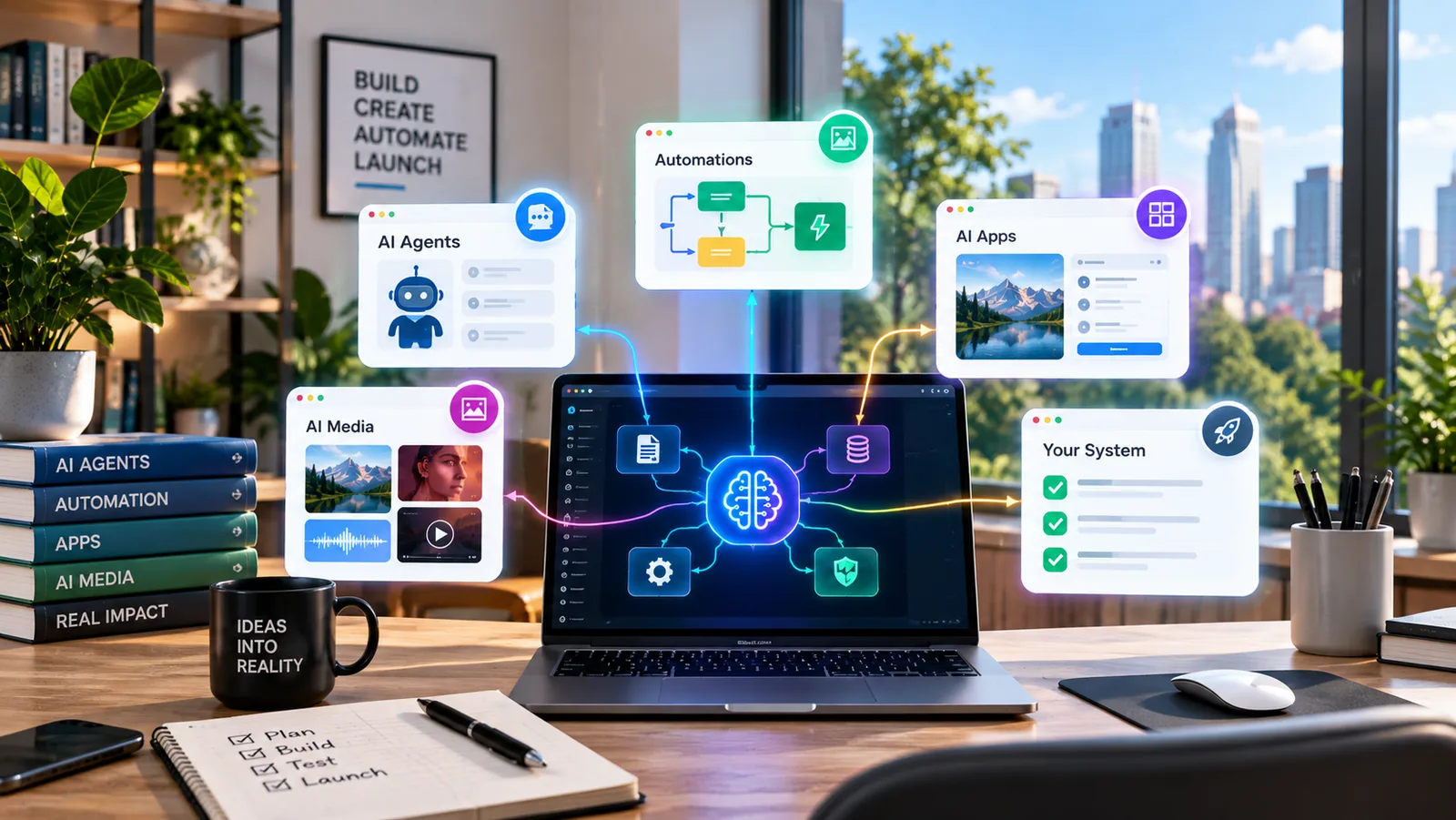
Move beyond exercises and build systems designed to actually work.
AI Agents
Build agents that can reason through tasks, use tools, and take action.
Automated Workflows
Connect multiple steps so work can move from one task to the next automatically.
AI Apps
Turn your AI systems into experiences that real people can interact with.
Generated AI System
Bring agents, automation, apps, safety, and media together into one finished system.

Build It. Break It. Make It Better.
Cyberical Academy uses the Playful Logic approach to blend education with entertainment. Instead of only reading about agents, automation, logic, and AI systems, you'll experiment with them through games, challenges, interactive tools, and problems designed to make you think.
Challenge It
Put your code and AI systems in situations they were not expecting.
Break It
Find edge cases, failed workflows, bad inputs, and unexpected agent behavior.
Experiment With It
Change rules, tools, logic, and conditions to see how the system responds.
Make It Yours
Take what works, change it, and build an original version around your own idea.
How it works
Built Around What You Already Know
Builders meets you at your current skill level, then pushes you toward more capable projects one build at a time.
Start at Your Level
A quick check identifies what you already know and where you should begin.
Build as You Learn
New concepts become part of working agents, apps, automations, and systems.
Get Help When You Need It
Your AI coach gives you feedback and helps you work through problems.
This Isn't Just More Coding.
Not isolated Python exercises. Build systems where the pieces work together.
Not AI that only chats. Build agents that can use tools and take action.
Not automation without control. Learn where people, safeguards, and approvals belong.
Not projects that end on your computer. Build for real users, test your work, and release it.
The curriculum
What's inside your school
12 modules · 97 lessons

Intermediate Python and Program Architecture
Teaches how to organize larger Python programs using classes, modules, and clean separation of logic from the user interface.
- 1.1Understand How Larger Python Programs Are OrganizedIncluded
- 1.2Use Classes and Objects to Organize Data and BehaviorIncluded
- 1.3Use Constructors to Set Up Objects With Starting InformationIncluded
- 1.4Understand How Objects Can Store and Change Their Own StateIncluded
- 1.5Organize Reusable Code Into ModulesIncluded
- 1.6Separate Program Logic From the User InterfaceIncluded
- 1.7Turn a Simple Python Project Into a Structured ProgramIncluded
Build Reliable and Resilient Programs
Equips learners to write programs that catch errors gracefully, validate inputs, log behavior, and recover from common failures.
- 2.1Understand Why Programs Need to Handle Unexpected ProblemsIncluded
- 2.2Use Try and Except to Handle Python Errors SafelyIncluded
- 2.3Validate Inputs Before Your Program Uses ThemIncluded
- 2.4Identify Edge Cases That Could Break a ProgramIncluded
- 2.5Write Simple Tests to Check That Your Code WorksIncluded
- 2.6Use Logging to Track What Happens Inside a ProgramIncluded
- 2.7Improve a Program Until It Can Recover From Common FailuresIncluded
Data, Memory, and Structure
Teaches learners to design, store, query, and structure data using nested dicts, JSON, and CSV so an AI agent can search and use it.
- 3.1Understand Why Good Data Structure Matters in AI SystemsIncluded
- 3.2Use Nested Lists and Dictionaries to Organize Complex InformationIncluded
- 3.3Use JSON to Store and Exchange Structured DataIncluded
- 3.4Use CSV Files to Work With Collections of InformationIncluded
- 3.5Search, Filter, and Sort Stored DataIncluded
- 3.6Design Data Structures Before Writing Your ProgramIncluded
- 3.7Build Structured Memory That an AI Agent Can Search and UseIncluded
Automation Basics
Covers how to design and build multi-step automation pipelines with triggers, scheduling, retries, logging, and human override checkpoints.
- 4.1Understand What Automation Is and When It Is UsefulIncluded
- 4.2Break a Repetitive Task Into Steps That Can Be AutomatedIncluded
- 4.3Build Source, Transform, and Output Stages Into an AutomationIncluded
- 4.4Use Triggers to Start an Automated WorkflowIncluded
- 4.5Schedule Automated Tasks to Run at the Right TimeIncluded
- 4.6Add Retries and Logging When an Automation FailsIncluded
- 4.7Add Human Approval and Override Points to Keep Automations SafeIncluded
- 4.8Build an Automation That Completes a Real Multi-Step TaskIncluded
Build AI Agents That Use Tools
Shows learners how to create tool-using AI agents that choose the right tool, validate results, and enforce safe usage limits.
- 5.1Understand How Tool-Using AI Agents WorkIncluded
- 5.2Create Tools That an AI Agent Can Understand and UseIncluded
- 5.3Teach an Agent to Choose the Right Tool for a TaskIncluded
- 5.4Give Tools Clear Inputs and Expected OutputsIncluded
- 5.5Validate Information Returned by an Agent's ToolsIncluded
- 5.6Handle Tool Errors and Missing InformationIncluded
- 5.7Set Limits on What an AI Agent Is Allowed to DoIncluded
- 5.8Build an AI Agent That Chooses and Uses Multiple ToolsIncluded
Agent Memory and Reasoning
Teaches learners to build agents with short- and long-term memory, efficient context use, and a full plan–act–observe–revise reasoning loop.
- 6.1Understand the Difference Between Short-Term and Long-Term Agent MemoryIncluded
- 6.2Understand Context Windows and Why AI Memory Has LimitsIncluded
- 6.3Summarize Information to Create More Efficient Agent MemoryIncluded
- 6.4Teach an AI Agent to Break a Goal Into Smaller StepsIncluded
- 6.5Use a Plan, Act, Observe, and Revise Reasoning LoopIncluded
- 6.6Teach an Agent to Change Its Plan When New Information AppearsIncluded
- 6.7Give an Agent Clear Conditions for Finishing a TaskIncluded
- 6.8Build an AI Agent That Plans, Remembers, Acts, and RevisesIncluded
Build Multi-Agent Systems
Covers how to design and deploy systems of specialized AI agents coordinated by an orchestrator, with safe handoff and communication rules.
- 7.1Understand How Multiple AI Agents Can Work TogetherIncluded
- 7.2Give Different Agents Specialized Roles and ResponsibilitiesIncluded
- 7.3Pass Information and Tasks Between AI AgentsIncluded
- 7.4Use an Orchestrator to Coordinate a Team of AgentsIncluded
- 7.5Design Clear Rules for Agent-to-Agent CommunicationIncluded
- 7.6Handle Failed Handoffs and Disagreements Between AgentsIncluded
- 7.7Understand How Hybrid Actors Combine Function With Creative IdentityIncluded
- 7.8Build a Multi-Agent Team That Completes a Task TogetherIncluded
Game Development and Logic Engines
Guides learners through building a logic-driven game engine with state tracking, procedural generation, and an embedded AI agent opponent.
- 8.1Understand How a Game Loop Keeps a Game RunningIncluded
- 8.2Track Players, Objects, and Events Using Game StateIncluded
- 8.3Create Rules That Control What Can Happen in a GameIncluded
- 8.4Design Win, Lose, and Progress ConditionsIncluded
- 8.5Use Procedural Generation to Create Changing Game ExperiencesIncluded
- 8.6Build Reusable Logic Instead of Hard-Coding Every OutcomeIncluded
- 8.7Add an AI Agent as a Character or OpponentIncluded
- 8.8Build a Game Powered by Your Own Logic EngineIncluded
AI Ethics and Responsible Building
Examines bias, consent, deepfake risks, and disclosure obligations so learners build AI systems that are fair, transparent, and accountable.
- 9.1Understand How Bias Can Enter AI Data, Prompts, and OutputsIncluded
- 9.2Identify Bias and Unfair Outcomes in AI SystemsIncluded
- 9.3Understand Consent and Ownership When Using AI-Generated MediaIncluded
- 9.4Understand the Risks of AI-Generated Voices, Likenesses, and DeepfakesIncluded
- 9.5Learn When AI-Generated Content Should Be Clearly IdentifiedIncluded
- 9.6Design AI Experiences That Are Accessible to Different UsersIncluded
- 9.7Build Safety Rules and Guardrails Into an AI SystemIncluded
- 9.8Test an AI Project for Bias, Safety, and Possible MisuseIncluded
Build AI Apps for Real Users
Covers interface design, user journeys, safe inputs, testing, and deployment so learners can turn AI logic into working apps that real people can use.
- 10.1Understand How an AI App Connects an Interface to AI LogicIncluded
- 10.2Design a Clear User Journey Through an AI AppIncluded
- 10.3Collect and Validate User Input SafelyIncluded
- 10.4Connect an AI Agent to an App InterfaceIncluded
- 10.5Design Useful Responses, Loading States, and Error MessagesIncluded
- 10.6Test an AI App With Someone Who Did Not Build ItIncluded
- 10.7Improve an App Based on Real User FeedbackIncluded
- 10.8Deploy and Update a Working AI AppIncluded
AI Media and Multimodal Storytelling
Explores images, video, voice, music, and text so learners can combine AI-generated media into consistent, original stories and creative productions.
- 11.1Understand How Images, Video, Voice, Music, and Text Can Work TogetherIncluded
- 11.2Plan a Multi-Asset AI Media Project Before Generating ContentIncluded
- 11.3Create Consistent Characters, Locations, and Visual StylesIncluded
- 11.4Plan Scenes and Shots for AI-Generated VideoIncluded
- 11.5Combine Dialogue, Music, Ambience, and Sound EffectsIncluded
- 11.6Organize Images, Video, Audio, and Other Generated AssetsIncluded
- 11.7Use Editing and Iteration to Turn AI Outputs Into an Original ProductionIncluded
- 11.8Create a Short Film, Audio Drama, or Interactive Digital BookIncluded
Build and Launch Your Generated AI System
Brings agents, automation, apps, media, safety, and user feedback together so learners can build, test, and launch a complete Generated AI system.
- 12.1Choose a Real Problem or Creative Challenge for Your Final AI SystemIncluded
- 12.2Define Who Will Use Your System and What It Needs to AccomplishIncluded
- 12.3Plan How Agents, Automation, Apps, and Media Will Work TogetherIncluded
- 12.4Build the First Working Version of Your Generated AI SystemIncluded
- 12.5Create an Automated Workflow That Connects the Parts of Your SystemIncluded
- 12.6Add Human Approval Points and Controls Where They Are NeededIncluded
- 12.7Test Your System With People Who Did Not Build ItIncluded
- 12.8Find Failures and Improve the Reliability of Your SystemIncluded
- 12.9Add Safety Rules, Error Handling, and Human OverridesIncluded
- 12.10Improve Your System Based on User FeedbackIncluded
- 12.11Document How Your System Works and How to Use ItIncluded
- 12.12Release and Present Your Finished Generated AI SystemIncluded
Who it's for
Is this you?

The Self-Taught Coder
You've been learning Python from YouTube and docs and you're ready to stop following tutorials and start building real systems from your own design.

The AI-Curious Teen
You're fascinated by AI and want to understand how agents actually work under the hood, not just prompt chat tools, but build them yourself in Python.

The CS Student
You're taking programming classes but the coursework feels disconnected from real AI development. You want project experience that actually looks like the industry.

The Game Dev Hopeful
You want to build games with real logic engines and AI-driven opponents, and you know Python well enough to make it happen with the right guidance.

The Automation Builder
You've already automated a few things with scripts and you want to level up into proper pipelines with triggers, retries, scheduling, and human checkpoints.

The Responsible Builder
You care about building AI the right way, bias, consent, deepfakes, ethical guardrails, and you want a program that treats that as engineering, not an afterthought.
Questions
Frequently asked
Your teacher
A note from your teacher

Cyberical Academy
Hey, I'm MG Montague. if you're reading this, I'm guessing you're somewhere in the middle. You're past the beginner stage. You've written real Python. But when you look at actual AI agent code, or a multi-agent pipeline, or even a cleanly architected program with proper modules and error handling, it still feels like there's a layer you haven't unlocked yet. I know that feeling. It's not a lack of ability. It's a lack of the right next step.
That's exactly why I built Cyberical AI Builders. Not as another "intro to Python" course. Not as a lecture series about how AI works in theory. But as a project-driven program that takes you from where you are right now, writing functional scripts, to building AI agents that plan, act, observe, and revise; automation pipelines with real triggers and retry logic; multi-agent systems with orchestrators and specialized roles; and logic engines that power actual games. Every section ends with something you shipped. That's the deal.
Here's what I kept running into when I was designing this: most intermediate Python content either stays too shallow, more syntax drills, more toy examples, or it jumps straight into AI frameworks without teaching you the engineering foundations that make those frameworks make sense. So I built both. You'll learn to architect programs with clean class structures and module separation. You'll build programs that validate inputs, log behavior, and recover from failure. You'll design data layers your agents can actually search. And then, once that foundation is solid, you'll build the agents on top of it because now you understand what's happening inside.
The ethics section is non-negotiable, and I want to be straight with you about why. AI bias isn't abstract, it enters your systems through your data, your prompts, and your design choices. Consent and ownership of AI-generated media are live legal and moral questions right now. Deepfakes and synthetic voices are being misused at scale. If you're going to build in this space, you need to be the kind of builder who thinks about this stuff before shipping, not after. That section is part of the program because it's part of the job.
If you're a teenager or young adult who's been writing Python and wondering what comes next, this is it. Come build something real.
— Cyberical Academy
Start your journey today
Get instant access — learn at your own pace with an AI coach in your corner.
$49/mo
Recurring billing · cancel anytime
Secure checkout · Instant access
- 12 modules, 97 lessons
- AI-adaptive lessons tuned to your level
- Quizzes & checkpoints to lock in progress
- Your own AI learning coach
- Learn on any device, at your pace
- Full access for as long as you're subscribed