
Read Daniel the way it was written to be read
A scholarly, theologically serious study of Daniel's court stories, apocalyptic visions, and enduring theology — for learners who want historical grounding, not headline prophecy and speculative timelines.
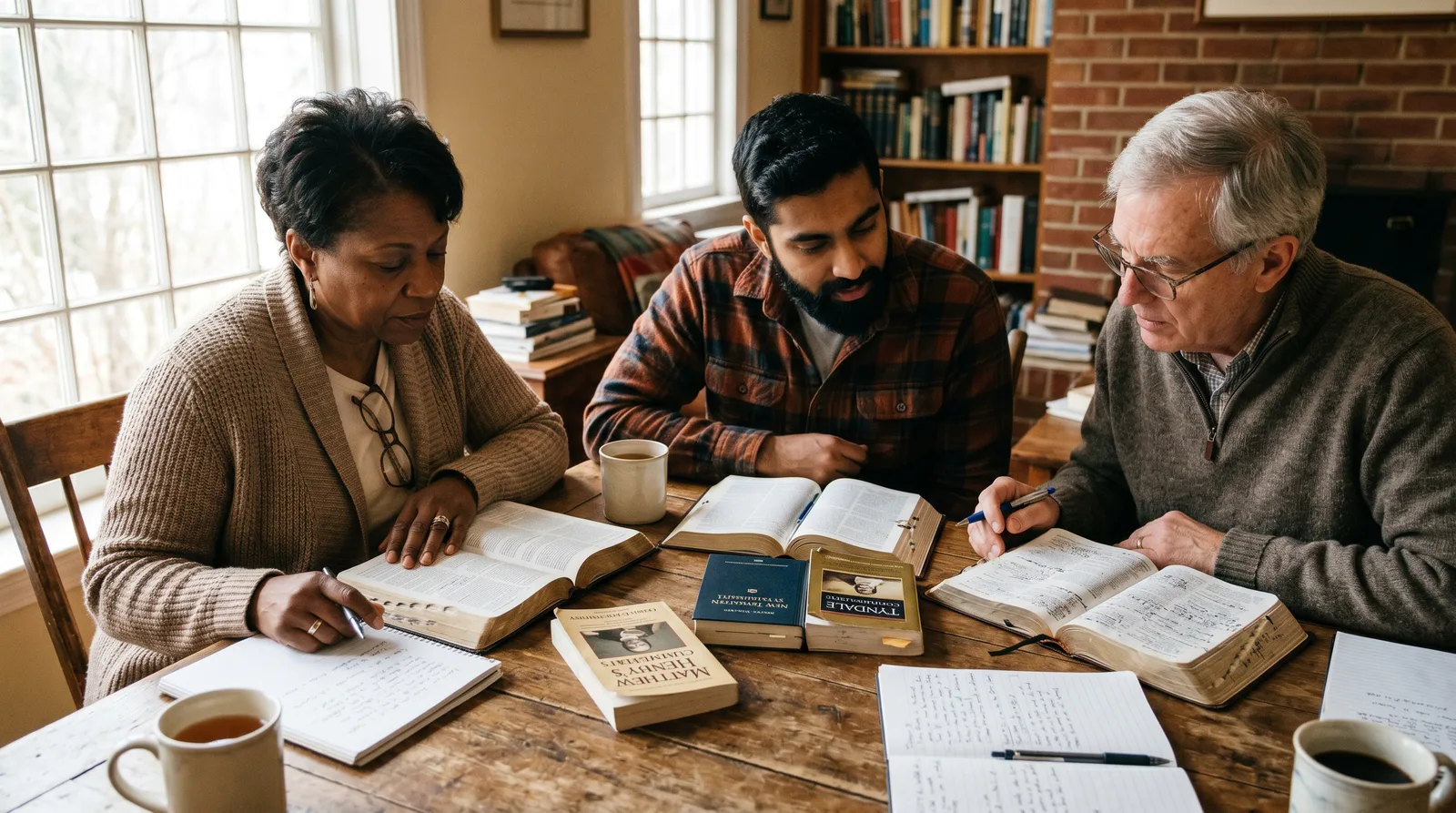
"Daniel was not written to satisfy our curiosity about the future — it was written to sustain communities who had to live faithfully inside an uncertain present, and that is precisely why it still matters."
— Carla Paton

What you'll learn
What you'll be able to do
- Interpret Daniel's court narratives — the fiery furnace, the lions' den, Belshazzar's feast — within their ancient political and theological context, identifying how they address identity, loyalty, and faithfulness under empire
- Read Daniel's apocalyptic visions (four kingdoms, the Ancient of Days, the Son of Man, the seventy weeks) using genre-appropriate literary tools rather than speculative modern timelines
- Evaluate major scholarly positions on Daniel's date, authorship, language, and composition, and articulate why these questions matter for interpretation
- Trace the intertextual connections between Daniel and other biblical writings, including the New Testament's use of the Son of Man tradition, resurrection, and apocalyptic themes associated with Jesus
- Compare significant Jewish and Christian interpretive traditions — including historical-critical, canonical, and theological approaches — and assess their strengths and limitations responsibly
- Apply Daniel's core theological convictions about divine sovereignty, faithful witness under persecution, and hope amid oppressive power to contemporary questions of faith and public life
How it works
A school that adapts to you
This isn't a set of static videos. Every lesson is generated live and tuned to where you actually are.
We learn your level
A quick placement check tailors your starting point so you're never bored or lost.
Lessons adapt as you go
Each lesson is written for your pace and your goal, adjusting as your skills grow.
Your AI coach keeps you moving
Checkpoints, feedback, and gentle nudges turn progress into a real result.
The curriculum
What's inside your school
6 modules · 25 lessons

Introducing Daniel: Book, World, and Method
Orients learners to the Book of Daniel's contents, historical setting, literary shape, and the interpretive stakes involved in reading it well.
- 1.1What Kind of Book Is Daniel?Included
- 1.2The World Behind the Book: Babylon, Persia, and the Hellenistic CrisisIncluded
- 1.3Authorship, Date, and Composition: Why the Debates MatterIncluded
- 1.4Reading Responsibly: Genre, Method, and the Dangers of SensationalismIncluded
Faithful in Babylon: The Court Narratives (Daniel 1–6)
Studies Daniel 1–6's six court stories as carefully crafted narratives addressing identity, loyalty, wisdom, and resistance under foreign rule.
- 2.1Daniel 1 — Identity, Food, and the Politics of AssimilationIncluded
- 2.2Daniel 2 — Nebuchadnezzar's Dream and the God Who Reveals SecretsIncluded
- 2.3Daniel 3 — The Fiery Furnace and Faithful DefianceIncluded
- 2.4Daniel 4–5 — The Humbling of Kings: Nebuchadnezzar and BelshazzarIncluded
- 2.5Daniel 6 — The Lions' Den and Life Under Hostile PowerIncluded
Visions of Empire and End: Apocalyptic Literature in Daniel 7–12
Guides learners through Daniel's four symbolic visions, introducing the literary conventions of apocalyptic writing and their ancient rhetorical purposes.
- 3.1What Is Apocalyptic? Genre, Symbolism, and Original AudienceIncluded
- 3.2Daniel 7 — Four Beasts, the Ancient of Days, and the One Like a Son of ManIncluded
- 3.3Daniel 8–9 — The Little Horn, the Seventy Weeks, and Historical CrisisIncluded
- 3.4Daniel 10–12 — Angelic Conflict, Resurrection, and the End of the StoryIncluded
Interpreting the Visions: Major Approaches and Scholarly Debates
Surveys the four main interpretive systems for Daniel's visions and equips learners to evaluate their strengths, weaknesses, and underlying assumptions.
- 4.1Four Kingdoms, Four Approaches: Preterist, Historicist, Futurist, and IdealistIncluded
- 4.2The Seventy Weeks Across History: A Case Study in Interpretive DiversityIncluded
- 4.3Jewish Readings of Daniel: Second Temple, Rabbinic, and Medieval TraditionsIncluded
- 4.4Christian Readings of Daniel: Patristic, Reformation, and Modern ApproachesIncluded
Daniel in the Biblical Canon: Intertextual Connections
Traces Daniel's deep roots in earlier Scripture and its formative influence on later biblical writings, especially the New Testament.
- 5.1Daniel's Debt to Earlier Scripture: Exodus, Jeremiah, Ezekiel, and the PsalmsIncluded
- 5.2The Son of Man Tradition: From Daniel 7 to the GospelsIncluded
- 5.3Daniel and the New Testament's Apocalyptic ImaginationIncluded
- 5.4Resurrection, Judgment, and Kingdom: Daniel's Theological LegacyIncluded
Daniel for Today: Theology, Witness, and Living Under Empire
Draws Daniel's core theological convictions into conversation with contemporary questions of power, faithful public life, suffering, and hope.
- 6.1Divine Sovereignty and Human Power: What Daniel Says to Every EmpireIncluded
- 6.2Faithful Witness Under Pressure: Resistance, Participation, and CompromiseIncluded
- 6.3Suffering, Persecution, and the Promise That Oppression Is Not the EndIncluded
- 6.4Reading Daniel Wisely: Avoiding Sensationalism, Embracing DepthIncluded
Who it's for
Is this you?

Independent Bible Scholars
You've outgrown surface-level devotional reads and want the historical grounding and literary tools to interpret Daniel on its own terms.

Bible Study Leaders
You're responsible for guiding others through Daniel and need scholarly depth, interpretive honesty, and content you can actually apply in a group setting.

Seminary Students
You need rigorous engagement with the critical debates — authorship, date, genre, and major interpretive traditions — as a foundation for ministry and further study.

Pastors & Preachers
You want to preach or teach Daniel with theological integrity, historical awareness, and the confidence to address end-times speculation responsibly.

Frustrated Prophecy Skeptics
You've been burned by sensationalist end-times culture and are looking for a rigorous, honest alternative that takes Daniel seriously without the speculation.

Theologians & Faith Thinkers
You're drawn to Daniel's theology of divine sovereignty, faithful witness, and eschatological hope — and want to trace those themes across the biblical canon and into today.
Questions
Frequently asked
Your teacher
A note from your teacher

Carla Paton
If you have picked up a commentary on Daniel and found yourself either lost in academic abstraction or frustrated by prophetic speculation, I want you to know — that frustration is legitimate, and it points toward something real. Daniel is one of the most intellectually demanding, theologically charged, and interpretively contested books in the entire biblical canon. It has been poorly served by both extremes: the sensationalism that treats it as a prophecy decoder for current events, and the purely academic approach that dissects it without ever asking what it might mean to live inside its convictions.
This school exists in the space between those failures. My aim is to take the text as seriously as it takes itself — which means engaging its ancient contexts, its literary forms, its contested history, and its extraordinary theological claims with equal care. We will spend real time in the court narratives of chapters 1–6, not because they are simple, but because they are not. Daniel's refusal to eat the king's food, the three men in the furnace, Daniel in the lions' den — these stories address the hardest questions any person of faith faces when the empire they live inside demands a loyalty that belongs to God alone. That is not an ancient problem.
The visions of chapters 7–12 deserve the same disciplined attention. The four beasts, the Ancient of Days, the one like a Son of Man, the seventy weeks — these images have generated centuries of interpretation, some of it brilliant, some of it reckless. I will not hand you a system. I will give you the tools to read the genre as the genre, to evaluate the major interpretive traditions honestly, and to follow Daniel's theological vision into the New Testament and into your own context. The Son of Man tradition alone, tracing from Daniel 7 through the Gospels, is one of the most significant threads in all of biblical theology.
What I most want you to leave with is not a set of positions on contested questions, but a way of reading — historically informed, literarily attentive, theologically serious, and pastorally alive. Daniel was written for communities under pressure. It shaped Jews surviving Hellenistic persecution, early Christians navigating Roman power, and believers across the centuries who needed to hear that divine sovereignty is not refuted by present suffering. That word is still worth hearing. And it is worth hearing well.
If you are ready to engage Daniel with the depth it deserves — to sit with its complexity, to hold its tensions honestly, and to let its theology speak to real questions of faith and public life — then this is the school for you. I am glad you are here.
— Carla Paton
Start your journey today
Get instant access — learn at your own pace with an AI coach in your corner.
$39/mo
Recurring billing · cancel anytime
Secure checkout · Instant access
- 6 modules, 25 lessons
- AI-adaptive lessons tuned to your level
- Quizzes & checkpoints to lock in progress
- Your own AI learning coach
- Learn on any device, at your pace
- Full access for as long as you're subscribed